
Pfizer (PFE)
Developer of prescription medicines and vaccines across oncology, internal medicine, immunology and infectious disease.
Something off on this page? Send us feedback.
Pfizer sells medicines and vaccines, with a blood thinner, a pneumonia-vaccine family and a rare-heart-disease treatment doing much of the heavy lifting. Its pandemic products are shrinking, so newer cancer drugs and an obesity pipeline must take over as older blockbusters lose protection from copycats.
Item facts: FY2025 · year ended Dec 31, 2025, from filings, earnings calls and company pages.
Judgment weights, not filed revenue
The band summarizes business focus and direction. ~ marks estimates.
9 in detail · 16 more below
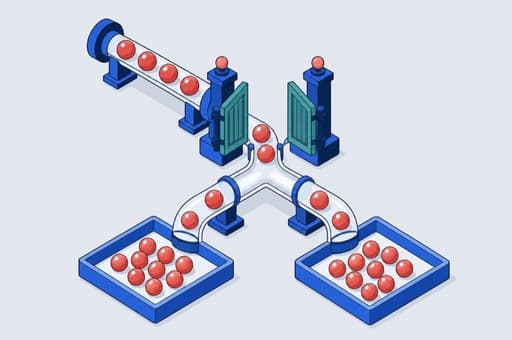
ELIQUIS
Pfizer's biggest medicine brought in $7.96B in FY2025, and sales rose 17% in H1 2026. Overseas copycats are already taking a bite; wider price pressure and the timing of U.S. copies are the watchpoints.
Competes with XARELTO (Bayer / Janssen) · PRADAXA (Boehringer Ingelheim)
In plain English
This is a pill for people whose irregular heartbeat or other conditions put them at risk of dangerous blood clots. Think of it as keeping traffic moving through the body's blood vessels instead of letting a harmful blockage form.
Doctors prescribe it, patients keep taking it, and insurers or public health plans cover much of the bill. Pfizer and Bristol Myers Squibb generally split the resulting profits and losses equally. Together, Eliquis, Prevnar and Vyndaqel supplied about one-third of Pfizer's FY2025 revenue.

PREVNAR Family
The pneumonia-vaccine family produced $6.49B in FY2025 and was nearly steady in H1 2026. Birth cohorts and adult recommendations renew demand, while Merck's newer choices make coverage and schedule placement matter.
Competes with VAXNEUVANCE (Merck) · CAPVAXIVE (Merck)
In plain English
A set of shots that teaches the immune system to recognize several forms of pneumococcal bacteria. Different versions serve children and adults, so this is a family of vaccines rather than one unchanging product.
Public-health programs, pharmacies and doctors buy or deliver the doses as children reach vaccination age and adults qualify by age or health risk. A two-year Brazilian adult contract shows how a government program can lock in purchases. Pfizer keeps earning only if its coverage of bacterial types wins a place in recommended schedules and its plants reliably make the doses.
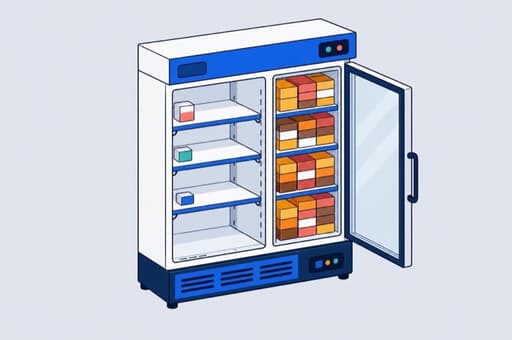
COMIRNATY
The updated COVID vaccine generated $4.37B in FY2025, down 18%. It is now an autumn-heavy booster business rather than a pandemic windfall, and narrower eligibility makes each season's uptake decisive.
Competes with SPIKEVAX / MNEXSPIKE (Moderna) · NUVAXOVID (Novavax / Sanofi)
In plain English
Pfizer and BioNTech refresh this COVID shot as the virus changes, much as the contents of a seasonal toolkit get swapped before the next round of use. Governments, health systems and pharmacies order doses, then eligible people receive them during the vaccination season.
Most sales now arrive late in the year instead of through huge pandemic-era contracts. Pfizer and BioNTech split equally what remains after the cost of making the vaccine. The business therefore depends on who is eligible, how many people show up, which version health authorities choose and whether patent disputes change the economics.
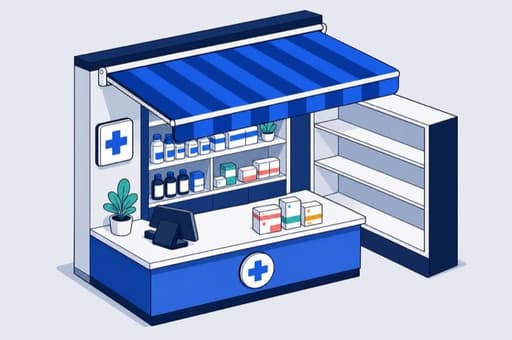
PAXLOVID
The COVID treatment made $2.36B in FY2025, down 59%, then fell another 77% in H1 2026. Its sales switch on and off with infections, early diagnosis and government stockpile decisions.
Competes with LAGEVRIO (Merck / Ridgeback) · VEKLURY (Gilead)
In plain English
Unlike a vaccine taken before illness, Paxlovid is a course of pills for high-risk people who already have COVID. Demand behaves less like a steady household purchase and more like umbrellas during unpredictable rain: infections create the need, and quiet periods leave shelves still.
Patients must be diagnosed early enough, then pharmacies, hospitals or access programs dispense the treatment. Pfizer earns on courses sold through ordinary health channels or bought by governments. Drug interactions, policy choices and the size of each infection wave all decide how much volume appears.
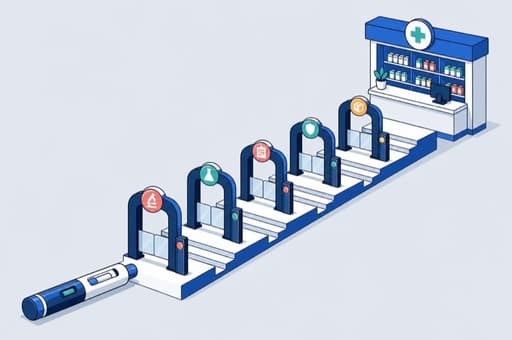
Berobenatide
Pfizer's acquired obesity shot has no sales; 2028 is the first possible approval date it has cited. Ten late-stage studies planned during 2026 must prove that monthly maintenance can stand out in a crowded field.
Competes with WEGOVY (Novo Nordisk) · ZEPBOUND (Eli Lilly) · MariTide (Amgen)
In plain English
Here is the bet that does not pay the bills yet: an injected obesity medicine tested with weekly starting doses and monthly maintenance. In a middle-stage study, people lost up to 15.9% of body weight after 32 weeks, before adjusting for what happened in the comparison group.
Pfizer acquired the program with Metsera and is carrying it through a large set of final studies. There are no customers until those tests succeed, regulators approve it and health plans agree to cover it. Manufacturing enough reliable doses and matching established weekly rivals are just as important as convenience.
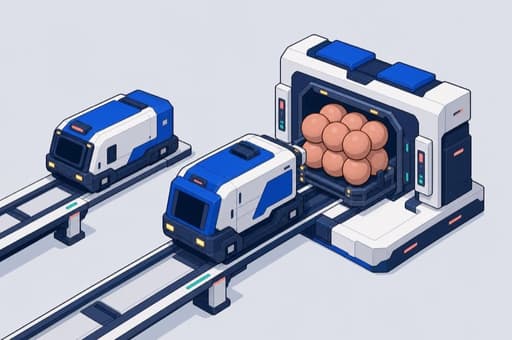
PADCEV
The Seagen-acquired bladder-cancer drug brought in $1.94B in FY2025 and grew 30% in H1 2026. Its newly widened use around surgery can extend growth, provided production, side effects and coverage hold up.
Competes with Bulumtatug fuvedotin / 9MW2821 (Mabwell) · OPDIVO plus cisplatin and gemcitabine (Bristol Myers Squibb)
In plain English
A cancer medicine built like targeted delivery: one part seeks a marker on tumor cells and another carries the damaging payload. Pfizer gained Padcev with Seagen and sells it with Astellas for certain bladder cancers.
Hospitals buy infusions as doctors identify eligible patients. Pairing Padcev with Merck's Keytruda widened its use, and a July 2026 approval added treatment before and after surgery for muscle-invasive disease. More approved settings mean more patients, but Pfizer still shares the commercial work with Astellas and depends on complicated production, manageable side effects and health-plan coverage.
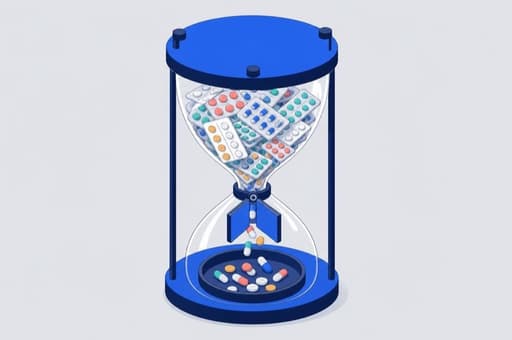
IBRANCE
This breast-cancer pill delivered $4.12B in FY2025, down 6%, and was nearly flat in H1 2026. A wider use helps, but stronger rivals and U.S. copycat entry expected after patent expiry limit the runway.
Competes with KISQALI (Novartis) · VERZENIO (Eli Lilly)
In plain English
One of Pfizer's older cancer workhorses, Ibrance is a pill used with hormone-focused treatment for certain breast cancers. The combination aims to keep cancer growth in check, and each covered prescription becomes a sale.
Cancer doctors choose among several similar medicines based on evidence, the exact disease setting and what health plans will cover. A new June 2026 use alongside other therapies opens another group of patients. Even so, sales have stopped growing, rivals overlap heavily and the listed U.S. patent expiry brings cheaper copies closer.
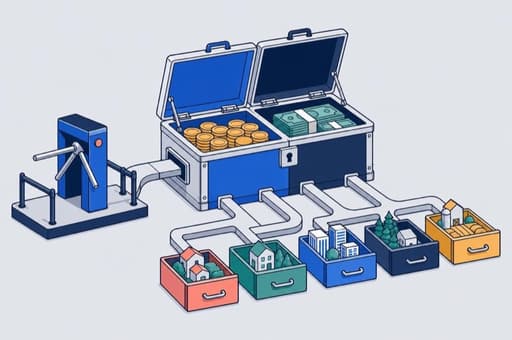
XTANDI
Pfizer received $2.19B from Xtandi in FY2025, mostly through its Astellas partnership, but H1 2026 fell 4%. Earlier treatment can add use; U.S. patent and negotiated-price pressure are due in 2027.
Competes with ERLEADA (Johnson & Johnson) · NUBEQA (Bayer / Orion)
In plain English
Xtandi blocks a signal that certain prostate cancers use to grow. Doctors can use it at several points in the disease, which gives the medicine more than one path to patients rather than tying it to a single treatment moment.
The unusual part is how Pfizer gets paid: Astellas handles important pieces of the business, while Pfizer receives its agreed share of U.S. results and payments tied to other territories. That means Pfizer's number is not total worldwide pharmacy sales. More use in earlier disease can help, but cheaper copies and negotiated U.S. pricing approach together.
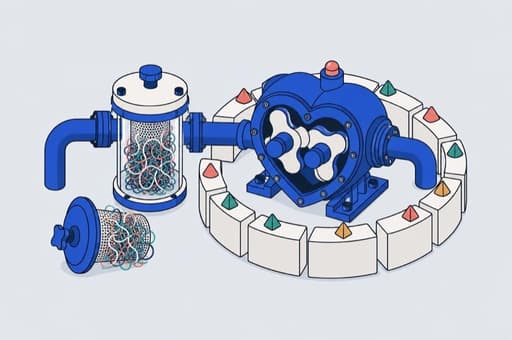
VYNDAQEL Family
Pfizer's rare-heart-disease family earned $6.38B in FY2025, up 17%, and kept growing in H1 2026. Finding more patients drives starts; two new rivals now compete, while settlements are expected to protect U.S. sales into mid-2031.
Competes with ATTRUBY (BridgeBio) · AMVUTTRA (Alnylam)
In plain English
These medicines treat a rare disease in which a troublesome protein builds up and damages the heart. Many people go undiagnosed, so the commercial engine begins with doctors recognizing the condition and getting patients onto treatment.
Once diagnosed, patients receive Vyndaqel, U.S. Vyndamax or Japan's Vynmac through specialist pharmacies, with insurers deciding access and the price Pfizer actually collects. It has been a fast-growing franchise, but newer oral and injected alternatives give doctors real choices. Patent settlements added about five years of expected U.S. protection, buying Pfizer more time before copies arrive.


 ELIQUISPfizer's biggest medicine brought in $7.96B in FY2025, and sales rose 17% in H1 2026. Overseas copycats are already taking a bite; wider price pressure and the timing of U.S. copies are the watchpoints.
Pfizer's biggest medicine brought in $7.96B in FY2025, and sales rose 17% in H1 2026. Overseas copycats are already taking a bite; wider price pressure and the timing of U.S. copies are the watchpoints.
In plain English
This is a pill for people whose irregular heartbeat or other conditions put them at risk of dangerous blood clots. Think of it as keeping traffic moving through the body's blood vessels instead of letting a harmful blockage form.
Doctors prescribe it, patients keep taking it, and insurers or public health plans cover much of the bill. Pfizer and Bristol Myers Squibb generally split the resulting profits and losses equally. Together, Eliquis, Prevnar and Vyndaqel supplied about one-third of Pfizer's FY2025 revenue.
Competes with XARELTO (Bayer / Janssen) · PRADAXA (Boehringer Ingelheim)
 PREVNAR FamilyThe pneumonia-vaccine family produced $6.49B in FY2025 and was nearly steady in H1 2026. Birth cohorts and adult recommendations renew demand, while Merck's newer choices make coverage and schedule placement matter.
The pneumonia-vaccine family produced $6.49B in FY2025 and was nearly steady in H1 2026. Birth cohorts and adult recommendations renew demand, while Merck's newer choices make coverage and schedule placement matter.
In plain English
A set of shots that teaches the immune system to recognize several forms of pneumococcal bacteria. Different versions serve children and adults, so this is a family of vaccines rather than one unchanging product.
Public-health programs, pharmacies and doctors buy or deliver the doses as children reach vaccination age and adults qualify by age or health risk. A two-year Brazilian adult contract shows how a government program can lock in purchases. Pfizer keeps earning only if its coverage of bacterial types wins a place in recommended schedules and its plants reliably make the doses.
Competes with VAXNEUVANCE (Merck) · CAPVAXIVE (Merck)
 COMIRNATYThe updated COVID vaccine generated $4.37B in FY2025, down 18%. It is now an autumn-heavy booster business rather than a pandemic windfall, and narrower eligibility makes each season's uptake decisive.
The updated COVID vaccine generated $4.37B in FY2025, down 18%. It is now an autumn-heavy booster business rather than a pandemic windfall, and narrower eligibility makes each season's uptake decisive.
In plain English
Pfizer and BioNTech refresh this COVID shot as the virus changes, much as the contents of a seasonal toolkit get swapped before the next round of use. Governments, health systems and pharmacies order doses, then eligible people receive them during the vaccination season.
Most sales now arrive late in the year instead of through huge pandemic-era contracts. Pfizer and BioNTech split equally what remains after the cost of making the vaccine. The business therefore depends on who is eligible, how many people show up, which version health authorities choose and whether patent disputes change the economics.
Competes with SPIKEVAX / MNEXSPIKE (Moderna) · NUVAXOVID (Novavax / Sanofi)
 PAXLOVIDThe COVID treatment made $2.36B in FY2025, down 59%, then fell another 77% in H1 2026. Its sales switch on and off with infections, early diagnosis and government stockpile decisions.
The COVID treatment made $2.36B in FY2025, down 59%, then fell another 77% in H1 2026. Its sales switch on and off with infections, early diagnosis and government stockpile decisions.
In plain English
Unlike a vaccine taken before illness, Paxlovid is a course of pills for high-risk people who already have COVID. Demand behaves less like a steady household purchase and more like umbrellas during unpredictable rain: infections create the need, and quiet periods leave shelves still.
Patients must be diagnosed early enough, then pharmacies, hospitals or access programs dispense the treatment. Pfizer earns on courses sold through ordinary health channels or bought by governments. Drug interactions, policy choices and the size of each infection wave all decide how much volume appears.
Competes with LAGEVRIO (Merck / Ridgeback) · VEKLURY (Gilead)
 BerobenatidePfizer's acquired obesity shot has no sales; 2028 is the first possible approval date it has cited. Ten late-stage studies planned during 2026 must prove that monthly maintenance can stand out in a crowded field.
Pfizer's acquired obesity shot has no sales; 2028 is the first possible approval date it has cited. Ten late-stage studies planned during 2026 must prove that monthly maintenance can stand out in a crowded field.
In plain English
Here is the bet that does not pay the bills yet: an injected obesity medicine tested with weekly starting doses and monthly maintenance. In a middle-stage study, people lost up to 15.9% of body weight after 32 weeks, before adjusting for what happened in the comparison group.
Pfizer acquired the program with Metsera and is carrying it through a large set of final studies. There are no customers until those tests succeed, regulators approve it and health plans agree to cover it. Manufacturing enough reliable doses and matching established weekly rivals are just as important as convenience.
Competes with WEGOVY (Novo Nordisk) · ZEPBOUND (Eli Lilly) · MariTide (Amgen)
 PADCEVThe Seagen-acquired bladder-cancer drug brought in $1.94B in FY2025 and grew 30% in H1 2026. Its newly widened use around surgery can extend growth, provided production, side effects and coverage hold up.
The Seagen-acquired bladder-cancer drug brought in $1.94B in FY2025 and grew 30% in H1 2026. Its newly widened use around surgery can extend growth, provided production, side effects and coverage hold up.
In plain English
A cancer medicine built like targeted delivery: one part seeks a marker on tumor cells and another carries the damaging payload. Pfizer gained Padcev with Seagen and sells it with Astellas for certain bladder cancers.
Hospitals buy infusions as doctors identify eligible patients. Pairing Padcev with Merck's Keytruda widened its use, and a July 2026 approval added treatment before and after surgery for muscle-invasive disease. More approved settings mean more patients, but Pfizer still shares the commercial work with Astellas and depends on complicated production, manageable side effects and health-plan coverage.
Competes with Bulumtatug fuvedotin / 9MW2821 (Mabwell) · OPDIVO plus cisplatin and gemcitabine (Bristol Myers Squibb)
 IBRANCEThis breast-cancer pill delivered $4.12B in FY2025, down 6%, and was nearly flat in H1 2026. A wider use helps, but stronger rivals and U.S. copycat entry expected after patent expiry limit the runway.
This breast-cancer pill delivered $4.12B in FY2025, down 6%, and was nearly flat in H1 2026. A wider use helps, but stronger rivals and U.S. copycat entry expected after patent expiry limit the runway.
In plain English
One of Pfizer's older cancer workhorses, Ibrance is a pill used with hormone-focused treatment for certain breast cancers. The combination aims to keep cancer growth in check, and each covered prescription becomes a sale.
Cancer doctors choose among several similar medicines based on evidence, the exact disease setting and what health plans will cover. A new June 2026 use alongside other therapies opens another group of patients. Even so, sales have stopped growing, rivals overlap heavily and the listed U.S. patent expiry brings cheaper copies closer.
Competes with KISQALI (Novartis) · VERZENIO (Eli Lilly)
 XTANDIPfizer received $2.19B from Xtandi in FY2025, mostly through its Astellas partnership, but H1 2026 fell 4%. Earlier treatment can add use; U.S. patent and negotiated-price pressure are due in 2027.
Pfizer received $2.19B from Xtandi in FY2025, mostly through its Astellas partnership, but H1 2026 fell 4%. Earlier treatment can add use; U.S. patent and negotiated-price pressure are due in 2027.
In plain English
Xtandi blocks a signal that certain prostate cancers use to grow. Doctors can use it at several points in the disease, which gives the medicine more than one path to patients rather than tying it to a single treatment moment.
The unusual part is how Pfizer gets paid: Astellas handles important pieces of the business, while Pfizer receives its agreed share of U.S. results and payments tied to other territories. That means Pfizer's number is not total worldwide pharmacy sales. More use in earlier disease can help, but cheaper copies and negotiated U.S. pricing approach together.
Competes with ERLEADA (Johnson & Johnson) · NUBEQA (Bayer / Orion)
 VYNDAQEL FamilyPfizer's rare-heart-disease family earned $6.38B in FY2025, up 17%, and kept growing in H1 2026. Finding more patients drives starts; two new rivals now compete, while settlements are expected to protect U.S. sales into mid-2031.
Pfizer's rare-heart-disease family earned $6.38B in FY2025, up 17%, and kept growing in H1 2026. Finding more patients drives starts; two new rivals now compete, while settlements are expected to protect U.S. sales into mid-2031.
In plain English
These medicines treat a rare disease in which a troublesome protein builds up and damages the heart. Many people go undiagnosed, so the commercial engine begins with doctors recognizing the condition and getting patients onto treatment.
Once diagnosed, patients receive Vyndaqel, U.S. Vyndamax or Japan's Vynmac through specialist pharmacies, with insurers deciding access and the price Pfizer actually collects. It has been a fast-growing franchise, but newer oral and injected alternatives give doctors real choices. Patent settlements added about five years of expected U.S. protection, buying Pfizer more time before copies arrive.
Competes with ATTRUBY (BridgeBio) · AMVUTTRA (Alnylam)
Named in filings, launches and programs
- Other named Oncology productsProduct lineTen medicines including Adcetris, Braftovi/Mektovi and Tukysa contributed $5.12B together in FY2025.
- Other named Specialty Care productsProduct lineNine medicines including Inflectra, Enbrel and Cibinqo contributed $4.46B together in FY2025.
- All other HospitalProduct lineSmaller hospital medicines generated $4.03B in FY2025; Pfizer does not reveal their brand-by-brand mix.
- All other Primary CareProduct lineSmaller vaccines and mature primary-care brands generated $2.86B in FY2025.
- All other Specialty CareProduct lineUnitemized specialty medicines supplied another $1.59B in FY2025.
- NURTEC ODT / VYDURAProductAn oral migraine medicine that produced $1.42B in FY2025.
- Pfizer CentreOneServiceMakes medicines and active ingredients for others and supplies older products; revenue was $1.34B in FY2025.
- Oncology BiosimilarsProduct lineFive lower-cost versions of complex cancer medicines generated $1.30B in FY2025.
- All other OncologyProduct lineUnitemized cancer medicines added $1.13B in FY2025.
- XELJANZProductAn inflammatory-disease medicine with $1.09B of FY2025 revenue and listed U.S. patent expiry in 2026.
- ABRYSVOProductPfizer's RSV vaccine produced $1.03B in FY2025 and $388M in H1 2026.
- LORBRENAProductA medicine for a defined form of advanced lung cancer; FY2025 revenue reached $1.02B.
- FSME-IMMUN / TicoVacProductA tick-borne encephalitis vaccine that generated $319M in FY2025.
- PF'4404Product · Pre-revenueA licensed experimental cancer medicine in nine studies by August 2026, including two late-stage trials.
- Innovent Oncology CollaborationProduct · Pre-revenueFour experimental cancer programs licensed in July 2026 for $650M upfront and as much as $9.85B in milestone payments.
- U.S. Government Pricing and TrumpRx ProgramCustomer programLower Medicaid and direct-purchase prices paired with tariff relief and U.S. manufacturing commitments.
Other named Oncology productsProduct line
Ten medicines including Adcetris, Braftovi/Mektovi and Tukysa contributed $5.12B together in FY2025.
Other named Specialty Care productsProduct line
Nine medicines including Inflectra, Enbrel and Cibinqo contributed $4.46B together in FY2025.
All other HospitalProduct line
Smaller hospital medicines generated $4.03B in FY2025; Pfizer does not reveal their brand-by-brand mix.
All other Primary CareProduct line
Smaller vaccines and mature primary-care brands generated $2.86B in FY2025.
All other Specialty CareProduct line
Unitemized specialty medicines supplied another $1.59B in FY2025.
NURTEC ODT / VYDURAProduct
An oral migraine medicine that produced $1.42B in FY2025.
Pfizer CentreOneService
Makes medicines and active ingredients for others and supplies older products; revenue was $1.34B in FY2025.
Oncology BiosimilarsProduct line
Five lower-cost versions of complex cancer medicines generated $1.30B in FY2025.
All other OncologyProduct line
Unitemized cancer medicines added $1.13B in FY2025.
XELJANZProduct
An inflammatory-disease medicine with $1.09B of FY2025 revenue and listed U.S. patent expiry in 2026.
ABRYSVOProduct
Pfizer's RSV vaccine produced $1.03B in FY2025 and $388M in H1 2026.
LORBRENAProduct
A medicine for a defined form of advanced lung cancer; FY2025 revenue reached $1.02B.
FSME-IMMUN / TicoVacProduct
A tick-borne encephalitis vaccine that generated $319M in FY2025.
PF'4404Product · Pre-revenue
A licensed experimental cancer medicine in nine studies by August 2026, including two late-stage trials.
Innovent Oncology CollaborationProduct · Pre-revenue
Four experimental cancer programs licensed in July 2026 for $650M upfront and as much as $9.85B in milestone payments.
U.S. Government Pricing and TrumpRx ProgramCustomer program
Lower Medicaid and direct-purchase prices paired with tariff relief and U.S. manufacturing commitments.