
Public Storage (PSA)
Operates U.S. self-storage facilities with insurance, management, lending, and European investment exposure.
Something off on this page? Send us feedback.
Public Storage is overwhelmingly a monthly-rent business: households and companies pay to keep belongings in its storage rooms. The mature locations still pay the bills, while large purchases are turning it into a broader North American network with insurance, property management, and lending wrapped around the space.
Item facts: FY2025 · year ended Dec 31, 2025, from filings, earnings calls and company pages.
Judgment weights, not filed revenue
The band summarizes business focus and direction. ~ marks estimates.
9 in detail · 13 more below
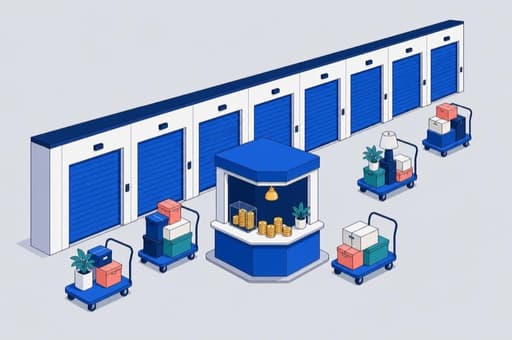
Same Store Facilities
Mature U.S. properties supplied $3.76 billion of FY2025 revenue and kept 92.0% of their space occupied on average. Move-in prices, renter retention, nearby competition, and property costs decide whether this cash engine grows.
Competes with Owned-store portfolio (Extra Space Storage) · Same-store portfolio (CubeSmart)
In plain English
This is the long-established neighborhood storage business: rows of locked rooms where people or small companies leave furniture, documents, or stock they cannot keep elsewhere. Renters usually pay month by month, so no giant order book protects future sales.
Money comes from keeping rooms filled and collecting more rent from each occupied square foot. These mature properties produce most of Public Storage's sales and cash, but they are sensitive to cheaper new space nearby, local rent rules, taxes, insurance, and the price offered to each new renter.

PS Next
The digital system linking search, leasing, pricing, the app, stores, and phone help. By July 2026, about three quarters of leases were completed online; the test is whether convenience lifts rentals while reducing store labor.
Competes with Customer-acquisition and pricing platform (Extra Space Storage) · Technology-led operating model (Safestore)
In plain English
Think of PS Next as the control panel behind the storage network. A renter can find a room, sign up, pay, and gain access digitally, while employees use the same flow to answer questions and set prices.
It is not sold on its own. It earns its keep when more shoppers become paying renters, existing customers stay, insurance is added, or fewer staff hours are needed at each property. Its biggest near-term job is moving newly purchased locations onto one operating system without disrupting payments or access.
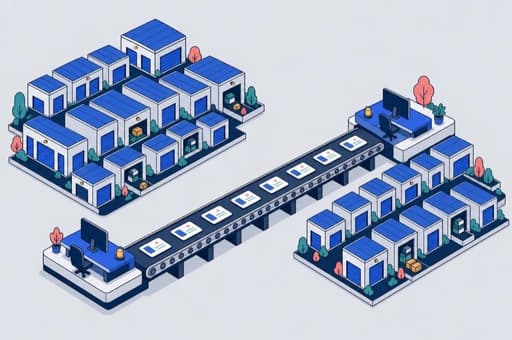
National Storage Affiliates Acquisition and Joint Venture
The July 2026 purchase added more than a thousand properties and is the biggest step-change in the footprint. Watch whether smooth rebranding, renter retention, and promised savings turn sheer scale into better results.
Competes with Owned and joint-venture portfolio (Extra Space Storage) · Consolidated and joint-venture portfolio (CubeSmart)
In plain English
A whole storage chain arrived at once. Public Storage owns some of the acquired properties outright and runs the rest in jointly owned groups, including one where it owns only a small slice.
That mixed structure creates several paydays: rent from fully owned buildings, fees for running shared ones, insurance sold to their renters, and interest on money lent into the deal. The catch is practical rather than mysterious—hundreds of thousands of units, payments, employees, and customers must move onto Public Storage's systems without losing service or renters.
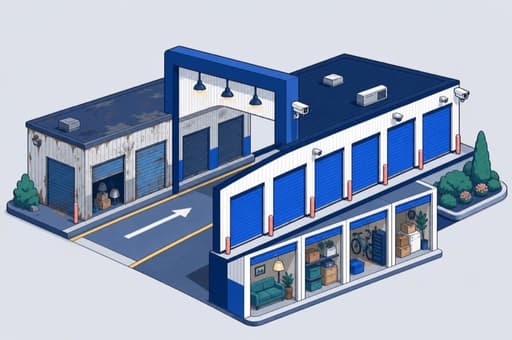
Acquired Facilities
Recently purchased properties generated $246.7 million in FY2025 revenue. They typically arrive with more empty space than mature sites, leaving room to improve—but purchase price, local demand, and integration determine whether that promise pays.
Competes with Acquisition and bridge-loan funnel (Extra Space Storage) · Acquisition and joint-ownership program (CubeSmart)
In plain English
Buying an existing storage property is like taking over a partly filled apartment building: customers and rent arrive on day one, but the new owner still has to improve the operation. These sites remain in the acquired group while Public Storage seasons them.
Revenue comes from inherited renters and newcomers. Public Storage tries to fill more rooms, adjust rents, and replace the old owner's systems with its own. That can lift income faster than building from bare ground, though paying too much or buying into an overbuilt neighborhood can erase the advantage.
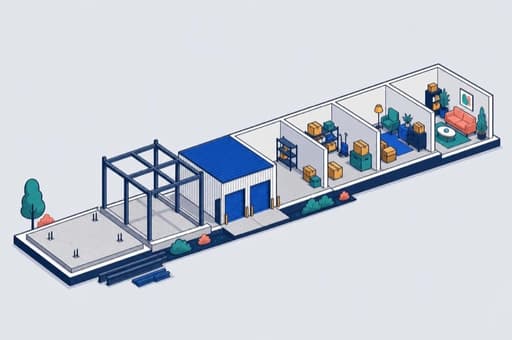
Newly Developed and Expanded Facilities
New buildings and additions produced $183.0 million in FY2025 revenue. The pipeline held 47 projects by June 2026; opening on budget matters, but filling the new rooms at good rents is the real test.
Competes with Development and redevelopment pipeline (Extra Space Storage) · Development joint ventures (CubeSmart)
In plain English
Here Public Storage makes more shelf space itself. It builds a facility from the ground up or adds rooms to a property it already owns, then waits as local renters gradually fill it.
A completed building does not become a mature earner overnight. Construction money goes out first; rent trickles in as each room is leased, and the property pays off only when enough doors stay occupied at worthwhile prices. Zoning delays, expensive materials, late openings, or a wave of nearby construction can stretch that climb.
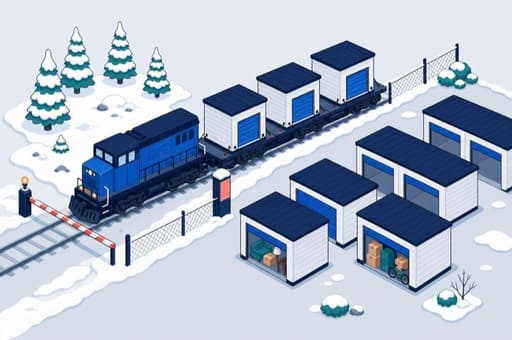
Public Storage Canada
The September 2026 purchase brought 68 Canadian properties into the network. More rooms were empty than at the mature U.S. sites, leaving room to improve; local demand, currency changes, and a clean systems switch bear watching.
Competes with Access Storage portfolio (StorageVault Canada) · Canadian portfolio (StorageMart)
In plain English
Canada is the new geographic branch. Public Storage bought a long-running group of storage sites from the Hughes family and is bringing its digital leasing, pricing, and insurance tools across the border.
Canadian households and businesses pay monthly rent just as U.S. customers do. More filled rooms and better rent would grow the contribution; insurance can add another payment around each rental. Part of what the sellers ultimately receive depends on the properties reaching an agreed income goal, so the handover and the pace of filling empty space matter directly.
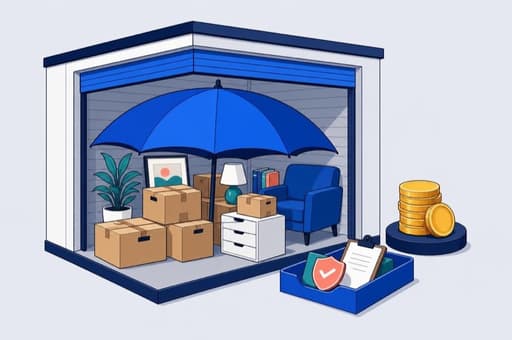
Orange Door Storage Insurance Program and Savvy Storage Insurance Program
Coverage for stored belongings produced $250.7 million in FY2025 premiums and kept $192.4 million after claims and running costs. Growth follows rented units and sign-ups; severe losses, new rules, or fewer customers choosing coverage can shrink what remains.
Competes with Tenant reinsurance (Extra Space Storage) · Safestor (U-Haul)
In plain English
A storage room protects belongings from clutter, not every mishap. Orange Door offers coverage to Public Storage renters, while Savvy reaches customers at independently owned facilities through outside software.
An unrelated insurer issues the policy, but a Public Storage subsidiary keeps most of the premium and takes on nearly all of the risk. That makes each covered renter a small recurring payment layered on top of room rent. The model scales with occupied units, yet fires, storms, regulation, or fewer customers choosing coverage can quickly change what remains after claims.

PS Advantage
Outside owners paid $59.0 million in FY2025 for Public Storage to run 362 facilities. The fees are small, but each relationship can also lead to insurance, lending, operating data, or a future purchase.
Competes with ManagementPlus (Extra Space Storage) · Third-party management platform (CubeSmart)
In plain English
Not every building run the Public Storage way belongs to Public Storage. Independent owners can hire PS Advantage to handle the day-to-day work—finding renters, setting prices, taking payments, and running the property.
Those owners pay management fees, giving Public Storage income without buying the real estate. The relationship can deepen: a developer may borrow from Public Storage, offer insurance to renters, share useful operating information, or eventually sell the site. Growth depends on signing owners, keeping them, and seeing unfinished contracted properties actually open.

Shurgard Self Storage
Public Storage's 35% Shurgard stake reaches seven Western European countries without adding Shurgard's sales to its own. It contributed $9.6 million of FY2025 earnings; rents, filled space, currencies, and Shurgard's spending drive the result.
Competes with Safestore portfolio (Safestore) · Big Yellow and Armadillo portfolios (Big Yellow)
In plain English
Shurgard is a separate European storage operator in which Public Storage owns a little over one third. Its hundreds of properties serve local households and businesses under Shurgard's own operation.
Public Storage does not collect those buildings' sales as its own. Instead, it receives its share of Shurgard's profit, much like a part-owner of a shop receiving part of what the shop earns rather than ringing every sale into a personal till. The stake adds international reach, but its contribution moves with European demand, exchange rates, development choices, and Shurgard's own use of cash.


 Same Store FacilitiesMature U.S. properties supplied $3.76 billion of FY2025 revenue and kept 92.0% of their space occupied on average. Move-in prices, renter retention, nearby competition, and property costs decide whether this cash engine grows.
Mature U.S. properties supplied $3.76 billion of FY2025 revenue and kept 92.0% of their space occupied on average. Move-in prices, renter retention, nearby competition, and property costs decide whether this cash engine grows.
In plain English
This is the long-established neighborhood storage business: rows of locked rooms where people or small companies leave furniture, documents, or stock they cannot keep elsewhere. Renters usually pay month by month, so no giant order book protects future sales.
Money comes from keeping rooms filled and collecting more rent from each occupied square foot. These mature properties produce most of Public Storage's sales and cash, but they are sensitive to cheaper new space nearby, local rent rules, taxes, insurance, and the price offered to each new renter.
Competes with Owned-store portfolio (Extra Space Storage) · Same-store portfolio (CubeSmart)
 PS NextThe digital system linking search, leasing, pricing, the app, stores, and phone help. By July 2026, about three quarters of leases were completed online; the test is whether convenience lifts rentals while reducing store labor.
The digital system linking search, leasing, pricing, the app, stores, and phone help. By July 2026, about three quarters of leases were completed online; the test is whether convenience lifts rentals while reducing store labor.
In plain English
Think of PS Next as the control panel behind the storage network. A renter can find a room, sign up, pay, and gain access digitally, while employees use the same flow to answer questions and set prices.
It is not sold on its own. It earns its keep when more shoppers become paying renters, existing customers stay, insurance is added, or fewer staff hours are needed at each property. Its biggest near-term job is moving newly purchased locations onto one operating system without disrupting payments or access.
Competes with Customer-acquisition and pricing platform (Extra Space Storage) · Technology-led operating model (Safestore)
 National Storage Affiliates Acquisition and Joint VentureThe July 2026 purchase added more than a thousand properties and is the biggest step-change in the footprint. Watch whether smooth rebranding, renter retention, and promised savings turn sheer scale into better results.
The July 2026 purchase added more than a thousand properties and is the biggest step-change in the footprint. Watch whether smooth rebranding, renter retention, and promised savings turn sheer scale into better results.
In plain English
A whole storage chain arrived at once. Public Storage owns some of the acquired properties outright and runs the rest in jointly owned groups, including one where it owns only a small slice.
That mixed structure creates several paydays: rent from fully owned buildings, fees for running shared ones, insurance sold to their renters, and interest on money lent into the deal. The catch is practical rather than mysterious—hundreds of thousands of units, payments, employees, and customers must move onto Public Storage's systems without losing service or renters.
Competes with Owned and joint-venture portfolio (Extra Space Storage) · Consolidated and joint-venture portfolio (CubeSmart)
 Acquired FacilitiesRecently purchased properties generated $246.7 million in FY2025 revenue. They typically arrive with more empty space than mature sites, leaving room to improve—but purchase price, local demand, and integration determine whether that promise pays.
Recently purchased properties generated $246.7 million in FY2025 revenue. They typically arrive with more empty space than mature sites, leaving room to improve—but purchase price, local demand, and integration determine whether that promise pays.
In plain English
Buying an existing storage property is like taking over a partly filled apartment building: customers and rent arrive on day one, but the new owner still has to improve the operation. These sites remain in the acquired group while Public Storage seasons them.
Revenue comes from inherited renters and newcomers. Public Storage tries to fill more rooms, adjust rents, and replace the old owner's systems with its own. That can lift income faster than building from bare ground, though paying too much or buying into an overbuilt neighborhood can erase the advantage.
Competes with Acquisition and bridge-loan funnel (Extra Space Storage) · Acquisition and joint-ownership program (CubeSmart)
 Newly Developed and Expanded FacilitiesNew buildings and additions produced $183.0 million in FY2025 revenue. The pipeline held 47 projects by June 2026; opening on budget matters, but filling the new rooms at good rents is the real test.
New buildings and additions produced $183.0 million in FY2025 revenue. The pipeline held 47 projects by June 2026; opening on budget matters, but filling the new rooms at good rents is the real test.
In plain English
Here Public Storage makes more shelf space itself. It builds a facility from the ground up or adds rooms to a property it already owns, then waits as local renters gradually fill it.
A completed building does not become a mature earner overnight. Construction money goes out first; rent trickles in as each room is leased, and the property pays off only when enough doors stay occupied at worthwhile prices. Zoning delays, expensive materials, late openings, or a wave of nearby construction can stretch that climb.
Competes with Development and redevelopment pipeline (Extra Space Storage) · Development joint ventures (CubeSmart)
 Public Storage CanadaThe September 2026 purchase brought 68 Canadian properties into the network. More rooms were empty than at the mature U.S. sites, leaving room to improve; local demand, currency changes, and a clean systems switch bear watching.
The September 2026 purchase brought 68 Canadian properties into the network. More rooms were empty than at the mature U.S. sites, leaving room to improve; local demand, currency changes, and a clean systems switch bear watching.
In plain English
Canada is the new geographic branch. Public Storage bought a long-running group of storage sites from the Hughes family and is bringing its digital leasing, pricing, and insurance tools across the border.
Canadian households and businesses pay monthly rent just as U.S. customers do. More filled rooms and better rent would grow the contribution; insurance can add another payment around each rental. Part of what the sellers ultimately receive depends on the properties reaching an agreed income goal, so the handover and the pace of filling empty space matter directly.
Competes with Access Storage portfolio (StorageVault Canada) · Canadian portfolio (StorageMart)
 Orange Door Storage Insurance Program and Savvy Storage Insurance ProgramCoverage for stored belongings produced $250.7 million in FY2025 premiums and kept $192.4 million after claims and running costs. Growth follows rented units and sign-ups; severe losses, new rules, or fewer customers choosing coverage can shrink what remains.
Coverage for stored belongings produced $250.7 million in FY2025 premiums and kept $192.4 million after claims and running costs. Growth follows rented units and sign-ups; severe losses, new rules, or fewer customers choosing coverage can shrink what remains.
In plain English
A storage room protects belongings from clutter, not every mishap. Orange Door offers coverage to Public Storage renters, while Savvy reaches customers at independently owned facilities through outside software.
An unrelated insurer issues the policy, but a Public Storage subsidiary keeps most of the premium and takes on nearly all of the risk. That makes each covered renter a small recurring payment layered on top of room rent. The model scales with occupied units, yet fires, storms, regulation, or fewer customers choosing coverage can quickly change what remains after claims.
Competes with Tenant reinsurance (Extra Space Storage) · Safestor (U-Haul)
 PS AdvantageOutside owners paid $59.0 million in FY2025 for Public Storage to run 362 facilities. The fees are small, but each relationship can also lead to insurance, lending, operating data, or a future purchase.
Outside owners paid $59.0 million in FY2025 for Public Storage to run 362 facilities. The fees are small, but each relationship can also lead to insurance, lending, operating data, or a future purchase.
In plain English
Not every building run the Public Storage way belongs to Public Storage. Independent owners can hire PS Advantage to handle the day-to-day work—finding renters, setting prices, taking payments, and running the property.
Those owners pay management fees, giving Public Storage income without buying the real estate. The relationship can deepen: a developer may borrow from Public Storage, offer insurance to renters, share useful operating information, or eventually sell the site. Growth depends on signing owners, keeping them, and seeing unfinished contracted properties actually open.
Competes with ManagementPlus (Extra Space Storage) · Third-party management platform (CubeSmart)
 Shurgard Self StoragePublic Storage's 35% Shurgard stake reaches seven Western European countries without adding Shurgard's sales to its own. It contributed $9.6 million of FY2025 earnings; rents, filled space, currencies, and Shurgard's spending drive the result.
Public Storage's 35% Shurgard stake reaches seven Western European countries without adding Shurgard's sales to its own. It contributed $9.6 million of FY2025 earnings; rents, filled space, currencies, and Shurgard's spending drive the result.
In plain English
Shurgard is a separate European storage operator in which Public Storage owns a little over one third. Its hundreds of properties serve local households and businesses under Shurgard's own operation.
Public Storage does not collect those buildings' sales as its own. Instead, it receives its share of Shurgard's profit, much like a part-owner of a shop receiving part of what the shop earns rather than ringing every sale into a personal till. The stake adds international reach, but its contribution moves with European demand, exchange rates, development choices, and Shurgard's own use of cash.
Competes with Safestore portfolio (Safestore) · Big Yellow and Armadillo portfolios (Big Yellow)
Named in filings, launches and programs
- Other Non-Same Store FacilitiesSegmentCasualty-affected sites awaiting a return to the mature group; after the 2026 reset, only 15 facilities remained.
- Bridge Lending ProgramService · RampingLoans to storage owners can earn interest and open doors to management or purchases; $173.3 million was outstanding in June 2026.
- Merchandise SalesProduct lineLocks, boxes, and packing supplies sold alongside rentals generated $25.1 million, or 0.5% of FY2025 revenue.
- Public Storage App and eRentalPlatformThe customer-facing pieces of PS Next handle digital leasing, payment, and remote property access.
- EllieService · RampingAn automated customer-service helper that had handled more than 90,000 interactions by July 2026.
- Business StorageServiceRooms for company documents, equipment, and inventory; the rent stays inside the property groups.
- Vehicle and RV StorageServiceSpaces for cars and recreational vehicles, sold as variants of the main rental offer.
- Boat StorageServiceBoat spaces at selected properties; Public Storage gives no separate sales figure.
- Climate Controlled StorageServiceTemperature-moderated rooms for more sensitive belongings, priced within the main storage rental business.
- Commercial and Retail SpaceServiceA small side estate of shop and business space totaling 0.9 million square feet in June 2026.
- Rooftop Solar ProgramEcosystem · RampingSolar panels had reached more than 1,060 properties, with 1,300 targeted by the end of 2026.
- Welltower Data Science PartnershipEcosystemWelltower licenses Public Storage's property-buying models while the two companies share lessons from operating data.
- Cell Tower LeaseServiceSpace leased for cell towers at storage sites, with no separate sales or profit figure.
Other Non-Same Store FacilitiesSegment
Casualty-affected sites awaiting a return to the mature group; after the 2026 reset, only 15 facilities remained.
Bridge Lending ProgramService · Ramping
Loans to storage owners can earn interest and open doors to management or purchases; $173.3 million was outstanding in June 2026.
Merchandise SalesProduct line
Locks, boxes, and packing supplies sold alongside rentals generated $25.1 million, or 0.5% of FY2025 revenue.
Public Storage App and eRentalPlatform
The customer-facing pieces of PS Next handle digital leasing, payment, and remote property access.
EllieService · Ramping
An automated customer-service helper that had handled more than 90,000 interactions by July 2026.
Business StorageService
Rooms for company documents, equipment, and inventory; the rent stays inside the property groups.
Vehicle and RV StorageService
Spaces for cars and recreational vehicles, sold as variants of the main rental offer.
Boat StorageService
Boat spaces at selected properties; Public Storage gives no separate sales figure.
Climate Controlled StorageService
Temperature-moderated rooms for more sensitive belongings, priced within the main storage rental business.
Commercial and Retail SpaceService
A small side estate of shop and business space totaling 0.9 million square feet in June 2026.
Rooftop Solar ProgramEcosystem · Ramping
Solar panels had reached more than 1,060 properties, with 1,300 targeted by the end of 2026.
Welltower Data Science PartnershipEcosystem
Welltower licenses Public Storage's property-buying models while the two companies share lessons from operating data.
Cell Tower LeaseService
Space leased for cell towers at storage sites, with no separate sales or profit figure.