
Rivian (RIVN)
Builds electric pickups, SUVs, and commercial vans alongside vehicle software and services.
Something off on this page? Send us feedback.
Rivian still earns most of its money by selling premium electric trucks and sport utility vehicles, but it is trying to become a broader vehicle-and-software business. Its new midsize sport utility vehicle is the volume bet, while paid driving software and work for Volkswagen aim to add income that costs less to deliver. Amazon and Volkswagen make up an unusually large part of sales, and the transition still depends on factory expansion and smooth launches.
Item facts: FY2025 · year ended Dec 31, 2025, from filings, earnings calls and company pages.
Judgment weights, not filed revenue
The band summarizes business focus and direction. ~ marks estimates.
9 in detail · 12 more below
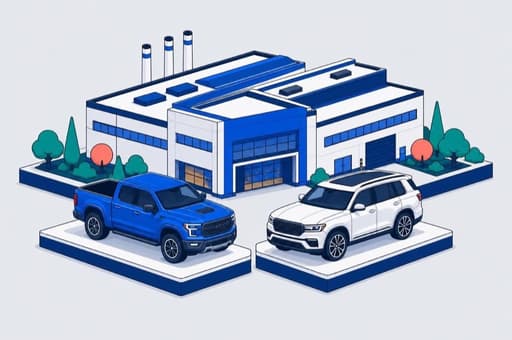
R1T and R1S
Rivian's premium electric pickup and seven-seat SUV still provide about half of company sales. They fund the next launch, but demand weakened in a flat U.S. electric-car market, so pricing, lease demand, and factory use matter.
Competes with Silverado EV (Chevrolet) · Gravity (Lucid)
In plain English
The R1T is an electric pickup and the R1S is its roomy sport utility sibling. Think of them as the premium shelf in Rivian's store: expensive, distinctive vehicles aimed at buyers who want both everyday transport and outdoor capability.
Rivian sells them directly or sends them into consumer leases through Chase, which buys the vehicle first. Cash arrives when a vehicle is sold; later service and add-ons can bring more. These models still carry the business, so weaker deliveries leave the factory underused and make each vehicle costlier to build.
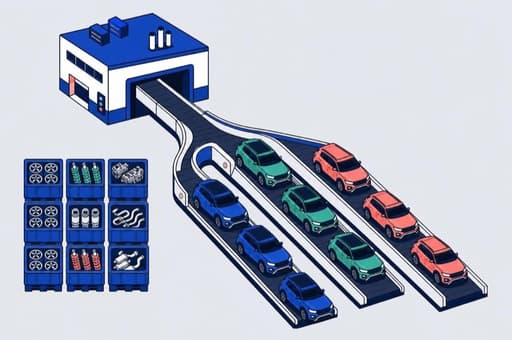
R2
The smaller, lower-priced sport utility vehicle reached its first customers in June 2026. It is Rivian's main bid for higher volume; watch the factory's second shift, cheaper versions, supplier timing, and whether demo drivers place orders.
Competes with Model Y (Tesla) · Equinox EV (Chevrolet)
In plain English
R2 takes Rivian's electric sport utility idea into a smaller body and a lower price range. The first version is the expensive one; a Standard version is listed from $44,990 for 2027, widening the group of people who might buy it.
Customers order directly from Rivian, just as they do with R1. The money comes with each delivery, but the real goal is repetition: many more vehicles moving through the same factory so its people and equipment are not sitting idle. That makes a smooth production increase as important as customer interest.
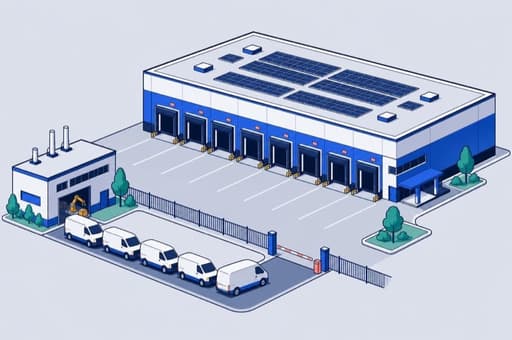
Electric Delivery Van
Electric delivery vans generated roughly $900 million through Amazon in FY2025. That anchor gives Rivian real fleet scale, but results still swing with one customer's purchasing schedule and readiness to charge vans at its depots.
Competes with 2026 Xos SV (Xos) · 2026 ProMaster EV (Ram)
In plain English
A delivery van is a work tool: it runs a fixed route, carries parcels, returns to the same base, and charges there overnight. Rivian builds two sizes for this job, with Amazon buying most of them and other operators able to buy a commercial version.
The buyer pays for each van, while Rivian can also sell software that watches vehicles, chargers, and service needs across the whole group. This is steadier than waiting for individual shoppers, but one very large customer's order timing can make sales jump or dip from quarter to quarter.
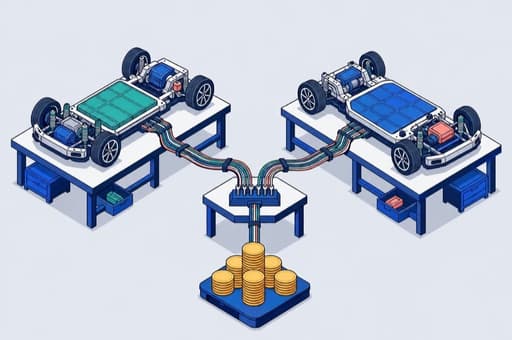
Rivian and Volkswagen Group Technologies
The jointly owned Volkswagen program produced $836 million in FY2025 by building a shared way to organize vehicle computers, wiring, and software. Volkswagen pays ahead for work expected through roughly mid-2028; delivery progress and future launches determine how long this income lasts.
Competes with Snapdragon Digital Chassis (Qualcomm) · Aptiv LINC (Aptiv)
In plain English
Under a modern car's floor is a web of computers, wires, and instructions that make everything from the doors to the battery work together. Rivian and Volkswagen created a jointly owned team to build one simpler pattern that both companies can place in future vehicles.
Volkswagen supplies most of the outside money and pays some of it before the work is finished. Rivian counts portions as sales as engineers complete agreed steps. That turns know-how first built for Rivian's own cars into paid development work, though the income depends heavily on one partner and its launch calendar.
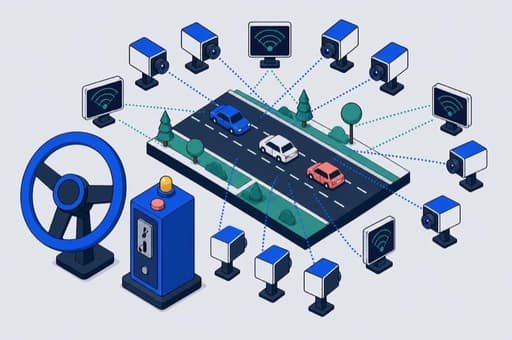
Autonomy+
This paid driving assistant costs $49.99 a month after a trial and began contributing in April 2026. Rivian has not disclosed sales; watch how many owners keep paying and whether promised hands-off features arrive safely.
Competes with Full Self-Driving (Supervised) (Tesla) · Super Cruise (General Motors)
In plain English
Instead of buying another piece of hardware, an owner unlocks driving help already built into the vehicle. Cameras and radar watch the road, while the software can handle parts of a trip under the driver's supervision.
After a free trial, owners either subscribe each month or pay once for lasting access. Because the feature arrives as a download, each additional sale needs little factory work. The hard part is earning trust: Rivian must improve the system, prove it is safe, and persuade owners that the help is worth continuing to pay for.
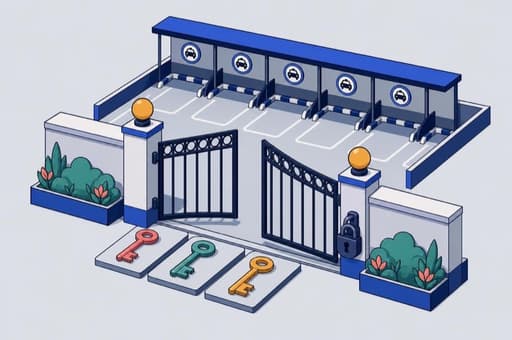
Uber autonomous-vehicle program
The framework points to as many as 50,000 driverless taxis from 2028, but that headline is conditional: most are only an option to discuss later, not orders. Watch technical milestones, approvals, and actual fleet purchases.
Competes with Gravity–Nuro Driver robotaxis (Lucid, Nuro and Uber) · Driverless robotaxis (NVIDIA and Uber)
In plain English
This is still a plan, not a business with paying rides. Rivian is developing R2 vehicles meant to drive without a human at the wheel, while Uber would place those cars on its ride service and Uber or other fleet owners would buy and operate them.
Rivian gets development funding now, but that funding is an investment in the company rather than sales. Vehicle and software income comes only if the technology meets agreed steps, authorities allow it on public roads, and fleet buyers follow through. Uber is also working with other driverless-car suppliers, so Rivian is not its only path.
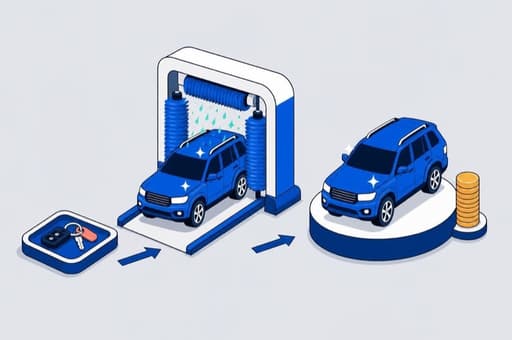
Remarketing
Rivian buys trade-ins and resells used vehicles, creating a second sale from cars already on the road. The contribution is meaningful but uneven; used-car prices, available inventory, and preparation costs decide the result.
Competes with Tesla Pre-Owned (Tesla) · Used electric cars (Carvana)
In plain English
The second trip through Rivian's shop. An owner trades in a vehicle, Rivian takes ownership, checks and prepares it, then sells it to another buyer through its used-vehicle storefront.
Revenue arrives when the title passes to that next owner. The business can make Rivian's direct-sales relationship more useful and give shoppers a lower-priced entry point, but it is less predictable than new-car production. Supply depends on owners trading vehicles in, while the resale price can move before a car is ready to leave the lot.
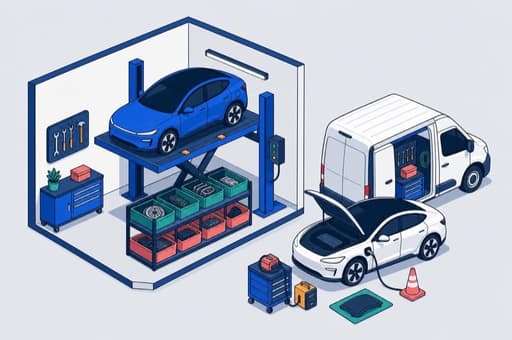
Vehicle Repair and Maintenance
Parts, labor, maintenance, collision work, and mobile visits turn Rivian's growing vehicle population into repeat service sales. Repair helped services grow in Q2 2026; watch technician coverage, parts availability, and how much work is paid rather than covered by warranty.
Competes with Service and Mobile Service (Tesla) · EV and Mobile Service (Ford)
In plain English
Cars keep earning after they leave the showroom when owners pay to fix damage, replace worn parts, or have maintenance done. Rivian performs that work at service centers and can send a mobile technician for jobs that do not need a full shop.
Each completed paid job brings parts-and-labor revenue. More Rivians on the road should mean more opportunities over time, especially as vehicles age. The catch is that electric cars need less routine maintenance, and work covered by Rivian's promise to fix defects is a cost to the company rather than a customer sale.
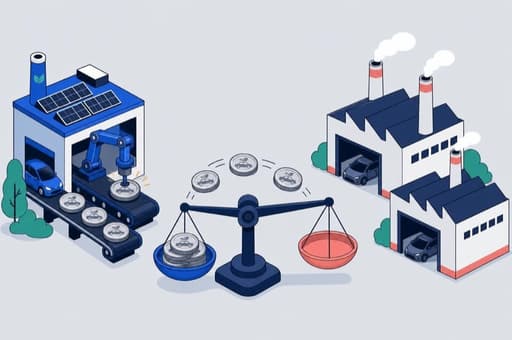
Automotive Regulatory Credits
Selling clean-air credits added $197 million in FY2025 without building a separate product. Rule changes have weakened demand, and management expects a recent burst of credit sales not to repeat, making this useful income but a fragile foundation.
Competes with Automotive regulatory credits (Tesla) · Clean-air and fuel-economy credits (Lucid)
In plain English
Clean-air rules work a little like permission slips. By making electric vehicles, Rivian earns certificates showing that it has met or exceeded certain standards. Automakers that fall short can buy those certificates from Rivian to cover their gap.
Rivian receives cash when it transfers the credits, with little extra manufacturing attached. That makes the sales valuable, but Rivian does not control the market: governments decide the rules and penalties, unnamed automakers decide when to buy, and prices are negotiated. If a penalty disappears, buyers may need fewer slips.


 R1T and R1SRivian's premium electric pickup and seven-seat SUV still provide about half of company sales. They fund the next launch, but demand weakened in a flat U.S. electric-car market, so pricing, lease demand, and factory use matter.
Rivian's premium electric pickup and seven-seat SUV still provide about half of company sales. They fund the next launch, but demand weakened in a flat U.S. electric-car market, so pricing, lease demand, and factory use matter.
In plain English
The R1T is an electric pickup and the R1S is its roomy sport utility sibling. Think of them as the premium shelf in Rivian's store: expensive, distinctive vehicles aimed at buyers who want both everyday transport and outdoor capability.
Rivian sells them directly or sends them into consumer leases through Chase, which buys the vehicle first. Cash arrives when a vehicle is sold; later service and add-ons can bring more. These models still carry the business, so weaker deliveries leave the factory underused and make each vehicle costlier to build.
Competes with Silverado EV (Chevrolet) · Gravity (Lucid)
 R2The smaller, lower-priced sport utility vehicle reached its first customers in June 2026. It is Rivian's main bid for higher volume; watch the factory's second shift, cheaper versions, supplier timing, and whether demo drivers place orders.
The smaller, lower-priced sport utility vehicle reached its first customers in June 2026. It is Rivian's main bid for higher volume; watch the factory's second shift, cheaper versions, supplier timing, and whether demo drivers place orders.
In plain English
R2 takes Rivian's electric sport utility idea into a smaller body and a lower price range. The first version is the expensive one; a Standard version is listed from $44,990 for 2027, widening the group of people who might buy it.
Customers order directly from Rivian, just as they do with R1. The money comes with each delivery, but the real goal is repetition: many more vehicles moving through the same factory so its people and equipment are not sitting idle. That makes a smooth production increase as important as customer interest.
Competes with Model Y (Tesla) · Equinox EV (Chevrolet)
 Electric Delivery VanElectric delivery vans generated roughly $900 million through Amazon in FY2025. That anchor gives Rivian real fleet scale, but results still swing with one customer's purchasing schedule and readiness to charge vans at its depots.
Electric delivery vans generated roughly $900 million through Amazon in FY2025. That anchor gives Rivian real fleet scale, but results still swing with one customer's purchasing schedule and readiness to charge vans at its depots.
In plain English
A delivery van is a work tool: it runs a fixed route, carries parcels, returns to the same base, and charges there overnight. Rivian builds two sizes for this job, with Amazon buying most of them and other operators able to buy a commercial version.
The buyer pays for each van, while Rivian can also sell software that watches vehicles, chargers, and service needs across the whole group. This is steadier than waiting for individual shoppers, but one very large customer's order timing can make sales jump or dip from quarter to quarter.
Competes with 2026 Xos SV (Xos) · 2026 ProMaster EV (Ram)
 Rivian and Volkswagen Group TechnologiesThe jointly owned Volkswagen program produced $836 million in FY2025 by building a shared way to organize vehicle computers, wiring, and software. Volkswagen pays ahead for work expected through roughly mid-2028; delivery progress and future launches determine how long this income lasts.
The jointly owned Volkswagen program produced $836 million in FY2025 by building a shared way to organize vehicle computers, wiring, and software. Volkswagen pays ahead for work expected through roughly mid-2028; delivery progress and future launches determine how long this income lasts.
In plain English
Under a modern car's floor is a web of computers, wires, and instructions that make everything from the doors to the battery work together. Rivian and Volkswagen created a jointly owned team to build one simpler pattern that both companies can place in future vehicles.
Volkswagen supplies most of the outside money and pays some of it before the work is finished. Rivian counts portions as sales as engineers complete agreed steps. That turns know-how first built for Rivian's own cars into paid development work, though the income depends heavily on one partner and its launch calendar.
Competes with Snapdragon Digital Chassis (Qualcomm) · Aptiv LINC (Aptiv)
 Autonomy+This paid driving assistant costs $49.99 a month after a trial and began contributing in April 2026. Rivian has not disclosed sales; watch how many owners keep paying and whether promised hands-off features arrive safely.
This paid driving assistant costs $49.99 a month after a trial and began contributing in April 2026. Rivian has not disclosed sales; watch how many owners keep paying and whether promised hands-off features arrive safely.
In plain English
Instead of buying another piece of hardware, an owner unlocks driving help already built into the vehicle. Cameras and radar watch the road, while the software can handle parts of a trip under the driver's supervision.
After a free trial, owners either subscribe each month or pay once for lasting access. Because the feature arrives as a download, each additional sale needs little factory work. The hard part is earning trust: Rivian must improve the system, prove it is safe, and persuade owners that the help is worth continuing to pay for.
Competes with Full Self-Driving (Supervised) (Tesla) · Super Cruise (General Motors)
 Uber autonomous-vehicle programThe framework points to as many as 50,000 driverless taxis from 2028, but that headline is conditional: most are only an option to discuss later, not orders. Watch technical milestones, approvals, and actual fleet purchases.
The framework points to as many as 50,000 driverless taxis from 2028, but that headline is conditional: most are only an option to discuss later, not orders. Watch technical milestones, approvals, and actual fleet purchases.
In plain English
This is still a plan, not a business with paying rides. Rivian is developing R2 vehicles meant to drive without a human at the wheel, while Uber would place those cars on its ride service and Uber or other fleet owners would buy and operate them.
Rivian gets development funding now, but that funding is an investment in the company rather than sales. Vehicle and software income comes only if the technology meets agreed steps, authorities allow it on public roads, and fleet buyers follow through. Uber is also working with other driverless-car suppliers, so Rivian is not its only path.
Competes with Gravity–Nuro Driver robotaxis (Lucid, Nuro and Uber) · Driverless robotaxis (NVIDIA and Uber)
 RemarketingRivian buys trade-ins and resells used vehicles, creating a second sale from cars already on the road. The contribution is meaningful but uneven; used-car prices, available inventory, and preparation costs decide the result.
Rivian buys trade-ins and resells used vehicles, creating a second sale from cars already on the road. The contribution is meaningful but uneven; used-car prices, available inventory, and preparation costs decide the result.
In plain English
The second trip through Rivian's shop. An owner trades in a vehicle, Rivian takes ownership, checks and prepares it, then sells it to another buyer through its used-vehicle storefront.
Revenue arrives when the title passes to that next owner. The business can make Rivian's direct-sales relationship more useful and give shoppers a lower-priced entry point, but it is less predictable than new-car production. Supply depends on owners trading vehicles in, while the resale price can move before a car is ready to leave the lot.
Competes with Tesla Pre-Owned (Tesla) · Used electric cars (Carvana)
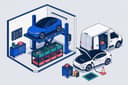 Vehicle Repair and MaintenanceParts, labor, maintenance, collision work, and mobile visits turn Rivian's growing vehicle population into repeat service sales. Repair helped services grow in Q2 2026; watch technician coverage, parts availability, and how much work is paid rather than covered by warranty.
Parts, labor, maintenance, collision work, and mobile visits turn Rivian's growing vehicle population into repeat service sales. Repair helped services grow in Q2 2026; watch technician coverage, parts availability, and how much work is paid rather than covered by warranty.
In plain English
Cars keep earning after they leave the showroom when owners pay to fix damage, replace worn parts, or have maintenance done. Rivian performs that work at service centers and can send a mobile technician for jobs that do not need a full shop.
Each completed paid job brings parts-and-labor revenue. More Rivians on the road should mean more opportunities over time, especially as vehicles age. The catch is that electric cars need less routine maintenance, and work covered by Rivian's promise to fix defects is a cost to the company rather than a customer sale.
Competes with Service and Mobile Service (Tesla) · EV and Mobile Service (Ford)
 Automotive Regulatory CreditsSelling clean-air credits added $197 million in FY2025 without building a separate product. Rule changes have weakened demand, and management expects a recent burst of credit sales not to repeat, making this useful income but a fragile foundation.
Selling clean-air credits added $197 million in FY2025 without building a separate product. Rule changes have weakened demand, and management expects a recent burst of credit sales not to repeat, making this useful income but a fragile foundation.
In plain English
Clean-air rules work a little like permission slips. By making electric vehicles, Rivian earns certificates showing that it has met or exceeded certain standards. Automakers that fall short can buy those certificates from Rivian to cover their gap.
Rivian receives cash when it transfers the credits, with little extra manufacturing attached. That makes the sales valuable, but Rivian does not control the market: governments decide the rules and penalties, unnamed automakers decide when to buy, and prices are negotiated. If a penalty disappears, buyers may need fewer slips.
Competes with Automotive regulatory credits (Tesla) · Clean-air and fuel-economy credits (Lucid)
Named in filings, launches and programs
- RivianOS 2Platform · RampingA shared vehicle-software system for R1 and R2, newly rolling out to eligible R1 vehicles.
- Connect+ServicePaid connectivity, media, and security features attached to eligible consumer vehicles.
- FleetOSPlatformSoftware that lets commercial operators oversee their vehicles, charging, and service from one place.
- Rivian Adventure NetworkEcosystemRivian-run fast chargers, increasingly open to other electric vehicles, with drivers paying for charging.
- Rivian InsuranceServiceRivian arranges policies from outside insurers and earns fees rather than taking the insurance risk itself.
- Rivian Financing and leasingServiceFinancing referrals plus consumer leases through Chase; leased vehicles are already counted in vehicle sales.
- Adventure Gear and accessoriesProduct lineVehicle accessories and merchandise sold directly and through Amazon.
- R3Product · AnnouncedA smaller future crossover with no disclosed launch date or revenue.
- R3XProduct · AnnouncedA performance-focused R3 version with no disclosed launch date or revenue.
- Also, Inc.EcosystemA separately funded small-vehicle venture in which Rivian retains a minority ownership stake.
- Mind RoboticsEcosystemA separately funded factory-software and robotics venture in which Rivian retains a minority ownership stake.
- ChargeScape managed chargingEcosystem · RampingA utility partnership that shifts when enrolled Rivian batteries charge; its business terms are undisclosed.
RivianOS 2Platform · Ramping
A shared vehicle-software system for R1 and R2, newly rolling out to eligible R1 vehicles.
Connect+Service
Paid connectivity, media, and security features attached to eligible consumer vehicles.
FleetOSPlatform
Software that lets commercial operators oversee their vehicles, charging, and service from one place.
Rivian Adventure NetworkEcosystem
Rivian-run fast chargers, increasingly open to other electric vehicles, with drivers paying for charging.
Rivian InsuranceService
Rivian arranges policies from outside insurers and earns fees rather than taking the insurance risk itself.
Rivian Financing and leasingService
Financing referrals plus consumer leases through Chase; leased vehicles are already counted in vehicle sales.
Adventure Gear and accessoriesProduct line
Vehicle accessories and merchandise sold directly and through Amazon.
R3Product · Announced
A smaller future crossover with no disclosed launch date or revenue.
R3XProduct · Announced
A performance-focused R3 version with no disclosed launch date or revenue.
Also, Inc.Ecosystem
A separately funded small-vehicle venture in which Rivian retains a minority ownership stake.
Mind RoboticsEcosystem
A separately funded factory-software and robotics venture in which Rivian retains a minority ownership stake.
ChargeScape managed chargingEcosystem · Ramping
A utility partnership that shifts when enrolled Rivian batteries charge; its business terms are undisclosed.