
ResMed (RMD)
Builds connected sleep-apnea devices, masks, ventilators, and home-care software.
Something off on this page? Send us feedback.
ResMed makes the bedside machines and face masks that keep people breathing steadily through the night, and sells software to the suppliers who hand that equipment out. Most of its money rides on one condition: trouble breathing during sleep. The machine is bought once; the mask parts get replaced for years, and that refill habit is the quieter engine. Its newer bets are still small.
Item facts: FY2026 · year ended June 30, 2026, from filings, earnings calls and company pages.
Judgment weights, not filed revenue
The band summarizes business focus and direction. ~ marks estimates.
6 in detail · 12 more below
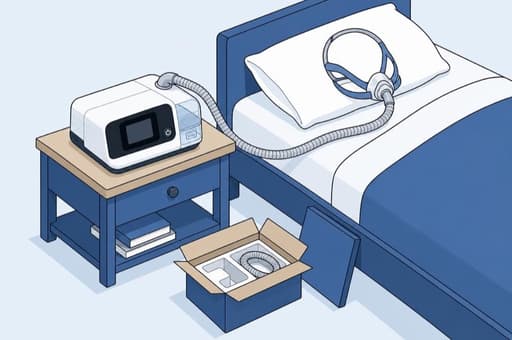
AirSense 11
The bedside air pumps that open every therapy relationship — roughly half of sales. Management plans on only mid-single-digit growth here; the machine's real job is the years of mask refills it sets up. It reached China this past year.
Competes with DreamStation 2 (Philips Respironics) · Luna G3 (React Health) · SleepStyle (Fisher & Paykel Healthcare)
In plain English
Picture a small, quiet air pump on a nightstand. A hose runs from it to a mask, and all night it pushes a steady cushion of air down the throat to keep the airway from closing while the sleeper breathes.
In the United States ResMed does not sell these to patients. Home medical equipment suppliers buy the machines, set them up in people's bedrooms and bill the insurer. The machine is one sale, and it is the moment the relationship starts — everything ResMed earns afterwards, in mask parts and monitoring, hangs off a machine already sitting beside someone's bed.
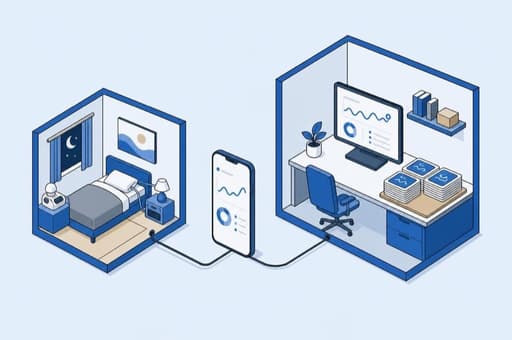
AirView and myAir
Free software wrapped around every machine: an app for the patient, a monitoring screen for the supplier and the doctor. Nobody is billed for it. Its job is keeping people on therapy, because people who stay on therapy keep buying cushions.
Competes with DreamMapper (Philips Respironics) · InfoSmart (Fisher & Paykel Healthcare)
In plain English
The machine has a cellular chip inside it, like a phone with no screen. Overnight it reports how long the person actually wore the mask — the patient sees that in an app called myAir, while the supplier and the doctor see it in a monitoring screen called AirView.
Neither is billed for. They exist because suppliers have to show insurers that the equipment is genuinely being used, and because a patient who keeps wearing the mask keeps ordering replacement parts. A sleep coach built into the app had fielded more than 1.5 million questions by last summer, which also took load off the customer-service desk.
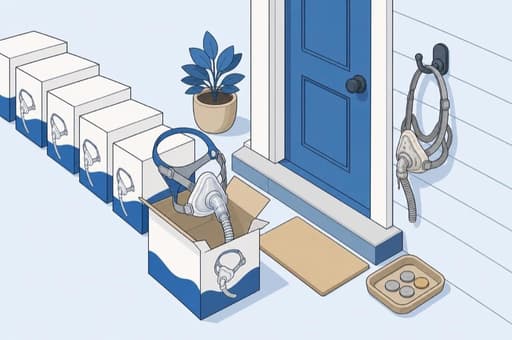
AirFit and AirTouch masks
Cushions, headgear, tubing and filters replaced on an insurer-funded schedule: $2,085M in FY2026, up from $1,840M. It grew 10% in the Americas and 12% elsewhere in the final quarter — the faster-growing half of the hardware.
Competes with Evora and Vitera masks (Fisher & Paykel Healthcare) · DreamWear Nasal / Full Face (Philips Respironics) · React Health mask portfolio (React Health)
In plain English
The part that wears out. A mask is a soft silicone or fabric cushion strapped to the face and joined by a ribbed hose to the machine, and because it presses against skin all night, every night, it gets swapped out on a schedule the insurer already pays for.
That is why this line runs ahead of the machines. Everyone set up in any past year keeps buying cushions, headgear and tubing in the years after, so the queue of people owing ResMed a refill only lengthens. Management plans on high-single-digit growth here against mid-single-digit growth in machines.
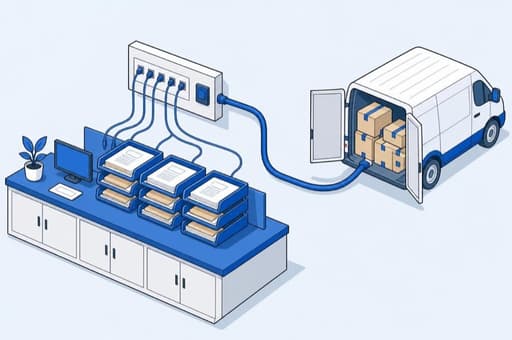
Brightree
Subscription software that runs US home equipment suppliers' orders, deliveries and billing — roughly a twentieth of sales. It also prompts those suppliers' patients to reorder cushions, making it a sales channel as much as a product.
Competes with Bonafide HME (WellSky) · NikoHealth (NikoHealth) · TIMS Software (Computers Unlimited)
In plain English
Think of the paperwork a home medical equipment supplier lives inside all day: orders, deliveries, claims to insurers, reminders that a patient is due for fresh cushions. Brightree is the software that holds all of it, sold as a subscription to those suppliers across the United States, plus pharmacies, brace shops and the outfits that set up drips at home.
It earns twice. The subscription is revenue, and the reorder prompts sitting inside it move ResMed's own cushions. ResMed has agreed to sell its separate, slower-growing senior-care software line, which leaves Brightree and its German counterpart as the software it is keeping.
MEDIFOX DAN
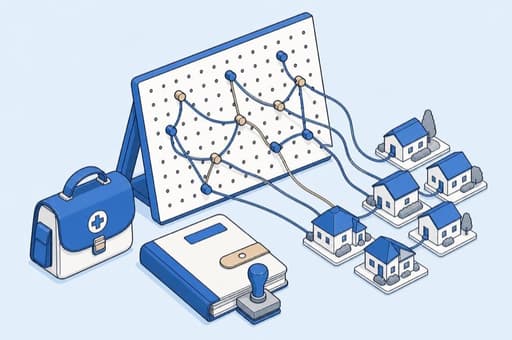
German software for home-nursing and care operators — documentation, staff rosters, route planning and billing — at roughly 3% of sales. It is the piece of the software arm management keeps naming as a grower.
Competes with Vivendi (Connext) · opta data care software (opta data) · SNAP Ambulant (Euregon)
In plain English
In Germany, nurses who visit people at home must document every visit, plan a sensible driving route between patients, and bill the state care insurance in a very particular way. MEDIFOX DAN is the software that does all three, and care operators pay for it month after month.
ResMed bought the Hildesheim company in 2022. It has nothing to do with sleep — it sells to nursing services rather than equipment suppliers, and demand comes from German documentation and billing rules rather than from more people being diagnosed. Three established suppliers, this one among them, hold most of the country's care providers.
Nydro (Noctrix)
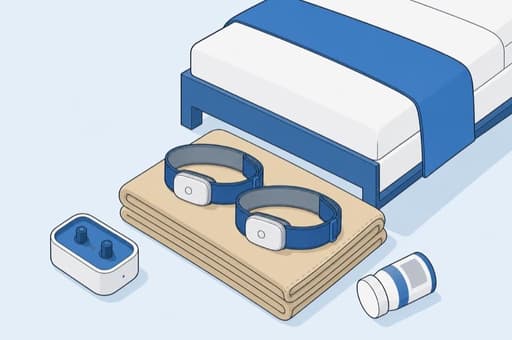
Two leg bands that treat restless legs without drugs, bought for $340M and closed one month before the year ended. Whether insurers agree to pay for a brand-new kind of treatment decides whether it ever matters.
Competes with Dopamine agonist and gabapentinoid pills (multiple drugmakers) · Other drug-free leg-stimulation devices (various makers)
In plain English
Restless legs syndrome is the urge to move your legs at night that makes falling asleep impossible. For people the usual pills have stopped helping, ResMed now sells a pair of bands worn around the calves overnight that gently stimulate the muscles instead.
ResMed paid $340 million for Noctrix Health, the small company behind the device, and sells it as Nydro. Revenue is barely visible yet. The logic is the channel: prescriptions for restless legs come mostly from sleep doctors, and the bands travel out through the same home equipment suppliers ResMed already sells machines to.


 AirSense 11The bedside air pumps that open every therapy relationship — roughly half of sales. Management plans on only mid-single-digit growth here; the machine's real job is the years of mask refills it sets up. It reached China this past year.
The bedside air pumps that open every therapy relationship — roughly half of sales. Management plans on only mid-single-digit growth here; the machine's real job is the years of mask refills it sets up. It reached China this past year.
In plain English
Picture a small, quiet air pump on a nightstand. A hose runs from it to a mask, and all night it pushes a steady cushion of air down the throat to keep the airway from closing while the sleeper breathes.
In the United States ResMed does not sell these to patients. Home medical equipment suppliers buy the machines, set them up in people's bedrooms and bill the insurer. The machine is one sale, and it is the moment the relationship starts — everything ResMed earns afterwards, in mask parts and monitoring, hangs off a machine already sitting beside someone's bed.
Competes with DreamStation 2 (Philips Respironics) · Luna G3 (React Health) · SleepStyle (Fisher & Paykel Healthcare)
 AirView and myAirFree software wrapped around every machine: an app for the patient, a monitoring screen for the supplier and the doctor. Nobody is billed for it. Its job is keeping people on therapy, because people who stay on therapy keep buying cushions.
Free software wrapped around every machine: an app for the patient, a monitoring screen for the supplier and the doctor. Nobody is billed for it. Its job is keeping people on therapy, because people who stay on therapy keep buying cushions.
In plain English
The machine has a cellular chip inside it, like a phone with no screen. Overnight it reports how long the person actually wore the mask — the patient sees that in an app called myAir, while the supplier and the doctor see it in a monitoring screen called AirView.
Neither is billed for. They exist because suppliers have to show insurers that the equipment is genuinely being used, and because a patient who keeps wearing the mask keeps ordering replacement parts. A sleep coach built into the app had fielded more than 1.5 million questions by last summer, which also took load off the customer-service desk.
Competes with DreamMapper (Philips Respironics) · InfoSmart (Fisher & Paykel Healthcare)
 AirFit and AirTouch masksCushions, headgear, tubing and filters replaced on an insurer-funded schedule: $2,085M in FY2026, up from $1,840M. It grew 10% in the Americas and 12% elsewhere in the final quarter — the faster-growing half of the hardware.
Cushions, headgear, tubing and filters replaced on an insurer-funded schedule: $2,085M in FY2026, up from $1,840M. It grew 10% in the Americas and 12% elsewhere in the final quarter — the faster-growing half of the hardware.
In plain English
The part that wears out. A mask is a soft silicone or fabric cushion strapped to the face and joined by a ribbed hose to the machine, and because it presses against skin all night, every night, it gets swapped out on a schedule the insurer already pays for.
That is why this line runs ahead of the machines. Everyone set up in any past year keeps buying cushions, headgear and tubing in the years after, so the queue of people owing ResMed a refill only lengthens. Management plans on high-single-digit growth here against mid-single-digit growth in machines.
Competes with Evora and Vitera masks (Fisher & Paykel Healthcare) · DreamWear Nasal / Full Face (Philips Respironics) · React Health mask portfolio (React Health)
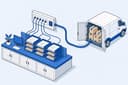 BrightreeSubscription software that runs US home equipment suppliers' orders, deliveries and billing — roughly a twentieth of sales. It also prompts those suppliers' patients to reorder cushions, making it a sales channel as much as a product.
Subscription software that runs US home equipment suppliers' orders, deliveries and billing — roughly a twentieth of sales. It also prompts those suppliers' patients to reorder cushions, making it a sales channel as much as a product.
In plain English
Think of the paperwork a home medical equipment supplier lives inside all day: orders, deliveries, claims to insurers, reminders that a patient is due for fresh cushions. Brightree is the software that holds all of it, sold as a subscription to those suppliers across the United States, plus pharmacies, brace shops and the outfits that set up drips at home.
It earns twice. The subscription is revenue, and the reorder prompts sitting inside it move ResMed's own cushions. ResMed has agreed to sell its separate, slower-growing senior-care software line, which leaves Brightree and its German counterpart as the software it is keeping.
Competes with Bonafide HME (WellSky) · NikoHealth (NikoHealth) · TIMS Software (Computers Unlimited)
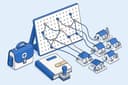 MEDIFOX DANGerman software for home-nursing and care operators — documentation, staff rosters, route planning and billing — at roughly 3% of sales. It is the piece of the software arm management keeps naming as a grower.
German software for home-nursing and care operators — documentation, staff rosters, route planning and billing — at roughly 3% of sales. It is the piece of the software arm management keeps naming as a grower.
In plain English
In Germany, nurses who visit people at home must document every visit, plan a sensible driving route between patients, and bill the state care insurance in a very particular way. MEDIFOX DAN is the software that does all three, and care operators pay for it month after month.
ResMed bought the Hildesheim company in 2022. It has nothing to do with sleep — it sells to nursing services rather than equipment suppliers, and demand comes from German documentation and billing rules rather than from more people being diagnosed. Three established suppliers, this one among them, hold most of the country's care providers.
Competes with Vivendi (Connext) · opta data care software (opta data) · SNAP Ambulant (Euregon)
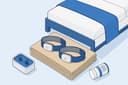 Nydro (Noctrix)Two leg bands that treat restless legs without drugs, bought for $340M and closed one month before the year ended. Whether insurers agree to pay for a brand-new kind of treatment decides whether it ever matters.
Two leg bands that treat restless legs without drugs, bought for $340M and closed one month before the year ended. Whether insurers agree to pay for a brand-new kind of treatment decides whether it ever matters.
In plain English
Restless legs syndrome is the urge to move your legs at night that makes falling asleep impossible. For people the usual pills have stopped helping, ResMed now sells a pair of bands worn around the calves overnight that gently stimulate the muscles instead.
ResMed paid $340 million for Noctrix Health, the small company behind the device, and sells it as Nydro. Revenue is barely visible yet. The logic is the channel: prescriptions for restless legs come mostly from sleep doctors, and the bands travel out through the same home equipment suppliers ResMed already sells machines to.
Competes with Dopamine agonist and gabapentinoid pills (multiple drugmakers) · Other drug-free leg-stimulation devices (various makers)
Named in filings, launches and programs
- AirCurve 11 ST / ST-AProductTwo-pressure machines for harder cases of disordered breathing; launched in the US in the last quarter of FY2026, then four Asia-Pacific markets.
- AirTouch N30i / F30iProductMasks with fabric cushions instead of silicone; the N30i showed 6% better 90-day wear than its silicone twin — the company's evidence that comfort keeps people on therapy.
- AirFit F40ProductResMed's smallest mask of the kind that covers both nose and mouth, launched during FY2026.
- AirMiniProductA pocket-sized travel version of the sleep machine — rarely discussed on results calls, but it keeps regular users covered on the road.
- NightOwlProductA throwaway home test for sleep apnea, from the Ectosense purchase; talked up heavily in late 2025, then barely mentioned since.
- VirtuOxServiceA US home sleep-testing service bought in the last quarter of FY2025; it runs ResMed's own tests and rival ones alike.
- ApneaLinkProductA small home recorder used to diagnose sleep apnea; Cleveland Medical has asserted patent claims involving ApneaLink Air working with AirView.
- SomnowarePlatformSoftware for the lung and sleep medicine practices that test and diagnose patients.
- Snap TechnologiesPlatformThe reorder engine that chases patients for replacement cushions; ResMed said it would extend it to suppliers who do not use Brightree.
- Brightree ReSupplyServiceThe automated refill programme inside Brightree, credited by management as a driver of US mask growth.
- ŌURA partnershipCustomer programAnnounced May 2026: ring wearers flagged for disturbed breathing are routed to ResMed's sleep assessment. Roughly 13,000 had arrived by August, most never diagnosed.
- Smart Comfort and DawnProductArtificial-intelligence therapy features cleared by US regulators during FY2026 and built into the machines.
AirCurve 11 ST / ST-AProduct
Two-pressure machines for harder cases of disordered breathing; launched in the US in the last quarter of FY2026, then four Asia-Pacific markets.
AirTouch N30i / F30iProduct
Masks with fabric cushions instead of silicone; the N30i showed 6% better 90-day wear than its silicone twin — the company's evidence that comfort keeps people on therapy.
AirFit F40Product
ResMed's smallest mask of the kind that covers both nose and mouth, launched during FY2026.
AirMiniProduct
A pocket-sized travel version of the sleep machine — rarely discussed on results calls, but it keeps regular users covered on the road.
NightOwlProduct
A throwaway home test for sleep apnea, from the Ectosense purchase; talked up heavily in late 2025, then barely mentioned since.
VirtuOxService
A US home sleep-testing service bought in the last quarter of FY2025; it runs ResMed's own tests and rival ones alike.
ApneaLinkProduct
A small home recorder used to diagnose sleep apnea; Cleveland Medical has asserted patent claims involving ApneaLink Air working with AirView.
SomnowarePlatform
Software for the lung and sleep medicine practices that test and diagnose patients.
Snap TechnologiesPlatform
The reorder engine that chases patients for replacement cushions; ResMed said it would extend it to suppliers who do not use Brightree.
Brightree ReSupplyService
The automated refill programme inside Brightree, credited by management as a driver of US mask growth.
ŌURA partnershipCustomer program
Announced May 2026: ring wearers flagged for disturbed breathing are routed to ResMed's sleep assessment. Roughly 13,000 had arrived by August, most never diagnosed.
Smart Comfort and DawnProduct
Artificial-intelligence therapy features cleared by US regulators during FY2026 and built into the machines.