
Roku (ROKU)
Connects television viewers to streaming through an operating system, devices, advertising and subscriptions.
Something off on this page? Send us feedback.
Roku writes the software that runs televisions, then sells access to the people watching them. The boxes and TV sets carrying its name are priced to barely break even on purpose — they exist to plant that software in living rooms, where advertising and a cut of other companies' subscriptions do the earning. Roku has agreed to be bought by Fox, and antitrust reviewers are still looking at the deal.
Item facts: FY2025 · year ended Dec 31, 2025, from filings, earnings calls and company pages.
Judgment weights, not filed revenue
The band summarizes business focus and direction. ~ marks estimates.
9 in detail · 14 more below
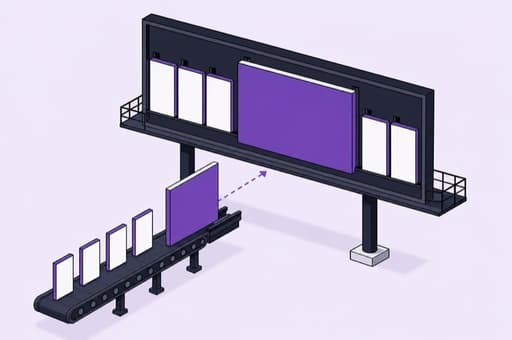
Advertising
Ad slots sold across Roku's TV software — in apps, on the home screen, in its own channel. Roughly half of revenue and speeding up again, about 26% higher in the first half of 2026. One buyer Roku identifies only as "Customer J" was 12% of revenue then.
Competes with Fire TV ad inventory (Amazon) · Tubi ad inventory (Fox) · Samsung Ads (Samsung)
In plain English
Every Roku television and streaming box runs Roku's software, and that software decides what you see first. Roku sells the advertising that comes with it — commercials inside the free apps people watch, and promotion space on the screen that greets you when the TV wakes up.
Brands pay for those slots, and most of that video now arrives through outside ad-buying systems rather than a phone call to a salesperson. Roku keeps the whole fee on space it owns and shares the money with app makers on the rest. It earns the fattest margin of the three parts of Roku — and it rises and falls with what American brands feel like spending.
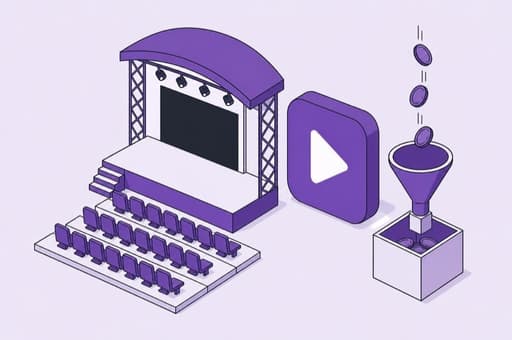
The Roku Channel
Roku's own free channel, paid for by commercials and ranked second on the platform by American viewing time. Roku owns these slots outright, so it keeps the whole ad fee instead of sharing it — its richest ad space, never broken out on its own.
Competes with Tubi (Fox) · Pluto TV (Paramount) · Samsung TV Plus (Samsung)
In plain English
Think of an old free channel that lives inside the television's own menu: movies, shows, live news, all free to watch if you sit through the commercials.
Roku owns this one, which changes the arithmetic. On somebody else's app, Roku sells the advertising and shares the money with whoever made the show; here it keeps the lot. The channel doubles as a shop window, too — it is where Roku sells subscriptions to other companies' services — so one storefront feeds both halves of the business. Its measured share of American viewing depends on who is counting, but it is the largest pool of ad space Roku owns.
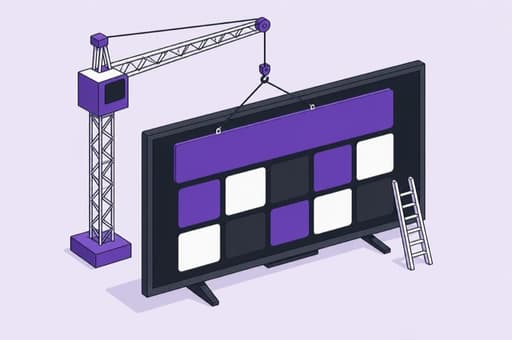
Roku Experience home screen
The advertising and promotion space on the screen every Roku household sees first. Management's top-named revenue project, rebuilt in a large test during 2026, and one reason ad profitability jumped in early 2026.
Competes with Fire TV home-screen ads (Amazon) · Google TV sponsored rows (Alphabet)
In plain English
Switch on a Roku TV and you land on a wall of app squares with a large panel above them. That panel, and the rows around it, are for sale.
A studio pays to put its new series where every household looks first; a brand with no show at all pays for the same spot. Roku owns this space outright, so nothing is shared away — it is the streaming version of the shelf at eye level in a supermarket, and it is the unit management names first. Roku has been rebuilding the layout at scale, which is a real risk as well as an opportunity: this is the screen the whole audience walks through.
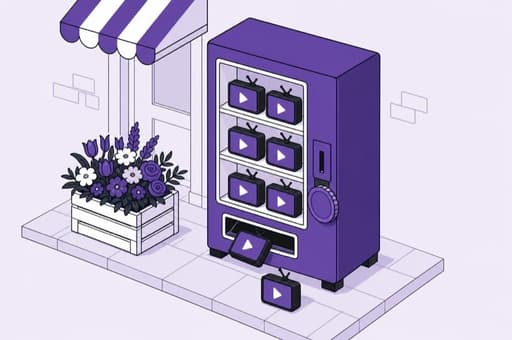
Roku Ads Manager
A self-serve tool letting a small shop buy television commercials from around five hundred dollars, no salesperson involved. Advertiser numbers more than doubled in early 2026 off a small base — likely tens of millions of dollars, not hundreds.
Competes with Amazon Ads self-service (Amazon) · Meta Ads Manager (Meta) · tvScientific performance TV ads (tvScientific)
In plain English
Until recently, putting an advert on television meant an agency, a contract and a budget with several zeros. This is the opposite: a web page where a florist or a furniture shop uploads a clip, picks who should see it, and pays from roughly five hundred dollars.
Roku's tools can clean a rough clip up so it looks right on a big screen, and merchants who run their store through Shopify — the online-shop toolkit — can wire their product catalogue straight into an ad you can buy from. It is small money against the sums flowing through the rest of Roku, and management calls it an entirely new set of advertisers rather than a bigger share of the old ones.
Subscriptions
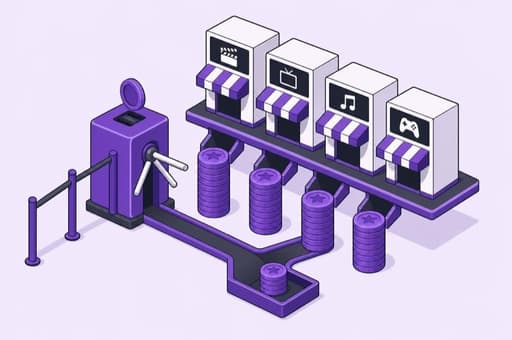
Roku collects the monthly payment for other companies' streaming services and keeps a slice, plus sells two services of its own. The fastest-growing part, up about 28% in the first half of 2026 — on a thinner margin that is still slipping.
Competes with Amazon Channels (Amazon) · Apple TV Channels (Apple) · Signing up direct on Netflix (Netflix)
In plain English
When you sign up for a streaming service on your Roku rather than on that service's own website, Roku takes your card details, collects the monthly payment, and passes the majority along — keeping a cut for being the checkout counter. Management describes tens of millions of subscriptions billed this way.
That cut is the bulk of this business; the rest is two services Roku owns outright. It grows by signing up more partners rather than by the whole category growing, so what matters is which big names agree to be billed through Roku — Apple TV joined in March 2026, Peacock in April — and how many instead push viewers to sign up direct.
Premium Subscriptions
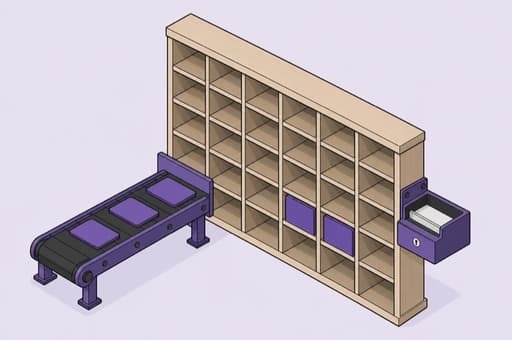
Other companies' paid services — Apple TV, Peacock, Paramount+ and a long tail — sold and watched inside The Roku Channel. Early 2026 was the record sign-up quarter, and the reason subscription profitability is drifting down.
Competes with Amazon Channels (Amazon) · YouTube Primetime Channels (Alphabet) · Apple TV Channels (Apple)
In plain English
A shelf, basically. Inside Roku's own free channel sits a rack of paid services you can add to the same bill and watch without leaving the channel.
The viewer stays the content company's customer; Roku is the shop that made the sale and takes a slice of every month they stay. Adding one big name lifts the whole line at once, which is why Apple TV arriving in March 2026 and Peacock in April mattered. The catch is in the maths: these slices are thinner than what Roku earns selling advertising, so the faster this grows, the more the average profit on a subscription dollar slips.

Frndly TV
A cheap live-TV bundle Roku bought for $185M in 2025 — fifty-plus channels for roughly nine to thirteen dollars a month, about a third of what the nearest rival charges. Worth an estimated $110M or so a year at the 2026 pace.
Competes with Philo skinny bundle (Philo) · Sling Select (EchoStar) · Fubo live-TV bundle (Fubo)
In plain English
Cable television, shrunk. Fifty-odd live channels, including A&E and Hallmark, plus on-demand shows and a recorder in the cloud, for less than the price of a takeaway pizza each month.
Roku bought it in 2025 and sells it as its own service rather than somebody else's, so it keeps the subscription itself instead of a slice — though the channel owners still take their carriage fees. It aims at households walking away from cable who do not want to pay sports-bundle prices. The open question, put to management by an analyst, is whether cheap live bundles are a lasting habit or a stop on the way to app-by-app streaming.
Devices
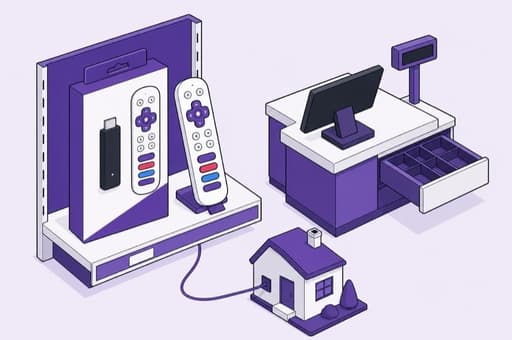
The players, sticks and Roku-branded televisions sold in shops, run deliberately near break-even to win households. Sales fell 16% in early 2026 as selling prices dropped and memory chips grew dearer, though the line turned a small profit in the spring quarter.
Competes with Fire TV Stick (Amazon) · Google TV Streamer (Alphabet) · Vizio SmartCast TVs (Walmart)
In plain English
The little box behind the television and the purple-tabbed remote in the sofa cushions — plus TV sets Roku designs and sells under its own name, now including its first OLED models.
Here is the twist: this hardware is not really meant to make money. Roku prices it to move units, because every unit sold is a household that will later watch advertising and buy subscriptions through Roku. A razor sold at cost, with the blades billed for years afterwards. The pressure point is cost, not demand: memory chips have been getting more expensive, and Roku argues its software needs less memory than rivals' do, which keeps its parts bill lower.
Roku TV Licensing Program
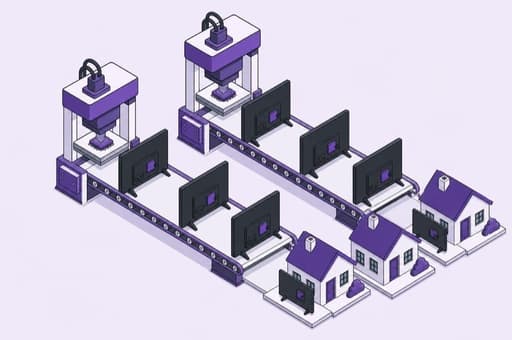
TV makers such as TCL and Hisense build sets that run Roku's software. Those sets are the biggest share of Roku TVs sold and bring Roku no hardware money at all; the payoff is the living room, billed later to advertisers.
Competes with Fire TV Edition licensing (Amazon) · Google TV licensing (Alphabet) · Vidaa, its own TV software (Hisense)
In plain English
Roku hands television manufacturers a finished recipe — the software, the menus, the reference design for the set itself. The manufacturer builds it, puts its own badge on the front, keeps the money from the sale, and ships a television that answers to Roku.
Why give away the hardware profit? Because Roku is after the living room, not the factory: its software passed a hundred million households early in 2026, and each one can be sold to advertisers for years. The fight is over shelf space in the big retailers, which Roku spends hundreds of millions a year on distribution to hold — against Amazon and Google offering manufacturers the same bargain.


 AdvertisingAd slots sold across Roku's TV software — in apps, on the home screen, in its own channel. Roughly half of revenue and speeding up again, about 26% higher in the first half of 2026. One buyer Roku identifies only as "Customer J" was 12% of revenue then.
Ad slots sold across Roku's TV software — in apps, on the home screen, in its own channel. Roughly half of revenue and speeding up again, about 26% higher in the first half of 2026. One buyer Roku identifies only as "Customer J" was 12% of revenue then.
In plain English
Every Roku television and streaming box runs Roku's software, and that software decides what you see first. Roku sells the advertising that comes with it — commercials inside the free apps people watch, and promotion space on the screen that greets you when the TV wakes up.
Brands pay for those slots, and most of that video now arrives through outside ad-buying systems rather than a phone call to a salesperson. Roku keeps the whole fee on space it owns and shares the money with app makers on the rest. It earns the fattest margin of the three parts of Roku — and it rises and falls with what American brands feel like spending.
Competes with Fire TV ad inventory (Amazon) · Tubi ad inventory (Fox) · Samsung Ads (Samsung)
 The Roku ChannelRoku's own free channel, paid for by commercials and ranked second on the platform by American viewing time. Roku owns these slots outright, so it keeps the whole ad fee instead of sharing it — its richest ad space, never broken out on its own.
Roku's own free channel, paid for by commercials and ranked second on the platform by American viewing time. Roku owns these slots outright, so it keeps the whole ad fee instead of sharing it — its richest ad space, never broken out on its own.
In plain English
Think of an old free channel that lives inside the television's own menu: movies, shows, live news, all free to watch if you sit through the commercials.
Roku owns this one, which changes the arithmetic. On somebody else's app, Roku sells the advertising and shares the money with whoever made the show; here it keeps the lot. The channel doubles as a shop window, too — it is where Roku sells subscriptions to other companies' services — so one storefront feeds both halves of the business. Its measured share of American viewing depends on who is counting, but it is the largest pool of ad space Roku owns.
Competes with Tubi (Fox) · Pluto TV (Paramount) · Samsung TV Plus (Samsung)
 Roku Experience home screenThe advertising and promotion space on the screen every Roku household sees first. Management's top-named revenue project, rebuilt in a large test during 2026, and one reason ad profitability jumped in early 2026.
The advertising and promotion space on the screen every Roku household sees first. Management's top-named revenue project, rebuilt in a large test during 2026, and one reason ad profitability jumped in early 2026.
In plain English
Switch on a Roku TV and you land on a wall of app squares with a large panel above them. That panel, and the rows around it, are for sale.
A studio pays to put its new series where every household looks first; a brand with no show at all pays for the same spot. Roku owns this space outright, so nothing is shared away — it is the streaming version of the shelf at eye level in a supermarket, and it is the unit management names first. Roku has been rebuilding the layout at scale, which is a real risk as well as an opportunity: this is the screen the whole audience walks through.
Competes with Fire TV home-screen ads (Amazon) · Google TV sponsored rows (Alphabet)
 Roku Ads ManagerA self-serve tool letting a small shop buy television commercials from around five hundred dollars, no salesperson involved. Advertiser numbers more than doubled in early 2026 off a small base — likely tens of millions of dollars, not hundreds.
A self-serve tool letting a small shop buy television commercials from around five hundred dollars, no salesperson involved. Advertiser numbers more than doubled in early 2026 off a small base — likely tens of millions of dollars, not hundreds.
In plain English
Until recently, putting an advert on television meant an agency, a contract and a budget with several zeros. This is the opposite: a web page where a florist or a furniture shop uploads a clip, picks who should see it, and pays from roughly five hundred dollars.
Roku's tools can clean a rough clip up so it looks right on a big screen, and merchants who run their store through Shopify — the online-shop toolkit — can wire their product catalogue straight into an ad you can buy from. It is small money against the sums flowing through the rest of Roku, and management calls it an entirely new set of advertisers rather than a bigger share of the old ones.
Competes with Amazon Ads self-service (Amazon) · Meta Ads Manager (Meta) · tvScientific performance TV ads (tvScientific)
 SubscriptionsRoku collects the monthly payment for other companies' streaming services and keeps a slice, plus sells two services of its own. The fastest-growing part, up about 28% in the first half of 2026 — on a thinner margin that is still slipping.
Roku collects the monthly payment for other companies' streaming services and keeps a slice, plus sells two services of its own. The fastest-growing part, up about 28% in the first half of 2026 — on a thinner margin that is still slipping.
In plain English
When you sign up for a streaming service on your Roku rather than on that service's own website, Roku takes your card details, collects the monthly payment, and passes the majority along — keeping a cut for being the checkout counter. Management describes tens of millions of subscriptions billed this way.
That cut is the bulk of this business; the rest is two services Roku owns outright. It grows by signing up more partners rather than by the whole category growing, so what matters is which big names agree to be billed through Roku — Apple TV joined in March 2026, Peacock in April — and how many instead push viewers to sign up direct.
Competes with Amazon Channels (Amazon) · Apple TV Channels (Apple) · Signing up direct on Netflix (Netflix)
 Premium SubscriptionsOther companies' paid services — Apple TV, Peacock, Paramount+ and a long tail — sold and watched inside The Roku Channel. Early 2026 was the record sign-up quarter, and the reason subscription profitability is drifting down.
Other companies' paid services — Apple TV, Peacock, Paramount+ and a long tail — sold and watched inside The Roku Channel. Early 2026 was the record sign-up quarter, and the reason subscription profitability is drifting down.
In plain English
A shelf, basically. Inside Roku's own free channel sits a rack of paid services you can add to the same bill and watch without leaving the channel.
The viewer stays the content company's customer; Roku is the shop that made the sale and takes a slice of every month they stay. Adding one big name lifts the whole line at once, which is why Apple TV arriving in March 2026 and Peacock in April mattered. The catch is in the maths: these slices are thinner than what Roku earns selling advertising, so the faster this grows, the more the average profit on a subscription dollar slips.
Competes with Amazon Channels (Amazon) · YouTube Primetime Channels (Alphabet) · Apple TV Channels (Apple)
 Frndly TVA cheap live-TV bundle Roku bought for $185M in 2025 — fifty-plus channels for roughly nine to thirteen dollars a month, about a third of what the nearest rival charges. Worth an estimated $110M or so a year at the 2026 pace.
A cheap live-TV bundle Roku bought for $185M in 2025 — fifty-plus channels for roughly nine to thirteen dollars a month, about a third of what the nearest rival charges. Worth an estimated $110M or so a year at the 2026 pace.
In plain English
Cable television, shrunk. Fifty-odd live channels, including A&E and Hallmark, plus on-demand shows and a recorder in the cloud, for less than the price of a takeaway pizza each month.
Roku bought it in 2025 and sells it as its own service rather than somebody else's, so it keeps the subscription itself instead of a slice — though the channel owners still take their carriage fees. It aims at households walking away from cable who do not want to pay sports-bundle prices. The open question, put to management by an analyst, is whether cheap live bundles are a lasting habit or a stop on the way to app-by-app streaming.
Competes with Philo skinny bundle (Philo) · Sling Select (EchoStar) · Fubo live-TV bundle (Fubo)
 DevicesThe players, sticks and Roku-branded televisions sold in shops, run deliberately near break-even to win households. Sales fell 16% in early 2026 as selling prices dropped and memory chips grew dearer, though the line turned a small profit in the spring quarter.
The players, sticks and Roku-branded televisions sold in shops, run deliberately near break-even to win households. Sales fell 16% in early 2026 as selling prices dropped and memory chips grew dearer, though the line turned a small profit in the spring quarter.
In plain English
The little box behind the television and the purple-tabbed remote in the sofa cushions — plus TV sets Roku designs and sells under its own name, now including its first OLED models.
Here is the twist: this hardware is not really meant to make money. Roku prices it to move units, because every unit sold is a household that will later watch advertising and buy subscriptions through Roku. A razor sold at cost, with the blades billed for years afterwards. The pressure point is cost, not demand: memory chips have been getting more expensive, and Roku argues its software needs less memory than rivals' do, which keeps its parts bill lower.
Competes with Fire TV Stick (Amazon) · Google TV Streamer (Alphabet) · Vizio SmartCast TVs (Walmart)
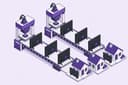 Roku TV Licensing ProgramTV makers such as TCL and Hisense build sets that run Roku's software. Those sets are the biggest share of Roku TVs sold and bring Roku no hardware money at all; the payoff is the living room, billed later to advertisers.
TV makers such as TCL and Hisense build sets that run Roku's software. Those sets are the biggest share of Roku TVs sold and bring Roku no hardware money at all; the payoff is the living room, billed later to advertisers.
In plain English
Roku hands television manufacturers a finished recipe — the software, the menus, the reference design for the set itself. The manufacturer builds it, puts its own badge on the front, keeps the money from the sale, and ships a television that answers to Roku.
Why give away the hardware profit? Because Roku is after the living room, not the factory: its software passed a hundred million households early in 2026, and each one can be sold to advertisers for years. The fight is over shelf space in the big retailers, which Roku spends hundreds of millions a year on distribution to hold — against Amazon and Google offering manufacturers the same bargain.
Competes with Fire TV Edition licensing (Amazon) · Google TV licensing (Alphabet) · Vidaa, its own TV software (Hisense)
Named in filings, launches and programs
- HowdyServiceRoku's own ad-free service at $2.99 a month, launched August 2025 with about ten thousand hours of licensed films and shows; also on Amazon Prime and in Mexico.
- Third-party ad-buying partnersCustomer programMost Roku video ads now arrive through outside buying systems — Amazon, The Trade Desk, Yahoo, Google's DV360; that spending rose over 40% in early 2026.
- Roku Data CloudPlatformA sealed room where advertisers match their own customer lists against Roku viewing data; DICK'S Sporting Goods was the first partner.
- Roku ExchangePlatformRoku's own marketplace, the door through which outside ad-buying systems reach its ad slots.
- Roku PayServiceThe checkout plumbing behind subscriptions, rentals and events — the reason Roku can put someone else's service on your bill.
- Roku OriginalsProduct lineA small slate of shows Roku pays for itself; the Laguna Beach twentieth-anniversary reunion was its biggest unscripted series so far.
- Roku-branded TVs — Select, Plus, Pro SeriesProduct lineRoku's own television sets, from the budget Select range up to the Pro Series introduced in 2024; counted inside devices.
- Roku Pro Series OLED and LX OLEDProductRoku's first televisions with OLED screens, launched September 2026 at the top of its own TV range.
- Hero brand TVsBrandA second Roku television brand, sold only at Target.
- Roku streaming players and sticksProduct lineThe original hardware: small boxes and sticks that turn any television into a Roku. Falling selling prices drove the early-2026 devices decline.
- Roku smart home and audioProduct lineCameras, doorbells, lights and speakers sold under the Roku name, counted inside devices.
- Roku LabsProduct · AnnouncedA home-screen tile for experimental apps — weather, stocks, a dashboard — added September 2026.
- Fairground AI Creator TVEcosystemAn outside round-the-clock free channel of AI-made films, added to The Roku Channel in August 2026.
- Branded buttons on the remoteProductStreaming services pay for their own dedicated button on the Roku remote; the money lands with subscription distribution.
HowdyService
Roku's own ad-free service at $2.99 a month, launched August 2025 with about ten thousand hours of licensed films and shows; also on Amazon Prime and in Mexico.
Third-party ad-buying partnersCustomer program
Most Roku video ads now arrive through outside buying systems — Amazon, The Trade Desk, Yahoo, Google's DV360; that spending rose over 40% in early 2026.
Roku Data CloudPlatform
A sealed room where advertisers match their own customer lists against Roku viewing data; DICK'S Sporting Goods was the first partner.
Roku ExchangePlatform
Roku's own marketplace, the door through which outside ad-buying systems reach its ad slots.
Roku PayService
The checkout plumbing behind subscriptions, rentals and events — the reason Roku can put someone else's service on your bill.
Roku OriginalsProduct line
A small slate of shows Roku pays for itself; the Laguna Beach twentieth-anniversary reunion was its biggest unscripted series so far.
Roku-branded TVs — Select, Plus, Pro SeriesProduct line
Roku's own television sets, from the budget Select range up to the Pro Series introduced in 2024; counted inside devices.
Roku Pro Series OLED and LX OLEDProduct
Roku's first televisions with OLED screens, launched September 2026 at the top of its own TV range.
Hero brand TVsBrand
A second Roku television brand, sold only at Target.
Roku streaming players and sticksProduct line
The original hardware: small boxes and sticks that turn any television into a Roku. Falling selling prices drove the early-2026 devices decline.
Roku smart home and audioProduct line
Cameras, doorbells, lights and speakers sold under the Roku name, counted inside devices.
Roku LabsProduct · Announced
A home-screen tile for experimental apps — weather, stocks, a dashboard — added September 2026.
Fairground AI Creator TVEcosystem
An outside round-the-clock free channel of AI-made films, added to The Roku Channel in August 2026.
Branded buttons on the remoteProduct
Streaming services pay for their own dedicated button on the Roku remote; the money lands with subscription distribution.