
SBA Communications (SBAC)
Leases multi-tenant tower space and builds sites for wireless carriers.
Something off on this page? Send us feedback.
SBA owns the tall steel towers that hold mobile-phone antennas, and rents space on them under leases that run for years. Three American carriers pay most of the bills, and that home business is slowly shrinking as old leases fall away. The growth now comes from Latin America and Africa, with a small early bet on parking computers at the foot of the towers.
Item facts: FY2025 · year ended December 31, 2025, from filings, earnings calls and company pages.
Judgment weights, not filed revenue
The band summarizes business focus and direction. ~ marks estimates.
6 in detail · 9 more below
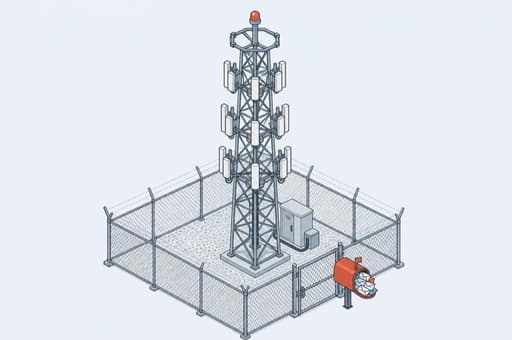
Domestic Site Leasing
Antenna space on about 17,400 US and territory sites, rented to carriers and to public-safety and utility users. It is guided lower for 2026, because cancelled Sprint and EchoStar leases outweigh the new ones being signed.
Competes with US tower portfolio (American Tower) · Towers segment (Crown Castle)
In plain English
Think of a tower as a very tall apartment building where the only tenants are phone companies. SBA owns the steel, the fence and usually the ground underneath; a carrier bolts its antennas at an agreed height and pays monthly rent for that spot.
The rent steps up by a set amount every year, and when a carrier hangs newer gear on a spot it already rents, it pays more. Running the tower costs about the same whether one tenant or three are on it, so nearly every extra dollar of rent stays with SBA. Across the whole portfolio sites carry 1.8 tenants on average, so there is room left above.
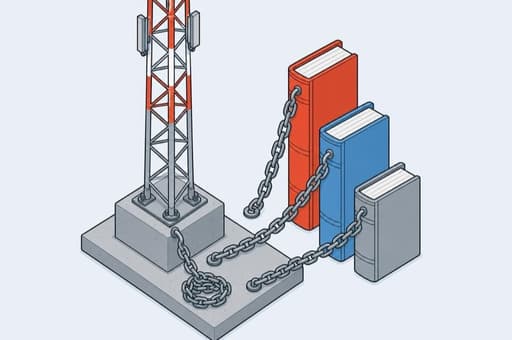
US carrier master leases
Three portfolio-wide contracts set almost all of the US economics: T-Mobile, AT&T and Verizon together paid 66.5% of 2025 revenue. Verizon signed a fresh long-term deal in late 2025; T-Mobile's was said to run out around late 2026, with no renewal announced.
Competes with Carrier master leases (American Tower) · Carrier master leases (Crown Castle) · Self-built towers and small cells (Verizon)
In plain English
Rather than haggle tower by tower, each big carrier signs one contract covering thousands of SBA sites at once — a national account instead of a separate bill from every branch.
The shape of each contract decides how much SBA earns when that carrier upgrades. AT&T's is described as largely locked in: it pays a bonus yearly step-up for broad access, so extra equipment does not turn into much extra rent. Verizon's newer one is more linear — more activity, more money — and carries a minimum amount of new tower space Verizon commits to take over ten years, a figure the company kept to itself.
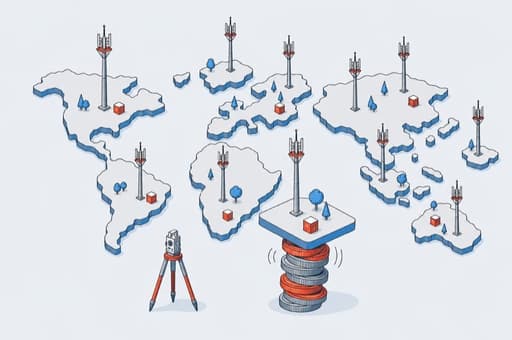
International Site Leasing
About 29,000 towers across twelve markets — Brazil is the largest of them, alongside Chile, Ecuador, Peru, six Central American countries, South Africa and Tanzania. Quarterly revenue climbed from $155.2M to $211.4M over six quarters; 2026 is management's expected peak for cancellations abroad.
Competes with Latin America segment (American Tower) · Africa and Latin America towers (IHS Towers)
In plain English
Same business, different countries. SBA buys towers from local phone companies, then rents the space back to them and to their rivals.
Overseas rent usually rises with local inflation instead of a fixed yearly step, so a weaker local currency quietly shaves the dollars that come home — the Brazilian real was behind the only change to this year's forecast. Towers are also thinner on the ground there: management cites a study putting Brazil at roughly four sites per ten thousand people against about sixteen in the US, which is the argument for putting up more of them and filling them.
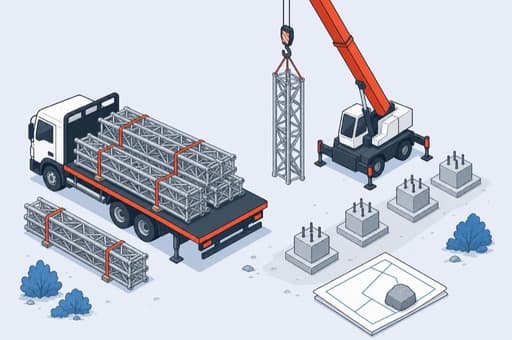
Millicom (Tigo) Central America towers
Over 7,000 Central American towers bought from Millicom for about $975M in initial cash, with a fifteen-year lease in US dollars and an agreement to build more. SBA now holds over 10,500 sites in the region; the question is how fast new builds turn into rent.
Competes with Central American tower portfolios (Continental Towers) · Latin America bolt-on acquisitions (American Tower)
In plain English
One purchase, not a slow accumulation. Millicom — the Latin American phone group that trades under the name Tigo — sold SBA more than seven thousand of its Central American towers and signed a fifteen-year lease to keep using them, priced in US dollars rather than local money.
That makes this rent unusually predictable: no exchange-rate worry on this slice. The deal also came with an arrangement for SBA to build new towers where Tigo wants coverage, and most of a record building year went there. In early 2026 SBA bought the land under most of its Guatemalan towers, turning a ground rent it used to pay out into dirt it owns.
Site Development Services
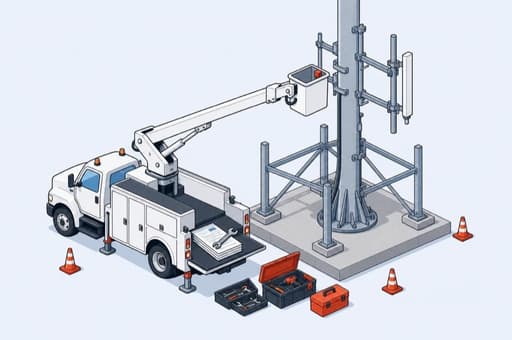
Finding, zoning, permitting and building cell sites for the same three carriers. It reached $244.5M in 2025 — management called it the second-best services year in company history — and is guided down to $190–210M for 2026.
Competes with Network deployment services (Ericsson) · Network deployment services (Nokia)
In plain English
The unglamorous half-brother of the rent business. When a carrier needs a site located, zoned, permitted and physically built or upgraded, SBA's crews do the job for a fee, for the same three customers who rent the towers.
It is paid project by project, so the money arrives in lumps and thins out whenever carriers pause their build plans. Roughly eighteen cents of every dollar of this work is profit, against close to eighty cents on tower rent — which is why a line worth almost a tenth of sales counts for very little of the profit. It is sold alongside tower access as one package.
SBA Edge
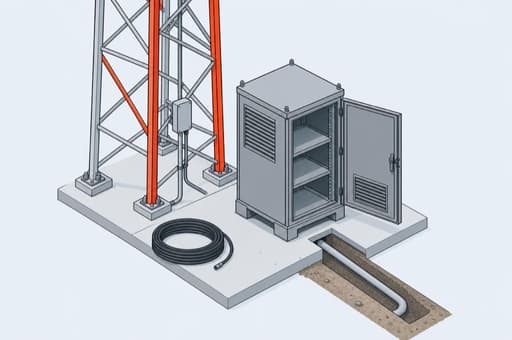
Small computer cabinets at tower sites, aimed at AI work that has to sit close to the user. Nothing sold yet and only a few trial installs; management says roughly half the US portfolio suits the uses being discussed.
Competes with Colocation data centres (Equinix) · Data centre campuses (Digital Realty) · US data centre assets (American Tower)
In plain English
Picture a fridge-sized computer cabinet at the bottom of a tower instead of in a warehouse full of servers hundreds of miles away.
The pitch is that some AI jobs push a lot of data up from phones and cameras and need a fast answer, so doing the work near the user beats shipping it across the country — and the giant server warehouses are running into power limits anyway. SBA's sites already have land, fencing and a power connection, though how much power each one can supply is the limit today. Nothing has been sold: talks with several unnamed parties, each deployment small.


 Domestic Site LeasingAntenna space on about 17,400 US and territory sites, rented to carriers and to public-safety and utility users. It is guided lower for 2026, because cancelled Sprint and EchoStar leases outweigh the new ones being signed.
Antenna space on about 17,400 US and territory sites, rented to carriers and to public-safety and utility users. It is guided lower for 2026, because cancelled Sprint and EchoStar leases outweigh the new ones being signed.
In plain English
Think of a tower as a very tall apartment building where the only tenants are phone companies. SBA owns the steel, the fence and usually the ground underneath; a carrier bolts its antennas at an agreed height and pays monthly rent for that spot.
The rent steps up by a set amount every year, and when a carrier hangs newer gear on a spot it already rents, it pays more. Running the tower costs about the same whether one tenant or three are on it, so nearly every extra dollar of rent stays with SBA. Across the whole portfolio sites carry 1.8 tenants on average, so there is room left above.
Competes with US tower portfolio (American Tower) · Towers segment (Crown Castle)
 US carrier master leasesThree portfolio-wide contracts set almost all of the US economics: T-Mobile, AT&T and Verizon together paid 66.5% of 2025 revenue. Verizon signed a fresh long-term deal in late 2025; T-Mobile's was said to run out around late 2026, with no renewal announced.
Three portfolio-wide contracts set almost all of the US economics: T-Mobile, AT&T and Verizon together paid 66.5% of 2025 revenue. Verizon signed a fresh long-term deal in late 2025; T-Mobile's was said to run out around late 2026, with no renewal announced.
In plain English
Rather than haggle tower by tower, each big carrier signs one contract covering thousands of SBA sites at once — a national account instead of a separate bill from every branch.
The shape of each contract decides how much SBA earns when that carrier upgrades. AT&T's is described as largely locked in: it pays a bonus yearly step-up for broad access, so extra equipment does not turn into much extra rent. Verizon's newer one is more linear — more activity, more money — and carries a minimum amount of new tower space Verizon commits to take over ten years, a figure the company kept to itself.
Competes with Carrier master leases (American Tower) · Carrier master leases (Crown Castle) · Self-built towers and small cells (Verizon)
 International Site LeasingAbout 29,000 towers across twelve markets — Brazil is the largest of them, alongside Chile, Ecuador, Peru, six Central American countries, South Africa and Tanzania. Quarterly revenue climbed from $155.2M to $211.4M over six quarters; 2026 is management's expected peak for cancellations abroad.
About 29,000 towers across twelve markets — Brazil is the largest of them, alongside Chile, Ecuador, Peru, six Central American countries, South Africa and Tanzania. Quarterly revenue climbed from $155.2M to $211.4M over six quarters; 2026 is management's expected peak for cancellations abroad.
In plain English
Same business, different countries. SBA buys towers from local phone companies, then rents the space back to them and to their rivals.
Overseas rent usually rises with local inflation instead of a fixed yearly step, so a weaker local currency quietly shaves the dollars that come home — the Brazilian real was behind the only change to this year's forecast. Towers are also thinner on the ground there: management cites a study putting Brazil at roughly four sites per ten thousand people against about sixteen in the US, which is the argument for putting up more of them and filling them.
Competes with Latin America segment (American Tower) · Africa and Latin America towers (IHS Towers)
 Millicom (Tigo) Central America towersOver 7,000 Central American towers bought from Millicom for about $975M in initial cash, with a fifteen-year lease in US dollars and an agreement to build more. SBA now holds over 10,500 sites in the region; the question is how fast new builds turn into rent.
Over 7,000 Central American towers bought from Millicom for about $975M in initial cash, with a fifteen-year lease in US dollars and an agreement to build more. SBA now holds over 10,500 sites in the region; the question is how fast new builds turn into rent.
In plain English
One purchase, not a slow accumulation. Millicom — the Latin American phone group that trades under the name Tigo — sold SBA more than seven thousand of its Central American towers and signed a fifteen-year lease to keep using them, priced in US dollars rather than local money.
That makes this rent unusually predictable: no exchange-rate worry on this slice. The deal also came with an arrangement for SBA to build new towers where Tigo wants coverage, and most of a record building year went there. In early 2026 SBA bought the land under most of its Guatemalan towers, turning a ground rent it used to pay out into dirt it owns.
Competes with Central American tower portfolios (Continental Towers) · Latin America bolt-on acquisitions (American Tower)
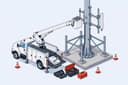 Site Development ServicesFinding, zoning, permitting and building cell sites for the same three carriers. It reached $244.5M in 2025 — management called it the second-best services year in company history — and is guided down to $190–210M for 2026.
Finding, zoning, permitting and building cell sites for the same three carriers. It reached $244.5M in 2025 — management called it the second-best services year in company history — and is guided down to $190–210M for 2026.
In plain English
The unglamorous half-brother of the rent business. When a carrier needs a site located, zoned, permitted and physically built or upgraded, SBA's crews do the job for a fee, for the same three customers who rent the towers.
It is paid project by project, so the money arrives in lumps and thins out whenever carriers pause their build plans. Roughly eighteen cents of every dollar of this work is profit, against close to eighty cents on tower rent — which is why a line worth almost a tenth of sales counts for very little of the profit. It is sold alongside tower access as one package.
Competes with Network deployment services (Ericsson) · Network deployment services (Nokia)
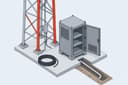 SBA EdgeSmall computer cabinets at tower sites, aimed at AI work that has to sit close to the user. Nothing sold yet and only a few trial installs; management says roughly half the US portfolio suits the uses being discussed.
Small computer cabinets at tower sites, aimed at AI work that has to sit close to the user. Nothing sold yet and only a few trial installs; management says roughly half the US portfolio suits the uses being discussed.
In plain English
Picture a fridge-sized computer cabinet at the bottom of a tower instead of in a warehouse full of servers hundreds of miles away.
The pitch is that some AI jobs push a lot of data up from phones and cameras and need a fast answer, so doing the work near the user beats shipping it across the country — and the giant server warehouses are running into power limits anyway. SBA's sites already have land, fencing and a power connection, though how much power each one can supply is the limit today. Nothing has been sold: talks with several unnamed parties, each deployment small.
Competes with Colocation data centres (Equinix) · Data centre campuses (Digital Realty) · US data centre assets (American Tower)
Named in filings, launches and programs
- New tower build programmeEcosystemTowers built to order rather than bought — up to 800 planned for 2025, the most in over twenty years, and 109 more in the second quarter of 2026.
- Land and ground-lease purchasesServiceSBA steadily buys the dirt under its own towers; about 71% of structures now sit on owned or long-controlled land, capping the largest cost line.
- Brazil portfolioSegmentOver 12,000 sites and the second-largest market after the US; it carries most of the overseas lease cancellations and the currency swings.
- Africa portfolio — South Africa and TanzaniaSegmentTowers in South Africa and Tanzania, which management says earn the highest return on money invested of anything the company owns.
- Telefónica leasesCustomer programTelefónica is the largest tenant abroad, at roughly 21–22% of international site leasing revenue.
- DAS, small cells and in-building wirelessProduct lineShared indoor coverage systems for offices, hospitals, apartment blocks and venues — one set of gear that every carrier's customers can use.
- Fibre shelters and cabinetsProduct lineQuick-to-install huts and roadside boxes that house fibre-optic and radio gear, sold alongside rooftop and other non-tower sites.
- Public safety networksServiceConnectivity for emergency services, listed among the company's site and connectivity solutions.
- Regional and standalone data centresServiceA handful of data centres SBA already owns and runs; management has said it will not add more of this kind.
New tower build programmeEcosystem
Towers built to order rather than bought — up to 800 planned for 2025, the most in over twenty years, and 109 more in the second quarter of 2026.
Land and ground-lease purchasesService
SBA steadily buys the dirt under its own towers; about 71% of structures now sit on owned or long-controlled land, capping the largest cost line.
Brazil portfolioSegment
Over 12,000 sites and the second-largest market after the US; it carries most of the overseas lease cancellations and the currency swings.
Africa portfolio — South Africa and TanzaniaSegment
Towers in South Africa and Tanzania, which management says earn the highest return on money invested of anything the company owns.
Telefónica leasesCustomer program
Telefónica is the largest tenant abroad, at roughly 21–22% of international site leasing revenue.
DAS, small cells and in-building wirelessProduct line
Shared indoor coverage systems for offices, hospitals, apartment blocks and venues — one set of gear that every carrier's customers can use.
Fibre shelters and cabinetsProduct line
Quick-to-install huts and roadside boxes that house fibre-optic and radio gear, sold alongside rooftop and other non-tower sites.
Public safety networksService
Connectivity for emergency services, listed among the company's site and connectivity solutions.
Regional and standalone data centresService
A handful of data centres SBA already owns and runs; management has said it will not add more of this kind.