Starbucks (SBUX)
Operates and licenses coffeehouses and sells packaged coffee through retail partners.
Something off on this page? Send us feedback.
Starbucks sells drinks and food chiefly through stores it runs itself, with North America doing most of the heavy lifting. It is trying to restore faster, more reliable service at home while shifting more overseas growth—especially China—to partners who fund and operate the shops. Grocery shelves and bottled drinks are a small but highly profitable extension of the brand.
Item facts: FY2025 · year ended Sep 28, 2025, from filings, earnings calls and company pages.
Judgment weights, not filed revenue
The band summarizes business focus and direction. ~ marks estimates.
8 in detail · 12 more below
North America Company-Operated Coffeehouses
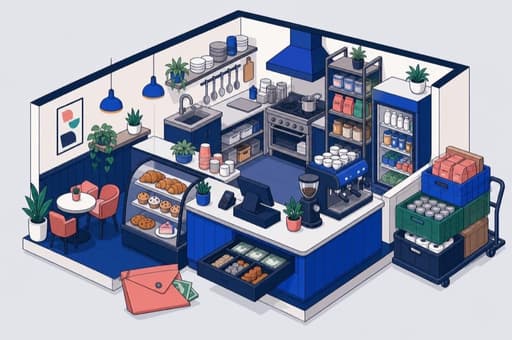
Starbucks' own U.S. and Canadian cafés are the cash engine, bringing in $24.79B in FY2025. Sales grew in the latest quarter, but extra staffing squeezed what each sales dollar left behind.
Competes with Dunkin coffeehouses (Inspire Brands) · Dutch Bros drive-thru shops (Dutch Bros)
In plain English
This is the Starbucks most people picture: a café, drive-through, app pickup counter, or delivery order where Starbucks controls the site, staff, menu, prices, and customer payment. North America supplies most of the company's sales.
Each visit turns into money through the drink and food total at checkout. Starbucks keeps that receipt, then pays for workers, rent, ingredients, packaging, and equipment. The current repair job is simple to describe but hard to execute: serve people faster and more consistently without letting the added labor eat too deeply into what the stores earn.
Beverages
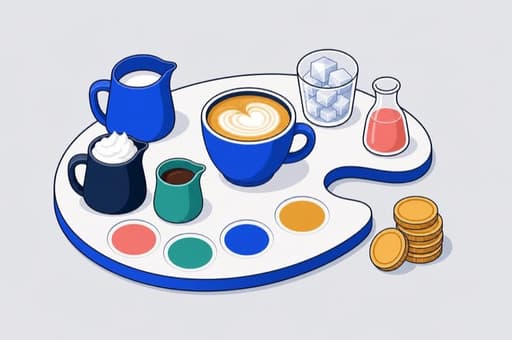
Coffee, tea, fruit-and-caffeine Refreshers, blended drinks, and add-ons produced $22.54B in FY2025. Drinks still lead the menu, though their share has recently edged down while Refreshers gained attention.
Competes with Dunkin iced coffee, cold brew, and energy (Inspire Brands) · Rebel energy and handcrafted coffee (Dutch Bros)
In plain English
A drink starts as a base—espresso, brewed coffee, tea, or fruit flavor—then becomes hundreds of possible orders through milk, foam, syrups, ice, and size choices. That variety gives customers reasons to return at breakfast or in the afternoon.
The cup is the main unit of sale. Customers pay for the drink and often pay more for additions; baristas and equipment turn the recipe into something repeatable. The catch is that choice can slow the line, so new flavors only help if stores can build them quickly and consistently.
Food
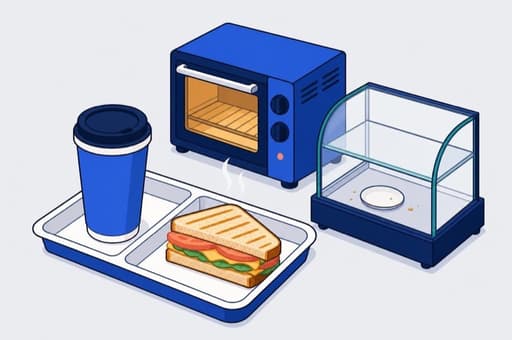
Pastries, breakfast sandwiches, bakery goods, snack boxes, and lunch generated $7.05B in FY2025. Food is taking a little more of the sales mix; the test is adding it without slowing drink service.
Competes with McDonald's breakfast menu (McDonald's) · Dunkin Sandwiches & Wraps (Inspire Brands)
In plain English
The pastry case and warming oven turn a coffee stop into breakfast or lunch. A customer already coming for a drink can add a croissant, sandwich, or snack box, raising the value of the same visit.
Starbucks buys prepared and baked goods, keeps them fresh, displays them, and heats some to order. The extra sale is attractive because the customer is already at the counter, but waste and oven time matter: unsold food gets discarded, and a backed-up warming station can hold up the entire order.
International Company-Operated Coffeehouses
Stores Starbucks ran outside the U.S. and Canada brought in $5.95B in FY2025. After China moved to a partner-run structure in April 2026, this business became smaller but kept more from each sales dollar.
Competes with McCafé cafés (McDonald's) · Costa Coffee shops (Coca-Cola)
In plain English
Outside the United States and Canada, Starbucks has owned cafés serving local commuters, travelers, and people meeting over coffee. It collects the full customer payment, just as it does in North America, while adapting prices, menus, and store formats to each market.
That also leaves Starbucks carrying local rent, staff, supplies, and currency swings. The picture changed sharply when the Chinese stores stopped being directly run in April 2026. International sales now look smaller because those shop receipts no longer come to Starbucks, even though the brand remains in China through a partnership.
Starbucks Rewards, Starbucks Card, and Mobile Order & Pay
Rewards ties points, prepaid cards, app ordering, and pickup to repeat café visits. Roughly 36 million U.S. members were recently active; the watchpoint is whether digital convenience helps frequency without clogging pickup counters.
Competes with MyMcDonald's Rewards and Mobile Order & Pay (McDonald's) · Dutch Rewards, Order Ahead, and Dutch Pass (Dutch Bros)
In plain English
Think of Rewards as a return-ticket tucked into the payment system. Members preload money or pay in the app, earn Stars—points that buy future items—and can send an order to a store before arriving.
Starbucks earns when those members buy drinks and food, not from selling software. The system matters because it can bring people back, reward another visit, and make payment quick. It also holds prepaid customer money until people spend it. But a flood of app orders can overwhelm the same counter serving walk-ins, so order timing is part of the product.
Licensed Stores
Partners run Starbucks counters in travel hubs, retailers, institutions, and overseas markets, paying Starbucks for supplies and the brand. This produced $4.35B in FY2025; growth depends on partners maintaining the experience.
Competes with Dunkin franchises (Inspire Brands) · Luckin partnership stores (Luckin Coffee)
In plain English
Here Starbucks lends its name and operating recipe to another business. The partner pays to build and staff the shop—inside an airport, university, hospital, hotel, retailer, or overseas market—and keeps the customer's full checkout payment.
Starbucks makes money by selling branded ingredients and equipment and charging for use of the name. It receives much less revenue per shop than at a café it owns, but it also avoids most rent and payroll. This route is becoming more important after China joined the partner-run side of the network.
Starbucks China Joint Venture
In April 2026, control of 7,991 Chinese stores shifted to Boyu while Starbucks kept the brand and a minority stake. The prize is partner-funded expansion; the hard part is facing a much faster-growing Luckin.
Competes with Luckin stores (Luckin Coffee) · Cotti Coffee shops (Cotti Coffee)
In plain English
China now works more like a partnership than a chain Starbucks runs itself. Boyu, a Chinese investment firm, owns the larger piece and controls the shop network; Starbucks kept the smaller piece plus ownership of its name and store system.
Customer spending stays mainly inside the partnership. Money reaches Starbucks through supplies, permission to use the brand, and its share of the venture's results. This reduces the stores and sales shown directly by Starbucks, while letting Boyu provide local capital and management. Success rests on local value, consistent stores, and keeping pace with Luckin.
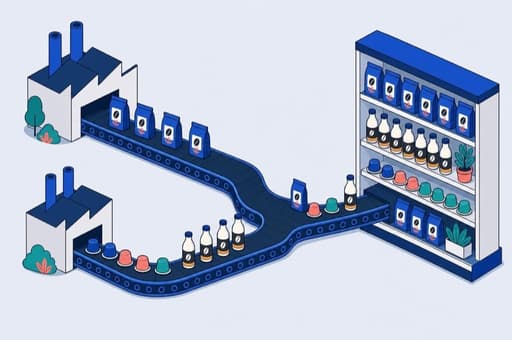
Channel Development
Packaged coffee, coffee pods, bottled drinks, creamers, and workplace products brought in $1.87B in FY2025. The latest quarter jumped, but results depend heavily on Nestlé and PepsiCo-linked distribution relationships.
Competes with Dunkin at Home (Inspire Brands / J.M. Smucker) · Nespresso Original and Vertuo (Nestlé)
In plain English
The coffee aisle, fridge case, and office dispenser take Starbucks beyond its own counters. Shoppers buy bags, pods, bottled drinks, creamers, and other products for home, travel, or work.
Much of the machinery belongs to partners. Nestlé distributes many Starbucks consumer products outside the cafés, while a PepsiCo-linked partnership makes and distributes ready-to-drink beverages in North America. Starbucks earns through product sales, permission to use its brand, and its share of partnership results. The partners bring enormous reach, but that also makes their execution and shelf access central to growth.


 North America Company-Operated CoffeehousesStarbucks' own U.S. and Canadian cafés are the cash engine, bringing in $24.79B in FY2025. Sales grew in the latest quarter, but extra staffing squeezed what each sales dollar left behind.
Starbucks' own U.S. and Canadian cafés are the cash engine, bringing in $24.79B in FY2025. Sales grew in the latest quarter, but extra staffing squeezed what each sales dollar left behind.
In plain English
This is the Starbucks most people picture: a café, drive-through, app pickup counter, or delivery order where Starbucks controls the site, staff, menu, prices, and customer payment. North America supplies most of the company's sales.
Each visit turns into money through the drink and food total at checkout. Starbucks keeps that receipt, then pays for workers, rent, ingredients, packaging, and equipment. The current repair job is simple to describe but hard to execute: serve people faster and more consistently without letting the added labor eat too deeply into what the stores earn.
Competes with Dunkin coffeehouses (Inspire Brands) · Dutch Bros drive-thru shops (Dutch Bros)
 BeveragesCoffee, tea, fruit-and-caffeine Refreshers, blended drinks, and add-ons produced $22.54B in FY2025. Drinks still lead the menu, though their share has recently edged down while Refreshers gained attention.
Coffee, tea, fruit-and-caffeine Refreshers, blended drinks, and add-ons produced $22.54B in FY2025. Drinks still lead the menu, though their share has recently edged down while Refreshers gained attention.
In plain English
A drink starts as a base—espresso, brewed coffee, tea, or fruit flavor—then becomes hundreds of possible orders through milk, foam, syrups, ice, and size choices. That variety gives customers reasons to return at breakfast or in the afternoon.
The cup is the main unit of sale. Customers pay for the drink and often pay more for additions; baristas and equipment turn the recipe into something repeatable. The catch is that choice can slow the line, so new flavors only help if stores can build them quickly and consistently.
Competes with Dunkin iced coffee, cold brew, and energy (Inspire Brands) · Rebel energy and handcrafted coffee (Dutch Bros)
 FoodPastries, breakfast sandwiches, bakery goods, snack boxes, and lunch generated $7.05B in FY2025. Food is taking a little more of the sales mix; the test is adding it without slowing drink service.
Pastries, breakfast sandwiches, bakery goods, snack boxes, and lunch generated $7.05B in FY2025. Food is taking a little more of the sales mix; the test is adding it without slowing drink service.
In plain English
The pastry case and warming oven turn a coffee stop into breakfast or lunch. A customer already coming for a drink can add a croissant, sandwich, or snack box, raising the value of the same visit.
Starbucks buys prepared and baked goods, keeps them fresh, displays them, and heats some to order. The extra sale is attractive because the customer is already at the counter, but waste and oven time matter: unsold food gets discarded, and a backed-up warming station can hold up the entire order.
Competes with McDonald's breakfast menu (McDonald's) · Dunkin Sandwiches & Wraps (Inspire Brands)
 International Company-Operated CoffeehousesStores Starbucks ran outside the U.S. and Canada brought in $5.95B in FY2025. After China moved to a partner-run structure in April 2026, this business became smaller but kept more from each sales dollar.
Stores Starbucks ran outside the U.S. and Canada brought in $5.95B in FY2025. After China moved to a partner-run structure in April 2026, this business became smaller but kept more from each sales dollar.
In plain English
Outside the United States and Canada, Starbucks has owned cafés serving local commuters, travelers, and people meeting over coffee. It collects the full customer payment, just as it does in North America, while adapting prices, menus, and store formats to each market.
That also leaves Starbucks carrying local rent, staff, supplies, and currency swings. The picture changed sharply when the Chinese stores stopped being directly run in April 2026. International sales now look smaller because those shop receipts no longer come to Starbucks, even though the brand remains in China through a partnership.
Competes with McCafé cafés (McDonald's) · Costa Coffee shops (Coca-Cola)
 Starbucks Rewards, Starbucks Card, and Mobile Order & PayRewards ties points, prepaid cards, app ordering, and pickup to repeat café visits. Roughly 36 million U.S. members were recently active; the watchpoint is whether digital convenience helps frequency without clogging pickup counters.
Rewards ties points, prepaid cards, app ordering, and pickup to repeat café visits. Roughly 36 million U.S. members were recently active; the watchpoint is whether digital convenience helps frequency without clogging pickup counters.
In plain English
Think of Rewards as a return-ticket tucked into the payment system. Members preload money or pay in the app, earn Stars—points that buy future items—and can send an order to a store before arriving.
Starbucks earns when those members buy drinks and food, not from selling software. The system matters because it can bring people back, reward another visit, and make payment quick. It also holds prepaid customer money until people spend it. But a flood of app orders can overwhelm the same counter serving walk-ins, so order timing is part of the product.
Competes with MyMcDonald's Rewards and Mobile Order & Pay (McDonald's) · Dutch Rewards, Order Ahead, and Dutch Pass (Dutch Bros)
 Licensed StoresPartners run Starbucks counters in travel hubs, retailers, institutions, and overseas markets, paying Starbucks for supplies and the brand. This produced $4.35B in FY2025; growth depends on partners maintaining the experience.
Partners run Starbucks counters in travel hubs, retailers, institutions, and overseas markets, paying Starbucks for supplies and the brand. This produced $4.35B in FY2025; growth depends on partners maintaining the experience.
In plain English
Here Starbucks lends its name and operating recipe to another business. The partner pays to build and staff the shop—inside an airport, university, hospital, hotel, retailer, or overseas market—and keeps the customer's full checkout payment.
Starbucks makes money by selling branded ingredients and equipment and charging for use of the name. It receives much less revenue per shop than at a café it owns, but it also avoids most rent and payroll. This route is becoming more important after China joined the partner-run side of the network.
Competes with Dunkin franchises (Inspire Brands) · Luckin partnership stores (Luckin Coffee)
 Starbucks China Joint VentureIn April 2026, control of 7,991 Chinese stores shifted to Boyu while Starbucks kept the brand and a minority stake. The prize is partner-funded expansion; the hard part is facing a much faster-growing Luckin.
In April 2026, control of 7,991 Chinese stores shifted to Boyu while Starbucks kept the brand and a minority stake. The prize is partner-funded expansion; the hard part is facing a much faster-growing Luckin.
In plain English
China now works more like a partnership than a chain Starbucks runs itself. Boyu, a Chinese investment firm, owns the larger piece and controls the shop network; Starbucks kept the smaller piece plus ownership of its name and store system.
Customer spending stays mainly inside the partnership. Money reaches Starbucks through supplies, permission to use the brand, and its share of the venture's results. This reduces the stores and sales shown directly by Starbucks, while letting Boyu provide local capital and management. Success rests on local value, consistent stores, and keeping pace with Luckin.
Competes with Luckin stores (Luckin Coffee) · Cotti Coffee shops (Cotti Coffee)
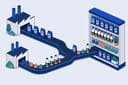 Channel DevelopmentPackaged coffee, coffee pods, bottled drinks, creamers, and workplace products brought in $1.87B in FY2025. The latest quarter jumped, but results depend heavily on Nestlé and PepsiCo-linked distribution relationships.
Packaged coffee, coffee pods, bottled drinks, creamers, and workplace products brought in $1.87B in FY2025. The latest quarter jumped, but results depend heavily on Nestlé and PepsiCo-linked distribution relationships.
In plain English
The coffee aisle, fridge case, and office dispenser take Starbucks beyond its own counters. Shoppers buy bags, pods, bottled drinks, creamers, and other products for home, travel, or work.
Much of the machinery belongs to partners. Nestlé distributes many Starbucks consumer products outside the cafés, while a PepsiCo-linked partnership makes and distributes ready-to-drink beverages in North America. Starbucks earns through product sales, permission to use its brand, and its share of partnership results. The partners bring enormous reach, but that also makes their execution and shelf access central to growth.
Competes with Dunkin at Home (Inspire Brands / J.M. Smucker) · Nespresso Original and Vertuo (Nestlé)
Named in filings, launches and programs
- Starbucks RefreshersProduct lineFruit-and-caffeine drinks with $2B in sales at U.S. cafés Starbucks runs; sparkling versions entered testing in July 2026.
- Cold FoamProduct lineAbout one-third of drink additions; fruit-flavored volume more than doubled during FY2026.
- Protein Lattes and Protein Cold FoamProduct linePermanent U.S. and Canadian café additions since fall 2025, extending coffee into protein-focused occasions.
- Starbucks Coffee & ProteinProduct line · RampingBottled coffee-and-protein drinks launched through the PepsiCo partnership in March 2026.
- Starbucks Iced Energy and Frappuccino LiteProduct lineBottled products launched through the North American Coffee Partnership in March 2025.
- Global Coffee AllianceEcosystemNestlé-led distribution and brand-use arrangement for consumer and workplace products sold beyond Starbucks cafés.
- North American Coffee PartnershipEcosystemPepsiCo-linked partnership that makes and distributes bottled Starbucks beverages in North America.
- Green Apron Service and Smart QueuePlatformStaffing and order-timing system rolled across U.S. cafés Starbucks runs during FY2025.
- Clover VerticaPlatformBrewed-coffee equipment whose rollout across U.S. company stores was nearing completion in early FY2026.
- Mastrena 3Platform · AnnouncedNext-generation espresso equipment included in the January 2026 store-improvement roadmap.
- DeliveryServiceMarketplace ordering exceeded $1B in U.S. sales during FY2025 and was still growing quickly.
- Starbucks Reserve and RoasteriesBrandPremium stores and products remain active, though recent restructuring reduced the recorded value of some locations.
Starbucks RefreshersProduct line
Fruit-and-caffeine drinks with $2B in sales at U.S. cafés Starbucks runs; sparkling versions entered testing in July 2026.
Cold FoamProduct line
About one-third of drink additions; fruit-flavored volume more than doubled during FY2026.
Protein Lattes and Protein Cold FoamProduct line
Permanent U.S. and Canadian café additions since fall 2025, extending coffee into protein-focused occasions.
Starbucks Coffee & ProteinProduct line · Ramping
Bottled coffee-and-protein drinks launched through the PepsiCo partnership in March 2026.
Starbucks Iced Energy and Frappuccino LiteProduct line
Bottled products launched through the North American Coffee Partnership in March 2025.
Global Coffee AllianceEcosystem
Nestlé-led distribution and brand-use arrangement for consumer and workplace products sold beyond Starbucks cafés.
North American Coffee PartnershipEcosystem
PepsiCo-linked partnership that makes and distributes bottled Starbucks beverages in North America.
Green Apron Service and Smart QueuePlatform
Staffing and order-timing system rolled across U.S. cafés Starbucks runs during FY2025.
Clover VerticaPlatform
Brewed-coffee equipment whose rollout across U.S. company stores was nearing completion in early FY2026.
Mastrena 3Platform · Announced
Next-generation espresso equipment included in the January 2026 store-improvement roadmap.
DeliveryService
Marketplace ordering exceeded $1B in U.S. sales during FY2025 and was still growing quickly.
Starbucks Reserve and RoasteriesBrand
Premium stores and products remain active, though recent restructuring reduced the recorded value of some locations.