
NuScale Power (SMR)
Designs modular light-water reactors and licenses the technology for multi-module nuclear plants.
Something off on this page? Send us feedback.
NuScale has designed a small nuclear reactor, won American regulators' approval for it, and has yet to sell a single one. The money it collects today is engineering and licensing fees from one power-plant project in Romania, and that work has run out. Another company holds the exclusive right to sell NuScale's plants, and NuScale pays it for every module it hopes to ship. Shareholders fund the wait.
Item facts: FY2025 · year ended Dec 31, 2025, from filings, earnings calls and company pages.
Judgment weights, not filed revenue
The band summarizes business focus and direction. ~ marks estimates.
7 in detail · 8 more below
Power plant and module services
Engineering, licensing and design work sold into nuclear projects — about 93% of 2025's $31.5 million of revenue. The study that generated it finished in late 2025, and the line has run near zero since: $312,000 in the first half of 2026.
Competes with Licensing and engineering around the BWRX-300 (GE Vernova Hitachi) · Self-performed services for the SMR-300 (Holtec) · AP300 delivery services (Westinghouse)
In plain English
Before anyone pours concrete for a nuclear plant, somebody has to draw it and prove it to the regulators. That drawing-and-paperwork stage is what NuScale has actually been paid for: it worked under Fluor, the construction firm running the design study for a plant in Romania, and licensed its reactor technology to the project's owner.
The catch is that this work only exists while a project is being planned. The Romanian design study finished in late 2025 and the billing stopped with it — a line worth $20.4 million in the first half of 2025 brought in $312,000 in the same stretch of 2026.
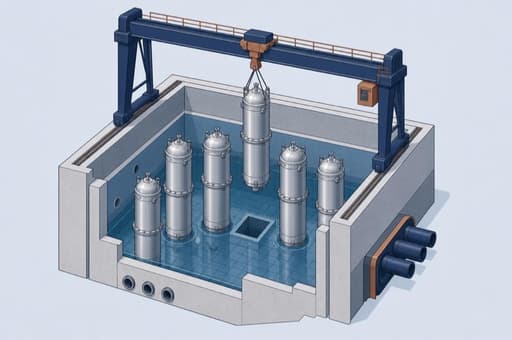
NuScale Power Module and VOYGR plants
The product itself: a factory-built 77-megawatt reactor module, approved by US regulators, grouped four, six or twelve at a time into a plant. Sales to date: none. Parts for twelve modules are being made ahead of any order.
Competes with BWRX-300 (GE Vernova Hitachi) · SMR-300 (Holtec) · AP300 (Westinghouse)
In plain English
A normal reactor is built on site, one enormous custom job. NuScale's is a sealed steel cylinder about as long as a seven-storey building is tall, made in a factory and delivered whole; each makes 77 megawatts of electricity, and a plant is assembled from four, six or twelve of them the way a torch takes batteries.
Nobody has bought one yet. US regulators approved the six-module design in 2025, and heavy parts for twelve modules are already being forged by supplier Doosan Enerbility ahead of any order. Until a customer signs an equipment contract, all of that is stock on a shelf rather than income.
ENTRA1 Energy partnership
NuScale's exclusive sales partner, and its largest expense. A fee is owed on every module in every deal ENTRA1 lands; the first one cost $507.4 million in 2025. Watch whether a signed contract ever arrives to earn it back.
Competes with Aurora, sold and owned in-house (Oklo) · SMR-300, delivered in-house (Holtec)
In plain English
Most companies pay a salesperson a cut after the sale. This arrangement runs the other way round. ENTRA1 Energy, a private developer of power projects, holds the exclusive worldwide right to sell NuScale's plants — customers sign with ENTRA1, and NuScale supplies the modules and the engineering behind it.
For that, NuScale owes ENTRA1 a fee on every module in a deal: a small slice when a non-binding agreement is announced, a bigger slice when a power contract is signed, the rest when the equipment order lands. The first slice alone cost $507.4 million in 2025 — more than sixteen times that year's revenue — paid out of money raised from shareholders.
TVA 6-gigawatt deployment program
A framework with the federal power utility of the American south for up to 6 gigawatts — roughly 72 modules — announced in 2025 and still unsigned. The biggest thing in NuScale's future, and the one it controls least.
Competes with BWRX-300 at Clinch River (GE Vernova Hitachi) · SMR-300 agreement with Entergy (Holtec)
In plain English
The Tennessee Valley Authority is the federal power company for a seven-state stretch of the American south, and the case for more generation there is built on data centres, advanced manufacturing and national defence. In 2025 it and ENTRA1 announced plans for up to 6 gigawatts of NuScale-powered capacity — roughly 72 modules across as many as six plants, which would be the largest small-reactor program the country has attempted.
Announced is the operative word. A year on, the two sides are still talking toward an actual contract to buy the power, and NuScale is not in the room. Its first equipment order waits on a signature it does not control.
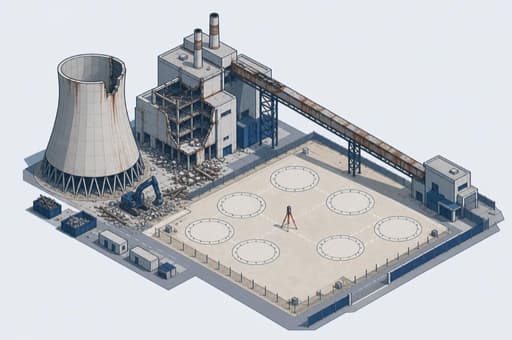
RoPower Doicești project
The only customer that has ever paid NuScale much: a 462-megawatt, six-module plant on a shut Romanian coal site, billed through lead contractor Fluor. The investment was approved in February 2026; construction contracts are about a year out.
Competes with BWRX-300 (GE Vernova Hitachi) · Rolls-Royce SMR (Rolls-Royce)
In plain English
At a closed coal site about 90 kilometres northwest of Bucharest, Romania's state power operator Nuclearelectrica and the project company RoPower plan to put six NuScale modules where a coal plant used to run — 462 megawatts in all. This is the project behind nearly all of NuScale's revenue so far, through a technology licence plus design work billed under Fluor.
Nuclearelectrica's shareholders committed the money in February 2026, and in July they voted down a proposal to go shopping for rival reactor designs. The project is now inching toward construction contracts; the chief executive puts the final go-ahead about a year out, and NuScale's fees resume only when the work does.

E2 Centers
A dozen simulator rooms at universities that recreate a NuScale control room. Tiny — about $0.3 million in the first half of 2026 — yet it out-earned the engineering line that half, which says more about the engineering line.
Competes with BWRX-300 operator training (GE Vernova Hitachi) · AP300 operator training (Westinghouse)
In plain English
A dozen universities and institutes run a NuScale simulator: a working copy of the control room of a twelve-module plant, where a student takes the operator's chair and runs a reactor that does not exist yet. NuScale calls them Energy Exploration Centers.
The bills are paid by university budgets and clean-energy grants rather than by anyone buying power, which is why this line kept ticking over while the project work went to nothing. It is less a profit centre than a workforce pipeline: the people trained here are the people a NuScale plant would hire.
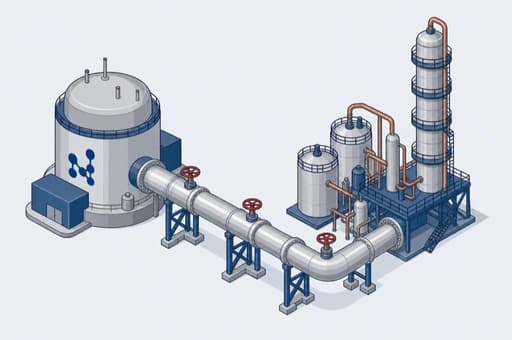
Process heat and industrial steam
Each module can make 250 megawatts of heat as steam, which chemical works and hydrogen makers could buy instead of electricity. Nothing sold; management discussed it more on the August 2026 call than ever before.
Competes with Xe-100 (X-energy) · Aurora (Oklo)
In plain English
Electricity is only half of what a reactor makes. The other half is heat, and one NuScale module boils enough steam to run a chemical works. The customers management names are petrochemical plants, hydrogen and ammonia makers, and sites in dry regions, where a plant that can shed its heat to air rather than water is worth something.
Nothing has been sold. A company study in 2025 concluded the economics work for chemical plants, and the subject came up more on the August 2026 call than at any point before it. For now this is a reason a small reactor might be worth buying, not a line of income.


 Power plant and module servicesEngineering, licensing and design work sold into nuclear projects — about 93% of 2025's $31.5 million of revenue. The study that generated it finished in late 2025, and the line has run near zero since: $312,000 in the first half of 2026.
Engineering, licensing and design work sold into nuclear projects — about 93% of 2025's $31.5 million of revenue. The study that generated it finished in late 2025, and the line has run near zero since: $312,000 in the first half of 2026.
In plain English
Before anyone pours concrete for a nuclear plant, somebody has to draw it and prove it to the regulators. That drawing-and-paperwork stage is what NuScale has actually been paid for: it worked under Fluor, the construction firm running the design study for a plant in Romania, and licensed its reactor technology to the project's owner.
The catch is that this work only exists while a project is being planned. The Romanian design study finished in late 2025 and the billing stopped with it — a line worth $20.4 million in the first half of 2025 brought in $312,000 in the same stretch of 2026.
Competes with Licensing and engineering around the BWRX-300 (GE Vernova Hitachi) · Self-performed services for the SMR-300 (Holtec) · AP300 delivery services (Westinghouse)
 NuScale Power Module and VOYGR plantsThe product itself: a factory-built 77-megawatt reactor module, approved by US regulators, grouped four, six or twelve at a time into a plant. Sales to date: none. Parts for twelve modules are being made ahead of any order.
The product itself: a factory-built 77-megawatt reactor module, approved by US regulators, grouped four, six or twelve at a time into a plant. Sales to date: none. Parts for twelve modules are being made ahead of any order.
In plain English
A normal reactor is built on site, one enormous custom job. NuScale's is a sealed steel cylinder about as long as a seven-storey building is tall, made in a factory and delivered whole; each makes 77 megawatts of electricity, and a plant is assembled from four, six or twelve of them the way a torch takes batteries.
Nobody has bought one yet. US regulators approved the six-module design in 2025, and heavy parts for twelve modules are already being forged by supplier Doosan Enerbility ahead of any order. Until a customer signs an equipment contract, all of that is stock on a shelf rather than income.
Competes with BWRX-300 (GE Vernova Hitachi) · SMR-300 (Holtec) · AP300 (Westinghouse)
 ENTRA1 Energy partnershipNuScale's exclusive sales partner, and its largest expense. A fee is owed on every module in every deal ENTRA1 lands; the first one cost $507.4 million in 2025. Watch whether a signed contract ever arrives to earn it back.
NuScale's exclusive sales partner, and its largest expense. A fee is owed on every module in every deal ENTRA1 lands; the first one cost $507.4 million in 2025. Watch whether a signed contract ever arrives to earn it back.
In plain English
Most companies pay a salesperson a cut after the sale. This arrangement runs the other way round. ENTRA1 Energy, a private developer of power projects, holds the exclusive worldwide right to sell NuScale's plants — customers sign with ENTRA1, and NuScale supplies the modules and the engineering behind it.
For that, NuScale owes ENTRA1 a fee on every module in a deal: a small slice when a non-binding agreement is announced, a bigger slice when a power contract is signed, the rest when the equipment order lands. The first slice alone cost $507.4 million in 2025 — more than sixteen times that year's revenue — paid out of money raised from shareholders.
Competes with Aurora, sold and owned in-house (Oklo) · SMR-300, delivered in-house (Holtec)
 TVA 6-gigawatt deployment programA framework with the federal power utility of the American south for up to 6 gigawatts — roughly 72 modules — announced in 2025 and still unsigned. The biggest thing in NuScale's future, and the one it controls least.
A framework with the federal power utility of the American south for up to 6 gigawatts — roughly 72 modules — announced in 2025 and still unsigned. The biggest thing in NuScale's future, and the one it controls least.
In plain English
The Tennessee Valley Authority is the federal power company for a seven-state stretch of the American south, and the case for more generation there is built on data centres, advanced manufacturing and national defence. In 2025 it and ENTRA1 announced plans for up to 6 gigawatts of NuScale-powered capacity — roughly 72 modules across as many as six plants, which would be the largest small-reactor program the country has attempted.
Announced is the operative word. A year on, the two sides are still talking toward an actual contract to buy the power, and NuScale is not in the room. Its first equipment order waits on a signature it does not control.
Competes with BWRX-300 at Clinch River (GE Vernova Hitachi) · SMR-300 agreement with Entergy (Holtec)
 RoPower Doicești projectThe only customer that has ever paid NuScale much: a 462-megawatt, six-module plant on a shut Romanian coal site, billed through lead contractor Fluor. The investment was approved in February 2026; construction contracts are about a year out.
The only customer that has ever paid NuScale much: a 462-megawatt, six-module plant on a shut Romanian coal site, billed through lead contractor Fluor. The investment was approved in February 2026; construction contracts are about a year out.
In plain English
At a closed coal site about 90 kilometres northwest of Bucharest, Romania's state power operator Nuclearelectrica and the project company RoPower plan to put six NuScale modules where a coal plant used to run — 462 megawatts in all. This is the project behind nearly all of NuScale's revenue so far, through a technology licence plus design work billed under Fluor.
Nuclearelectrica's shareholders committed the money in February 2026, and in July they voted down a proposal to go shopping for rival reactor designs. The project is now inching toward construction contracts; the chief executive puts the final go-ahead about a year out, and NuScale's fees resume only when the work does.
Competes with BWRX-300 (GE Vernova Hitachi) · Rolls-Royce SMR (Rolls-Royce)
 E2 CentersA dozen simulator rooms at universities that recreate a NuScale control room. Tiny — about $0.3 million in the first half of 2026 — yet it out-earned the engineering line that half, which says more about the engineering line.
A dozen simulator rooms at universities that recreate a NuScale control room. Tiny — about $0.3 million in the first half of 2026 — yet it out-earned the engineering line that half, which says more about the engineering line.
In plain English
A dozen universities and institutes run a NuScale simulator: a working copy of the control room of a twelve-module plant, where a student takes the operator's chair and runs a reactor that does not exist yet. NuScale calls them Energy Exploration Centers.
The bills are paid by university budgets and clean-energy grants rather than by anyone buying power, which is why this line kept ticking over while the project work went to nothing. It is less a profit centre than a workforce pipeline: the people trained here are the people a NuScale plant would hire.
Competes with BWRX-300 operator training (GE Vernova Hitachi) · AP300 operator training (Westinghouse)
 Process heat and industrial steamEach module can make 250 megawatts of heat as steam, which chemical works and hydrogen makers could buy instead of electricity. Nothing sold; management discussed it more on the August 2026 call than ever before.
Each module can make 250 megawatts of heat as steam, which chemical works and hydrogen makers could buy instead of electricity. Nothing sold; management discussed it more on the August 2026 call than ever before.
In plain English
Electricity is only half of what a reactor makes. The other half is heat, and one NuScale module boils enough steam to run a chemical works. The customers management names are petrochemical plants, hydrogen and ammonia makers, and sites in dry regions, where a plant that can shed its heat to air rather than water is worth something.
Nothing has been sold. A company study in 2025 concluded the economics work for chemical plants, and the subject came up more on the August 2026 call than at any point before it. For now this is a reason a small reactor might be worth buying, not a line of income.
Competes with Xe-100 (X-energy) · Aurora (Oklo)
Named in filings, launches and programs
- Long-lead module manufacturingProduct · RampingSupplier Doosan Enerbility is forging major parts for twelve modules ahead of any order, and says it could build about twenty modules a year.
- Framatome fuel supply agreementCustomer programA March 2026 contract with fuel maker Framatome adding European fabrication and preparing its Richland site to make NuScale fuel over five years.
- Paragon protection-system contractCustomer programParagon, a Mirion company, won a June 2026 award to complete the final design of the reactor's highly integrated protection system.
- Curio fuel-cycle MOUCustomer program · AnnouncedAn August 2026 memorandum with Curio and Framatome to evaluate fuel recycling and next-generation fuel-cycle options for advanced reactors.
- MillenniTEK boron-oxide pelletsProduct · AnnouncedFirst-of-a-kind pellets developed with MillenniTEK for the reactor's passive emergency core cooling system, announced in September 2026.
- NPX and Nuclearn AI toolingService · AnnouncedNuclear-specific AI software from NPX and Nuclearn, deployed internally in August 2026 to speed up NuScale's advanced reactor program.
- Reusable licence applicationProductAbout 60% of the licence application written for the cancelled Idaho project can be carried across to a new US site.
- 50-megawatt module designProductThe earlier, smaller version of the module carries a US design approval from 2020 and a design certification from 2023.
Long-lead module manufacturingProduct · Ramping
Supplier Doosan Enerbility is forging major parts for twelve modules ahead of any order, and says it could build about twenty modules a year.
Framatome fuel supply agreementCustomer program
A March 2026 contract with fuel maker Framatome adding European fabrication and preparing its Richland site to make NuScale fuel over five years.
Paragon protection-system contractCustomer program
Paragon, a Mirion company, won a June 2026 award to complete the final design of the reactor's highly integrated protection system.
Curio fuel-cycle MOUCustomer program · Announced
An August 2026 memorandum with Curio and Framatome to evaluate fuel recycling and next-generation fuel-cycle options for advanced reactors.
MillenniTEK boron-oxide pelletsProduct · Announced
First-of-a-kind pellets developed with MillenniTEK for the reactor's passive emergency core cooling system, announced in September 2026.
NPX and Nuclearn AI toolingService · Announced
Nuclear-specific AI software from NPX and Nuclearn, deployed internally in August 2026 to speed up NuScale's advanced reactor program.
Reusable licence applicationProduct
About 60% of the licence application written for the cancelled Idaho project can be carried across to a new US site.
50-megawatt module designProduct
The earlier, smaller version of the module carries a US design approval from 2020 and a design certification from 2023.