
SpaceX (SPCX)
Runs Starlink connectivity, reusable launch services, and an AI platform spanning Grok and X.
Something off on this page? Send us feedback.
SpaceX now combines satellite internet, rented AI computing power, social advertising, software, launches, and spacecraft. Satellite internet still brings in most of the money and the profit. Rented computing power is growing fastest but losing heavily, while launches and spacecraft have become the smaller arm.
Item facts: Q2 FY2026 · quarter ended Jun 30, 2026, from filings, earnings calls and company pages.
Judgment weights, not filed revenue
The band summarizes business focus and direction. ~ marks estimates.
9 in detail · 15 more below
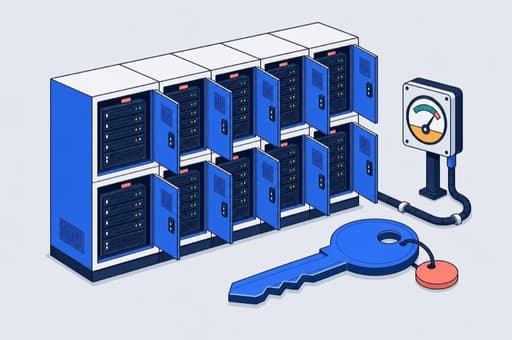
AI Solutions & Infrastructure
Rented computer power, Grok subscriptions and data access are the fastest-growing sales line. One unnamed customer buying across all three businesses and another buying only AI supplied 37.8% of Q2 revenue together.
Competes with CoreWeave Cloud (CoreWeave) · Nebius AI Cloud (Nebius)
In plain English
Think of a landlord for extremely powerful computers. SpaceX builds huge rooms full of computing machines, then reserves blocks of those machines for AI companies that need far more power than they can easily install themselves. It also charges for Grok, its AI assistant, and licenses access to software and data.
Large customers pay fixed monthly fees for reserved computer power; subscribers and software users pay for access. That can create repeat sales, but some cloud customers may cancel with ninety days' notice. The costly part comes first: chips, electricity, cooling and buildings must be ready before the rent arrives.

Advertising
Paid messages shown on X brought in $367M during Q2 and declined from a year earlier. User attention and advertisers' comfort with the platform matter more here than the rush to build AI computing sites.
Competes with Meta Ads (Meta Platforms) · Google Ads (Alphabet)
In plain English
The old-fashioned media business sits inside the new AI group. People spend time reading and posting on X, and companies pay to place promoted messages in front of them. The advertiser is the customer; the audience's attention is what X has to sell.
Money rises when people visit often, ads reach the right buyers and marketers trust the setting around their messages. It falls when users drift away or brands grow wary. Unlike computer rentals, this line needs little new heavy equipment, but its latest quarterly sales were shrinking rather than growing.
Cursor
Cursor joined SpaceX after Q2 in a share deal valuing it at $60B, not as sales. Its own revenue remains undisclosed; access to outside AI systems, computing costs and customer retention decide whether this new software arm holds up.
Competes with GitHub Copilot (Microsoft/GitHub) · Claude Code (Anthropic) · Codex (OpenAI)
In plain English
A programmer opens Cursor to write, inspect and change software with help from AI. It is like giving a mechanic a powered tool that can also search the manual and suggest the next repair. Individual developers and company engineering teams pay subscriptions to keep using it.
Those fees can repeat each month, but the service depends on outside AI systems as well as SpaceX computing power. If a supplier withdraws access, Cursor must replace that capability without making the product worse or more expensive. SpaceX bought the company in August, so the latest quarterly mix contains none of its sales.
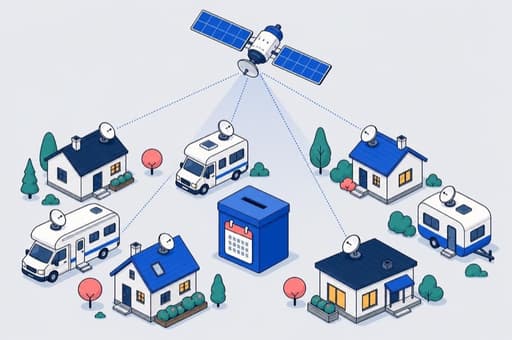
Consumer
Starlink's home and roaming internet remains the largest single sales line, serving roughly twelve million subscribers by June. Subscriber growth is strong, but lower prices in newer markets mean each added household brings in less money.
Competes with Amazon Leo (Amazon) · OneWeb (Eutelsat)
In plain English
A small dish on a home or vehicle talks to satellites overhead, bringing internet to places where cables and cell towers do a poor job. Customers usually pay month by month and can also buy the receiving kit.
It resembles a mobile-phone plan delivered from space: more subscribers mean more monthly fees, provided the satellites have room for all their traffic. SpaceX must keep launching capacity, secure local permission and make the hardware affordable. This is the broad cash engine, though the average monthly payment has fallen as Starlink reaches lower-price countries.
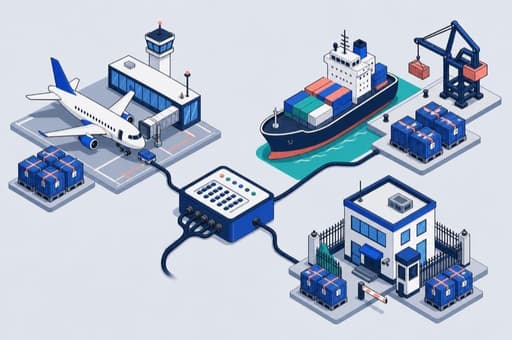
Enterprise & Government
Satellite links for companies and public agencies form the second steady connectivity line. Across SpaceX, contracted work waiting to be delivered totaled $47.461B; turning large awards into durable service is the watchpoint.
Competes with OneWeb enterprise connectivity (Eutelsat) · Inmarsat GX (Viasat)
In plain English
The same satellite web that reaches homes is packaged for airlines, ships, phone companies and public agencies. These buyers need wider coverage, secure connections or service across whole fleets, so their deals are larger and more involved than a household plan.
An airline pays as aircraft are connected; a shipping operator pays for vessels; a government pays for communications, sensing or network projects. Installation partners may help put the equipment in place. Contracts can last longer than consumer subscriptions, but payment still depends on meeting service promises, gaining operating approval and delivering each project on schedule.
Starlink Mobile
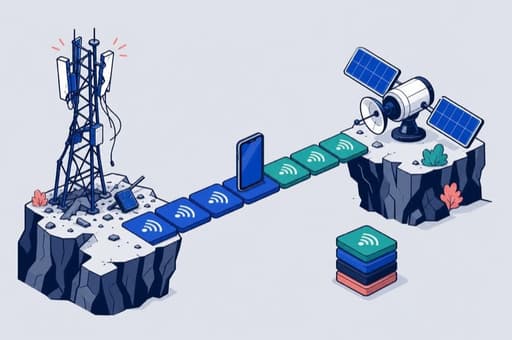
Ordinary phones connect through satellites and mobile-company partners when ground networks cannot reach them. A roughly $19.6B purchase of more airwaves for phones could widen the service, but prices, user counts and revenue remain undisclosed.
Competes with BlueBird (AST SpaceMobile) · Lynk direct-to-device (Lynk Global)
In plain English
No special dish is the idea: an ordinary phone reaches a satellite when a normal cell tower is missing. SpaceX supplies the space connection, while mobile companies bring customers, phone compatibility and billing. Early service uses a narrow slice of the airwaves phones need, so it cannot yet behave like a full ground network.
The business becomes money when those partners bundle coverage or subscribers pay for it. More airwaves, new satellites and ground equipment could make the connection faster and more useful. Until approvals and transfers are complete, however, the large purchase commitment is a gate to the business rather than proof of demand.
Launch Services
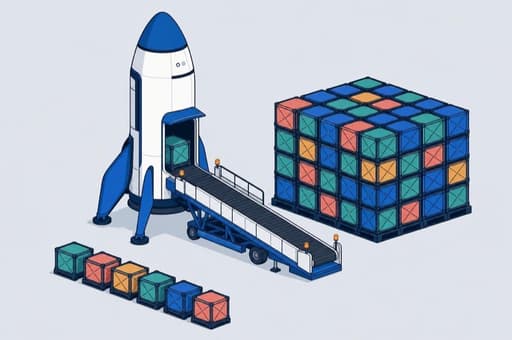
Falcon rockets carry paying satellites and other payloads into space, with sales usually arriving when the mission flies. Only ten of thirty-seven Q2 Falcon missions served outside customers; internal Starlink trips bring no launch sale.
Competes with Vulcan Centaur (United Launch Alliance) · New Glenn (Blue Origin)
In plain English
Here, the product is a ride to space. A satellite operator or government books room on a Falcon rocket, and SpaceX generally gets to count the sale when the payload actually launches. One rocket may carry a dedicated customer or share space among smaller payloads.
Reusing rockets and flying often can spread the cost of pads, engines and crews across more missions. But a busy launch calendar is not the same as outside demand: most recent Falcon flights carried SpaceX's own Starlink satellites, helping the internet business without creating launch revenue. Reliability, permits and customer readiness decide when paid missions happen.
Launch & Development
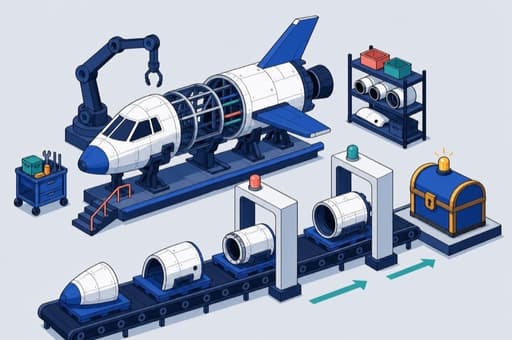
Long-running spacecraft and engineering jobs pay as agreed work is completed, rather than only at launch. Some contracts can stretch across fourteen years, so milestones, cost control and public budgets matter more than flight count.
Competes with CST-100 Starliner (Boeing) · Blue Moon (Blue Origin)
In plain English
Some space work is paid like a custom house build. NASA or a defense agency agrees on a spacecraft or engineering program, then SpaceX earns money in stages as design, testing and construction move forward. The Human Landing System for lunar missions is one anchor.
That makes progress—not the number of rockets launched—the meter for sales. A program can run for many years, and estimates of remaining work affect whether it makes or loses money. Funding decisions, technical approval and missed milestones can all move payment later, while a difficult design can cost more than the fixed price allows.
Starship
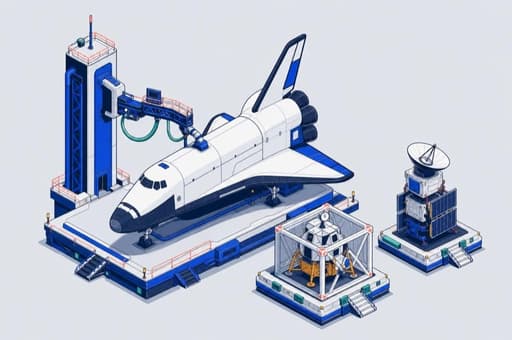
Starship is the large reusable vehicle meant to carry heavier payloads, deploy newer Starlink satellites and land astronauts on the Moon. Its flights through Q2 were internal, so outside launch demand and achieved costs remain unproven.
Competes with New Glenn (Blue Origin) · Vulcan Centaur (United Launch Alliance) · Blue Moon (Blue Origin)
In plain English
The giant vehicle is meant to be a bigger delivery truck for space: launch, return, refuel and fly again while carrying far more than Falcon. SpaceX needs it for larger Starlink satellites, and NASA is paying for a Moon-landing version through development milestones.
For now, Starship is infrastructure and a development program rather than a separately visible sales line. It could eventually earn from outside payload owners, but first reuse, in-space refueling, launch permission, pad turnaround and safe recovery must work repeatedly. The company's lower-cost targets are design ambitions, not economics already demonstrated by paying missions.


 AI Solutions & InfrastructureRented computer power, Grok subscriptions and data access are the fastest-growing sales line. One unnamed customer buying across all three businesses and another buying only AI supplied 37.8% of Q2 revenue together.
Rented computer power, Grok subscriptions and data access are the fastest-growing sales line. One unnamed customer buying across all three businesses and another buying only AI supplied 37.8% of Q2 revenue together.
In plain English
Think of a landlord for extremely powerful computers. SpaceX builds huge rooms full of computing machines, then reserves blocks of those machines for AI companies that need far more power than they can easily install themselves. It also charges for Grok, its AI assistant, and licenses access to software and data.
Large customers pay fixed monthly fees for reserved computer power; subscribers and software users pay for access. That can create repeat sales, but some cloud customers may cancel with ninety days' notice. The costly part comes first: chips, electricity, cooling and buildings must be ready before the rent arrives.
Competes with CoreWeave Cloud (CoreWeave) · Nebius AI Cloud (Nebius)
 AdvertisingPaid messages shown on X brought in $367M during Q2 and declined from a year earlier. User attention and advertisers' comfort with the platform matter more here than the rush to build AI computing sites.
Paid messages shown on X brought in $367M during Q2 and declined from a year earlier. User attention and advertisers' comfort with the platform matter more here than the rush to build AI computing sites.
In plain English
The old-fashioned media business sits inside the new AI group. People spend time reading and posting on X, and companies pay to place promoted messages in front of them. The advertiser is the customer; the audience's attention is what X has to sell.
Money rises when people visit often, ads reach the right buyers and marketers trust the setting around their messages. It falls when users drift away or brands grow wary. Unlike computer rentals, this line needs little new heavy equipment, but its latest quarterly sales were shrinking rather than growing.
Competes with Meta Ads (Meta Platforms) · Google Ads (Alphabet)
 CursorCursor joined SpaceX after Q2 in a share deal valuing it at $60B, not as sales. Its own revenue remains undisclosed; access to outside AI systems, computing costs and customer retention decide whether this new software arm holds up.
Cursor joined SpaceX after Q2 in a share deal valuing it at $60B, not as sales. Its own revenue remains undisclosed; access to outside AI systems, computing costs and customer retention decide whether this new software arm holds up.
In plain English
A programmer opens Cursor to write, inspect and change software with help from AI. It is like giving a mechanic a powered tool that can also search the manual and suggest the next repair. Individual developers and company engineering teams pay subscriptions to keep using it.
Those fees can repeat each month, but the service depends on outside AI systems as well as SpaceX computing power. If a supplier withdraws access, Cursor must replace that capability without making the product worse or more expensive. SpaceX bought the company in August, so the latest quarterly mix contains none of its sales.
Competes with GitHub Copilot (Microsoft/GitHub) · Claude Code (Anthropic) · Codex (OpenAI)
 ConsumerStarlink's home and roaming internet remains the largest single sales line, serving roughly twelve million subscribers by June. Subscriber growth is strong, but lower prices in newer markets mean each added household brings in less money.
Starlink's home and roaming internet remains the largest single sales line, serving roughly twelve million subscribers by June. Subscriber growth is strong, but lower prices in newer markets mean each added household brings in less money.
In plain English
A small dish on a home or vehicle talks to satellites overhead, bringing internet to places where cables and cell towers do a poor job. Customers usually pay month by month and can also buy the receiving kit.
It resembles a mobile-phone plan delivered from space: more subscribers mean more monthly fees, provided the satellites have room for all their traffic. SpaceX must keep launching capacity, secure local permission and make the hardware affordable. This is the broad cash engine, though the average monthly payment has fallen as Starlink reaches lower-price countries.
Competes with Amazon Leo (Amazon) · OneWeb (Eutelsat)
 Enterprise & GovernmentSatellite links for companies and public agencies form the second steady connectivity line. Across SpaceX, contracted work waiting to be delivered totaled $47.461B; turning large awards into durable service is the watchpoint.
Satellite links for companies and public agencies form the second steady connectivity line. Across SpaceX, contracted work waiting to be delivered totaled $47.461B; turning large awards into durable service is the watchpoint.
In plain English
The same satellite web that reaches homes is packaged for airlines, ships, phone companies and public agencies. These buyers need wider coverage, secure connections or service across whole fleets, so their deals are larger and more involved than a household plan.
An airline pays as aircraft are connected; a shipping operator pays for vessels; a government pays for communications, sensing or network projects. Installation partners may help put the equipment in place. Contracts can last longer than consumer subscriptions, but payment still depends on meeting service promises, gaining operating approval and delivering each project on schedule.
Competes with OneWeb enterprise connectivity (Eutelsat) · Inmarsat GX (Viasat)
 Starlink MobileOrdinary phones connect through satellites and mobile-company partners when ground networks cannot reach them. A roughly $19.6B purchase of more airwaves for phones could widen the service, but prices, user counts and revenue remain undisclosed.
Ordinary phones connect through satellites and mobile-company partners when ground networks cannot reach them. A roughly $19.6B purchase of more airwaves for phones could widen the service, but prices, user counts and revenue remain undisclosed.
In plain English
No special dish is the idea: an ordinary phone reaches a satellite when a normal cell tower is missing. SpaceX supplies the space connection, while mobile companies bring customers, phone compatibility and billing. Early service uses a narrow slice of the airwaves phones need, so it cannot yet behave like a full ground network.
The business becomes money when those partners bundle coverage or subscribers pay for it. More airwaves, new satellites and ground equipment could make the connection faster and more useful. Until approvals and transfers are complete, however, the large purchase commitment is a gate to the business rather than proof of demand.
Competes with BlueBird (AST SpaceMobile) · Lynk direct-to-device (Lynk Global)
 Launch ServicesFalcon rockets carry paying satellites and other payloads into space, with sales usually arriving when the mission flies. Only ten of thirty-seven Q2 Falcon missions served outside customers; internal Starlink trips bring no launch sale.
Falcon rockets carry paying satellites and other payloads into space, with sales usually arriving when the mission flies. Only ten of thirty-seven Q2 Falcon missions served outside customers; internal Starlink trips bring no launch sale.
In plain English
Here, the product is a ride to space. A satellite operator or government books room on a Falcon rocket, and SpaceX generally gets to count the sale when the payload actually launches. One rocket may carry a dedicated customer or share space among smaller payloads.
Reusing rockets and flying often can spread the cost of pads, engines and crews across more missions. But a busy launch calendar is not the same as outside demand: most recent Falcon flights carried SpaceX's own Starlink satellites, helping the internet business without creating launch revenue. Reliability, permits and customer readiness decide when paid missions happen.
Competes with Vulcan Centaur (United Launch Alliance) · New Glenn (Blue Origin)
 Launch & DevelopmentLong-running spacecraft and engineering jobs pay as agreed work is completed, rather than only at launch. Some contracts can stretch across fourteen years, so milestones, cost control and public budgets matter more than flight count.
Long-running spacecraft and engineering jobs pay as agreed work is completed, rather than only at launch. Some contracts can stretch across fourteen years, so milestones, cost control and public budgets matter more than flight count.
In plain English
Some space work is paid like a custom house build. NASA or a defense agency agrees on a spacecraft or engineering program, then SpaceX earns money in stages as design, testing and construction move forward. The Human Landing System for lunar missions is one anchor.
That makes progress—not the number of rockets launched—the meter for sales. A program can run for many years, and estimates of remaining work affect whether it makes or loses money. Funding decisions, technical approval and missed milestones can all move payment later, while a difficult design can cost more than the fixed price allows.
Competes with CST-100 Starliner (Boeing) · Blue Moon (Blue Origin)
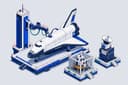 StarshipStarship is the large reusable vehicle meant to carry heavier payloads, deploy newer Starlink satellites and land astronauts on the Moon. Its flights through Q2 were internal, so outside launch demand and achieved costs remain unproven.
Starship is the large reusable vehicle meant to carry heavier payloads, deploy newer Starlink satellites and land astronauts on the Moon. Its flights through Q2 were internal, so outside launch demand and achieved costs remain unproven.
In plain English
The giant vehicle is meant to be a bigger delivery truck for space: launch, return, refuel and fly again while carrying far more than Falcon. SpaceX needs it for larger Starlink satellites, and NASA is paying for a Moon-landing version through development milestones.
For now, Starship is infrastructure and a development program rather than a separately visible sales line. It could eventually earn from outside payload owners, but first reuse, in-space refueling, launch permission, pad turnaround and safe recovery must work repeatedly. The company's lower-cost targets are design ambitions, not economics already demonstrated by paying missions.
Competes with New Glenn (Blue Origin) · Vulcan Centaur (United Launch Alliance) · Blue Moon (Blue Origin)
Named in filings, launches and programs
- StarshieldServiceSecure communications and sensing work for public agencies; its sales sit inside business and government links.
- Space Data Network BackboneCustomer programA $2.29B Space Force test network linking low-orbit satellites with light beams, targeted to operate by the end of 2027.
- DragonProductCrew and cargo spacecraft used for NASA and private flights carrying people into space.
- Human Landing SystemCustomer program · RampingNASA's Moon-landing program uses a Starship-derived vehicle and pays through long development milestones.
- Transporter RideshareServiceShared Falcon missions let several small payload owners split one ride to space.
- Starlink AviationServiceIn-flight internet sold through aircraft approval and airline fleet rollouts.
- Starlink MaritimeServiceSatellite internet for commercial and private vessels, paid by operators that need coverage away from shore.
- Starlink KitsProductReceiving dishes and related hardware; all SpaceX product sales together were $461M in Q2.
- Anthropic Cloud Services AgreementCustomer programMore than 220,000 NVIDIA computing chips were cited at Colossus I, a huge computing site serving Anthropic's Claude AI system.
- Google Cloud Services AgreementCustomer program · RampingComputer capacity scheduled to rise from October at $920M per month, subject to delivery and cancellation terms.
- Reflection AI Compute AgreementCustomer programColossus II computer capacity priced at a reported $150M per month from July, with later cancellation rights.
- GrokPlatformAI assistant and underlying software family earning money through subscriptions, software access and data licensing.
- StarmindProduct · AnnouncedPlanned satellites for running AI computing in orbit; management said launches should begin in 2027.
- TerafabProduct · AnnouncedA named initiative to make computer chips, with no disclosed sales or deployment timetable.
- Mesh OpticalBrandA company that moves data through light-based network equipment, acquired in July; its sales contribution has not been disclosed.
StarshieldService
Secure communications and sensing work for public agencies; its sales sit inside business and government links.
Space Data Network BackboneCustomer program
A $2.29B Space Force test network linking low-orbit satellites with light beams, targeted to operate by the end of 2027.
DragonProduct
Crew and cargo spacecraft used for NASA and private flights carrying people into space.
Human Landing SystemCustomer program · Ramping
NASA's Moon-landing program uses a Starship-derived vehicle and pays through long development milestones.
Transporter RideshareService
Shared Falcon missions let several small payload owners split one ride to space.
Starlink AviationService
In-flight internet sold through aircraft approval and airline fleet rollouts.
Starlink MaritimeService
Satellite internet for commercial and private vessels, paid by operators that need coverage away from shore.
Starlink KitsProduct
Receiving dishes and related hardware; all SpaceX product sales together were $461M in Q2.
Anthropic Cloud Services AgreementCustomer program
More than 220,000 NVIDIA computing chips were cited at Colossus I, a huge computing site serving Anthropic's Claude AI system.
Google Cloud Services AgreementCustomer program · Ramping
Computer capacity scheduled to rise from October at $920M per month, subject to delivery and cancellation terms.
Reflection AI Compute AgreementCustomer program
Colossus II computer capacity priced at a reported $150M per month from July, with later cancellation rights.
GrokPlatform
AI assistant and underlying software family earning money through subscriptions, software access and data licensing.
StarmindProduct · Announced
Planned satellites for running AI computing in orbit; management said launches should begin in 2027.
TerafabProduct · Announced
A named initiative to make computer chips, with no disclosed sales or deployment timetable.
Mesh OpticalBrand
A company that moves data through light-based network equipment, acquired in July; its sales contribution has not been disclosed.