
AT&T (T)
Connects U.S. consumers and businesses through wireless, fiber, and fixed-wireless broadband.
Something off on this page? Send us feedback.
AT&T is mostly a monthly-bill business: U.S. mobile service supplies the cash, while phone sales add volume but less dependable profit. The company is using that base to replace aging copper connections with fiber and radio-based home internet, trying to own both the phone in a customer's pocket and the line into the home.
Item facts: FY2025 · year ended Dec 31, 2025, from filings, earnings calls and company pages.
Judgment weights, not filed revenue
The band summarizes business focus and direction. ~ marks estimates.
7 in detail · 14 more below
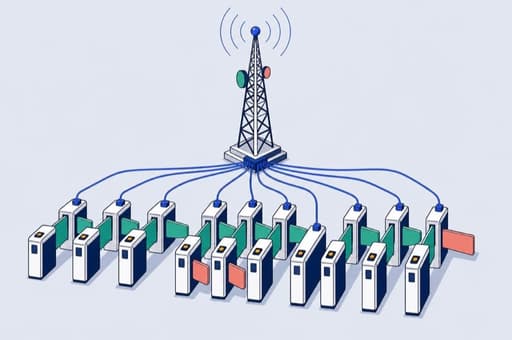
Wireless Service
Monthly U.S. mobile plans are the center of gravity: $67.38 billion of 2025 revenue. The watchpoint is whether better prices and customer mix can keep service growing without promotions or departures eating the gain.
Competes with Simplicity unlimited plans (Verizon) · Experience More/Beyond (T-Mobile)
In plain English
This is the signal behind calls, messages, and internet use on phones and other connected devices. Most customers pay a bill each month; others buy service in advance, and businesses can pay to put many devices on the network.
It works much like a utility in your pocket. AT&T keeps collecting while a connection stays active, so a customer who remains for years is worth far more than one phone sale. Price, plan choice, and how many people leave determine whether that dependable stream grows.
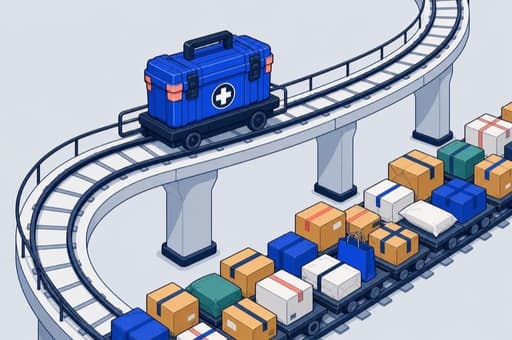
FirstNet
A nationwide network gives first responders priority when ordinary phone service is crowded. AT&T committed about $18 billion to sustain it; performance and resilience matter more here than consumer-style price competition.
Competes with Frontline (Verizon) · T-Priority (T-Mobile)
In plain English
When a stadium crowd jams ordinary phone service, firefighters and paramedics still need their devices to work. FirstNet is the dedicated public-safety arrangement that puts those users first on AT&T's network.
A federal authority provides radio airspace and funding, while AT&T builds, runs, and maintains the system under a long agreement. Emergency agencies buy connections for people and equipment. They keep paying because reliable coverage during disasters is part of the job, not a convenience.
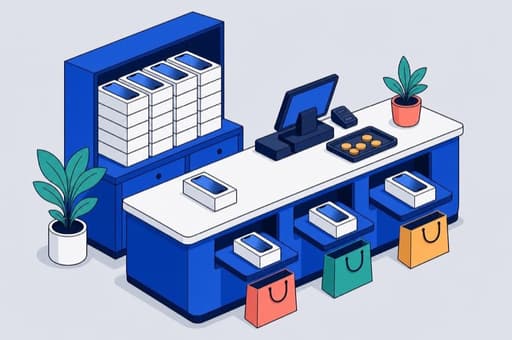
Equipment
Phones, other wireless devices, and customer-site gear produced $22.83 billion domestically in 2025. It is a large sales line but a weaker profit guide because device costs pass through and new launches make demand lumpy.
Competes with Device Payment Program (Verizon) · Equipment Installment Plan (T-Mobile) · Apple Upgrade (Apple/Klarna)
In plain English
The phone in the box is a sale, not a subscription. AT&T sells smartphones, other wireless devices, and equipment that business customers place at their own sites, often with monthly installments or a trade-in.
The shop counter helps bring in a new customer or keep an existing one, but much of the selling price pays for the device itself. That makes this line big without making it the heart of the economics. Release calendars, promotions, credit approvals, and replacement timing decide when the money arrives.
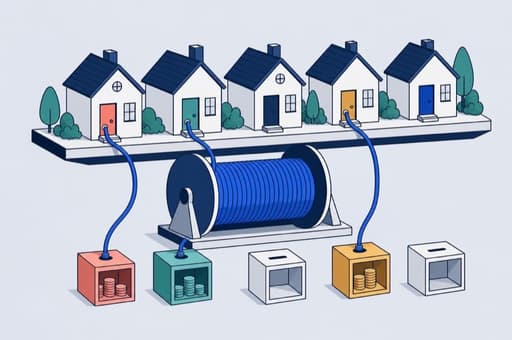
AT&T Fiber
Fiber-to-the-home internet generated $8.65 billion in 2025 and is AT&T's main expansion engine outside mobile. The build only pays off when enough homes along each new route sign up and stay.
Competes with GFiber 1/3/8 Gig (Alphabet) · Xfinity Internet (Comcast)
In plain English
Picture a new water pipe laid past a row of houses: digging the route costs money before anyone turns on a tap. AT&T Fiber does that with hair-thin glass cable, carrying home internet all the way to each subscribing property.
Households and small businesses choose a speed and pay every month. Once the cable is in the street, each extra signup adds a bill without rebuilding the whole route. The hard parts are reaching enough addresses, persuading enough of them to join, and keeping local cable and fiber rivals from taking them.
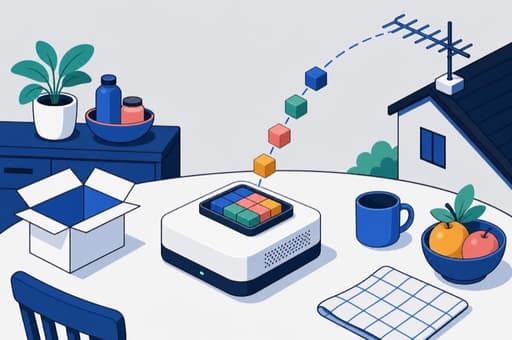
AT&T Internet Air
Self-installed home internet delivered over the mobile network generated roughly $0.7 billion in 2025 by estimate. It can reach homes quickly, but AT&T must limit availability where local radio capacity is already busy.
Competes with 5G Home Internet (Verizon) · 5G Home Internet (T-Mobile)
In plain English
Some homes can get AT&T internet without a crew laying cable to the door. A customer receives a small gateway, plugs it in, and the box connects to the same kind of radio network used by mobile devices.
The household pays a monthly bill, starting from the advertised price of $55, while self-installation keeps setup simple. AT&T can sell it at addresses fiber does not reach, using room already available on nearby radios. The catch is physical: too many home users in one area can crowd the network everyone shares.
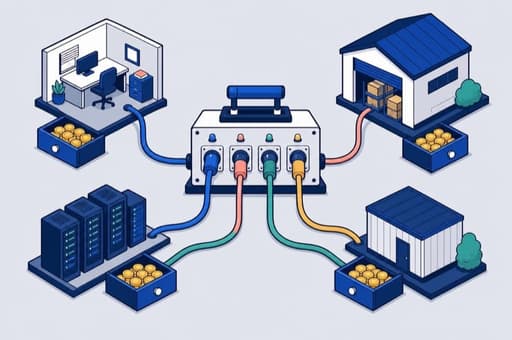
Fiber and Advanced Connectivity Services
Modern business connections grew 10.0% in the June 2026 quarter as companies replaced older networks. Keeping that pace depends on more replacements, suitable routes, installation timing, and customer moves.
Competes with Dedicated Internet Access (Lumen) · Private IP (Verizon)
In plain English
The unshowy plumbing between offices, small sites, and large computing centers. AT&T provides dedicated internet and private links over modern fiber so a business can move data reliably between its locations and the wider internet.
A small company may buy a published monthly plan; a large one negotiates a connection built around its sites and speed needs. Recurring bills follow once the line is working. Customers keep paying because changing a critical link is disruptive, but AT&T first has to put the right route in place and keep its promises for reliability.
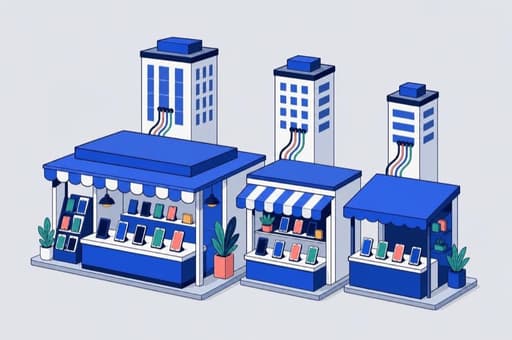
AT&T Mexico
Mexico adds a second national mobile market but remains small: $4.38 billion of 2025 revenue, with much thinner profit than U.S. mobile. It must win customers in a market led by Telcel.
Competes with Telcel (América Móvil) · Movistar (Telefónica)
In plain English
South of the U.S. business, AT&T runs a separate mobile carrier selling monthly plans, service paid in advance, and phones to Mexican consumers and companies. The recipe is familiar, but customer prices, currency, rules, and competitors are local.
People pay for a connection and sometimes a handset; stores, websites, and dealers bring them in. Keeping each subscriber and increasing how much service they buy makes the network more productive. The challenge is scale: Telcel holds the leading position, while AT&T Mexico earns far less on each dollar of sales than the domestic mobile operation.


 Wireless ServiceMonthly U.S. mobile plans are the center of gravity: $67.38 billion of 2025 revenue. The watchpoint is whether better prices and customer mix can keep service growing without promotions or departures eating the gain.
Monthly U.S. mobile plans are the center of gravity: $67.38 billion of 2025 revenue. The watchpoint is whether better prices and customer mix can keep service growing without promotions or departures eating the gain.
In plain English
This is the signal behind calls, messages, and internet use on phones and other connected devices. Most customers pay a bill each month; others buy service in advance, and businesses can pay to put many devices on the network.
It works much like a utility in your pocket. AT&T keeps collecting while a connection stays active, so a customer who remains for years is worth far more than one phone sale. Price, plan choice, and how many people leave determine whether that dependable stream grows.
Competes with Simplicity unlimited plans (Verizon) · Experience More/Beyond (T-Mobile)
 FirstNetA nationwide network gives first responders priority when ordinary phone service is crowded. AT&T committed about $18 billion to sustain it; performance and resilience matter more here than consumer-style price competition.
A nationwide network gives first responders priority when ordinary phone service is crowded. AT&T committed about $18 billion to sustain it; performance and resilience matter more here than consumer-style price competition.
In plain English
When a stadium crowd jams ordinary phone service, firefighters and paramedics still need their devices to work. FirstNet is the dedicated public-safety arrangement that puts those users first on AT&T's network.
A federal authority provides radio airspace and funding, while AT&T builds, runs, and maintains the system under a long agreement. Emergency agencies buy connections for people and equipment. They keep paying because reliable coverage during disasters is part of the job, not a convenience.
Competes with Frontline (Verizon) · T-Priority (T-Mobile)
 EquipmentPhones, other wireless devices, and customer-site gear produced $22.83 billion domestically in 2025. It is a large sales line but a weaker profit guide because device costs pass through and new launches make demand lumpy.
Phones, other wireless devices, and customer-site gear produced $22.83 billion domestically in 2025. It is a large sales line but a weaker profit guide because device costs pass through and new launches make demand lumpy.
In plain English
The phone in the box is a sale, not a subscription. AT&T sells smartphones, other wireless devices, and equipment that business customers place at their own sites, often with monthly installments or a trade-in.
The shop counter helps bring in a new customer or keep an existing one, but much of the selling price pays for the device itself. That makes this line big without making it the heart of the economics. Release calendars, promotions, credit approvals, and replacement timing decide when the money arrives.
Competes with Device Payment Program (Verizon) · Equipment Installment Plan (T-Mobile) · Apple Upgrade (Apple/Klarna)
 AT&T FiberFiber-to-the-home internet generated $8.65 billion in 2025 and is AT&T's main expansion engine outside mobile. The build only pays off when enough homes along each new route sign up and stay.
Fiber-to-the-home internet generated $8.65 billion in 2025 and is AT&T's main expansion engine outside mobile. The build only pays off when enough homes along each new route sign up and stay.
In plain English
Picture a new water pipe laid past a row of houses: digging the route costs money before anyone turns on a tap. AT&T Fiber does that with hair-thin glass cable, carrying home internet all the way to each subscribing property.
Households and small businesses choose a speed and pay every month. Once the cable is in the street, each extra signup adds a bill without rebuilding the whole route. The hard parts are reaching enough addresses, persuading enough of them to join, and keeping local cable and fiber rivals from taking them.
Competes with GFiber 1/3/8 Gig (Alphabet) · Xfinity Internet (Comcast)
 AT&T Internet AirSelf-installed home internet delivered over the mobile network generated roughly $0.7 billion in 2025 by estimate. It can reach homes quickly, but AT&T must limit availability where local radio capacity is already busy.
Self-installed home internet delivered over the mobile network generated roughly $0.7 billion in 2025 by estimate. It can reach homes quickly, but AT&T must limit availability where local radio capacity is already busy.
In plain English
Some homes can get AT&T internet without a crew laying cable to the door. A customer receives a small gateway, plugs it in, and the box connects to the same kind of radio network used by mobile devices.
The household pays a monthly bill, starting from the advertised price of $55, while self-installation keeps setup simple. AT&T can sell it at addresses fiber does not reach, using room already available on nearby radios. The catch is physical: too many home users in one area can crowd the network everyone shares.
Competes with 5G Home Internet (Verizon) · 5G Home Internet (T-Mobile)
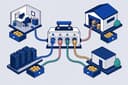 Fiber and Advanced Connectivity ServicesModern business connections grew 10.0% in the June 2026 quarter as companies replaced older networks. Keeping that pace depends on more replacements, suitable routes, installation timing, and customer moves.
Modern business connections grew 10.0% in the June 2026 quarter as companies replaced older networks. Keeping that pace depends on more replacements, suitable routes, installation timing, and customer moves.
In plain English
The unshowy plumbing between offices, small sites, and large computing centers. AT&T provides dedicated internet and private links over modern fiber so a business can move data reliably between its locations and the wider internet.
A small company may buy a published monthly plan; a large one negotiates a connection built around its sites and speed needs. Recurring bills follow once the line is working. Customers keep paying because changing a critical link is disruptive, but AT&T first has to put the right route in place and keep its promises for reliability.
Competes with Dedicated Internet Access (Lumen) · Private IP (Verizon)
 AT&T MexicoMexico adds a second national mobile market but remains small: $4.38 billion of 2025 revenue, with much thinner profit than U.S. mobile. It must win customers in a market led by Telcel.
Mexico adds a second national mobile market but remains small: $4.38 billion of 2025 revenue, with much thinner profit than U.S. mobile. It must win customers in a market led by Telcel.
In plain English
South of the U.S. business, AT&T runs a separate mobile carrier selling monthly plans, service paid in advance, and phones to Mexican consumers and companies. The recipe is familiar, but customer prices, currency, rules, and competitors are local.
People pay for a connection and sometimes a handset; stores, websites, and dealers bring them in. Keeping each subscriber and increasing how much service they buy makes the network more productive. The challenge is scale: Telcel holds the leading position, while AT&T Mexico earns far less on each dollar of sales than the domestic mobile operation.
Competes with Telcel (América Móvil) · Movistar (Telefónica)
Named in filings, launches and programs
- Cricket WirelessBrandValue-priced prepaid phone service whose customer bills sit inside domestic wireless service.
- AT&T PREPAIDBrandAT&T-branded phone plans paid in advance, with their money counted inside domestic wireless service.
- Unlimited Your WayCustomer programMix-and-match monthly phone plans that let customers choose different service levels for lines on one account.
- OneConnectCustomer programOne subscription joining eligible AT&T Fiber and mobile service, meant to deepen the household relationship and reduce departures.
- AT&T Internet Air for BusinessServiceSelf-installed internet over the mobile network for eligible small-business locations.
- AT&T Dedicated InternetServiceA quoted, dedicated internet connection for business sites; its sales sit inside modern business connectivity.
- GigapowerEcosystem · RampingA half-owned shared fiber network that extends the addresses AT&T can serve beyond the lines it owns outright.
- Forged Fiber 37 ServicesBrandHolds the acquired Lumen fiber network while AT&T looks for an outside investor to take control.
- Boost Mobile wholesale network-services agreementCustomer programA long-term arrangement making AT&T the main network provider behind EchoStar's Boost Mobile service.
- Satellite direct-to-device joint ventureEcosystem · AnnouncedA proposed venture with T-Mobile and Verizon to connect ordinary phones through satellites; final agreements and closing are still pending.
- AST SpaceMobileEcosystem · AnnouncedA satellite collaboration intended to extend AT&T phone coverage into remote areas.
- AT&T Dynamic DefenseServiceSecurity controls built into AT&T's network to stop threats before they reach a customer's connection.
- AZIO AI master services agreementCustomer program · AnnouncedA roughly $2.4 million fiber commitment for an initial Texas artificial-intelligence campus—strategic-sounding, but financially tiny today.
- DriveNetsEcosystemA network-software investment in which AT&T owned 16.6% at the end of 2025.
Cricket WirelessBrand
Value-priced prepaid phone service whose customer bills sit inside domestic wireless service.
AT&T PREPAIDBrand
AT&T-branded phone plans paid in advance, with their money counted inside domestic wireless service.
Unlimited Your WayCustomer program
Mix-and-match monthly phone plans that let customers choose different service levels for lines on one account.
OneConnectCustomer program
One subscription joining eligible AT&T Fiber and mobile service, meant to deepen the household relationship and reduce departures.
AT&T Internet Air for BusinessService
Self-installed internet over the mobile network for eligible small-business locations.
AT&T Dedicated InternetService
A quoted, dedicated internet connection for business sites; its sales sit inside modern business connectivity.
GigapowerEcosystem · Ramping
A half-owned shared fiber network that extends the addresses AT&T can serve beyond the lines it owns outright.
Forged Fiber 37 ServicesBrand
Holds the acquired Lumen fiber network while AT&T looks for an outside investor to take control.
Boost Mobile wholesale network-services agreementCustomer program
A long-term arrangement making AT&T the main network provider behind EchoStar's Boost Mobile service.
Satellite direct-to-device joint ventureEcosystem · Announced
A proposed venture with T-Mobile and Verizon to connect ordinary phones through satellites; final agreements and closing are still pending.
AST SpaceMobileEcosystem · Announced
A satellite collaboration intended to extend AT&T phone coverage into remote areas.
AT&T Dynamic DefenseService
Security controls built into AT&T's network to stop threats before they reach a customer's connection.
AZIO AI master services agreementCustomer program · Announced
A roughly $2.4 million fiber commitment for an initial Texas artificial-intelligence campus—strategic-sounding, but financially tiny today.
DriveNetsEcosystem
A network-software investment in which AT&T owned 16.6% at the end of 2025.