
Teradyne (TER)
Builds semiconductor and electronics test systems alongside collaborative and autonomous mobile robots.
Something off on this page? Send us feedback.
Teradyne builds the machines that put finished chips through their paces before they ship — plug the chip in, run it hard, see whether it breaks. For years phones drove that work; now the buying follows AI datacenters and the memory stacked beside them. A robot-arm business sits alongside, climbing back after a lean year. Everything here rises and falls with what chipmakers spend.
Item facts: FY2025 · year ended Dec 31, 2025, from filings, earnings calls and company pages.
Judgment weights, not filed revenue
The band summarizes business focus and direction. ~ marks estimates.
8 in detail · 10 more below
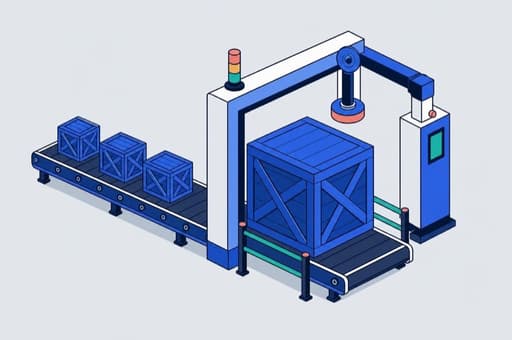
UltraFLEX / UltraFLEXplus
The flagship tester for the biggest computer chips, and the engine of the company. One buyer was 19% of 2025 revenue, and two chip designers who choose the tester sat behind another 12% and 10%. Advantest is the larger rival.
Competes with V93000 chip test platform (Advantest) · T2000 tester (Advantest) · In-house test setups (Large chipmakers)
In plain English
A chip can come off the line looking perfect and still be dead. Teradyne's answer is a machine that grips the chip, runs it through a punishing sequence of electrical tests and sorts good from bad. UltraFLEXplus is the top of the range, built for the big brain chips inside AI servers.
The buyers are the plants that make and package chips — some for others, some their own — though the company that designed the chip usually decides which tester the plant must use. Each machine is a base cabinet customers keep filling with extra measuring instruments, so one sale keeps selling. Work for AI computers went from roughly a tenth of these logic-chip sales in 2023 to about seven in ten by spring 2026.
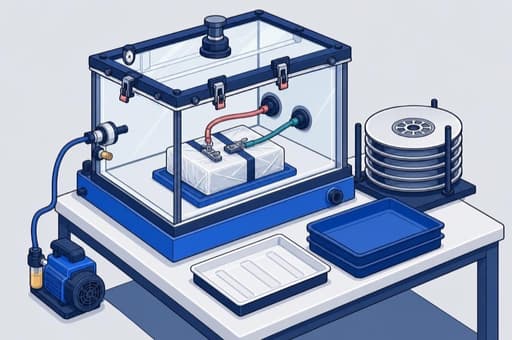
Integrated System Test — Titan HP and Saturn
Testing after packaging: running a finished chip as if it were already in a server, plus test rigs for storage drives. About $130M in 2025, up 53%, and steadily adding customer names.
Competes with Island test platform for packaged chips (Cohu) · Test cells for packaged chips (Advantest) · In-house test rigs (Drive makers and datacenter operators)
In plain English
Some faults only appear when a chip is doing real work, hot and loaded — the way a car passes inspection in the lot and then stalls on the motorway. So once a chip has been sealed into its package, Titan machines run it in something close to its real working conditions. A sister line, Saturn, tests finished hard drives and solid-state drives.
It is the smallest of the chip-test lines and the one that has been widening its customer list: drive test now reaches all three big drive makers, and two customers began using it on AI accelerator chips in 2025. Management's own caution is that there is a lot of upside to go before it moves the needle.
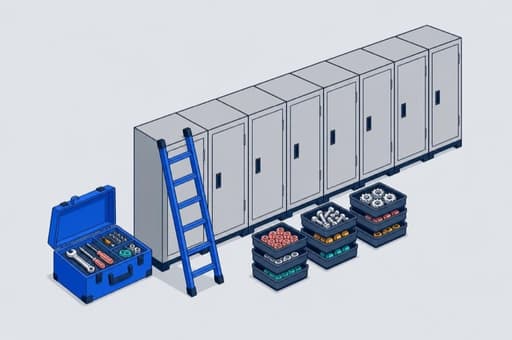
Service, Support and Upgrades
Spares, calibration, training and add-on upgrades for machines already installed — $529.8M in 2025, barely changed from 2024 while machine sales doubled around it. Watch whether the 2026 shipping surge finally pulls it up.
Competes with Field service and upgrade programs (Advantest) · Servicing of older testers (Independent service shops) · In-house maintenance teams (Large chipmakers)
In plain English
Nobody buys a tester for the service contract. It arrives anyway. A machine that stays on a customer's floor needs spare parts, calibration visits, staff training and the odd bolt-on upgrade, and Teradyne sells all of it — much like a lift in an office block, where installing it is one payday and servicing it arrives every year after.
The catch is the lag. This income follows past shipments, so it sat flat through 2025 and, by the spring 2026 quarter, had slipped to about a tenth of company sales from about a fifth a year earlier — purely because machine sales doubled around it. The robot business runs the same attachment, at 14% of its sales in one 2025 quarter.

Magnum Memory Test
Machines that test memory chips, including the layered stacks that sit beside AI processors. Flat at $504M in 2025, then spring 2026 brought more than two dollars of new orders for every dollar shipped.
Competes with T5801 memory tester (Advantest) · Test cells for memory before stacking (Advantest and FormFactor) · Memory testers (Regional Asian suppliers)
In plain English
Memory is the notepad a computer scribbles on. For AI work those chips get stacked in layers and mounted right beside the processor, and they get tested twice over — before the layers go together and again once the finished chip is packaged.
Magnum is the family of machines that does that testing, sold to the handful of companies that make the world's memory. Sales sat flat through 2025 in a quiet memory year, then the AI build-out landed: orders in spring 2026 ran at more than twice what shipped, and management expects the memory-test market to be over 40% bigger in 2026 than in 2025.
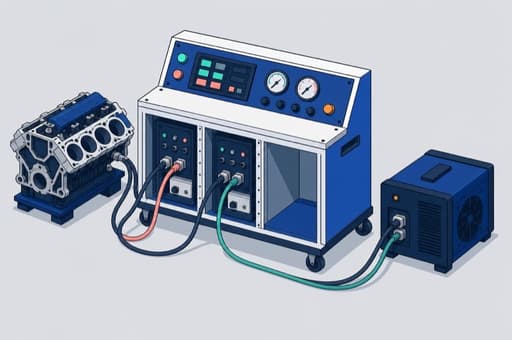
ETS / Eagle Test
The cheaper machines for the everyday chips in cars, factories and power supplies — about an eighth of sales. Management calls the car-chip recovery moderate rather than a boom, and names this line as a second-half 2026 growth source.
Competes with T2000 tester for car and power chips (Advantest) · Diamondx power and radio-chip test (Cohu) · Testers for everyday chips (Regional suppliers in China and Taiwan)
In plain English
Not every chip is a superstar. Most are quiet workhorses: the part that manages a car's battery, the one that steps voltage down inside a power supply. ETS and Eagle are the cost-cut cousins of the flagship tester, built for exactly those parts.
Car makers, industrial firms and power-chip suppliers are the buyers, and their spending moves with the car cycle rather than with AI. In 2025 Teradyne bought a small unit from Infineon, the German chipmaker, for €17.6M, to cover chips made from tougher materials that handle high voltage.
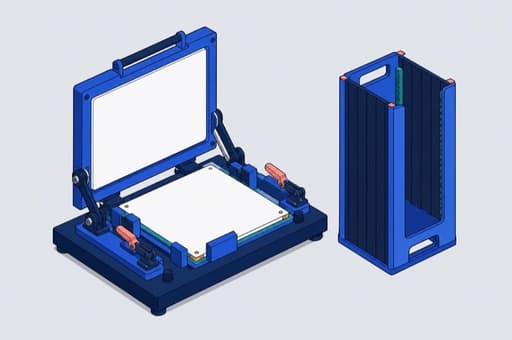
Production Board Test — TestStation and Omnyx
Testers for finished circuit boards rather than bare chips — a few percent of sales. Omnyx, aimed at AI server boards and the trays they slot into, shipped its first units in spring 2026; that is the piece to watch.
Competes with i3070 board tester (Keysight) · Board test systems (TRI) · Board test systems (SPEA)
In plain English
Zoom out one step from the chip. A circuit board carries hundreds of parts, and before it goes into a server or a car somebody has to confirm two things: that every part is the right one, sitting where it should, and that the assembled board actually does its job. TestStation is the machine for that.
The customers are the plants that assemble boards in volume. Omnyx, announced in April 2026, is the newer machine built for AI server boards and the large trays they mount into, with first units out the door in the spring quarter.
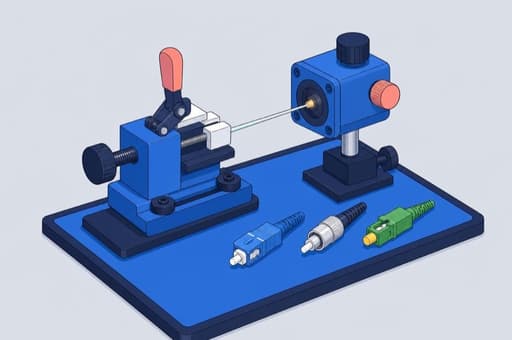
Photonics and High-Speed Link Test
Test gear for the light-based and high-speed copper links that carry data around AI datacenters. Tiny today; management sizes one slice of that testing market at $300–700M by 2028.
Competes with Optical test and measurement systems (Keysight) · Optical test instruments (EXFO) · Optical test instruments (VIAVI)
In plain English
Inside an AI datacenter, more and more data travels as pulses of light down glass fibre instead of electricity down copper wire. The parts that switch between the two are fiddly, and someone has to check they work.
Teradyne bought its way into this: Quantifi Photonics, a maker of light-measuring instruments, for $127.2M in 2025, then three-quarters of MultiLane Test Products — the copper, high-speed side — for about $157M in April 2026. Photon 100, launched in March 2026, is built on the same frame as the flagship chip tester. It earns very little so far, and which style of connection wins is still unsettled.
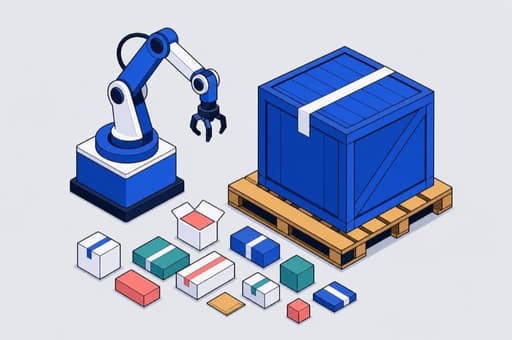
Universal Robots
Robot arms safe enough to work beside people, and roughly a third of that market. After a poor 2025 the robot segment grew four quarters running, reaching $100M in spring 2026, up 33%.
Competes with CRX robot arms (FANUC) · GoFa robot arms (ABB) · Lower-priced robot arms (Techman and AUBO)
In plain English
Picture a robot arm meant to work alongside people rather than fenced off on its own. Bolt it to a bench and it packs boxes, feeds a machine or tightens lids all day. Universal Robots sells these through distributors and the firms that install factory equipment, and increasingly straight to very large customers.
The arm is the sale; the buyer supplies the job it does. 2025 was thin — the smaller resellers stayed quiet even as the biggest accounts grew — but the robot segment, arms plus its warehouse-cart sibling, has grown every quarter since. There is also an AI development kit for the arms, built with NVIDIA and launched in late 2024.


 UltraFLEX / UltraFLEXplusThe flagship tester for the biggest computer chips, and the engine of the company. One buyer was 19% of 2025 revenue, and two chip designers who choose the tester sat behind another 12% and 10%. Advantest is the larger rival.
The flagship tester for the biggest computer chips, and the engine of the company. One buyer was 19% of 2025 revenue, and two chip designers who choose the tester sat behind another 12% and 10%. Advantest is the larger rival.
In plain English
A chip can come off the line looking perfect and still be dead. Teradyne's answer is a machine that grips the chip, runs it through a punishing sequence of electrical tests and sorts good from bad. UltraFLEXplus is the top of the range, built for the big brain chips inside AI servers.
The buyers are the plants that make and package chips — some for others, some their own — though the company that designed the chip usually decides which tester the plant must use. Each machine is a base cabinet customers keep filling with extra measuring instruments, so one sale keeps selling. Work for AI computers went from roughly a tenth of these logic-chip sales in 2023 to about seven in ten by spring 2026.
Competes with V93000 chip test platform (Advantest) · T2000 tester (Advantest) · In-house test setups (Large chipmakers)
 Integrated System Test — Titan HP and SaturnTesting after packaging: running a finished chip as if it were already in a server, plus test rigs for storage drives. About $130M in 2025, up 53%, and steadily adding customer names.
Testing after packaging: running a finished chip as if it were already in a server, plus test rigs for storage drives. About $130M in 2025, up 53%, and steadily adding customer names.
In plain English
Some faults only appear when a chip is doing real work, hot and loaded — the way a car passes inspection in the lot and then stalls on the motorway. So once a chip has been sealed into its package, Titan machines run it in something close to its real working conditions. A sister line, Saturn, tests finished hard drives and solid-state drives.
It is the smallest of the chip-test lines and the one that has been widening its customer list: drive test now reaches all three big drive makers, and two customers began using it on AI accelerator chips in 2025. Management's own caution is that there is a lot of upside to go before it moves the needle.
Competes with Island test platform for packaged chips (Cohu) · Test cells for packaged chips (Advantest) · In-house test rigs (Drive makers and datacenter operators)
 Service, Support and UpgradesSpares, calibration, training and add-on upgrades for machines already installed — $529.8M in 2025, barely changed from 2024 while machine sales doubled around it. Watch whether the 2026 shipping surge finally pulls it up.
Spares, calibration, training and add-on upgrades for machines already installed — $529.8M in 2025, barely changed from 2024 while machine sales doubled around it. Watch whether the 2026 shipping surge finally pulls it up.
In plain English
Nobody buys a tester for the service contract. It arrives anyway. A machine that stays on a customer's floor needs spare parts, calibration visits, staff training and the odd bolt-on upgrade, and Teradyne sells all of it — much like a lift in an office block, where installing it is one payday and servicing it arrives every year after.
The catch is the lag. This income follows past shipments, so it sat flat through 2025 and, by the spring 2026 quarter, had slipped to about a tenth of company sales from about a fifth a year earlier — purely because machine sales doubled around it. The robot business runs the same attachment, at 14% of its sales in one 2025 quarter.
Competes with Field service and upgrade programs (Advantest) · Servicing of older testers (Independent service shops) · In-house maintenance teams (Large chipmakers)
 Magnum Memory TestMachines that test memory chips, including the layered stacks that sit beside AI processors. Flat at $504M in 2025, then spring 2026 brought more than two dollars of new orders for every dollar shipped.
Machines that test memory chips, including the layered stacks that sit beside AI processors. Flat at $504M in 2025, then spring 2026 brought more than two dollars of new orders for every dollar shipped.
In plain English
Memory is the notepad a computer scribbles on. For AI work those chips get stacked in layers and mounted right beside the processor, and they get tested twice over — before the layers go together and again once the finished chip is packaged.
Magnum is the family of machines that does that testing, sold to the handful of companies that make the world's memory. Sales sat flat through 2025 in a quiet memory year, then the AI build-out landed: orders in spring 2026 ran at more than twice what shipped, and management expects the memory-test market to be over 40% bigger in 2026 than in 2025.
Competes with T5801 memory tester (Advantest) · Test cells for memory before stacking (Advantest and FormFactor) · Memory testers (Regional Asian suppliers)
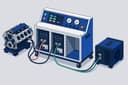 ETS / Eagle TestThe cheaper machines for the everyday chips in cars, factories and power supplies — about an eighth of sales. Management calls the car-chip recovery moderate rather than a boom, and names this line as a second-half 2026 growth source.
The cheaper machines for the everyday chips in cars, factories and power supplies — about an eighth of sales. Management calls the car-chip recovery moderate rather than a boom, and names this line as a second-half 2026 growth source.
In plain English
Not every chip is a superstar. Most are quiet workhorses: the part that manages a car's battery, the one that steps voltage down inside a power supply. ETS and Eagle are the cost-cut cousins of the flagship tester, built for exactly those parts.
Car makers, industrial firms and power-chip suppliers are the buyers, and their spending moves with the car cycle rather than with AI. In 2025 Teradyne bought a small unit from Infineon, the German chipmaker, for €17.6M, to cover chips made from tougher materials that handle high voltage.
Competes with T2000 tester for car and power chips (Advantest) · Diamondx power and radio-chip test (Cohu) · Testers for everyday chips (Regional suppliers in China and Taiwan)
 Production Board Test — TestStation and OmnyxTesters for finished circuit boards rather than bare chips — a few percent of sales. Omnyx, aimed at AI server boards and the trays they slot into, shipped its first units in spring 2026; that is the piece to watch.
Testers for finished circuit boards rather than bare chips — a few percent of sales. Omnyx, aimed at AI server boards and the trays they slot into, shipped its first units in spring 2026; that is the piece to watch.
In plain English
Zoom out one step from the chip. A circuit board carries hundreds of parts, and before it goes into a server or a car somebody has to confirm two things: that every part is the right one, sitting where it should, and that the assembled board actually does its job. TestStation is the machine for that.
The customers are the plants that assemble boards in volume. Omnyx, announced in April 2026, is the newer machine built for AI server boards and the large trays they mount into, with first units out the door in the spring quarter.
Competes with i3070 board tester (Keysight) · Board test systems (TRI) · Board test systems (SPEA)
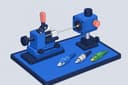 Photonics and High-Speed Link TestTest gear for the light-based and high-speed copper links that carry data around AI datacenters. Tiny today; management sizes one slice of that testing market at $300–700M by 2028.
Test gear for the light-based and high-speed copper links that carry data around AI datacenters. Tiny today; management sizes one slice of that testing market at $300–700M by 2028.
In plain English
Inside an AI datacenter, more and more data travels as pulses of light down glass fibre instead of electricity down copper wire. The parts that switch between the two are fiddly, and someone has to check they work.
Teradyne bought its way into this: Quantifi Photonics, a maker of light-measuring instruments, for $127.2M in 2025, then three-quarters of MultiLane Test Products — the copper, high-speed side — for about $157M in April 2026. Photon 100, launched in March 2026, is built on the same frame as the flagship chip tester. It earns very little so far, and which style of connection wins is still unsettled.
Competes with Optical test and measurement systems (Keysight) · Optical test instruments (EXFO) · Optical test instruments (VIAVI)
 Universal RobotsRobot arms safe enough to work beside people, and roughly a third of that market. After a poor 2025 the robot segment grew four quarters running, reaching $100M in spring 2026, up 33%.
Robot arms safe enough to work beside people, and roughly a third of that market. After a poor 2025 the robot segment grew four quarters running, reaching $100M in spring 2026, up 33%.
In plain English
Picture a robot arm meant to work alongside people rather than fenced off on its own. Bolt it to a bench and it packs boxes, feeds a machine or tightens lids all day. Universal Robots sells these through distributors and the firms that install factory equipment, and increasingly straight to very large customers.
The arm is the sale; the buyer supplies the job it does. 2025 was thin — the smaller resellers stayed quiet even as the biggest accounts grew — but the robot segment, arms plus its warehouse-cart sibling, has grown every quarter since. There is also an AI development kit for the arms, built with NVIDIA and launched in late 2024.
Competes with CRX robot arms (FANUC) · GoFa robot arms (ABB) · Lower-priced robot arms (Techman and AUBO)
Named in filings, launches and programs
- Mobile Industrial Robots (MiR)BrandSelf-driving warehouse carts and pallet jacks sold alongside the arms — about $45M over the first three quarters of 2025; its sales team merged with UR's.
- Defense & Aerospace TestProduct lineSpectrum, Guardian, Tempo and VERTA systems test military and aerospace electronics — the strongest driver of the non-chip test segment in 2025.
- LitePointBrandTests wireless chips and gadgets — Wi-Fi, cellular, and short-range radio. Won all 13 Wi-Fi 7 chances it chased in early 2025; work with STMicroelectronics announced August 2026.
- J750 / IP750 image-sensor testProduct lineThe cheaper, older testers for phone, consumer and camera-sensor chips. Still shipping, still paying — but mobile is the part management calls uncertain.
- TestInsightPlatformSoftware for writing chip tests that also runs on rivals' machines; bought April 2026, together with MultiLane using about $165M of cash off a credit line.
- Known-good-die cell with Tokyo ElectronProduct line · AnnouncedThe flagship tester paired with Tokyo Electron's prober, introduced June 2026, to screen individual chips before they are assembled into AI and datacenter packages.
- Merchant GPU test programCustomer program · RampingA graphics-chip maker placed first production orders in early 2026 and took delivery that spring; roughly $50M of 2026 revenue in sight. Customer not named.
- Second datacenter compute programCustomer program · AnnouncedA second large datacenter operator finished matching results across two tester platforms in spring 2026; management frames it as a 2027 share gain. Not named.
- Large e-commerce robotics accountCustomer program · RampingAn online retailer settled on UR arms as its standard in mid-2025 and was more than 5% of robot sales by the December quarter. Not named.
- Technoprobe stakeBrandTeradyne sold the unit making the hardware that links testers to chips to Technoprobe in 2024, keeping a holding; a tenth of Technoprobe's profit lands a quarter late.
Mobile Industrial Robots (MiR)Brand
Self-driving warehouse carts and pallet jacks sold alongside the arms — about $45M over the first three quarters of 2025; its sales team merged with UR's.
Defense & Aerospace TestProduct line
Spectrum, Guardian, Tempo and VERTA systems test military and aerospace electronics — the strongest driver of the non-chip test segment in 2025.
LitePointBrand
Tests wireless chips and gadgets — Wi-Fi, cellular, and short-range radio. Won all 13 Wi-Fi 7 chances it chased in early 2025; work with STMicroelectronics announced August 2026.
J750 / IP750 image-sensor testProduct line
The cheaper, older testers for phone, consumer and camera-sensor chips. Still shipping, still paying — but mobile is the part management calls uncertain.
TestInsightPlatform
Software for writing chip tests that also runs on rivals' machines; bought April 2026, together with MultiLane using about $165M of cash off a credit line.
Known-good-die cell with Tokyo ElectronProduct line · Announced
The flagship tester paired with Tokyo Electron's prober, introduced June 2026, to screen individual chips before they are assembled into AI and datacenter packages.
Merchant GPU test programCustomer program · Ramping
A graphics-chip maker placed first production orders in early 2026 and took delivery that spring; roughly $50M of 2026 revenue in sight. Customer not named.
Second datacenter compute programCustomer program · Announced
A second large datacenter operator finished matching results across two tester platforms in spring 2026; management frames it as a 2027 share gain. Not named.
Large e-commerce robotics accountCustomer program · Ramping
An online retailer settled on UR arms as its standard in mid-2025 and was more than 5% of robot sales by the December quarter. Not named.
Technoprobe stakeBrand
Teradyne sold the unit making the hardware that links testers to chips to Technoprobe in 2024, keeping a holding; a tenth of Technoprobe's profit lands a quarter late.