
TPG (TPG)
Manages private equity, growth, impact, credit, real estate, and market-solutions strategies.
Something off on this page? Send us feedback.
TPG invests money for big institutions, insurers and, lately, well-off individuals, charging a fee for the work and keeping a slice of the profits. Buying whole companies built the firm and still brings in most of the fees. Lending is now the bigger pile of assets, and a long-term deal with an insurer keeps feeding it. The profit slice is stacking up on paper, waiting on sales that keep slipping.
Item facts: H1 FY2026 · six months ended Jun 30, 2026, from filings, earnings calls and company pages.
Judgment weights, not filed revenue
The band summarizes business focus and direction. ~ marks estimates.
9 in detail · 14 more below

TPG Capital
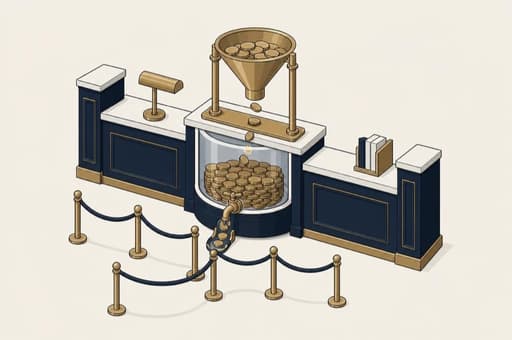
The flagship buy-the-whole-company business — TPG Capital, Healthcare Partners, TPG Asia — with $94.1B of assets and the steepest fee rate in the house. Its two newest funds had gathered over $14B by August, mostly from investors already on the books.
Competes with Blackstone Capital Partners IX (Blackstone) · North America Fund XIV (KKR)
In plain English
Buy a company outright, run it for years, sell it to the next owner — that is the old-fashioned engine at the centre of TPG. Healthcare is a big slice of what it buys here, and a separate arm does the same across Asia.
The money behaves like a gym membership. Large institutions commit cash and pay an annual charge on it whether or not anything is bought or sold that year; when a holding is eventually sold at a profit, TPG also keeps a slice of the gain. The annual charge here is the steepest of any TPG platform, which is why this one carries the most fee income.
T-POP and TCAP (Global Wealth Solutions)
TPG's push to sell its funds to individuals, not only institutions. T-POP, the always-open private equity fund launched in June 2025, held $2.9B by mid-2026 and drew roughly $450M of new money that quarter. TCAP does the same in lending.
Competes with BXPE (Blackstone) · BCRED (Blackstone) · OCIC (Blue Owl)
In plain English
T-POP is a private equity fund that never closes its doors. Money can go in and, within limits, come back out again — which is what makes it sellable through big brokerages and private banks, rather than only to institutions writing enormous cheques.
TCAP is the same idea pointed at lending, stocked with loans that Twin Brook, TPG's mid-size-company lender, writes itself. Both earn TPG an annual charge on whatever is parked inside, so the business grows exactly as fast as those distributors gather money. The honest caveat: TPG has said buyers of private-lending funds across the industry have turned cautious.
TPG Credit
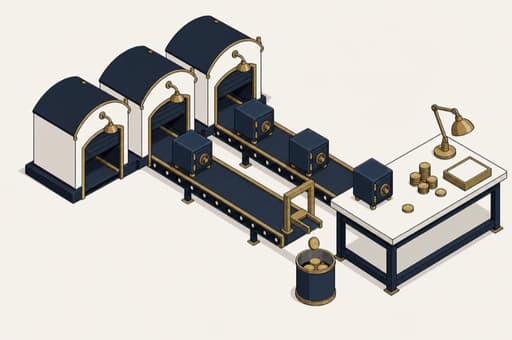
The biggest pile of assets in the house at $101.2B, mostly loans to mid-size companies. It raised $21B and lent out $25B in 2025, both records. Across the whole firm, another $39B is committed but not yet charging fees.
Competes with Senior Direct Lending / Ares Capital (Ares) · Blue Owl Credit / OBDC (Blue Owl)
In plain English
Lending, not owning. TPG gathers money from investors and hands it to companies as loans — mostly mid-size ones, through its Twin Brook arm — and also lends against hard assets rather than a borrower's promise alone. Most of this arrived with the 2023 purchase of Angelo Gordon, the firm that built out this side of the house.
Borrowers pay interest, the investors take most of it, and TPG keeps an annual charge for running the pot. That charge is thinner per dollar than the buyout side gets, which is why the largest platform by assets is not the largest by fees. In the spring quarter, 1.4% of the loans were not paying on schedule.
Jackson Financial partnership
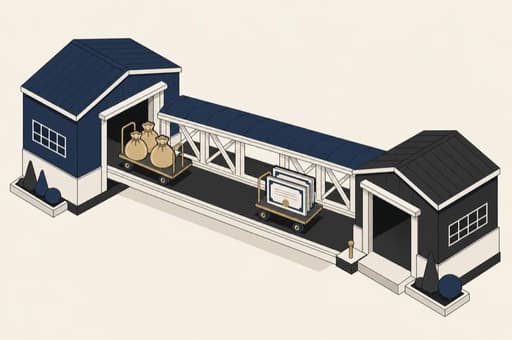
Jackson, an annuity company, handed TPG at least $12B of its own investment money to run, with the deal rewarding growth toward $20B. It is TPG's largest named customer, and more than a third of the money had shown up by August.
Competes with Athene (Apollo) · Insurance solutions arm (Blue Owl) · Insurance solutions arm (Ares)
In plain English
An insurer that sells annuities takes money now and promises income later, so a large investment pot sits between the two. Jackson hired TPG to run part of that pot — a minimum of twelve billion dollars over an initial ten years, renewable, and not exclusive to TPG.
The money goes at first into loans TPG writes itself, so a single dollar pays a management fee and keeps the lending arm busy at the same time. Each side bought into the other to seal it: TPG took $500M of Jackson shares, Jackson took $150M of TPG's. Management calls the result a flywheel.
TPG Growth
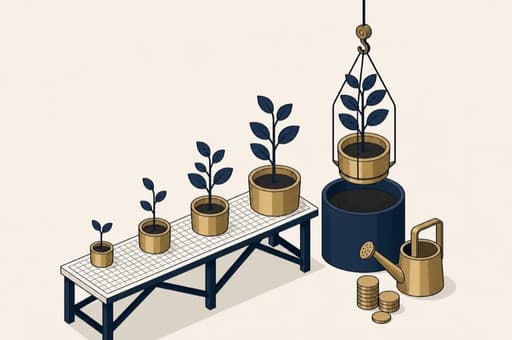
Growth equity and custom-shaped deals in mid-size companies. A modest $34.6B of assets, but priced near buyout rates, so its fee weight runs ahead of its size. Growth VI closed above its $4B target.
Competes with Blackstone Growth / BXG (Blackstone) · Growth funds (General Atlantic) · BeyondNetZero (General Atlantic)
In plain English
Between the start-up that needs its first real cheque and the mature company someone buys outright sits a big middle: businesses that already work and want money to get bigger. That is this platform's hunting ground — technology, life sciences, Asia, sports — sometimes buying shares, sometimes structuring something bespoke.
Investors commit to a fund, TPG charges an annual fee close to buyout rates, and keeps a slice of the profit whenever a holding is sold on. A recent example: Smith + Howard, a top-fifty accounting firm, bought in late July 2026 on a bet about artificial intelligence.
TPG Real Estate
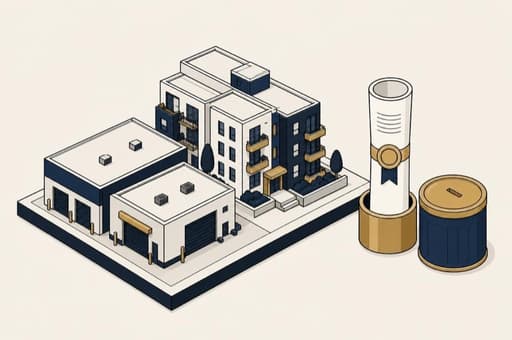
Buildings and building loans across the US, Europe and Asia — $41.9B of assets, including two stock-market-listed vehicles. Values rose over 9% in 2025 on data centres, industrial sites and homes. Four funds are due to take first money around the end of 2026.
Competes with Blackstone Real Estate Partners (Blackstone) · Carlyle Realty Partners X (Carlyle)
In plain English
Two jobs under one roof. TPG buys property here — industrial sites, data centres, homes — and it also lends to other people who own property, holding the mortgage instead of the deeds. A large part of this came with the Angelo Gordon purchase in 2023.
Investors put money into funds; TPG charges an annual fee for choosing and minding the buildings, and keeps a share of the gain when one sells well. What decides how good that gain looks is interest rates and what it would cost to build the same thing from scratch — which is why management keeps talking about values having reset.
The Rise Funds and TPG Rise Climate
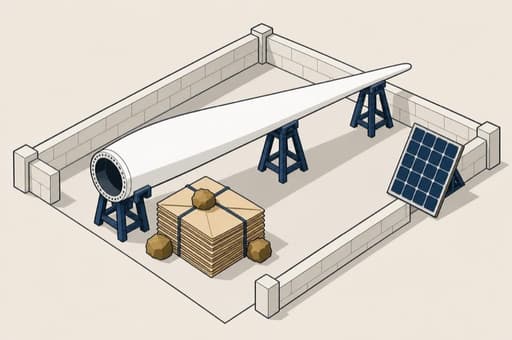
The funds aimed at cleaner energy and companies with a social mission — $34.9B of assets. The newest climate fund and its siblings passed $11B by May, with final money due in the September quarter. Appetite for mission-led funds has been cooling industry-wide.
Competes with Global Transition Fund II (Brookfield) · Global Impact Fund II (KKR)
In plain English
Same machinery, different shopping list. The Rise Funds back companies whose business is meant to do social good; TPG Rise Climate puts money into the move away from fossil fuels and the infrastructure that move needs.
Investors here include development banks as well as the usual institutions — the Asian Infrastructure Investment Bank signed up for the fund aimed at the Global South. Fees work as they do everywhere else in the house: an annual charge on money committed, a cut of profits later. The wrinkle is that much of what these funds buy leans on government subsidies and rules, and investor appetite for mission-led funds has been softening across the industry.
TPG Capital Markets
The in-house deal desk that arranges loans and share sales for the companies TPG's funds own or lend to. It earned $179M in the first half of 2026 — the least predictable money in the house, and management has said the September quarter steps down.
Competes with Leveraged finance desk (Goldman Sachs) · Leveraged finance desk (Jefferies) · Apollo Capital Solutions (Apollo)
In plain English
Every purchase needs financing, and somebody gets paid to arrange it. Rather than hand that job entirely to investment banks, TPG keeps a licensed desk of its own that lines up lenders and buyers and charges a fee — more than twenty times in a busy quarter, across a dozen-plus strategies.
Because it is paid per deal, this is the swingiest line TPG has: from roughly thirty million dollars in a quiet quarter to well over a hundred in a busy one. The cost of running it barely moves while the fee does, which makes this desk the main reason profit margins rise when deals flow and sag when they stall.

TPG Market Solutions
The newer odds and ends: buying secondhand stakes in other people's funds, Asia deals through NewQuest, and, since July 2025, Peppertree's mobile-phone towers. $20.1B of assets; Peppertree's eleventh fund took a $1B first slug in the spring quarter.
Competes with Ardian Secondary Fund IX (Ardian) · Strategic Partners IX (Blackstone) · DigitalBridge Partners III (DigitalBridge)
In plain English
A grab-bag of newer lines that did not fit the other five. The largest idea is the secondhand market: an investor who tied money up in a fund sometimes wants out early, and a fund manager sometimes wants to hold a prized company longer than the fund allows. TPG buys into both situations, and NewQuest does it across Asia.
The other piece is Peppertree, bought in July 2025, which invests in the tall steel masts that carry mobile phone signals. Everything here earns the same way — an annual charge on money managed, plus a share of profits later.


 TPG CapitalThe flagship buy-the-whole-company business — TPG Capital, Healthcare Partners, TPG Asia — with $94.1B of assets and the steepest fee rate in the house. Its two newest funds had gathered over $14B by August, mostly from investors already on the books.
The flagship buy-the-whole-company business — TPG Capital, Healthcare Partners, TPG Asia — with $94.1B of assets and the steepest fee rate in the house. Its two newest funds had gathered over $14B by August, mostly from investors already on the books.
In plain English
Buy a company outright, run it for years, sell it to the next owner — that is the old-fashioned engine at the centre of TPG. Healthcare is a big slice of what it buys here, and a separate arm does the same across Asia.
The money behaves like a gym membership. Large institutions commit cash and pay an annual charge on it whether or not anything is bought or sold that year; when a holding is eventually sold at a profit, TPG also keeps a slice of the gain. The annual charge here is the steepest of any TPG platform, which is why this one carries the most fee income.
Competes with Blackstone Capital Partners IX (Blackstone) · North America Fund XIV (KKR)
 T-POP and TCAP (Global Wealth Solutions)TPG's push to sell its funds to individuals, not only institutions. T-POP, the always-open private equity fund launched in June 2025, held $2.9B by mid-2026 and drew roughly $450M of new money that quarter. TCAP does the same in lending.
TPG's push to sell its funds to individuals, not only institutions. T-POP, the always-open private equity fund launched in June 2025, held $2.9B by mid-2026 and drew roughly $450M of new money that quarter. TCAP does the same in lending.
In plain English
T-POP is a private equity fund that never closes its doors. Money can go in and, within limits, come back out again — which is what makes it sellable through big brokerages and private banks, rather than only to institutions writing enormous cheques.
TCAP is the same idea pointed at lending, stocked with loans that Twin Brook, TPG's mid-size-company lender, writes itself. Both earn TPG an annual charge on whatever is parked inside, so the business grows exactly as fast as those distributors gather money. The honest caveat: TPG has said buyers of private-lending funds across the industry have turned cautious.
Competes with BXPE (Blackstone) · BCRED (Blackstone) · OCIC (Blue Owl)
 TPG CreditThe biggest pile of assets in the house at $101.2B, mostly loans to mid-size companies. It raised $21B and lent out $25B in 2025, both records. Across the whole firm, another $39B is committed but not yet charging fees.
The biggest pile of assets in the house at $101.2B, mostly loans to mid-size companies. It raised $21B and lent out $25B in 2025, both records. Across the whole firm, another $39B is committed but not yet charging fees.
In plain English
Lending, not owning. TPG gathers money from investors and hands it to companies as loans — mostly mid-size ones, through its Twin Brook arm — and also lends against hard assets rather than a borrower's promise alone. Most of this arrived with the 2023 purchase of Angelo Gordon, the firm that built out this side of the house.
Borrowers pay interest, the investors take most of it, and TPG keeps an annual charge for running the pot. That charge is thinner per dollar than the buyout side gets, which is why the largest platform by assets is not the largest by fees. In the spring quarter, 1.4% of the loans were not paying on schedule.
Competes with Senior Direct Lending / Ares Capital (Ares) · Blue Owl Credit / OBDC (Blue Owl)
 Jackson Financial partnershipJackson, an annuity company, handed TPG at least $12B of its own investment money to run, with the deal rewarding growth toward $20B. It is TPG's largest named customer, and more than a third of the money had shown up by August.
Jackson, an annuity company, handed TPG at least $12B of its own investment money to run, with the deal rewarding growth toward $20B. It is TPG's largest named customer, and more than a third of the money had shown up by August.
In plain English
An insurer that sells annuities takes money now and promises income later, so a large investment pot sits between the two. Jackson hired TPG to run part of that pot — a minimum of twelve billion dollars over an initial ten years, renewable, and not exclusive to TPG.
The money goes at first into loans TPG writes itself, so a single dollar pays a management fee and keeps the lending arm busy at the same time. Each side bought into the other to seal it: TPG took $500M of Jackson shares, Jackson took $150M of TPG's. Management calls the result a flywheel.
Competes with Athene (Apollo) · Insurance solutions arm (Blue Owl) · Insurance solutions arm (Ares)
 TPG GrowthGrowth equity and custom-shaped deals in mid-size companies. A modest $34.6B of assets, but priced near buyout rates, so its fee weight runs ahead of its size. Growth VI closed above its $4B target.
Growth equity and custom-shaped deals in mid-size companies. A modest $34.6B of assets, but priced near buyout rates, so its fee weight runs ahead of its size. Growth VI closed above its $4B target.
In plain English
Between the start-up that needs its first real cheque and the mature company someone buys outright sits a big middle: businesses that already work and want money to get bigger. That is this platform's hunting ground — technology, life sciences, Asia, sports — sometimes buying shares, sometimes structuring something bespoke.
Investors commit to a fund, TPG charges an annual fee close to buyout rates, and keeps a slice of the profit whenever a holding is sold on. A recent example: Smith + Howard, a top-fifty accounting firm, bought in late July 2026 on a bet about artificial intelligence.
Competes with Blackstone Growth / BXG (Blackstone) · Growth funds (General Atlantic) · BeyondNetZero (General Atlantic)
 TPG Real EstateBuildings and building loans across the US, Europe and Asia — $41.9B of assets, including two stock-market-listed vehicles. Values rose over 9% in 2025 on data centres, industrial sites and homes. Four funds are due to take first money around the end of 2026.
Buildings and building loans across the US, Europe and Asia — $41.9B of assets, including two stock-market-listed vehicles. Values rose over 9% in 2025 on data centres, industrial sites and homes. Four funds are due to take first money around the end of 2026.
In plain English
Two jobs under one roof. TPG buys property here — industrial sites, data centres, homes — and it also lends to other people who own property, holding the mortgage instead of the deeds. A large part of this came with the Angelo Gordon purchase in 2023.
Investors put money into funds; TPG charges an annual fee for choosing and minding the buildings, and keeps a share of the gain when one sells well. What decides how good that gain looks is interest rates and what it would cost to build the same thing from scratch — which is why management keeps talking about values having reset.
Competes with Blackstone Real Estate Partners (Blackstone) · Carlyle Realty Partners X (Carlyle)
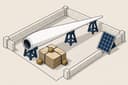 The Rise Funds and TPG Rise ClimateThe funds aimed at cleaner energy and companies with a social mission — $34.9B of assets. The newest climate fund and its siblings passed $11B by May, with final money due in the September quarter. Appetite for mission-led funds has been cooling industry-wide.
The funds aimed at cleaner energy and companies with a social mission — $34.9B of assets. The newest climate fund and its siblings passed $11B by May, with final money due in the September quarter. Appetite for mission-led funds has been cooling industry-wide.
In plain English
Same machinery, different shopping list. The Rise Funds back companies whose business is meant to do social good; TPG Rise Climate puts money into the move away from fossil fuels and the infrastructure that move needs.
Investors here include development banks as well as the usual institutions — the Asian Infrastructure Investment Bank signed up for the fund aimed at the Global South. Fees work as they do everywhere else in the house: an annual charge on money committed, a cut of profits later. The wrinkle is that much of what these funds buy leans on government subsidies and rules, and investor appetite for mission-led funds has been softening across the industry.
Competes with Global Transition Fund II (Brookfield) · Global Impact Fund II (KKR)
 TPG Capital MarketsThe in-house deal desk that arranges loans and share sales for the companies TPG's funds own or lend to. It earned $179M in the first half of 2026 — the least predictable money in the house, and management has said the September quarter steps down.
The in-house deal desk that arranges loans and share sales for the companies TPG's funds own or lend to. It earned $179M in the first half of 2026 — the least predictable money in the house, and management has said the September quarter steps down.
In plain English
Every purchase needs financing, and somebody gets paid to arrange it. Rather than hand that job entirely to investment banks, TPG keeps a licensed desk of its own that lines up lenders and buyers and charges a fee — more than twenty times in a busy quarter, across a dozen-plus strategies.
Because it is paid per deal, this is the swingiest line TPG has: from roughly thirty million dollars in a quiet quarter to well over a hundred in a busy one. The cost of running it barely moves while the fee does, which makes this desk the main reason profit margins rise when deals flow and sag when they stall.
Competes with Leveraged finance desk (Goldman Sachs) · Leveraged finance desk (Jefferies) · Apollo Capital Solutions (Apollo)
 TPG Market SolutionsThe newer odds and ends: buying secondhand stakes in other people's funds, Asia deals through NewQuest, and, since July 2025, Peppertree's mobile-phone towers. $20.1B of assets; Peppertree's eleventh fund took a $1B first slug in the spring quarter.
The newer odds and ends: buying secondhand stakes in other people's funds, Asia deals through NewQuest, and, since July 2025, Peppertree's mobile-phone towers. $20.1B of assets; Peppertree's eleventh fund took a $1B first slug in the spring quarter.
In plain English
A grab-bag of newer lines that did not fit the other five. The largest idea is the secondhand market: an investor who tied money up in a fund sometimes wants out early, and a fund manager sometimes wants to hold a prized company longer than the fund allows. TPG buys into both situations, and NewQuest does it across Asia.
The other piece is Peppertree, bought in July 2025, which invests in the tall steel masts that carry mobile phone signals. Everything here earns the same way — an annual charge on money managed, plus a share of profits later.
Competes with Ardian Secondary Fund IX (Ardian) · Strategic Partners IX (Blackstone) · DigitalBridge Partners III (DigitalBridge)
Named in filings, launches and programs
- TPG Twin Brook Capital PartnersBrandTPG's lender to smaller mid-size companies; it wrote about $2.3 billion of new loans in the spring quarter and feeds the credit platform its deals.
- Advantage Direct LendingProduct · RampingAn always-open lending fund for mid-size borrowers; close to half of what it does comes through Twin Brook.
- TPG Credit SolutionsProduct lineOne of the credit platform's fund families; its third fund returned 7.5% after costs in the quarter ended June 2026.
- Asset Based FinanceProduct lineLends against hard assets rather than a borrower's promise alone; it put out more than $1 billion in the spring quarter.
- CLOs and Multi-Asset CreditProduct lineBundles of corporate loans repackaged for investors, plus funds that roam across debt types — both sit in the credit platform, largely inherited from Angelo Gordon.
- TPG RE Finance Trust (TRTX)BrandA stock-market-listed lender against commercial buildings, run by a TPG affiliate; it priced a $1.0 billion loan-backed bond deal in September 2026.
- TPG Mortgage Investment Trust (MITT)BrandA listed home-loan trust run by a TPG affiliate; it agreed in August 2026 to buy Cherry Hill Mortgage, making a roughly $9 billion platform.
- Net LeaseProductA property-platform strategy of its own; its fifth fund raised $1 billion.
- Global South InitiativeProductAn impact-platform fund whose final money was due in the September quarter; it announced $1 billion into Tata Consultancy Services' AI data centre business.
- TPG NEXTProductSits inside the impact franchise alongside the Rise funds; TPG names it as a strategy but publishes no separate numbers.
- Tech AdjacenciesProductA growth-platform strategy listed beside Life Sciences Innovation and Emerging Companies Asia; its results fold into the platform totals.
- TPG SportsProductA small growth-platform strategy aimed at sports, folded into the platform figures rather than broken out.
- DeployCoCustomer program · Pre-revenueA new company formed to deploy OpenAI's technology; TPG is a lead founding partner, with more than $4 billion of initial capital committed alongside other firms.
- Five cross-platform partnerships (2025)Customer programFive tie-ups signed in 2025 that draw on more than one platform, worth over $10 billion of commitments; TPG has not named the counterparties.
TPG Twin Brook Capital PartnersBrand
TPG's lender to smaller mid-size companies; it wrote about $2.3 billion of new loans in the spring quarter and feeds the credit platform its deals.
Advantage Direct LendingProduct · Ramping
An always-open lending fund for mid-size borrowers; close to half of what it does comes through Twin Brook.
TPG Credit SolutionsProduct line
One of the credit platform's fund families; its third fund returned 7.5% after costs in the quarter ended June 2026.
Asset Based FinanceProduct line
Lends against hard assets rather than a borrower's promise alone; it put out more than $1 billion in the spring quarter.
CLOs and Multi-Asset CreditProduct line
Bundles of corporate loans repackaged for investors, plus funds that roam across debt types — both sit in the credit platform, largely inherited from Angelo Gordon.
TPG RE Finance Trust (TRTX)Brand
A stock-market-listed lender against commercial buildings, run by a TPG affiliate; it priced a $1.0 billion loan-backed bond deal in September 2026.
TPG Mortgage Investment Trust (MITT)Brand
A listed home-loan trust run by a TPG affiliate; it agreed in August 2026 to buy Cherry Hill Mortgage, making a roughly $9 billion platform.
Net LeaseProduct
A property-platform strategy of its own; its fifth fund raised $1 billion.
Global South InitiativeProduct
An impact-platform fund whose final money was due in the September quarter; it announced $1 billion into Tata Consultancy Services' AI data centre business.
TPG NEXTProduct
Sits inside the impact franchise alongside the Rise funds; TPG names it as a strategy but publishes no separate numbers.
Tech AdjacenciesProduct
A growth-platform strategy listed beside Life Sciences Innovation and Emerging Companies Asia; its results fold into the platform totals.
TPG SportsProduct
A small growth-platform strategy aimed at sports, folded into the platform figures rather than broken out.
DeployCoCustomer program · Pre-revenue
A new company formed to deploy OpenAI's technology; TPG is a lead founding partner, with more than $4 billion of initial capital committed alongside other firms.
Five cross-platform partnerships (2025)Customer program
Five tie-ups signed in 2025 that draw on more than one platform, worth over $10 billion of commitments; TPG has not named the counterparties.