
Texas Pacific Land (TPL)
Monetizes Permian Basin land, energy royalties, surface access, and oilfield water services.
Something off on this page? Send us feedback.
Texas Pacific Land owns a huge stretch of West Texas and does not drill a single well on it. It collects a cut of every barrel of oil pumped from under its acres, sells water to the crews that drill, and charges for pipelines and waste water crossing its ground. Now the same dirt is being courted for power plants and data centers — the old land, rented to a new kind of tenant.
Item facts: FY2025 · year ended December 31, 2025, from filings, earnings calls and company pages.
Judgment weights, not filed revenue
The band summarizes business focus and direction. ~ marks estimates.
8 in detail · 10 more below
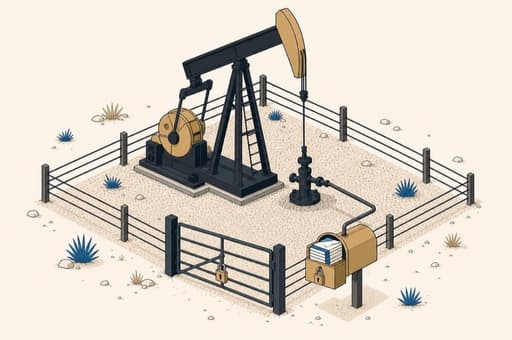
Oil and Gas Royalties
A permanent cut of every barrel produced under TPL's acres, with nothing deducted for cost. About forty percent of last year's revenue came from three customers TPL does not name. It never locks in prices ahead, so the oil price comes straight through.
Competes with Mineral and royalty interests (Viper Energy) · Surface and royalty portfolio (LandBridge)
In plain English
Imagine owning the field a farmer works and being owed a slice of every crop that comes off it — not rent, a slice, forever. That is a royalty, and TPL holds them under West Texas acres an 1888 railroad land trust put together and mostly never sold.
Oil companies drill the wells, pay for the rigs and take the risk. TPL takes its share off the top of whatever comes out, with no costs subtracted, and it drills nothing itself. Around five million barrels of oil a year come from under its acres, so a ten-dollar move in the oil price swings about fifty million dollars either way.

Acquired Permian Minerals and Royalties
Royalty acres TPL buys rather than inherits. It paid about $474 million in late 2025 for roughly 17,300 royalty acres in the Midland Basin, most of it on ground TPL already had an interest in. Watch whether the buying keeps up.
Competes with Mineral and royalty acreage (Viper Energy) · Minerals book (LandBridge)
In plain English
The 1888 acres came free. These did not.
Since 2018 TPL has been buying royalty rights from other landowners — the same permanent slice of whatever comes out of the ground, just bought instead of inherited. Each purchase adds barrels without adding a pump or a person. The bought acres now account for close to a fifth of the barrels TPL gets paid on, and the latest batch was the largest single call on the company's cash last year.
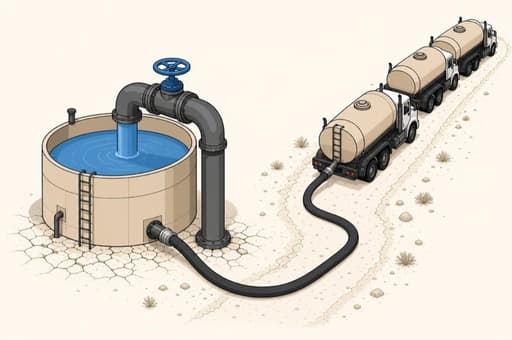
Water Sales
TPL pumps salty water out of the ground it owns and pipes it to the crews opening new wells. Volumes ran roughly 660,000 barrels a day in the spring of 2026 — well up on a year earlier, but below the record set at the end of 2025.
Competes with Water solutions network (Select Water Solutions) · Brackish water sales and royalties (LandBridge)
In plain English
Getting oil out of West Texas rock means blasting water down the hole to crack it open, and that takes a staggering amount of it. The water for that job does not have to be clean. Deep under TPL's land sits water far too salty to drink or farm with, which suits the work fine, and TPL owns the right to pump it.
This is the one piece of TPL that really operates something: a subsidiary called Texas Pacific Water Resources, with 482 miles of pipeline and storage tanks. Drillers pay between fifty cents and a dollar a barrel; lifting and moving it costs ten to twenty cents. The water is already TPL's, so most of what comes in stays in.
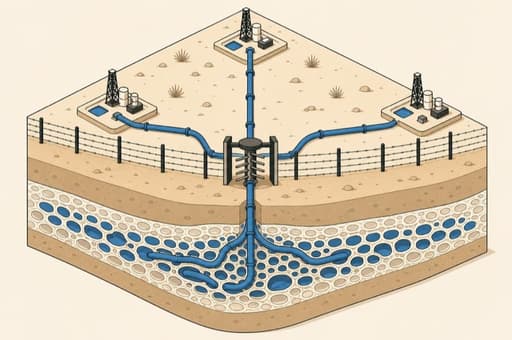
Produced Water Royalties
Oil wells bring up salty waste water that has to go somewhere. TPL charges roughly eight cents a barrel for water crossing its land or pumped into rock it owns — close to five million barrels a day. A rival prices new business at fifteen.
Competes with Produced water royalties (LandBridge) · Produced water handling (Aris Water Solutions)
In plain English
The Permian basin brings up close to twenty-five million barrels of salty, undrinkable water a day. It is waste. It gets piped away and pumped back into porous rock deep underground. TPL owns no disposal wells at all — it owns the ground those pipes cross and the rock they empty into, and charges for both.
A toll booth on a road nobody chose to drive. The fee per barrel is tiny, but the flow keeps rising even when drilling slows, because the rock still left to drill gives up more water for every barrel of oil. TPL also limits how many disposal wells sit on each patch, to keep room underground for later.
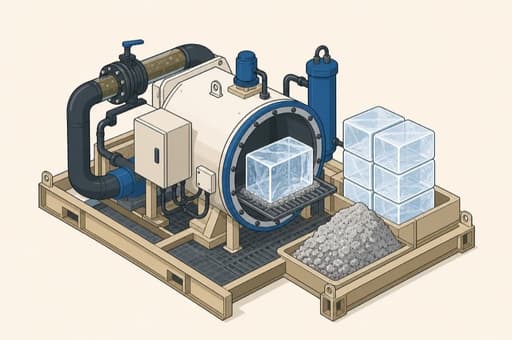
Orla Phase 2b Desalination
A test plant that freezes the salt out of oilfield waste water. It handles 10,000 barrels a day — trivial next to the five million TPL already charges for — and is really a bet that cleaned-up water becomes something to sell. It started up in mid-2026.
Competes with Produced water desalination program (Aris Water Solutions) · Recycling and reuse networks (Select Water Solutions)
In plain English
Salty water can be cleaned two ways: boil it, or freeze it. Freeze it and the ice that forms comes out fresh, because the salt stays behind in what is still liquid. TPL patented its own version of that trick and built a small plant at Orla, Texas to try it on oilfield waste water.
Nothing is sold from it yet. Two payoffs are being chased. The dull one: somewhere else to put water, for when pumping it underground gets harder. The odd one: freezing makes ice and chilled water, and chilling is exactly what a hall full of hot computers needs. The companies that build those halls came to watch the plant start up.
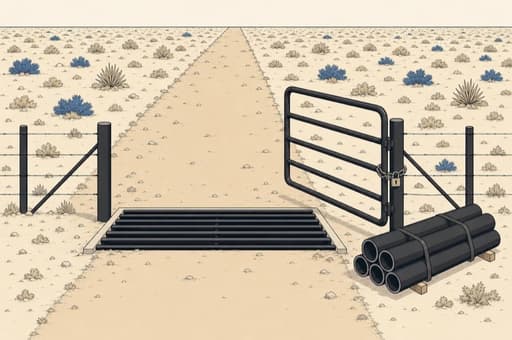
Easements and Other Surface Income
Payment for the right to cross, sit on, or dig gravel out of TPL land — pipelines mostly, and now power projects. It is the lumpiest line in the company: a record quarter in 2025 on pipeline crossings, then a third of that share of revenue three quarters later.
Competes with Surface use royalties (LandBridge) · Right-of-way agreements (private West Texas ranch owners)
In plain English
Owning the surface means owning the right to say who crosses it. Every pipeline laid over TPL ground, every well bored through it, every truckload of gravel hauled off it, comes with a payment. Nobody has to be drilling for that to happen.
That last part is what makes this line worth watching. When the pipeline builders came through in 2025, one quarter's payments jumped by twenty million dollars on crossings alone. The callers now include power and data center developers, and TPL already has signed, paying agreements for solar, wind, gas generation, batteries and carbon capture on its acres. Each deal is a negotiated one-off, so the line lurches.
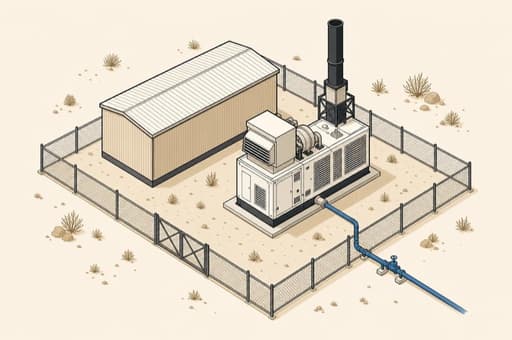
Project Kilby
TPL's first signed deal with the power and data center crowd: land and salty water for a gas-fired plant in Reeves County, sold to Chevron. Cash for the ground trickles in over twenty years; the prize is the exclusive right to supply its water. Power is due late 2028.
Competes with Digital infrastructure sites (LandBridge) · Gas-and-land campuses outside the Permian (other Texas site developers)
In plain English
A power plant needs three things before anything else: somewhere to sit, fuel close by, and water. TPL had all three in Reeves County, Texas, so Chevron bought the ground and signed up the water.
Chevron will burn cheap local gas in a plant of about 2.67 gigawatts — one plant, built to feed one data center — and has agreed to sell that power to Microsoft for twenty years. TPL's slice is the smallest and the safest: forty-three million dollars for the acreage, paid out yearly over two decades, plus the exclusive right to sell the plant its water. None of it is quick. Electricity is not expected to flow until late 2028.
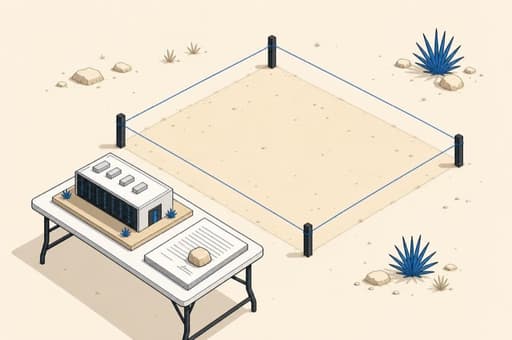
Bolt Data & Energy Agreement
TPL put $50 million into Bolt, a data-center-and-power company co-founded by former Google chief Eric Schmidt, and took the first claim on supplying water to whatever Bolt builds on TPL land. As of August 2026 nothing had been signed with an end customer.
Competes with Developer partnerships on rival acreage (LandBridge) · Power-and-land projects without a landowner partner (independent Texas developers)
In plain English
A landowner buying a slice of the developer who wants to build on the lot — that is the shape of this one. TPL wrote a fifty-million-dollar check for a minority share of Bolt Data & Energy — an AI data-and-power outfit co-founded by Eric Schmidt, once Google's chief executive — and in return got the first call on supplying water to anything Bolt puts up on TPL ground.
Not a dollar has come back yet. Bolt's plans start with gas-fired power of around a gigawatt and talk of ten times that later, and TPL's chief executive says the company is in advanced conversations over twenty-five gigawatts of projects — many times the Chevron plant. Conversations, though, not contracts: by August 2026 none had been signed.


 Oil and Gas RoyaltiesA permanent cut of every barrel produced under TPL's acres, with nothing deducted for cost. About forty percent of last year's revenue came from three customers TPL does not name. It never locks in prices ahead, so the oil price comes straight through.
A permanent cut of every barrel produced under TPL's acres, with nothing deducted for cost. About forty percent of last year's revenue came from three customers TPL does not name. It never locks in prices ahead, so the oil price comes straight through.
In plain English
Imagine owning the field a farmer works and being owed a slice of every crop that comes off it — not rent, a slice, forever. That is a royalty, and TPL holds them under West Texas acres an 1888 railroad land trust put together and mostly never sold.
Oil companies drill the wells, pay for the rigs and take the risk. TPL takes its share off the top of whatever comes out, with no costs subtracted, and it drills nothing itself. Around five million barrels of oil a year come from under its acres, so a ten-dollar move in the oil price swings about fifty million dollars either way.
Competes with Mineral and royalty interests (Viper Energy) · Surface and royalty portfolio (LandBridge)
 Acquired Permian Minerals and RoyaltiesRoyalty acres TPL buys rather than inherits. It paid about $474 million in late 2025 for roughly 17,300 royalty acres in the Midland Basin, most of it on ground TPL already had an interest in. Watch whether the buying keeps up.
Royalty acres TPL buys rather than inherits. It paid about $474 million in late 2025 for roughly 17,300 royalty acres in the Midland Basin, most of it on ground TPL already had an interest in. Watch whether the buying keeps up.
In plain English
The 1888 acres came free. These did not.
Since 2018 TPL has been buying royalty rights from other landowners — the same permanent slice of whatever comes out of the ground, just bought instead of inherited. Each purchase adds barrels without adding a pump or a person. The bought acres now account for close to a fifth of the barrels TPL gets paid on, and the latest batch was the largest single call on the company's cash last year.
Competes with Mineral and royalty acreage (Viper Energy) · Minerals book (LandBridge)
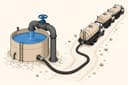 Water SalesTPL pumps salty water out of the ground it owns and pipes it to the crews opening new wells. Volumes ran roughly 660,000 barrels a day in the spring of 2026 — well up on a year earlier, but below the record set at the end of 2025.
TPL pumps salty water out of the ground it owns and pipes it to the crews opening new wells. Volumes ran roughly 660,000 barrels a day in the spring of 2026 — well up on a year earlier, but below the record set at the end of 2025.
In plain English
Getting oil out of West Texas rock means blasting water down the hole to crack it open, and that takes a staggering amount of it. The water for that job does not have to be clean. Deep under TPL's land sits water far too salty to drink or farm with, which suits the work fine, and TPL owns the right to pump it.
This is the one piece of TPL that really operates something: a subsidiary called Texas Pacific Water Resources, with 482 miles of pipeline and storage tanks. Drillers pay between fifty cents and a dollar a barrel; lifting and moving it costs ten to twenty cents. The water is already TPL's, so most of what comes in stays in.
Competes with Water solutions network (Select Water Solutions) · Brackish water sales and royalties (LandBridge)
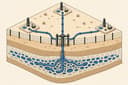 Produced Water RoyaltiesOil wells bring up salty waste water that has to go somewhere. TPL charges roughly eight cents a barrel for water crossing its land or pumped into rock it owns — close to five million barrels a day. A rival prices new business at fifteen.
Oil wells bring up salty waste water that has to go somewhere. TPL charges roughly eight cents a barrel for water crossing its land or pumped into rock it owns — close to five million barrels a day. A rival prices new business at fifteen.
In plain English
The Permian basin brings up close to twenty-five million barrels of salty, undrinkable water a day. It is waste. It gets piped away and pumped back into porous rock deep underground. TPL owns no disposal wells at all — it owns the ground those pipes cross and the rock they empty into, and charges for both.
A toll booth on a road nobody chose to drive. The fee per barrel is tiny, but the flow keeps rising even when drilling slows, because the rock still left to drill gives up more water for every barrel of oil. TPL also limits how many disposal wells sit on each patch, to keep room underground for later.
Competes with Produced water royalties (LandBridge) · Produced water handling (Aris Water Solutions)
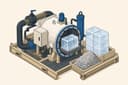 Orla Phase 2b DesalinationA test plant that freezes the salt out of oilfield waste water. It handles 10,000 barrels a day — trivial next to the five million TPL already charges for — and is really a bet that cleaned-up water becomes something to sell. It started up in mid-2026.
A test plant that freezes the salt out of oilfield waste water. It handles 10,000 barrels a day — trivial next to the five million TPL already charges for — and is really a bet that cleaned-up water becomes something to sell. It started up in mid-2026.
In plain English
Salty water can be cleaned two ways: boil it, or freeze it. Freeze it and the ice that forms comes out fresh, because the salt stays behind in what is still liquid. TPL patented its own version of that trick and built a small plant at Orla, Texas to try it on oilfield waste water.
Nothing is sold from it yet. Two payoffs are being chased. The dull one: somewhere else to put water, for when pumping it underground gets harder. The odd one: freezing makes ice and chilled water, and chilling is exactly what a hall full of hot computers needs. The companies that build those halls came to watch the plant start up.
Competes with Produced water desalination program (Aris Water Solutions) · Recycling and reuse networks (Select Water Solutions)
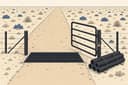 Easements and Other Surface IncomePayment for the right to cross, sit on, or dig gravel out of TPL land — pipelines mostly, and now power projects. It is the lumpiest line in the company: a record quarter in 2025 on pipeline crossings, then a third of that share of revenue three quarters later.
Payment for the right to cross, sit on, or dig gravel out of TPL land — pipelines mostly, and now power projects. It is the lumpiest line in the company: a record quarter in 2025 on pipeline crossings, then a third of that share of revenue three quarters later.
In plain English
Owning the surface means owning the right to say who crosses it. Every pipeline laid over TPL ground, every well bored through it, every truckload of gravel hauled off it, comes with a payment. Nobody has to be drilling for that to happen.
That last part is what makes this line worth watching. When the pipeline builders came through in 2025, one quarter's payments jumped by twenty million dollars on crossings alone. The callers now include power and data center developers, and TPL already has signed, paying agreements for solar, wind, gas generation, batteries and carbon capture on its acres. Each deal is a negotiated one-off, so the line lurches.
Competes with Surface use royalties (LandBridge) · Right-of-way agreements (private West Texas ranch owners)
 Project KilbyTPL's first signed deal with the power and data center crowd: land and salty water for a gas-fired plant in Reeves County, sold to Chevron. Cash for the ground trickles in over twenty years; the prize is the exclusive right to supply its water. Power is due late 2028.
TPL's first signed deal with the power and data center crowd: land and salty water for a gas-fired plant in Reeves County, sold to Chevron. Cash for the ground trickles in over twenty years; the prize is the exclusive right to supply its water. Power is due late 2028.
In plain English
A power plant needs three things before anything else: somewhere to sit, fuel close by, and water. TPL had all three in Reeves County, Texas, so Chevron bought the ground and signed up the water.
Chevron will burn cheap local gas in a plant of about 2.67 gigawatts — one plant, built to feed one data center — and has agreed to sell that power to Microsoft for twenty years. TPL's slice is the smallest and the safest: forty-three million dollars for the acreage, paid out yearly over two decades, plus the exclusive right to sell the plant its water. None of it is quick. Electricity is not expected to flow until late 2028.
Competes with Digital infrastructure sites (LandBridge) · Gas-and-land campuses outside the Permian (other Texas site developers)
 Bolt Data & Energy AgreementTPL put $50 million into Bolt, a data-center-and-power company co-founded by former Google chief Eric Schmidt, and took the first claim on supplying water to whatever Bolt builds on TPL land. As of August 2026 nothing had been signed with an end customer.
TPL put $50 million into Bolt, a data-center-and-power company co-founded by former Google chief Eric Schmidt, and took the first claim on supplying water to whatever Bolt builds on TPL land. As of August 2026 nothing had been signed with an end customer.
In plain English
A landowner buying a slice of the developer who wants to build on the lot — that is the shape of this one. TPL wrote a fifty-million-dollar check for a minority share of Bolt Data & Energy — an AI data-and-power outfit co-founded by Eric Schmidt, once Google's chief executive — and in return got the first call on supplying water to anything Bolt puts up on TPL ground.
Not a dollar has come back yet. Bolt's plans start with gas-fired power of around a gigawatt and talk of ten times that later, and TPL's chief executive says the company is in advanced conversations over twenty-five gigawatts of projects — many times the Chevron plant. Conversations, though, not contracts: by August 2026 none had been signed.
Competes with Developer partnerships on rival acreage (LandBridge) · Power-and-land projects without a landowner partner (independent Texas developers)
Named in filings, launches and programs
- Shackelford and Jones County landProduct line · RampingOver 10,000 acres bought east of the Permian in mid-2026 for roughly $100–110 million, aimed at power and data center siting.
- Out-of-basin pore spaceProduct lineRock bought outside the Delaware Basin to take waste water where earthquake rules limit deep injection; over 100,000 barrels a day by August 2025.
- Texas Pacific Water ResourcesBrandThe water subsidiary formed in 2017 that owns the pipelines and does the actual pumping, storing and piping.
- Transmissive Water ServicesBrand · Pre-revenueWholly-owned holder of the freeze-desalination patents behind the Orla plant; shows up in filings, nowhere in the revenue lines.
- Land sales programmeServiceSelling non-core acres, largely to fund the water business's land and pore-space buying — about $150 million of roughly $220 million spent.
- Solar, wind, battery and carbon capture leasesProduct lineSigned and already paying: agreements letting others build power and carbon projects on TPL acres, counted inside easement income.
- Aggregate salesProduct lineGravel and rock dug out of TPL land and sold, counted inside easement income alongside the crossing fees.
- Produced water offtake rightsProduct lineTPL keeps the right to take waste water off operators' hands — the raw material any future cleaning plant would need.
- Data center cooling studiesProduct · AnnouncedMoney going in during late 2026 to test whether the Orla plant's ice and chilled water can cool halls of computers.
- Brine mineral extractionProduct · AnnouncedManagement mentions pulling minerals such as lithium out of the salty water stream; no programme has been described.
Shackelford and Jones County landProduct line · Ramping
Over 10,000 acres bought east of the Permian in mid-2026 for roughly $100–110 million, aimed at power and data center siting.
Out-of-basin pore spaceProduct line
Rock bought outside the Delaware Basin to take waste water where earthquake rules limit deep injection; over 100,000 barrels a day by August 2025.
Texas Pacific Water ResourcesBrand
The water subsidiary formed in 2017 that owns the pipelines and does the actual pumping, storing and piping.
Transmissive Water ServicesBrand · Pre-revenue
Wholly-owned holder of the freeze-desalination patents behind the Orla plant; shows up in filings, nowhere in the revenue lines.
Land sales programmeService
Selling non-core acres, largely to fund the water business's land and pore-space buying — about $150 million of roughly $220 million spent.
Solar, wind, battery and carbon capture leasesProduct line
Signed and already paying: agreements letting others build power and carbon projects on TPL acres, counted inside easement income.
Aggregate salesProduct line
Gravel and rock dug out of TPL land and sold, counted inside easement income alongside the crossing fees.
Produced water offtake rightsProduct line
TPL keeps the right to take waste water off operators' hands — the raw material any future cleaning plant would need.
Data center cooling studiesProduct · Announced
Money going in during late 2026 to test whether the Orla plant's ice and chilled water can cool halls of computers.
Brine mineral extractionProduct · Announced
Management mentions pulling minerals such as lithium out of the salty water stream; no programme has been described.