
T. Rowe Price (TROW)
Active investment manager spanning retirement portfolios, public markets, and alternative credit.
Something off on this page? Send us feedback.
T. Rowe Price looks after other people's savings and is paid a yearly slice of whatever it holds. Most of that money is retirement money, sitting in workplace plans and the dated funds inside them. The old engine, hand-picked stock funds, leaks money every quarter to cheaper index products; the newer packages replacing it charge less for the same work. Rising markets have covered the shortfall so far.
Item facts: FY2025 · year ended December 31, 2025, from filings, earnings calls and company pages.
Judgment weights, not filed revenue
The band summarizes business focus and direction. ~ marks estimates.
7 in detail · 13 more below

Active Equity strategies
Hand-picked stock portfolios — Capital Appreciation, Blue Chip Growth, New Horizons — hold roughly $910B of the firm's $1.9T as of August 2026. Savers keep withdrawing in favour of cheap index products; rising markets have refilled the pot faster than it empties.
Competes with Contrafund · Growth Company (Fidelity) · Growth Fund of America (Capital Group) · Core index funds (Vanguard) · iShares index ETFs (BlackRock)
In plain English
People hand over savings and ask the firm to choose shares for them. Analysts study companies, argue about them, and build a portfolio meant to beat the market average. The fee is a slice of whatever sits in the account, charged every year, good year or bad.
That slice is the single biggest source of money here, and it is the part under pressure. A rival product — a fund that simply buys the whole market and charges a fraction as much — keeps winning on price, so more money leaves these funds than arrives, quarter after quarter. Performance is the defence: over ten years most of the money beat its yardstick, but over one and five years less than half did.
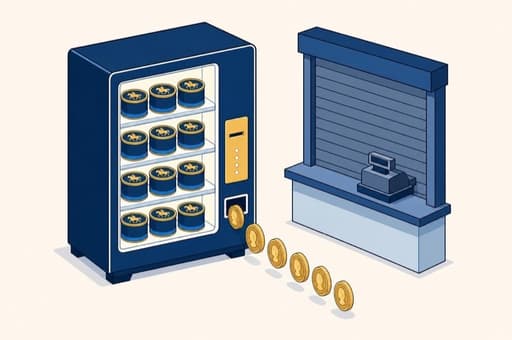
Active ETFs
The same managers' portfolios, sold in a form that trades on an exchange all day: 35 funds and about $30B by late 2026, growing quickly off a small base — and charging less than the mutual funds buyers leave behind.
Competes with Active ETF range (Capital Group) · Active ETFs (JPMorgan) · Semi-transparent equity ETFs (Fidelity)
In plain English
A mutual fund can only be bought or sold once a day, at a price struck after the market closes. An exchange-traded fund holds much the same portfolio but changes hands on the stock exchange all day like any share — cheaper to own and easier for an adviser to drop into a client's account.
The firm runs 35 of these now. Nothing new has to be invented: the same managers pick the holdings, and the extra cost is selling the package rather than researching it. The catch is baked in — a buyer who moves from the old fund to the new one pays a smaller fee for identical work, so growth here pulls the firm's average fee down.
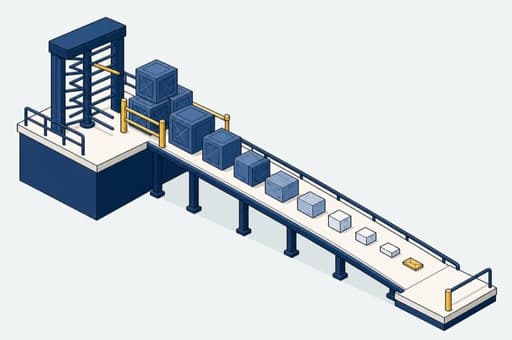
Target Date Retirement Portfolios
The default box a worker's plan money lands in, holding about $630B in August 2026 — roughly a third of the assets but under a quarter of the fees, because these charge less. Vanguard's rival series, the cheap incumbent, is far bigger.
Competes with Target Retirement funds (Vanguard) · Freedom · Freedom Index funds (Fidelity) · LifePath (BlackRock)
In plain English
Most people saving through work never pick a fund. Their money goes into the plan's default choice, and the usual default is a dated portfolio: choose the year you expect to retire, and the fund shifts itself from mostly shares toward mostly bonds as that year approaches.
The employer decides whose dated funds sit in the plan, so one decision can move billions, and the firm earns a slice of the balance each year after. Two things chip away at it. The cheaper variants now make up about a quarter of these assets. And when an employer is bought, its plan often gets folded onto the acquirer's provider and walks out the door.
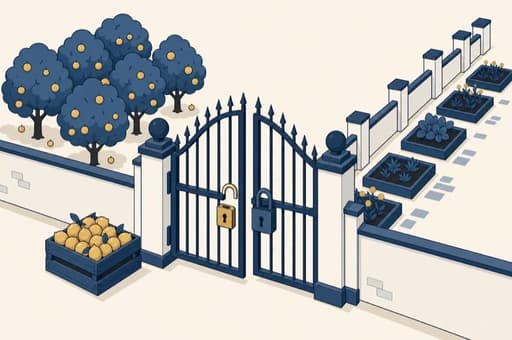
T. Rowe Price–Goldman Sachs alliance
A partnership announced in 2025 to put private investments — loans and company stakes that are not traded on an exchange — into retirement and wealth portfolios. The first public-and-private fund opened in July 2026; a companion dated series is built and waiting on demand.
Competes with LifePath with private markets (BlackRock) · Private markets in 401(k) plans (Empower) · Wealth-channel interval funds (Blackstone)
In plain English
Big pension funds have long owned things you cannot buy on a stock exchange: loans to private companies, stakes in businesses that never listed. Ordinary workplace savers mostly have not. This is an agreement with Goldman Sachs, the investment bank, to build portfolios holding both — Goldman sets the mix and brings its own selling power, T. Rowe Price supplies funds, and its private-lending arm supplies the loans.
Nothing meaningful is earned from it yet, and two locks have to open first: employers must get comfortable with the fees and with money that cannot be sold in a hurry, and Washington has yet to issue its guidance on holding such assets inside workplace plans.
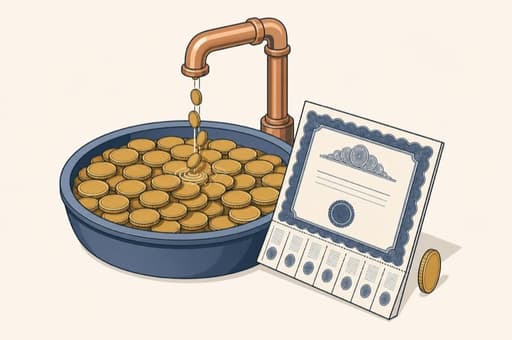
Fixed Income strategies
Bond and cash funds — lending to governments and companies for interest. The steadiest money-gatherer in the house at about $225B in August 2026 — eight straight quarters of inflows running into 2026, and money coming in again last quarter — but it charges the thinnest fee of anything the firm sells.
Competes with Total Return · Income Fund (PIMCO) · Total Bond Market Index · BND (Vanguard) · Municipal and securitized ETFs (BlackRock)
In plain English
Lending, rather than owning. A bond is a loan to a government or a company that pays interest on a fixed schedule; money market funds do the same for weeks at a time instead of years. The firm's job is deciding which borrowers are worth it and at what price.
Pension funds, workplace plans and, increasingly, advisers to wealthy households keep adding money here, helped by results: in early 2026, more than three-quarters of these fund assets were beating their peer group over one, three, five and ten years. The fee is the lowest of any shelf in the firm — the newest bond ETF charges twenty cents a year per hundred dollars — so every dollar arriving nudges the firm's average fee down.

U.S. Retirement Plan Services
About two-thirds of the money the firm manages is retirement savings, and this is the plumbing beneath it: tracking every worker's balance and paperwork. A small business next to Fidelity's, taking in a little less than a year ago, kept for what it opens up.
Competes with Workplace Investing (Fidelity) · Empower Retirement (Empower) · Recordkeeping services (Alight Solutions)
In plain English
Someone has to keep the books for a company savings plan: who paid in what this month, which fund it bought, what happens when a worker quits. That job is recordkeeping, and the employer pays for it — a charge to set the plan up, an annual fee for the plan, and a fee for each worker enrolled, with larger plans on larger tiers.
What keeps it worth running is the doorway it holds open. Plans already on the firm's books are the first place a new retirement product can be offered, which matters more than the fee itself — and the fee is drifting down as scale and price competition do their work.

Oak Hill Advisors
The private-lending arm, bought in 2021: it lends to companies directly rather than buying their traded bonds. Assets counted with borrowing and pledged money reached $112B by March 2026, yet the share of profits it hands back has fallen four quarters running.
Competes with Ares credit platform (Ares) · BCRED private credit fund (Blackstone) · Direct lending funds (Blue Owl)
In plain English
When a company needs a few hundred million dollars, it can sell bonds to the public or it can borrow privately from a fund, on terms written to order. Oak Hill Advisors, bought in 2021, runs the funds that make those loans, alongside funds that trade loans other lenders made.
Investors pay a yearly fee on the money they commit and hand back a cut of the gains when deals work out. That cut has shrunk four quarters in a row. More than $30B sits pledged but not yet lent, and the customers are serious money — seven of the ten largest U.S. state pension funds among them.


 Active Equity strategiesHand-picked stock portfolios — Capital Appreciation, Blue Chip Growth, New Horizons — hold roughly $910B of the firm's $1.9T as of August 2026. Savers keep withdrawing in favour of cheap index products; rising markets have refilled the pot faster than it empties.
Hand-picked stock portfolios — Capital Appreciation, Blue Chip Growth, New Horizons — hold roughly $910B of the firm's $1.9T as of August 2026. Savers keep withdrawing in favour of cheap index products; rising markets have refilled the pot faster than it empties.
In plain English
People hand over savings and ask the firm to choose shares for them. Analysts study companies, argue about them, and build a portfolio meant to beat the market average. The fee is a slice of whatever sits in the account, charged every year, good year or bad.
That slice is the single biggest source of money here, and it is the part under pressure. A rival product — a fund that simply buys the whole market and charges a fraction as much — keeps winning on price, so more money leaves these funds than arrives, quarter after quarter. Performance is the defence: over ten years most of the money beat its yardstick, but over one and five years less than half did.
Competes with Contrafund · Growth Company (Fidelity) · Growth Fund of America (Capital Group) · Core index funds (Vanguard) · iShares index ETFs (BlackRock)
 Active ETFsThe same managers' portfolios, sold in a form that trades on an exchange all day: 35 funds and about $30B by late 2026, growing quickly off a small base — and charging less than the mutual funds buyers leave behind.
The same managers' portfolios, sold in a form that trades on an exchange all day: 35 funds and about $30B by late 2026, growing quickly off a small base — and charging less than the mutual funds buyers leave behind.
In plain English
A mutual fund can only be bought or sold once a day, at a price struck after the market closes. An exchange-traded fund holds much the same portfolio but changes hands on the stock exchange all day like any share — cheaper to own and easier for an adviser to drop into a client's account.
The firm runs 35 of these now. Nothing new has to be invented: the same managers pick the holdings, and the extra cost is selling the package rather than researching it. The catch is baked in — a buyer who moves from the old fund to the new one pays a smaller fee for identical work, so growth here pulls the firm's average fee down.
Competes with Active ETF range (Capital Group) · Active ETFs (JPMorgan) · Semi-transparent equity ETFs (Fidelity)
 Target Date Retirement PortfoliosThe default box a worker's plan money lands in, holding about $630B in August 2026 — roughly a third of the assets but under a quarter of the fees, because these charge less. Vanguard's rival series, the cheap incumbent, is far bigger.
The default box a worker's plan money lands in, holding about $630B in August 2026 — roughly a third of the assets but under a quarter of the fees, because these charge less. Vanguard's rival series, the cheap incumbent, is far bigger.
In plain English
Most people saving through work never pick a fund. Their money goes into the plan's default choice, and the usual default is a dated portfolio: choose the year you expect to retire, and the fund shifts itself from mostly shares toward mostly bonds as that year approaches.
The employer decides whose dated funds sit in the plan, so one decision can move billions, and the firm earns a slice of the balance each year after. Two things chip away at it. The cheaper variants now make up about a quarter of these assets. And when an employer is bought, its plan often gets folded onto the acquirer's provider and walks out the door.
Competes with Target Retirement funds (Vanguard) · Freedom · Freedom Index funds (Fidelity) · LifePath (BlackRock)
 T. Rowe Price–Goldman Sachs allianceA partnership announced in 2025 to put private investments — loans and company stakes that are not traded on an exchange — into retirement and wealth portfolios. The first public-and-private fund opened in July 2026; a companion dated series is built and waiting on demand.
A partnership announced in 2025 to put private investments — loans and company stakes that are not traded on an exchange — into retirement and wealth portfolios. The first public-and-private fund opened in July 2026; a companion dated series is built and waiting on demand.
In plain English
Big pension funds have long owned things you cannot buy on a stock exchange: loans to private companies, stakes in businesses that never listed. Ordinary workplace savers mostly have not. This is an agreement with Goldman Sachs, the investment bank, to build portfolios holding both — Goldman sets the mix and brings its own selling power, T. Rowe Price supplies funds, and its private-lending arm supplies the loans.
Nothing meaningful is earned from it yet, and two locks have to open first: employers must get comfortable with the fees and with money that cannot be sold in a hurry, and Washington has yet to issue its guidance on holding such assets inside workplace plans.
Competes with LifePath with private markets (BlackRock) · Private markets in 401(k) plans (Empower) · Wealth-channel interval funds (Blackstone)
 Fixed Income strategiesBond and cash funds — lending to governments and companies for interest. The steadiest money-gatherer in the house at about $225B in August 2026 — eight straight quarters of inflows running into 2026, and money coming in again last quarter — but it charges the thinnest fee of anything the firm sells.
Bond and cash funds — lending to governments and companies for interest. The steadiest money-gatherer in the house at about $225B in August 2026 — eight straight quarters of inflows running into 2026, and money coming in again last quarter — but it charges the thinnest fee of anything the firm sells.
In plain English
Lending, rather than owning. A bond is a loan to a government or a company that pays interest on a fixed schedule; money market funds do the same for weeks at a time instead of years. The firm's job is deciding which borrowers are worth it and at what price.
Pension funds, workplace plans and, increasingly, advisers to wealthy households keep adding money here, helped by results: in early 2026, more than three-quarters of these fund assets were beating their peer group over one, three, five and ten years. The fee is the lowest of any shelf in the firm — the newest bond ETF charges twenty cents a year per hundred dollars — so every dollar arriving nudges the firm's average fee down.
Competes with Total Return · Income Fund (PIMCO) · Total Bond Market Index · BND (Vanguard) · Municipal and securitized ETFs (BlackRock)
 U.S. Retirement Plan ServicesAbout two-thirds of the money the firm manages is retirement savings, and this is the plumbing beneath it: tracking every worker's balance and paperwork. A small business next to Fidelity's, taking in a little less than a year ago, kept for what it opens up.
About two-thirds of the money the firm manages is retirement savings, and this is the plumbing beneath it: tracking every worker's balance and paperwork. A small business next to Fidelity's, taking in a little less than a year ago, kept for what it opens up.
In plain English
Someone has to keep the books for a company savings plan: who paid in what this month, which fund it bought, what happens when a worker quits. That job is recordkeeping, and the employer pays for it — a charge to set the plan up, an annual fee for the plan, and a fee for each worker enrolled, with larger plans on larger tiers.
What keeps it worth running is the doorway it holds open. Plans already on the firm's books are the first place a new retirement product can be offered, which matters more than the fee itself — and the fee is drifting down as scale and price competition do their work.
Competes with Workplace Investing (Fidelity) · Empower Retirement (Empower) · Recordkeeping services (Alight Solutions)
 Oak Hill AdvisorsThe private-lending arm, bought in 2021: it lends to companies directly rather than buying their traded bonds. Assets counted with borrowing and pledged money reached $112B by March 2026, yet the share of profits it hands back has fallen four quarters running.
The private-lending arm, bought in 2021: it lends to companies directly rather than buying their traded bonds. Assets counted with borrowing and pledged money reached $112B by March 2026, yet the share of profits it hands back has fallen four quarters running.
In plain English
When a company needs a few hundred million dollars, it can sell bonds to the public or it can borrow privately from a fund, on terms written to order. Oak Hill Advisors, bought in 2021, runs the funds that make those loans, alongside funds that trade loans other lenders made.
Investors pay a yearly fee on the money they commit and hand back a cut of the gains when deals work out. That cut has shrunk four quarters in a row. More than $30B sits pledged but not yet lent, and the customers are serious money — seven of the ten largest U.S. state pension funds among them.
Competes with Ares credit platform (Ares) · BCRED private credit fund (Blackstone) · Direct lending funds (Blue Owl)
Named in filings, launches and programs
- Separately Managed AccountsPlatform · RampingPortfolios held in a client's own account instead of pooled with strangers' money — 43 versions and about $20B by mid-2026, sold through advisers.
- F/m InvestmentsBrand · AnnouncedBond manager with roughly $19B and twenty exchange-traded funds, including single-Treasury funds; agreed August 2026, expected to close early 2027, price undisclosed.
- Active Crypto ETF (TKNZ)ProductListed July 2026, this fund holds a managed basket of digital coins — bitcoin, ether, XRP, solana — at 0.75% a year after a fee waiver.
- Securitized Income ETF (TSCZ)ProductLaunched September 2026 as the 35th fund in the ETF range, buying bundled loans: mortgages, commercial property debt and company borrowings.
- Managed Late-Stage Venture FundProduct · RampingBacks private companies nearing a listing; expected to pass its target size in 2026, with a second fund planned for 2027.
- OCREDITProductPrivate-credit fund for individual investors, launched 2023 and worth about $3B; it declared sixty cents a share in payouts in the second quarter of 2026.
- OFlexProduct · Pre-revenueOak Hill's mixed credit fund aimed at wealthier savers — registered, with no launch reported as of April 2026.
- T. Rowe Price managed CLOsProduct lineThe firm closed its first in-house pool of bundled corporate loans in April 2026, extending what it can offer in floating-rate lending.
- Aspida partnershipCustomer programManages money for Aspida, a $30B life insurance and annuity platform — over $0.5B of it by March 2026.
- First Abu Dhabi Bank partnershipCustomer program · AnnouncedA tie-up with First Abu Dhabi Bank that moved from planning into execution during 2026, with launch targeted for mid-year.
- Personalized Retirement ManagerProductA managed account that tailors a saver's mix using more than just the year they plan to retire.
- Lifetime income with QLACProductTurns part of a retirement balance into guaranteed payments that begin later in life, with a managed payout option alongside.
- European ETFsProduct line · AnnouncedThe firm's first exchange-traded funds for European investors are in development.
Separately Managed AccountsPlatform · Ramping
Portfolios held in a client's own account instead of pooled with strangers' money — 43 versions and about $20B by mid-2026, sold through advisers.
F/m InvestmentsBrand · Announced
Bond manager with roughly $19B and twenty exchange-traded funds, including single-Treasury funds; agreed August 2026, expected to close early 2027, price undisclosed.
Active Crypto ETF (TKNZ)Product
Listed July 2026, this fund holds a managed basket of digital coins — bitcoin, ether, XRP, solana — at 0.75% a year after a fee waiver.
Securitized Income ETF (TSCZ)Product
Launched September 2026 as the 35th fund in the ETF range, buying bundled loans: mortgages, commercial property debt and company borrowings.
Managed Late-Stage Venture FundProduct · Ramping
Backs private companies nearing a listing; expected to pass its target size in 2026, with a second fund planned for 2027.
OCREDITProduct
Private-credit fund for individual investors, launched 2023 and worth about $3B; it declared sixty cents a share in payouts in the second quarter of 2026.
OFlexProduct · Pre-revenue
Oak Hill's mixed credit fund aimed at wealthier savers — registered, with no launch reported as of April 2026.
T. Rowe Price managed CLOsProduct line
The firm closed its first in-house pool of bundled corporate loans in April 2026, extending what it can offer in floating-rate lending.
Aspida partnershipCustomer program
Manages money for Aspida, a $30B life insurance and annuity platform — over $0.5B of it by March 2026.
First Abu Dhabi Bank partnershipCustomer program · Announced
A tie-up with First Abu Dhabi Bank that moved from planning into execution during 2026, with launch targeted for mid-year.
Personalized Retirement ManagerProduct
A managed account that tailors a saver's mix using more than just the year they plan to retire.
Lifetime income with QLACProduct
Turns part of a retirement balance into guaranteed payments that begin later in life, with a managed payout option alongside.
European ETFsProduct line · Announced
The firm's first exchange-traded funds for European investors are in development.