
Tesla (TSLA)
Builds electric vehicles, energy storage and autonomy services around an integrated software and charging network.
Something off on this page? Send us feedback.
Tesla still makes most of its money by selling a pair of electric cars. Its energy-storage and owner-services businesses are growing around that core, while paid driving software, autonomous rides and humanoid robots remain much smaller bets. The company is spending heavily to turn those bets into the next business even as vehicle revenue and operating profitability have weakened.
Item facts: FY2025 · year ended Dec 31, 2025, from filings, earnings calls and company pages.
Judgment weights, not filed revenue
The band summarizes business focus and direction. ~ marks estimates.
8 in detail · 12 more below
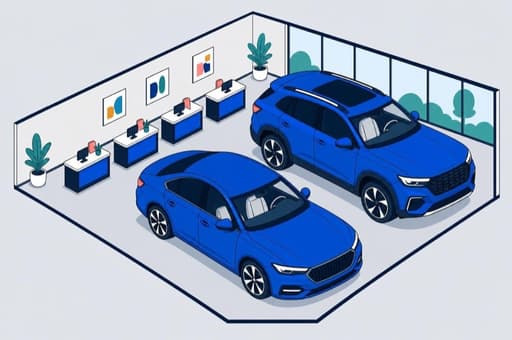
Model 3 and Model Y
Tesla's mass-market sedan and crossover are still the money engine, even after automotive revenue fell 9.8% in FY2025. Affordable demand, factory use and battery cost decide whether their enormous scale produces healthy profit.
Competes with IONIQ 5 (Hyundai) · Mustang Mach-E (Ford)
In plain English
These are the two Teslas most people actually buy: a sedan and a crossover powered by batteries instead of gasoline. Together they are the broad front door to almost everything else Tesla sells.
Households and fleets buy the cars directly from Tesla. A sale brings the large upfront payment, then creates chances to sell charging, repairs, insurance and driving software later. That makes the cars both the main product and the large population of vehicles supporting smaller businesses. The catch is ordinary carmaking math: price cuts, idle factories, expensive batteries or weak borrowing conditions can quickly squeeze what Tesla keeps from each sale.
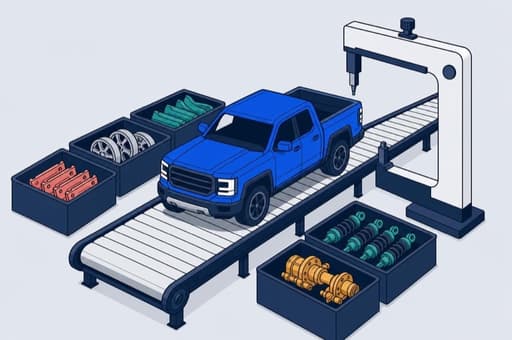
Cybertruck
The electric pickup is a small, undisclosed slice of sales. In Q2 FY2026, every model outside the Model 3/Y pair was just 2.6% of deliveries, so factory output and pickup demand matter more than attention.
Competes with R1T (Rivian) · Silverado EV (Chevrolet)
In plain English
Picture Tesla trying to win a different driveway. Cybertruck is its battery-powered pickup for North American buyers who want hauling ability, a striking shape and access to Tesla's chargers.
Tesla collects money when consumers or fleets take delivery, using the same direct-sales setup as its other vehicles. This is a much narrower market than the worldwide market for ordinary electric cars. Production also leans on Tesla's large battery cells and an Austin factory that must build the unusual steel body consistently. Until volume is clearer, Cybertruck is an offshoot of the car business, not its second pillar.
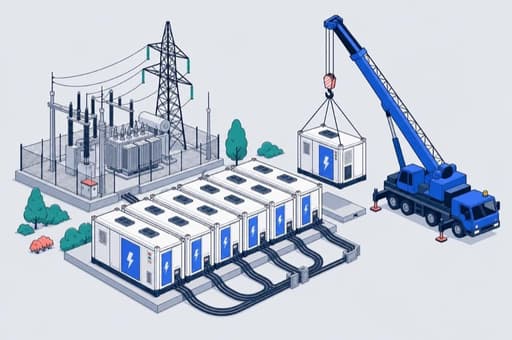
Megapack
Container-sized batteries help power companies save electricity for later, making Megapack the main engine of Tesla's higher-margin energy business. That whole business has $10.42 billion of promised work; project timing and lower prices can make growth uneven.
Competes with Gridstack Pro (Fluence) · GridSolv Quantum 3 (Wärtsilä)
In plain English
Megapack is a giant rechargeable battery in a box. A power company or project builder places many boxes beside the grid, fills them when electricity is plentiful, then releases that power when it is scarce or the grid needs help.
Customers pay Tesla for the battery systems, while Tesla's software helps run them and construction partners connect them to the grid. It resembles selling both warehouse shelves and the controls that decide when every shelf should empty. The business has grown faster and kept more from each sales dollar than Tesla's cars recently, but big projects arrive in lumps and depend on permits, grid connections, financing and a steady supply of battery cells.
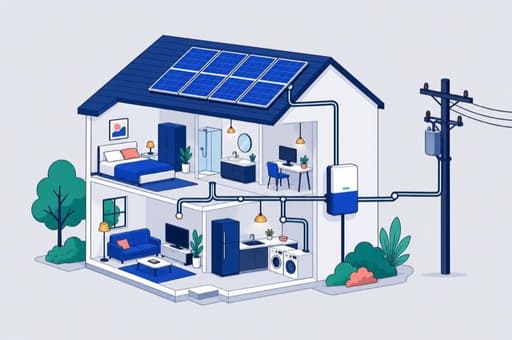
Powerwall
This home battery is still a small part of Tesla but is gaining factory capacity. Nevada can make systems storing more than six billion watt-hours each year; installer reach and household payback will determine sales.
Competes with IQ Battery 5P (Enphase) · aPower 2 (FranklinWH)
In plain English
When the grid goes dark, Powerwall is the battery on the house that keeps selected lights and appliances running. It can also save cheap or rooftop-solar electricity and use it later when power costs more.
Homeowners and small businesses pay for the unit and installation. Utilities can also pay to coordinate many household batteries as if they were one larger power source, giving owners another reason to join. Tesla therefore earns from selling hardware while partners find customers and install the equipment. Expansion depends on local electricity prices, rebates, outages, installer availability and how quickly each home can receive permission to connect.
Services and Other
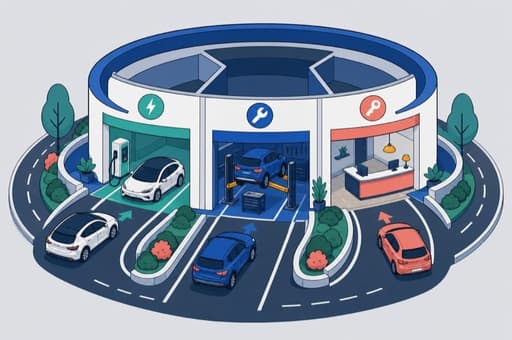
Charging, repairs, used cars, parts and insurance turn the growing fleet into repeat business. FY2025 revenue reached $12.53 billion, up 19%; repair capacity, charger reliability and claims costs decide how useful that growth is.
Competes with Electrify America network (Electrify America) · EVgo network (EVgo)
In plain English
The unglamorous part that keeps earning after a car leaves the factory. Tesla charges cars, fixes them, sells parts and used vehicles, and offers insurance in eligible places.
Owners return because their cars need electricity, collision work, maintenance or replacement parts; used-car buyers and policyholders add other payments. Think of it as the workshop, fuel stop and resale desk gathered around Tesla's own fleet. More cars on the road create more chances to earn, and quarterly sales have been climbing quickly. What Tesla keeps depends on enough repair bays, working chargers, electricity prices, used-car values and the cost of insurance claims.
Full Self-Driving (Supervised)
Paid driving software adds repeat sales to cars already delivered, but the driver must keep watching. Paid users reached 1.48 million by Q2 FY2026; safety, approval and continued subscriptions are the real test.
Competes with BlueCruise (Ford) · DRIVE PILOT (Mercedes-Benz)
In plain English
This is software that helps a Tesla steer, brake and navigate, while a human remains responsible and attentive. The name reaches further than the current job: it assists the driver rather than replacing one.
Owners either subscribe or qualify through an upfront purchase, and Tesla sends improvements through the car's internet connection. That turns a vehicle already sold into another stream of payments with little physical delivery cost. More compatible cars create a larger pool of possible buyers, but owners must find the help worth renewing. Safety performance, government permission, computer capacity and hardware inside older cars determine where the software can work and how far it can advance.
Robotaxi
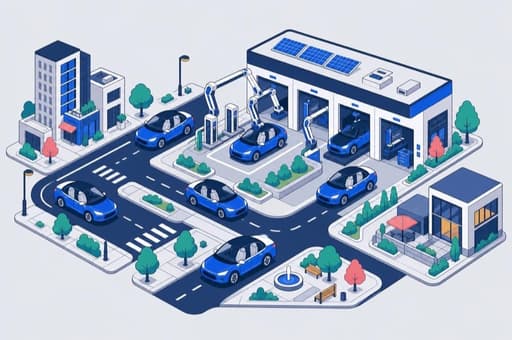
Tesla now sells rides without a supervising driver, using Model Y vehicles and adding Cybercab. By Q2 FY2026 it served several U.S. metros and logged roughly 380,000 unsupervised miles, but revenue remained immaterial.
Competes with Waymo One (Waymo) · Apollo Go (Baidu)
In plain English
Instead of selling the car, Tesla sells the trip. A rider uses Tesla's app to request a vehicle, rides to a destination, and pays a fare; Model Y cars handle the early service while Cybercab joins the fleet.
The same company supplies the vehicle, driving system, booking app and charging, so a successful fleet could earn from each car again and again. Today the service is still an early city-by-city operation. Safe driving, local permission, insurance, enough working vehicles and the cost of keeping them running and charged will decide whether many paid trips can become a durable business.
Optimus
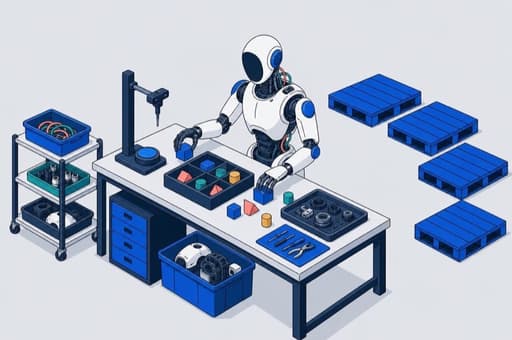
Tesla is testing a general-purpose humanoid robot inside its own factories before trying outside sales. Production timing has slipped toward late FY2026, and management says building the parts supply is slow and unpredictable.
Competes with Figure 03 (Figure AI) · Apollo (Apptronik)
In plain English
Optimus is Tesla's attempt to build a human-shaped machine for physical jobs. Its own factories are the first testing ground, where repetitive tasks can expose whether the robot is useful, safe and reliable.
There are no outside sales yet. Tesla has reassigned former car-factory space in Fremont and is building capacity in Texas, committing real space and money before a customer business exists. If the machine eventually works consistently, other businesses could pay to put robots to work. First it must master delicate movement, survive daily use, pass safety rules and be built repeatedly without the parts chain slowing everything down.


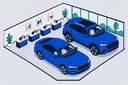 Model 3 and Model YTesla's mass-market sedan and crossover are still the money engine, even after automotive revenue fell 9.8% in FY2025. Affordable demand, factory use and battery cost decide whether their enormous scale produces healthy profit.
Tesla's mass-market sedan and crossover are still the money engine, even after automotive revenue fell 9.8% in FY2025. Affordable demand, factory use and battery cost decide whether their enormous scale produces healthy profit.
In plain English
These are the two Teslas most people actually buy: a sedan and a crossover powered by batteries instead of gasoline. Together they are the broad front door to almost everything else Tesla sells.
Households and fleets buy the cars directly from Tesla. A sale brings the large upfront payment, then creates chances to sell charging, repairs, insurance and driving software later. That makes the cars both the main product and the large population of vehicles supporting smaller businesses. The catch is ordinary carmaking math: price cuts, idle factories, expensive batteries or weak borrowing conditions can quickly squeeze what Tesla keeps from each sale.
Competes with IONIQ 5 (Hyundai) · Mustang Mach-E (Ford)
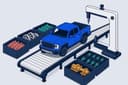 CybertruckThe electric pickup is a small, undisclosed slice of sales. In Q2 FY2026, every model outside the Model 3/Y pair was just 2.6% of deliveries, so factory output and pickup demand matter more than attention.
The electric pickup is a small, undisclosed slice of sales. In Q2 FY2026, every model outside the Model 3/Y pair was just 2.6% of deliveries, so factory output and pickup demand matter more than attention.
In plain English
Picture Tesla trying to win a different driveway. Cybertruck is its battery-powered pickup for North American buyers who want hauling ability, a striking shape and access to Tesla's chargers.
Tesla collects money when consumers or fleets take delivery, using the same direct-sales setup as its other vehicles. This is a much narrower market than the worldwide market for ordinary electric cars. Production also leans on Tesla's large battery cells and an Austin factory that must build the unusual steel body consistently. Until volume is clearer, Cybertruck is an offshoot of the car business, not its second pillar.
Competes with R1T (Rivian) · Silverado EV (Chevrolet)
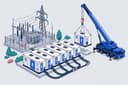 MegapackContainer-sized batteries help power companies save electricity for later, making Megapack the main engine of Tesla's higher-margin energy business. That whole business has $10.42 billion of promised work; project timing and lower prices can make growth uneven.
Container-sized batteries help power companies save electricity for later, making Megapack the main engine of Tesla's higher-margin energy business. That whole business has $10.42 billion of promised work; project timing and lower prices can make growth uneven.
In plain English
Megapack is a giant rechargeable battery in a box. A power company or project builder places many boxes beside the grid, fills them when electricity is plentiful, then releases that power when it is scarce or the grid needs help.
Customers pay Tesla for the battery systems, while Tesla's software helps run them and construction partners connect them to the grid. It resembles selling both warehouse shelves and the controls that decide when every shelf should empty. The business has grown faster and kept more from each sales dollar than Tesla's cars recently, but big projects arrive in lumps and depend on permits, grid connections, financing and a steady supply of battery cells.
Competes with Gridstack Pro (Fluence) · GridSolv Quantum 3 (Wärtsilä)
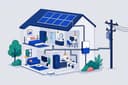 PowerwallThis home battery is still a small part of Tesla but is gaining factory capacity. Nevada can make systems storing more than six billion watt-hours each year; installer reach and household payback will determine sales.
This home battery is still a small part of Tesla but is gaining factory capacity. Nevada can make systems storing more than six billion watt-hours each year; installer reach and household payback will determine sales.
In plain English
When the grid goes dark, Powerwall is the battery on the house that keeps selected lights and appliances running. It can also save cheap or rooftop-solar electricity and use it later when power costs more.
Homeowners and small businesses pay for the unit and installation. Utilities can also pay to coordinate many household batteries as if they were one larger power source, giving owners another reason to join. Tesla therefore earns from selling hardware while partners find customers and install the equipment. Expansion depends on local electricity prices, rebates, outages, installer availability and how quickly each home can receive permission to connect.
Competes with IQ Battery 5P (Enphase) · aPower 2 (FranklinWH)
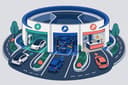 Services and OtherCharging, repairs, used cars, parts and insurance turn the growing fleet into repeat business. FY2025 revenue reached $12.53 billion, up 19%; repair capacity, charger reliability and claims costs decide how useful that growth is.
Charging, repairs, used cars, parts and insurance turn the growing fleet into repeat business. FY2025 revenue reached $12.53 billion, up 19%; repair capacity, charger reliability and claims costs decide how useful that growth is.
In plain English
The unglamorous part that keeps earning after a car leaves the factory. Tesla charges cars, fixes them, sells parts and used vehicles, and offers insurance in eligible places.
Owners return because their cars need electricity, collision work, maintenance or replacement parts; used-car buyers and policyholders add other payments. Think of it as the workshop, fuel stop and resale desk gathered around Tesla's own fleet. More cars on the road create more chances to earn, and quarterly sales have been climbing quickly. What Tesla keeps depends on enough repair bays, working chargers, electricity prices, used-car values and the cost of insurance claims.
Competes with Electrify America network (Electrify America) · EVgo network (EVgo)
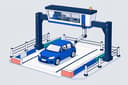 Full Self-Driving (Supervised)Paid driving software adds repeat sales to cars already delivered, but the driver must keep watching. Paid users reached 1.48 million by Q2 FY2026; safety, approval and continued subscriptions are the real test.
Paid driving software adds repeat sales to cars already delivered, but the driver must keep watching. Paid users reached 1.48 million by Q2 FY2026; safety, approval and continued subscriptions are the real test.
In plain English
This is software that helps a Tesla steer, brake and navigate, while a human remains responsible and attentive. The name reaches further than the current job: it assists the driver rather than replacing one.
Owners either subscribe or qualify through an upfront purchase, and Tesla sends improvements through the car's internet connection. That turns a vehicle already sold into another stream of payments with little physical delivery cost. More compatible cars create a larger pool of possible buyers, but owners must find the help worth renewing. Safety performance, government permission, computer capacity and hardware inside older cars determine where the software can work and how far it can advance.
Competes with BlueCruise (Ford) · DRIVE PILOT (Mercedes-Benz)
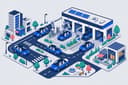 RobotaxiTesla now sells rides without a supervising driver, using Model Y vehicles and adding Cybercab. By Q2 FY2026 it served several U.S. metros and logged roughly 380,000 unsupervised miles, but revenue remained immaterial.
Tesla now sells rides without a supervising driver, using Model Y vehicles and adding Cybercab. By Q2 FY2026 it served several U.S. metros and logged roughly 380,000 unsupervised miles, but revenue remained immaterial.
In plain English
Instead of selling the car, Tesla sells the trip. A rider uses Tesla's app to request a vehicle, rides to a destination, and pays a fare; Model Y cars handle the early service while Cybercab joins the fleet.
The same company supplies the vehicle, driving system, booking app and charging, so a successful fleet could earn from each car again and again. Today the service is still an early city-by-city operation. Safe driving, local permission, insurance, enough working vehicles and the cost of keeping them running and charged will decide whether many paid trips can become a durable business.
Competes with Waymo One (Waymo) · Apollo Go (Baidu)
 OptimusTesla is testing a general-purpose humanoid robot inside its own factories before trying outside sales. Production timing has slipped toward late FY2026, and management says building the parts supply is slow and unpredictable.
Tesla is testing a general-purpose humanoid robot inside its own factories before trying outside sales. Production timing has slipped toward late FY2026, and management says building the parts supply is slow and unpredictable.
In plain English
Optimus is Tesla's attempt to build a human-shaped machine for physical jobs. Its own factories are the first testing ground, where repetitive tasks can expose whether the robot is useful, safe and reliable.
There are no outside sales yet. Tesla has reassigned former car-factory space in Fremont and is building capacity in Texas, committing real space and money before a customer business exists. If the machine eventually works consistently, other businesses could pay to put robots to work. First it must master delicate movement, survive daily use, pass safety rules and be built repeatedly without the parts chain slowing everything down.
Competes with Figure 03 (Figure AI) · Apollo (Apptronik)
Named in filings, launches and programs
- Automotive Regulatory CreditsProduct lineOther automakers paid $1.99 billion for transferable environmental credits in FY2025, a profitable stream facing reduced U.S. policy support.
- Automotive LeasingServiceTesla earned $1.71 billion in FY2025 by leasing vehicles directly to drivers rather than selling them outright.
- Tesla SemiProduct · RampingHeavy electric truck production began in 2026, with low volume targeted by year-end and Einride providing an outside fleet buyer.
- Solar PanelsProductRooftop solar panels remain on sale, but Tesla does not separate their small contribution to energy revenue.
- Autobidder and PowerhubPlatformSoftware decides when batteries and small power networks should store or release electricity; its sales stay inside the energy business.
- Tesla InsuranceServiceApp-based car insurance uses real-time driving behavior, including use of assisted-driving software, to serve drivers in eligible U.S. states.
- Supercharger Network and Supercharger for BusinessEcosystem · RampingTesla sells fast-charging sessions and lets outside operators buy supported sites, operate them and set local prices.
- NatPower Megapack programCustomer program · AnnouncedA multiyear Italy and U.K. storage plan; the reported $5 billion covers project construction, not promised Tesla sales.
- Clearway Megapack programCustomer program · AnnouncedClearway ordered another large group of battery systems for delivery from 2026, adding to an earlier purchase.
- Sunrun–Renew Home–Tesla flexible-power programCustomer program · AnnouncedThe partners aim to combine existing home batteries into a large shared power source for utilities and data centers; financial terms were not disclosed.
- Einride 500-Semi programCustomer program · AnnouncedEinride plans to add 500 Tesla Semis over 24 months beginning in September 2026, with financing supplied by another party.
- xAI Megapack and AI collaborationCustomer programxAI bought $430 million of Megapacks in FY2025; Tesla separately committed $2 billion to the related AI company.
Automotive Regulatory CreditsProduct line
Other automakers paid $1.99 billion for transferable environmental credits in FY2025, a profitable stream facing reduced U.S. policy support.
Automotive LeasingService
Tesla earned $1.71 billion in FY2025 by leasing vehicles directly to drivers rather than selling them outright.
Tesla SemiProduct · Ramping
Heavy electric truck production began in 2026, with low volume targeted by year-end and Einride providing an outside fleet buyer.
Solar PanelsProduct
Rooftop solar panels remain on sale, but Tesla does not separate their small contribution to energy revenue.
Autobidder and PowerhubPlatform
Software decides when batteries and small power networks should store or release electricity; its sales stay inside the energy business.
Tesla InsuranceService
App-based car insurance uses real-time driving behavior, including use of assisted-driving software, to serve drivers in eligible U.S. states.
Supercharger Network and Supercharger for BusinessEcosystem · Ramping
Tesla sells fast-charging sessions and lets outside operators buy supported sites, operate them and set local prices.
NatPower Megapack programCustomer program · Announced
A multiyear Italy and U.K. storage plan; the reported $5 billion covers project construction, not promised Tesla sales.
Clearway Megapack programCustomer program · Announced
Clearway ordered another large group of battery systems for delivery from 2026, adding to an earlier purchase.
Sunrun–Renew Home–Tesla flexible-power programCustomer program · Announced
The partners aim to combine existing home batteries into a large shared power source for utilities and data centers; financial terms were not disclosed.
Einride 500-Semi programCustomer program · Announced
Einride plans to add 500 Tesla Semis over 24 months beginning in September 2026, with financing supplied by another party.
xAI Megapack and AI collaborationCustomer program
xAI bought $430 million of Megapacks in FY2025; Tesla separately committed $2 billion to the related AI company.