
Twilio (TWLO)
Provides communications APIs, engagement software, and a customer data platform.
Something off on this page? Send us feedback.
Twilio rents out the plumbing behind the messages companies send you — the passcode text, the delivery alert, the receipt email. Developers wire it in once and pay by the message, the minute, the check. Texting still brings in more than half the money; after years of losses the business finally turns a profit, and the growth is shifting to phone calls and to a new layer that lets a company's own AI answer them.
Item facts: FY2025 · year ended Dec 31, 2025, from filings, earnings calls and company pages.
Judgment weights, not filed revenue
The band summarizes business focus and direction. ~ marks estimates.
7 in detail · 16 more below
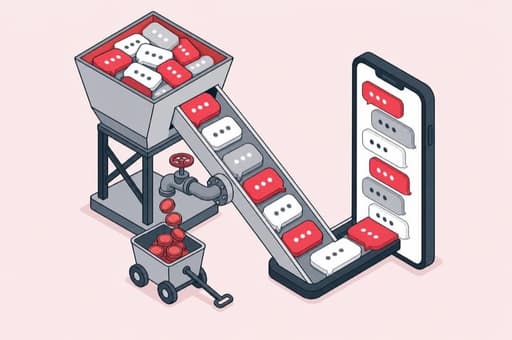
Messaging
The text business — passcodes, alerts, marketing sends — billed per message. It is $2.88B of $5.07B and grew 28% in the June 2026 quarter, but roughly ten of those points were carrier fee rises passed straight through, earning Twilio nothing.
Competes with Messaging API (Sinch) · Messaging API (Infobip) · Messaging API (Bandwidth)
In plain English
Every one-time passcode and "your driver is two minutes away" alert has to reach a handset through a mobile network. Companies would rather not wire themselves into every network on earth, so they hand the message to Twilio, which already has.
The bill is a fraction of a cent per message, multiplied by hundreds of billions — one peak week in late 2025 carried almost seven billion. Mobile carriers take a large slice of that, and when they raise their fees Twilio adds the increase to the invoice and passes it along: the sales figure grows, the profit does not. No single customer is more than a tenth of sales, so the concentration here is in the product, not the buyer.

Voice
Phone calls as a service — dialling out, taking calls in, conferencing — billed by the minute. Growth topped 20% in both 2026 quarters reported so far, and the reason is AI: software that answers phones still needs a phone line.
Competes with Programmable voice & SIP (Telnyx) · Voice API (Sinch) · Amazon Connect voice (Amazon)
In plain English
Twilio holds the connections into the ordinary telephone network and rents them out by the minute — the list price to place a call is under two cents a minute. Think of it as a phone company you talk to in code rather than at a shop counter.
What changed is who is dialling. Firms building AI that speaks to customers on the phone — Sierra, PolyAI, Retell AI — and big companies pulling scattered support lines onto one system both need real telephone plumbing underneath. Twilio sells the plumbing, not the AI, and charges the same whether the voice on the line is a person or a machine.

Conversation Relay
The piece that lets a company's own AI hold a phone conversation: speech into text, text back into speech, and knowing when it has been interrupted. Small money on its own — its job is to pull AI voice deals onto Twilio's phone lines.
Competes with Voice agent platform (Retell AI) · LiveKit Agents (LiveKit) · Amazon Connect with Lex (Amazon)
In plain English
Picture an interpreter seated between a telephone line and a computer program. The caller speaks; this turns the words into text the program can read. The program writes a reply; this says it out loud, and stops mid-sentence when the caller cuts in.
The customer brings whichever AI model it likes — Twilio deliberately stays neutral about that, because the neutrality is the selling point. Seven cents buys a minute of the interpreting. Even a billion minutes a year would be modest against a five-billion-dollar company; what matters is that all those calls arrive over Twilio's phone lines and get billed there too.

Conversations layer
The new layer above the channels: routing, memory of past exchanges, live scoring of a call, and a socket for any AI agent. Three months old at the last report — one trial customer, Car Finance 247, has already signed a seven-figure deal.
Competes with Agentforce (Salesforce) · Genesys Cloud CX orchestration (Genesys) · NICE CXone orchestration (NICE)
In plain English
Channels are only pipes: a text goes out, a call comes in. This sits above them and does the thinking — it remembers who the customer is and what they said last time, decides whether a person or a machine should take the next turn, and grades the conversation while it is still running.
Twilio charges small amounts for each chunk of text it handles, which is not really where the money is. A company that runs its conversations here pushes more texts and more calls through Twilio, and those get billed the usual way. It has only been on general sale since May 2026, so there is little to judge yet.
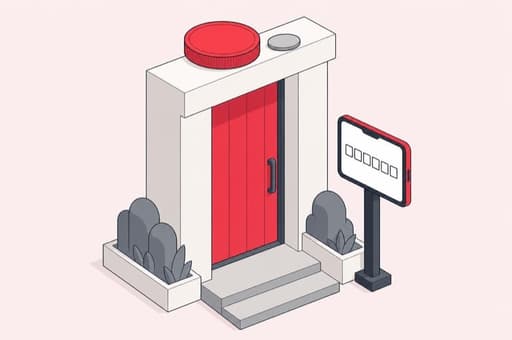
User Authentication and Identity
The login-code business: send a passcode, check it comes back, judge whether the number is real. Growth topped 30% in the June 2026 quarter. Twilio charges five cents a check where sending the bare text lists under a cent.
Competes with Verification (Sinch) · Verify (Vonage) · Phone-number fraud scoring (Telesign)
In plain English
You have done this a hundred times: type in your phone number, wait for a six-digit code, type the code back. Twilio runs that whole loop for the companies you are logging into, and answers the quieter question behind it — is this number real, and does it belong to who it claims to?
Sending the text costs well under a cent at list price. The check sells for about five cents, because the value is in spotting fraud, retrying, and falling back to another channel when the text does not land. In November 2025 Twilio bought Stytch, a small developer identity company, to stretch the same idea to AI agents that need to sign in somewhere.

Twilio Email (SendGrid)
SendGrid: order confirmations, password resets and newsletters, sold on monthly plans rather than per send. The slow one — 7% growth in 2025 — and it comes up less and less on earnings calls. Its job is steady cash while attention goes elsewhere.
Competes with Mailgun (Sinch) · Amazon SES (Amazon) · Resend email API (Resend)
In plain English
This is the quiet one. When a shop emails your order confirmation, something has to get it into the inbox rather than the spam folder, which means keeping a clean reputation with the big inbox providers and obeying their rules about who may send what.
Customers buy a monthly plan sized by volume instead of paying per email, which is why a peak week carrying seventy-five billion messages still works out to a fraction of a cent each. The market is mature and there are much cheaper places to send bulk mail, so this sells scale and one-stop convenience. Twilio is also moving the service off its old datacentres onto rented cloud, paying for both while the move runs.
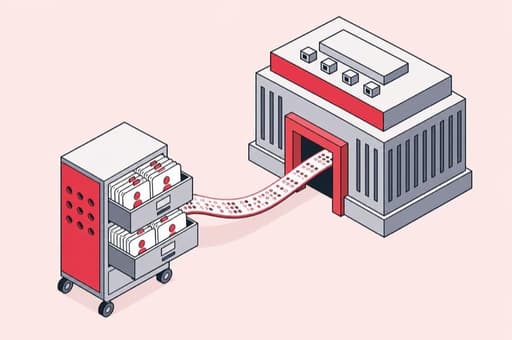
Twilio Segment
The customer-data platform bought in 2020: it stitches a person's clicks, purchases and messages into one profile. Revenue grew 2% in 2025, Twilio stopped putting a separate number on it, and its new job is feeding memory to the AI conversations layer.
Competes with Data Cloud (Salesforce) · Real-Time CDP (Adobe) · Warehouse-native activation (Hightouch)
In plain English
Companies know their customers in fragments — an email address here, an app login there, a purchase somewhere else. Segment catches those scraps as they happen, glues them into a single profile of one person, and pushes that profile out to whatever other tools the company runs.
Customers pay a subscription, mostly five- and six-figure contracts. Growth has all but stopped: Salesforce leads this category, and plenty of firms now assemble profiles straight out of the data warehouse they already pay for, skipping a packaged product like this. Segment's second life inside Twilio is supplying the memory that makes an AI conversation sound like it remembers you.


 MessagingThe text business — passcodes, alerts, marketing sends — billed per message. It is $2.88B of $5.07B and grew 28% in the June 2026 quarter, but roughly ten of those points were carrier fee rises passed straight through, earning Twilio nothing.
The text business — passcodes, alerts, marketing sends — billed per message. It is $2.88B of $5.07B and grew 28% in the June 2026 quarter, but roughly ten of those points were carrier fee rises passed straight through, earning Twilio nothing.
In plain English
Every one-time passcode and "your driver is two minutes away" alert has to reach a handset through a mobile network. Companies would rather not wire themselves into every network on earth, so they hand the message to Twilio, which already has.
The bill is a fraction of a cent per message, multiplied by hundreds of billions — one peak week in late 2025 carried almost seven billion. Mobile carriers take a large slice of that, and when they raise their fees Twilio adds the increase to the invoice and passes it along: the sales figure grows, the profit does not. No single customer is more than a tenth of sales, so the concentration here is in the product, not the buyer.
Competes with Messaging API (Sinch) · Messaging API (Infobip) · Messaging API (Bandwidth)
 VoicePhone calls as a service — dialling out, taking calls in, conferencing — billed by the minute. Growth topped 20% in both 2026 quarters reported so far, and the reason is AI: software that answers phones still needs a phone line.
Phone calls as a service — dialling out, taking calls in, conferencing — billed by the minute. Growth topped 20% in both 2026 quarters reported so far, and the reason is AI: software that answers phones still needs a phone line.
In plain English
Twilio holds the connections into the ordinary telephone network and rents them out by the minute — the list price to place a call is under two cents a minute. Think of it as a phone company you talk to in code rather than at a shop counter.
What changed is who is dialling. Firms building AI that speaks to customers on the phone — Sierra, PolyAI, Retell AI — and big companies pulling scattered support lines onto one system both need real telephone plumbing underneath. Twilio sells the plumbing, not the AI, and charges the same whether the voice on the line is a person or a machine.
Competes with Programmable voice & SIP (Telnyx) · Voice API (Sinch) · Amazon Connect voice (Amazon)
 Conversation RelayThe piece that lets a company's own AI hold a phone conversation: speech into text, text back into speech, and knowing when it has been interrupted. Small money on its own — its job is to pull AI voice deals onto Twilio's phone lines.
The piece that lets a company's own AI hold a phone conversation: speech into text, text back into speech, and knowing when it has been interrupted. Small money on its own — its job is to pull AI voice deals onto Twilio's phone lines.
In plain English
Picture an interpreter seated between a telephone line and a computer program. The caller speaks; this turns the words into text the program can read. The program writes a reply; this says it out loud, and stops mid-sentence when the caller cuts in.
The customer brings whichever AI model it likes — Twilio deliberately stays neutral about that, because the neutrality is the selling point. Seven cents buys a minute of the interpreting. Even a billion minutes a year would be modest against a five-billion-dollar company; what matters is that all those calls arrive over Twilio's phone lines and get billed there too.
Competes with Voice agent platform (Retell AI) · LiveKit Agents (LiveKit) · Amazon Connect with Lex (Amazon)
 Conversations layerThe new layer above the channels: routing, memory of past exchanges, live scoring of a call, and a socket for any AI agent. Three months old at the last report — one trial customer, Car Finance 247, has already signed a seven-figure deal.
The new layer above the channels: routing, memory of past exchanges, live scoring of a call, and a socket for any AI agent. Three months old at the last report — one trial customer, Car Finance 247, has already signed a seven-figure deal.
In plain English
Channels are only pipes: a text goes out, a call comes in. This sits above them and does the thinking — it remembers who the customer is and what they said last time, decides whether a person or a machine should take the next turn, and grades the conversation while it is still running.
Twilio charges small amounts for each chunk of text it handles, which is not really where the money is. A company that runs its conversations here pushes more texts and more calls through Twilio, and those get billed the usual way. It has only been on general sale since May 2026, so there is little to judge yet.
Competes with Agentforce (Salesforce) · Genesys Cloud CX orchestration (Genesys) · NICE CXone orchestration (NICE)
 User Authentication and IdentityThe login-code business: send a passcode, check it comes back, judge whether the number is real. Growth topped 30% in the June 2026 quarter. Twilio charges five cents a check where sending the bare text lists under a cent.
The login-code business: send a passcode, check it comes back, judge whether the number is real. Growth topped 30% in the June 2026 quarter. Twilio charges five cents a check where sending the bare text lists under a cent.
In plain English
You have done this a hundred times: type in your phone number, wait for a six-digit code, type the code back. Twilio runs that whole loop for the companies you are logging into, and answers the quieter question behind it — is this number real, and does it belong to who it claims to?
Sending the text costs well under a cent at list price. The check sells for about five cents, because the value is in spotting fraud, retrying, and falling back to another channel when the text does not land. In November 2025 Twilio bought Stytch, a small developer identity company, to stretch the same idea to AI agents that need to sign in somewhere.
Competes with Verification (Sinch) · Verify (Vonage) · Phone-number fraud scoring (Telesign)
 Twilio Email (SendGrid)SendGrid: order confirmations, password resets and newsletters, sold on monthly plans rather than per send. The slow one — 7% growth in 2025 — and it comes up less and less on earnings calls. Its job is steady cash while attention goes elsewhere.
SendGrid: order confirmations, password resets and newsletters, sold on monthly plans rather than per send. The slow one — 7% growth in 2025 — and it comes up less and less on earnings calls. Its job is steady cash while attention goes elsewhere.
In plain English
This is the quiet one. When a shop emails your order confirmation, something has to get it into the inbox rather than the spam folder, which means keeping a clean reputation with the big inbox providers and obeying their rules about who may send what.
Customers buy a monthly plan sized by volume instead of paying per email, which is why a peak week carrying seventy-five billion messages still works out to a fraction of a cent each. The market is mature and there are much cheaper places to send bulk mail, so this sells scale and one-stop convenience. Twilio is also moving the service off its old datacentres onto rented cloud, paying for both while the move runs.
Competes with Mailgun (Sinch) · Amazon SES (Amazon) · Resend email API (Resend)
 Twilio SegmentThe customer-data platform bought in 2020: it stitches a person's clicks, purchases and messages into one profile. Revenue grew 2% in 2025, Twilio stopped putting a separate number on it, and its new job is feeding memory to the AI conversations layer.
The customer-data platform bought in 2020: it stitches a person's clicks, purchases and messages into one profile. Revenue grew 2% in 2025, Twilio stopped putting a separate number on it, and its new job is feeding memory to the AI conversations layer.
In plain English
Companies know their customers in fragments — an email address here, an app login there, a purchase somewhere else. Segment catches those scraps as they happen, glues them into a single profile of one person, and pushes that profile out to whatever other tools the company runs.
Customers pay a subscription, mostly five- and six-figure contracts. Growth has all but stopped: Salesforce leads this category, and plenty of firms now assemble profiles straight out of the data warehouse they already pay for, skipping a packaged product like this. Segment's second life inside Twilio is supplying the memory that makes an AI conversation sound like it remembers you.
Competes with Data Cloud (Salesforce) · Real-Time CDP (Adobe) · Warehouse-native activation (Hightouch)
Named in filings, launches and programs
- Twilio FlexProductProgrammable contact centre, a low single-digit slice of sales; relaunched April 2026 as software other firms embed, including voice for Salesforce's Agentforce Service.
- RCS Business MessagingEcosystemThe next-generation text-message standard Twilio resells beside plain SMS. On general sale since August 2025 across 20+ countries and 55+ carriers; volume roughly five-fold in one quarter.
- WhatsApp Business APIEcosystemMeta's business chat channel, resold inside messaging; management named it as one of the aids to 2026 growth.
- Branded CallingProduct · RampingVerified caller identity, reaching 265M+ US devices. Revenue roughly six-fold in late 2025 and still tripling and more this year — off a tiny base.
- Twilio ConsolePlatformThe rebuilt developer dashboard, live May 2026; sign-ups convert more than 90% better since.
- Agent productivity solutionCustomer program · RampingContact centre, AI voice and the messaging and calling channels sold as one bundle; first deals landed in late 2025.
- Self-serve channelEcosystemDevelopers who sign up with a card and never meet a salesperson — up 21% in 2025 and 30% in the June 2026 quarter.
- ISV channelEcosystemSoftware companies that bury Twilio inside their own products — up 24% in 2025 and 25% in the June 2026 quarter.
- AI-native customer cohortCustomer program · RampingStartups building AI that phones people — Sierra, PolyAI, Retell AI, Genspark and others. Voice AI customers up about 60% year over year.
- Nine-figure renewal — a leading cloud providerCustomer programA large cloud company renewed across several products in late 2025 — a nine-figure contract, the biggest Twilio had signed at that point.
- Nine-figure renewal — a leading marketing automation platformCustomer programA marketing-automation platform topped it one quarter later with another nine-figure multiproduct renewal. Twilio names neither buyer.
- Eight-figure deal — a leading AI companyCustomer programAn unnamed AI company signed an eight-figure deal in the June 2026 quarter.
- Microsoft partnershipCustomer programMulti-year agreement signed May 2025 to build conversational AI on Microsoft's Azure cloud.
- KPN Netherlands RCS partnershipCustomer programDutch telecom operator KPN signed on in March 2026 to carry upgraded business texts nationwide across Dutch mobile operators.
- AEG partnershipCustomer programLive-entertainment group AEG signed in late 2025 for fan data and personalisation as events happen.
- Apple Messages for BusinessEcosystem · AnnouncedChatting with companies inside Apple's Messages app — announced at Twilio's 2026 developer conference, still in closed testing.
Twilio FlexProduct
Programmable contact centre, a low single-digit slice of sales; relaunched April 2026 as software other firms embed, including voice for Salesforce's Agentforce Service.
RCS Business MessagingEcosystem
The next-generation text-message standard Twilio resells beside plain SMS. On general sale since August 2025 across 20+ countries and 55+ carriers; volume roughly five-fold in one quarter.
WhatsApp Business APIEcosystem
Meta's business chat channel, resold inside messaging; management named it as one of the aids to 2026 growth.
Branded CallingProduct · Ramping
Verified caller identity, reaching 265M+ US devices. Revenue roughly six-fold in late 2025 and still tripling and more this year — off a tiny base.
Twilio ConsolePlatform
The rebuilt developer dashboard, live May 2026; sign-ups convert more than 90% better since.
Agent productivity solutionCustomer program · Ramping
Contact centre, AI voice and the messaging and calling channels sold as one bundle; first deals landed in late 2025.
Self-serve channelEcosystem
Developers who sign up with a card and never meet a salesperson — up 21% in 2025 and 30% in the June 2026 quarter.
ISV channelEcosystem
Software companies that bury Twilio inside their own products — up 24% in 2025 and 25% in the June 2026 quarter.
AI-native customer cohortCustomer program · Ramping
Startups building AI that phones people — Sierra, PolyAI, Retell AI, Genspark and others. Voice AI customers up about 60% year over year.
Nine-figure renewal — a leading cloud providerCustomer program
A large cloud company renewed across several products in late 2025 — a nine-figure contract, the biggest Twilio had signed at that point.
Nine-figure renewal — a leading marketing automation platformCustomer program
A marketing-automation platform topped it one quarter later with another nine-figure multiproduct renewal. Twilio names neither buyer.
Eight-figure deal — a leading AI companyCustomer program
An unnamed AI company signed an eight-figure deal in the June 2026 quarter.
Microsoft partnershipCustomer program
Multi-year agreement signed May 2025 to build conversational AI on Microsoft's Azure cloud.
KPN Netherlands RCS partnershipCustomer program
Dutch telecom operator KPN signed on in March 2026 to carry upgraded business texts nationwide across Dutch mobile operators.
AEG partnershipCustomer program
Live-entertainment group AEG signed in late 2025 for fan data and personalisation as events happen.
Apple Messages for BusinessEcosystem · Announced
Chatting with companies inside Apple's Messages app — announced at Twilio's 2026 developer conference, still in closed testing.