
UnitedHealth Group (UNH)
Combines health insurance with care delivery, pharmacy benefits, and health technology.
Something off on this page? Send us feedback.
UnitedHealth is mostly a giant health insurer, with Medicare coverage as its biggest engine, plus a tightly linked set of clinics, pharmacy services and healthcare software under Optum. The company is trying to recover from care costs rising faster than the payments it collected while narrowing some care operations and moving toward simpler pharmacy fees and more automation.
Item facts: FY2025 · year ended Dec 31, 2025, from filings, earnings calls and company pages.
Judgment weights, not filed revenue
The band summarizes business focus and direction. ~ marks estimates.
6 in detail · 18 more below
UnitedHealthcare Medicare & Retirement
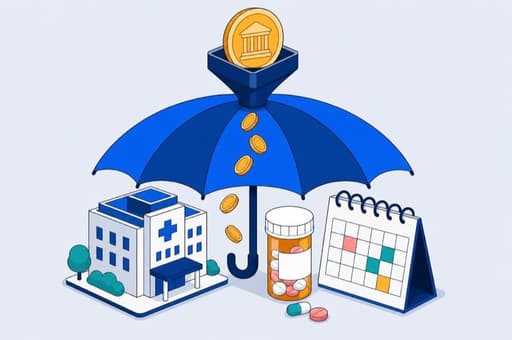
Medicare plans are UnitedHealth’s largest business, but membership has been shrinking as care costs and federal rates squeeze the math. CMS, the federal Medicare agency, is the one customer UnitedHealth depends on most.
Competes with Humana Medicare Advantage plans (Humana) · Aetna Medicare Advantage (CVS Health)
In plain English
Here, UnitedHealth stands between older Americans and their medical bills. It sells all-in-one private alternatives to traditional Medicare, add-on plans for costs Medicare leaves behind and stand-alone drug coverage.
The federal Medicare agency and some members pay a set amount each month. UnitedHealth then pays doctors, hospitals and pharmacies; what remains after care and running costs is the business. That makes accurate pricing crucial: members used more care than expected, and the main Medicare plan had fewer members by midyear.
UnitedHealthcare Community & State
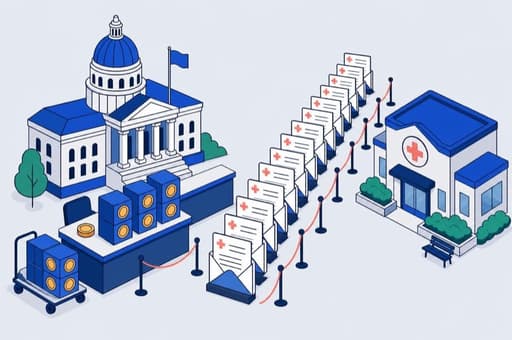
State Medicaid programs pay UnitedHealth to arrange care for lower-income families and other eligible residents. Revenue grew 17% in the year, yet later membership losses and state payments lagging medical costs point to a loss-making 2026.
Competes with Aetna Better Health Medicaid (CVS Health) · Molina Medicaid managed care (Molina Healthcare)
In plain English
Imagine a state hiring one organizer to manage health care for people covered by Medicaid, the public program for lower-income families and others who qualify. UnitedHealth builds the doctor and pharmacy network, helps members use it and pays the medical bills.
The state sends a fixed payment for each member every month. UnitedHealth makes money when those payments cover care and operating costs. The danger is timing: eligibility checks can remove members quickly, while state payment increases may arrive after hospitals and doctors have already raised prices.
Optum Rx
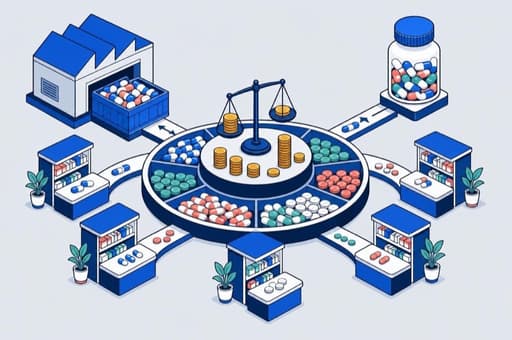
This is the middle desk between drugmakers, pharmacies and health plans, handling 1.659 billion prescriptions in the year. Volume is immense; shrinking UnitedHealthcare membership and demands for clearer fees are what to watch.
Competes with CVS Caremark pharmacy-benefit services (CVS Health) · Express Scripts pharmacy-benefit services (Evernorth/Cigna)
In plain English
A health plan or employer hires Optum Rx to decide which medicines it will cover, process each pharmacy bill, bargain with drugmakers and arrange home delivery. It works like a purchasing desk for millions of medicine orders.
The client pays for the service and the medicine flow; Optum earns from drug sales and service fees, while negotiated discounts are increasingly passed straight back to clients. Because UnitedHealthcare is a major customer inside the same parent company, fewer insurance members can mean fewer prescriptions moving through the system.
Optum Health
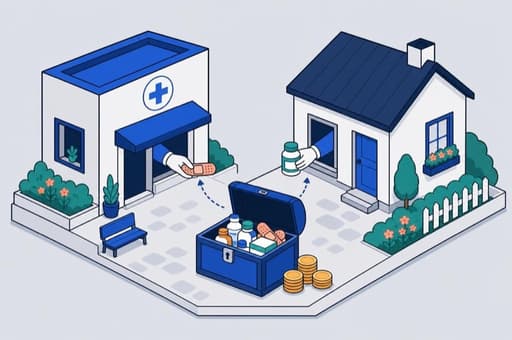
Clinics, home visits and online care generated $38.34 billion from outside customers in the year, but the business lost money before rebounding in mid-2026. Watch whether fewer, better-chosen patient groups can stay profitable.
Competes with CenterWell Primary Care/Home Health (Humana) · Oak Street Health/Signify Health (CVS Health)
In plain English
This is the doctor’s-office side of UnitedHealth. Optum runs clinics, sends care into homes and connects people to doctors and nurses online, often taking responsibility for a patient’s whole annual care budget.
An insurer pays Optum a fixed amount to look after each patient, or pays per visit and service. If care stays useful and well coordinated for less than that amount, Optum keeps the difference; if patients need more care, Optum absorbs the squeeze. UnitedHealthcare sends many of those patients, so the clinic network is being narrowed after costs outran payments.
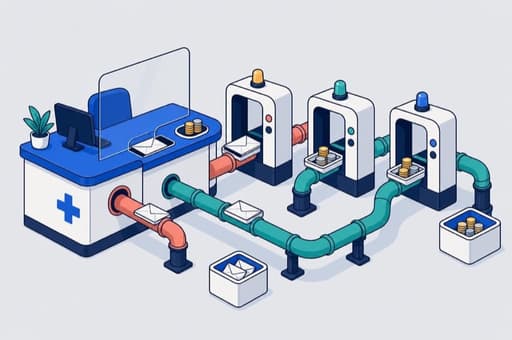
Optum Insight
Software and service teams help hospitals and insurers move bills, payment requests and money; a $31.1 billion work queue, including UnitedHealth’s own orders, sat behind it at year-end. Delivery, customer technology budgets and cyber resilience decide how quickly it becomes sales.
Competes with Oracle Health billing and payment software (Oracle) · Waystar Smart Platform (Waystar)
In plain English
Most patients never see this machinery. Optum Insight gives hospitals and insurers software and service teams that check coverage, send bills, route payments and find errors before money changes hands. Picture the pipes behind a hospital cashier’s desk.
Customers pay software subscriptions and sign service contracts that can run for several years. Optum earns as the tools are used and the promised work is delivered. UnitedHealthcare also buys these services; outside hospitals and insurers are the customers that add money from beyond the group.
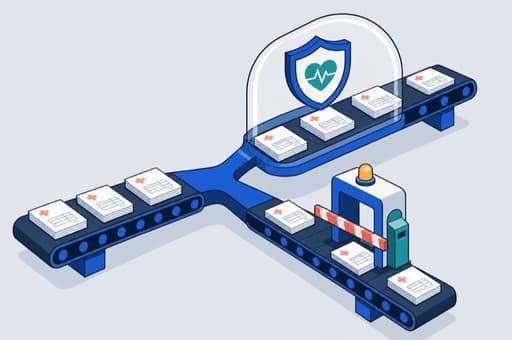
UnitedHealthcare Employer & Individual
Employers and individuals buy health coverage or pay UnitedHealth to run plans while bearing the medical bills themselves. The year brought $79.23 billion of revenue; the key shift is fewer people whose medical costs UnitedHealth bears but more employer-paid administration.
Competes with Aetna commercial health coverage (CVS Health) · Employer Group benefits (Elevance Health)
In plain English
Two arrangements sit under this name. In one, a company or person pays a monthly price and UnitedHealth pays the medical bills. In the other, an employer keeps those bills but hires UnitedHealth to run enrollment, doctor networks and payments—like using a payroll service for health benefits.
The first earns money when monthly payments exceed care and running costs; the second earns steadier administration fees without carrying the medical risk. Brokers, advisers and public insurance websites help bring in customers, and keeping prices aligned with rising care costs matters most.


 UnitedHealthcare Medicare & RetirementMedicare plans are UnitedHealth’s largest business, but membership has been shrinking as care costs and federal rates squeeze the math. CMS, the federal Medicare agency, is the one customer UnitedHealth depends on most.
Medicare plans are UnitedHealth’s largest business, but membership has been shrinking as care costs and federal rates squeeze the math. CMS, the federal Medicare agency, is the one customer UnitedHealth depends on most.
In plain English
Here, UnitedHealth stands between older Americans and their medical bills. It sells all-in-one private alternatives to traditional Medicare, add-on plans for costs Medicare leaves behind and stand-alone drug coverage.
The federal Medicare agency and some members pay a set amount each month. UnitedHealth then pays doctors, hospitals and pharmacies; what remains after care and running costs is the business. That makes accurate pricing crucial: members used more care than expected, and the main Medicare plan had fewer members by midyear.
Competes with Humana Medicare Advantage plans (Humana) · Aetna Medicare Advantage (CVS Health)
 UnitedHealthcare Community & StateState Medicaid programs pay UnitedHealth to arrange care for lower-income families and other eligible residents. Revenue grew 17% in the year, yet later membership losses and state payments lagging medical costs point to a loss-making 2026.
State Medicaid programs pay UnitedHealth to arrange care for lower-income families and other eligible residents. Revenue grew 17% in the year, yet later membership losses and state payments lagging medical costs point to a loss-making 2026.
In plain English
Imagine a state hiring one organizer to manage health care for people covered by Medicaid, the public program for lower-income families and others who qualify. UnitedHealth builds the doctor and pharmacy network, helps members use it and pays the medical bills.
The state sends a fixed payment for each member every month. UnitedHealth makes money when those payments cover care and operating costs. The danger is timing: eligibility checks can remove members quickly, while state payment increases may arrive after hospitals and doctors have already raised prices.
Competes with Aetna Better Health Medicaid (CVS Health) · Molina Medicaid managed care (Molina Healthcare)
 Optum RxThis is the middle desk between drugmakers, pharmacies and health plans, handling 1.659 billion prescriptions in the year. Volume is immense; shrinking UnitedHealthcare membership and demands for clearer fees are what to watch.
This is the middle desk between drugmakers, pharmacies and health plans, handling 1.659 billion prescriptions in the year. Volume is immense; shrinking UnitedHealthcare membership and demands for clearer fees are what to watch.
In plain English
A health plan or employer hires Optum Rx to decide which medicines it will cover, process each pharmacy bill, bargain with drugmakers and arrange home delivery. It works like a purchasing desk for millions of medicine orders.
The client pays for the service and the medicine flow; Optum earns from drug sales and service fees, while negotiated discounts are increasingly passed straight back to clients. Because UnitedHealthcare is a major customer inside the same parent company, fewer insurance members can mean fewer prescriptions moving through the system.
Competes with CVS Caremark pharmacy-benefit services (CVS Health) · Express Scripts pharmacy-benefit services (Evernorth/Cigna)
 Optum HealthClinics, home visits and online care generated $38.34 billion from outside customers in the year, but the business lost money before rebounding in mid-2026. Watch whether fewer, better-chosen patient groups can stay profitable.
Clinics, home visits and online care generated $38.34 billion from outside customers in the year, but the business lost money before rebounding in mid-2026. Watch whether fewer, better-chosen patient groups can stay profitable.
In plain English
This is the doctor’s-office side of UnitedHealth. Optum runs clinics, sends care into homes and connects people to doctors and nurses online, often taking responsibility for a patient’s whole annual care budget.
An insurer pays Optum a fixed amount to look after each patient, or pays per visit and service. If care stays useful and well coordinated for less than that amount, Optum keeps the difference; if patients need more care, Optum absorbs the squeeze. UnitedHealthcare sends many of those patients, so the clinic network is being narrowed after costs outran payments.
Competes with CenterWell Primary Care/Home Health (Humana) · Oak Street Health/Signify Health (CVS Health)
 Optum InsightSoftware and service teams help hospitals and insurers move bills, payment requests and money; a $31.1 billion work queue, including UnitedHealth’s own orders, sat behind it at year-end. Delivery, customer technology budgets and cyber resilience decide how quickly it becomes sales.
Software and service teams help hospitals and insurers move bills, payment requests and money; a $31.1 billion work queue, including UnitedHealth’s own orders, sat behind it at year-end. Delivery, customer technology budgets and cyber resilience decide how quickly it becomes sales.
In plain English
Most patients never see this machinery. Optum Insight gives hospitals and insurers software and service teams that check coverage, send bills, route payments and find errors before money changes hands. Picture the pipes behind a hospital cashier’s desk.
Customers pay software subscriptions and sign service contracts that can run for several years. Optum earns as the tools are used and the promised work is delivered. UnitedHealthcare also buys these services; outside hospitals and insurers are the customers that add money from beyond the group.
Competes with Oracle Health billing and payment software (Oracle) · Waystar Smart Platform (Waystar)
 UnitedHealthcare Employer & IndividualEmployers and individuals buy health coverage or pay UnitedHealth to run plans while bearing the medical bills themselves. The year brought $79.23 billion of revenue; the key shift is fewer people whose medical costs UnitedHealth bears but more employer-paid administration.
Employers and individuals buy health coverage or pay UnitedHealth to run plans while bearing the medical bills themselves. The year brought $79.23 billion of revenue; the key shift is fewer people whose medical costs UnitedHealth bears but more employer-paid administration.
In plain English
Two arrangements sit under this name. In one, a company or person pays a monthly price and UnitedHealth pays the medical bills. In the other, an employer keeps those bills but hires UnitedHealth to run enrollment, doctor networks and payments—like using a payroll service for health benefits.
The first earns money when monthly payments exceed care and running costs; the second earns steadier administration fees without carrying the medical risk. Brokers, advisers and public insurance websites help bring in customers, and keeping prices aligned with rising care costs matters most.
Competes with Aetna commercial health coverage (CVS Health) · Employer Group benefits (Elevance Health)
Named in filings, launches and programs
- Medicare AdvantageProduct lineThe all-in-one private Medicare plan inside Medicare & Retirement; roughly eight million members remained by mid-2026 after a year-over-year decline.
- Medicare SupplementProduct lineConsumer-paid add-on coverage for costs traditional Medicare leaves behind, serving roughly four million people at mid-2026.
- Medicare Part DProduct lineDrug coverage for Medicare members, including roughly three million people buying it as a stand-alone plan at mid-2026.
- HouseCallsServicePreventive checkups delivered in members’ homes; teams completed about three million visits during 2025.
- Individual ACA PlansProduct lineCoverage sold through public insurance websites; UnitedHealthcare promised to return any 2026 profit from these plans.
- SurestProductAn employer health plan that shows members prices before care; national expansion continued to be discussed in late 2025.
- AveryPlatform · RampingAn artificial-intelligence helper launched in 2026 to guide UnitedHealthcare members through benefits and care choices.
- Optum RealPlatform · RampingAutomated checks meant to catch coverage and payment errors before a healthcare provider sends a bill.
- Optum Integrity OnePlatform · RampingA set of tools introduced in late 2025 to help find improper healthcare payments.
- Crimson AIPlatform · RampingArtificial-intelligence tools for drug and medical research, introduced in late 2025.
- Optum FinancialServiceHealth spending accounts and consumer payment services, moved under Optum Insight at the start of 2026.
- Optum BankBrandThe regulated bank inside Optum Financial, moved with it to Optum Insight in 2026.
- AlegeusBrandHealth-benefit account and administration technology acquired for $3.0 billion in July 2026.
- AmedisysBrandHome-health and hospice operator bought for $3.3 billion in 2025 after required facility sales.
- Change HealthcarePlatformMedical-bill and payment plumbing inside Optum Insight; costs from its 2024 cyberattack still weighed on 2025.
- Gold Card ProgramCustomer programA program that waives advance approval for provider groups that consistently meet clinical standards.
- Support for 1,500 Rural HospitalsCustomer program · RampingA 2026 payment and care-access program intended to support 1,500 rural hospitals and nearby healthcare workers.
- Child and Family Behavioral CoachingService · RampingCoaching for children and families expanded in August 2026 to roughly thirteen million eligible workplace-plan members.
Medicare AdvantageProduct line
The all-in-one private Medicare plan inside Medicare & Retirement; roughly eight million members remained by mid-2026 after a year-over-year decline.
Medicare SupplementProduct line
Consumer-paid add-on coverage for costs traditional Medicare leaves behind, serving roughly four million people at mid-2026.
Medicare Part DProduct line
Drug coverage for Medicare members, including roughly three million people buying it as a stand-alone plan at mid-2026.
HouseCallsService
Preventive checkups delivered in members’ homes; teams completed about three million visits during 2025.
Individual ACA PlansProduct line
Coverage sold through public insurance websites; UnitedHealthcare promised to return any 2026 profit from these plans.
SurestProduct
An employer health plan that shows members prices before care; national expansion continued to be discussed in late 2025.
AveryPlatform · Ramping
An artificial-intelligence helper launched in 2026 to guide UnitedHealthcare members through benefits and care choices.
Optum RealPlatform · Ramping
Automated checks meant to catch coverage and payment errors before a healthcare provider sends a bill.
Optum Integrity OnePlatform · Ramping
A set of tools introduced in late 2025 to help find improper healthcare payments.
Crimson AIPlatform · Ramping
Artificial-intelligence tools for drug and medical research, introduced in late 2025.
Optum FinancialService
Health spending accounts and consumer payment services, moved under Optum Insight at the start of 2026.
Optum BankBrand
The regulated bank inside Optum Financial, moved with it to Optum Insight in 2026.
AlegeusBrand
Health-benefit account and administration technology acquired for $3.0 billion in July 2026.
AmedisysBrand
Home-health and hospice operator bought for $3.3 billion in 2025 after required facility sales.
Change HealthcarePlatform
Medical-bill and payment plumbing inside Optum Insight; costs from its 2024 cyberattack still weighed on 2025.
Gold Card ProgramCustomer program
A program that waives advance approval for provider groups that consistently meet clinical standards.
Support for 1,500 Rural HospitalsCustomer program · Ramping
A 2026 payment and care-access program intended to support 1,500 rural hospitals and nearby healthcare workers.
Child and Family Behavioral CoachingService · Ramping
Coaching for children and families expanded in August 2026 to roughly thirteen million eligible workplace-plan members.