
US Foods (USFD)
Foodservice distributor combining broadline delivery, cash-and-carry stores, private brands, and digital ordering.
Something off on this page? Send us feedback.
US Foods buys food by the truckload and delivers it to restaurant, hospital, hotel and school kitchens across the country. It earns only pennies on each box, so the whole thing turns on packing trucks and routes more tightly. What is changing is the mix: more of the food carries the company's own labels, and small trucks now reach kitchens that used to be too small to serve.
Item facts: FY2025 · year ended Dec 27, 2025, from filings, earnings calls and company pages.
Judgment weights, not filed revenue
The band summarizes business focus and direction. ~ marks estimates.
7 in detail · 17 more below
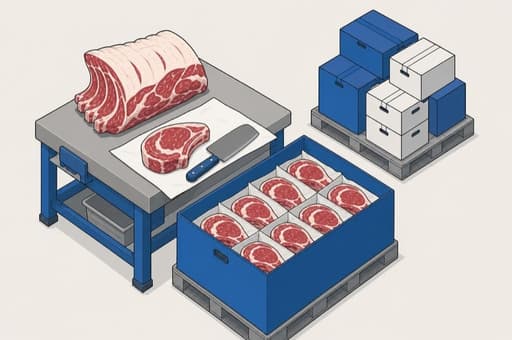
Meats and seafood
The biggest thing in the truck: $14.0B of FY2025 sales, more than a third of the company, and the line that moves most with beef prices. Watch how much of its growth is price rather than extra boxes.
Competes with Sysco brand proteins (Sysco) · Braveheart 100% Black Angus (Performance Food Group)
In plain English
Center of the plate. Steaks, chicken, pork and fish — the part of a restaurant order a diner actually remembers, and the most expensive part of the box.
Most of it is bought from the packing plants and driven straight through. Some stops first at Stock Yards, where about 160 master butchers cut to a chef's spec, age beef and portion it — work a kitchen would otherwise pay its own cook to do. US Foods earns a markup on every case it sends out, a case being one box on the pallet, so when cattle and beef prices climb this line climbs with them even if the same number of boxes goes out the door.
Exclusive Brands
The company's own-label family — more than 22 brands and roughly 10,000 products, from steaks to takeout boxes. Roughly half the cases going to small restaurants now carry one, and those are the cases that earn the most. That level has barely moved in two years.
Competes with Sysco brand portfolio (Sysco) · West Creek / Empire's Treasure (Performance Food Group)
In plain English
Think of a supermarket's own-label ketchup sitting next to the famous one, a little cheaper and made to the store's recipe. US Foods does the same for kitchens: it writes the specification, hires a factory to make it, and puts its own name on the case — Chef's Line, Monarch, Glenview Farms, Monogram, Stock Yards.
No famous brand is taking a cut in the middle, so each of these cases leaves more money behind than a national brand does. That is why the roughly 4,000 sellers, paid entirely on what they sell since June 2026, are pointed at them. The labels sit on every shelf in the truck, not in one corner of it.
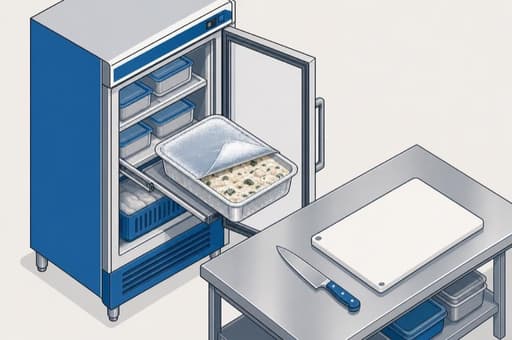
Refrigerated and frozen grocery products
Part-cooked and part-prepared cold and frozen food — $6.6B in FY2025, and the answer for kitchens that cannot hire cooks. Growth is slower and steadier than meat. What moves it is the cost of kitchen staff, not how busy the dining room is.
Competes with Sysco frozen prepared lines (Sysco) · Brilliance and Heritage Ovens (Performance Food Group)
In plain English
Food that arrives with the chopping — and some of the cooking — already done, then kept cold or frozen until a kitchen needs it. New items land under the Scoop program; the autumn 2026 batch was fourteen Italian-inspired ones, all under the company's own labels.
Why a restaurant pays for it: a tray pulled from the freezer does work that would otherwise take a cook an hour, and cooks are hard to find. That is management's own explanation for demand here, which makes this line a read on restaurant wage bills more than on how many people came in for dinner.
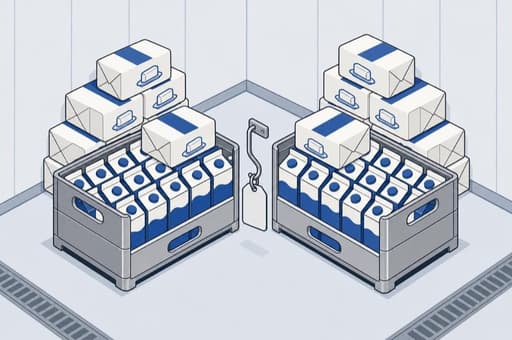
Dairy
Milk, butter, cheese and eggs — $4.2B in FY2025, and the one big line going backwards: down about 13% in the spring quarter and about 7% in the summer one. Management puts that down to prices, not lost customers.
Competes with Sysco Classic dairy (Sysco) · Nature's Best Dairy (Performance Food Group)
In plain English
The cold, unglamorous, unavoidable end of the truck: milk, cream, butter, cheese and eggs, much of it under the company's own Glenview Farms label.
Nobody wins this business with a clever pitch. Dairy is close to a pure commodity, so the conversation with a buyer is mostly about price, and the steadiest buyers are the places serving the same menu every day — hospital wards, school canteens. That cuts both ways in the numbers: when raw milk and butterfat get cheaper, the sales line falls even though the same cartons leave the warehouse. That is roughly what has been happening for the past year.
Pronto and Pronto Next Day
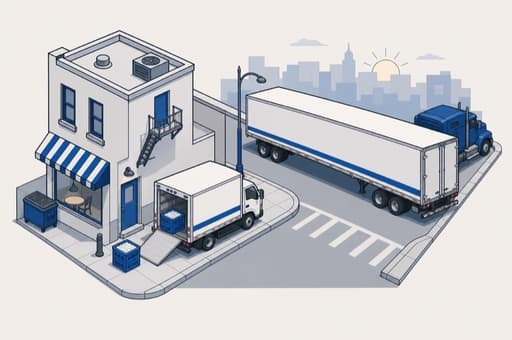
Small trucks on dense city routes, six days a week, taking orders late. About $1B of sales in FY2025 across 52 markets; management expects roughly $1.3B in FY2026 and more than $1.7B in 2027, and credits it for much of the case growth at small restaurants.
Competes with Restaurant Depot (Jetro) · Sysco To Go (Sysco)
In plain English
A big delivery truck only pays if the order is big. Plenty of small restaurants order too little for that, or run out of something mid-week, so they used to drive to a wholesale warehouse themselves.
Pronto is the small truck that turns up instead: tight city routes, six days a week, orders taken late in the day. Pronto Next Day sends those same trucks to existing customers on the days their regular delivery does not run. A new market needs only a truck or two to start, and every case carried is one that would otherwise have gone to a local distributor or been fetched by the customer.
CHEF'STORE
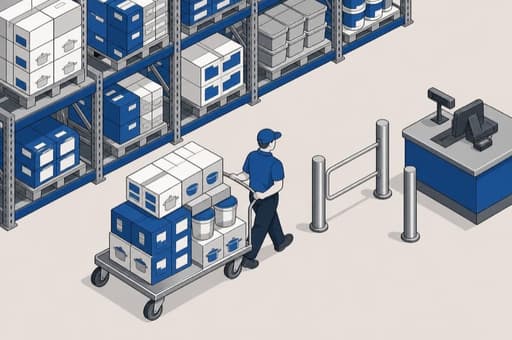
More than 90 self-serve warehouse stores in 14 states where small operators pay and carry the goods out themselves — roughly $1.5B of sales. Kept in 2025 after a sale process, with management still saying it is not the natural long-term owner.
Competes with Restaurant Depot (Jetro) · Sysco To Go (Sysco) · GFS Store (Gordon Food Service)
In plain English
Not a delivery business at all. These are plain warehouse stores where a chef, a caterer or a small restaurant owner drives over, loads a flat cart, pays and takes it away — the fill-in trip between the big deliveries.
The money works like a shop rather than a route: it depends on people walking in and what sits on the shelves, using the same suppliers and own labels as the trucks. The awkward part is the map — most stores sit west of the Mississippi, away from the delivery business. Meanwhile the largest rival in this format, Restaurant Depot, has agreed to be bought by Sysco.
Equipment, disposables and supplies
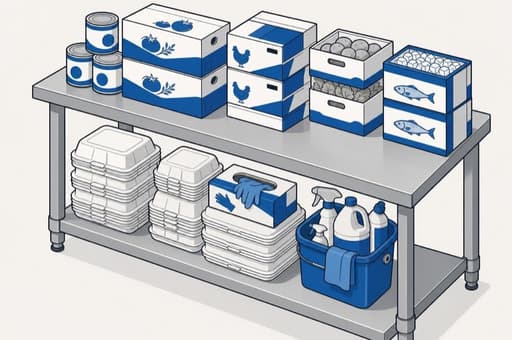
Takeout boxes, gloves, cleaning chemicals and kitchen tools — $3.6B, and flat for three years running. It follows how much takeout a restaurant does rather than food prices, and it is the easiest part of the order to price-shop elsewhere.
Competes with Sysco supplies and smallwares (Sysco) · Restaurant Depot (Jetro)
In plain English
Everything in the order that nobody eats: takeout containers, cups, gloves, cleaning chemicals and the pans and tongs a kitchen wears out, mostly under the company's Monogram label.
It rides along with the food, which suits the customer and costs little to add to a truck already heading there. But it is the part of the box tied to takeout volume rather than to food prices, and the part a buyer can most easily shop around — which shows up in a sales line that has barely moved in three years while the food lines grew.


 Meats and seafoodThe biggest thing in the truck: $14.0B of FY2025 sales, more than a third of the company, and the line that moves most with beef prices. Watch how much of its growth is price rather than extra boxes.
The biggest thing in the truck: $14.0B of FY2025 sales, more than a third of the company, and the line that moves most with beef prices. Watch how much of its growth is price rather than extra boxes.
In plain English
Center of the plate. Steaks, chicken, pork and fish — the part of a restaurant order a diner actually remembers, and the most expensive part of the box.
Most of it is bought from the packing plants and driven straight through. Some stops first at Stock Yards, where about 160 master butchers cut to a chef's spec, age beef and portion it — work a kitchen would otherwise pay its own cook to do. US Foods earns a markup on every case it sends out, a case being one box on the pallet, so when cattle and beef prices climb this line climbs with them even if the same number of boxes goes out the door.
Competes with Sysco brand proteins (Sysco) · Braveheart 100% Black Angus (Performance Food Group)
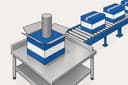 Exclusive BrandsThe company's own-label family — more than 22 brands and roughly 10,000 products, from steaks to takeout boxes. Roughly half the cases going to small restaurants now carry one, and those are the cases that earn the most. That level has barely moved in two years.
The company's own-label family — more than 22 brands and roughly 10,000 products, from steaks to takeout boxes. Roughly half the cases going to small restaurants now carry one, and those are the cases that earn the most. That level has barely moved in two years.
In plain English
Think of a supermarket's own-label ketchup sitting next to the famous one, a little cheaper and made to the store's recipe. US Foods does the same for kitchens: it writes the specification, hires a factory to make it, and puts its own name on the case — Chef's Line, Monarch, Glenview Farms, Monogram, Stock Yards.
No famous brand is taking a cut in the middle, so each of these cases leaves more money behind than a national brand does. That is why the roughly 4,000 sellers, paid entirely on what they sell since June 2026, are pointed at them. The labels sit on every shelf in the truck, not in one corner of it.
Competes with Sysco brand portfolio (Sysco) · West Creek / Empire's Treasure (Performance Food Group)
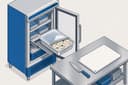 Refrigerated and frozen grocery productsPart-cooked and part-prepared cold and frozen food — $6.6B in FY2025, and the answer for kitchens that cannot hire cooks. Growth is slower and steadier than meat. What moves it is the cost of kitchen staff, not how busy the dining room is.
Part-cooked and part-prepared cold and frozen food — $6.6B in FY2025, and the answer for kitchens that cannot hire cooks. Growth is slower and steadier than meat. What moves it is the cost of kitchen staff, not how busy the dining room is.
In plain English
Food that arrives with the chopping — and some of the cooking — already done, then kept cold or frozen until a kitchen needs it. New items land under the Scoop program; the autumn 2026 batch was fourteen Italian-inspired ones, all under the company's own labels.
Why a restaurant pays for it: a tray pulled from the freezer does work that would otherwise take a cook an hour, and cooks are hard to find. That is management's own explanation for demand here, which makes this line a read on restaurant wage bills more than on how many people came in for dinner.
Competes with Sysco frozen prepared lines (Sysco) · Brilliance and Heritage Ovens (Performance Food Group)
 DairyMilk, butter, cheese and eggs — $4.2B in FY2025, and the one big line going backwards: down about 13% in the spring quarter and about 7% in the summer one. Management puts that down to prices, not lost customers.
Milk, butter, cheese and eggs — $4.2B in FY2025, and the one big line going backwards: down about 13% in the spring quarter and about 7% in the summer one. Management puts that down to prices, not lost customers.
In plain English
The cold, unglamorous, unavoidable end of the truck: milk, cream, butter, cheese and eggs, much of it under the company's own Glenview Farms label.
Nobody wins this business with a clever pitch. Dairy is close to a pure commodity, so the conversation with a buyer is mostly about price, and the steadiest buyers are the places serving the same menu every day — hospital wards, school canteens. That cuts both ways in the numbers: when raw milk and butterfat get cheaper, the sales line falls even though the same cartons leave the warehouse. That is roughly what has been happening for the past year.
Competes with Sysco Classic dairy (Sysco) · Nature's Best Dairy (Performance Food Group)
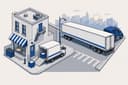 Pronto and Pronto Next DaySmall trucks on dense city routes, six days a week, taking orders late. About $1B of sales in FY2025 across 52 markets; management expects roughly $1.3B in FY2026 and more than $1.7B in 2027, and credits it for much of the case growth at small restaurants.
Small trucks on dense city routes, six days a week, taking orders late. About $1B of sales in FY2025 across 52 markets; management expects roughly $1.3B in FY2026 and more than $1.7B in 2027, and credits it for much of the case growth at small restaurants.
In plain English
A big delivery truck only pays if the order is big. Plenty of small restaurants order too little for that, or run out of something mid-week, so they used to drive to a wholesale warehouse themselves.
Pronto is the small truck that turns up instead: tight city routes, six days a week, orders taken late in the day. Pronto Next Day sends those same trucks to existing customers on the days their regular delivery does not run. A new market needs only a truck or two to start, and every case carried is one that would otherwise have gone to a local distributor or been fetched by the customer.
Competes with Restaurant Depot (Jetro) · Sysco To Go (Sysco)
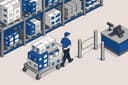 CHEF'STOREMore than 90 self-serve warehouse stores in 14 states where small operators pay and carry the goods out themselves — roughly $1.5B of sales. Kept in 2025 after a sale process, with management still saying it is not the natural long-term owner.
More than 90 self-serve warehouse stores in 14 states where small operators pay and carry the goods out themselves — roughly $1.5B of sales. Kept in 2025 after a sale process, with management still saying it is not the natural long-term owner.
In plain English
Not a delivery business at all. These are plain warehouse stores where a chef, a caterer or a small restaurant owner drives over, loads a flat cart, pays and takes it away — the fill-in trip between the big deliveries.
The money works like a shop rather than a route: it depends on people walking in and what sits on the shelves, using the same suppliers and own labels as the trucks. The awkward part is the map — most stores sit west of the Mississippi, away from the delivery business. Meanwhile the largest rival in this format, Restaurant Depot, has agreed to be bought by Sysco.
Competes with Restaurant Depot (Jetro) · Sysco To Go (Sysco) · GFS Store (Gordon Food Service)
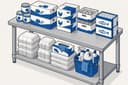 Equipment, disposables and suppliesTakeout boxes, gloves, cleaning chemicals and kitchen tools — $3.6B, and flat for three years running. It follows how much takeout a restaurant does rather than food prices, and it is the easiest part of the order to price-shop elsewhere.
Takeout boxes, gloves, cleaning chemicals and kitchen tools — $3.6B, and flat for three years running. It follows how much takeout a restaurant does rather than food prices, and it is the easiest part of the order to price-shop elsewhere.
In plain English
Everything in the order that nobody eats: takeout containers, cups, gloves, cleaning chemicals and the pans and tongs a kitchen wears out, mostly under the company's Monogram label.
It rides along with the food, which suits the customer and costs little to add to a truck already heading there. But it is the part of the box tied to takeout volume rather than to food prices, and the part a buyer can most easily shop around — which shows up in a sales line that has barely moved in three years while the food lines grew.
Competes with Sysco supplies and smallwares (Sysco) · Restaurant Depot (Jetro)
Named in filings, launches and programs
- Dry grocery productsProduct lineCans, oils, flour, pasta and seasonings — the slowest-growing of the big lines, and the easiest shelf on which to swap in a US Foods label.
- Beverage productsProduct lineThe drinks line: $2.3B in FY2025, the fastest-growing of the seven categories, up 8.5% in the quarter ended June 2026.
- ProduceProduct lineFruit and vegetables: $2.0B in FY2025, held back by the sale of a produce-processing business that spring, then up 17.8% in the June 2026 quarter.
- MOXēPlatformThe ordering app: roughly four in five orders from small restaurants arrive through it, against a 95% goal for 2027. Visit Assistant hands sellers customer insights.
- MenuIQPlatform · RampingA tool launched in spring 2026 that shows an operator what a dish really costs to put on the menu; about 15% of small-restaurant customers tried it within two months.
- ScoopProduct lineThe new-product drop under the company's own labels — the autumn 2026 edition was fourteen Italian-inspired items in formats that save kitchen labour.
- Switch + SavorCustomer programA value program that points a kitchen from a pricier item toward a cheaper equivalent that does the same job.
- US Foods DirectServiceA catalogue of more than 200,000 specialty items the trucks do not stock, shipped by FedEx rather than riding a US Foods route.
- VITALSPlatformA package of technology tools built for hospital and nursing-home food operations.
- SignaturePlatform · RampingThe hotel-and-hospitality version of that toolkit, introduced in May 2026.
- Independent restaurant channelCustomer programSmall, owner-run restaurants — cases up 5.1% in the June 2026 quarter, the 21st straight quarter of share gains.
- Healthcare channelCustomer programHospitals and nursing homes — cases up 3.5%, share gains for 23 quarters running; together with hotels, this is over a quarter of sales.
- Hospitality channelCustomer programHotels and the kitchens inside them — cases up 4.4% in the quarter ended June 2026.
- Chain and other channelCustomer programLarge chains and other big accounts, run for profit rather than growth — cases down 1.5% in the June 2026 quarter, by choice.
- Buying-group contractsCustomer programBuying groups negotiating for many kitchens at once are about 27% of sales; one group's members are roughly 14%. No single customer passes 2%.
- Jake's Finer FoodsBrandA Houston food distributor bought in January 2025 for $92 million, along with its Gourmet Ranch line.
- ShetakisBrandA Las Vegas food distributor bought in November 2025 for $46 million — one of the small deals that thicken local routes.
Dry grocery productsProduct line
Cans, oils, flour, pasta and seasonings — the slowest-growing of the big lines, and the easiest shelf on which to swap in a US Foods label.
Beverage productsProduct line
The drinks line: $2.3B in FY2025, the fastest-growing of the seven categories, up 8.5% in the quarter ended June 2026.
ProduceProduct line
Fruit and vegetables: $2.0B in FY2025, held back by the sale of a produce-processing business that spring, then up 17.8% in the June 2026 quarter.
MOXēPlatform
The ordering app: roughly four in five orders from small restaurants arrive through it, against a 95% goal for 2027. Visit Assistant hands sellers customer insights.
MenuIQPlatform · Ramping
A tool launched in spring 2026 that shows an operator what a dish really costs to put on the menu; about 15% of small-restaurant customers tried it within two months.
ScoopProduct line
The new-product drop under the company's own labels — the autumn 2026 edition was fourteen Italian-inspired items in formats that save kitchen labour.
Switch + SavorCustomer program
A value program that points a kitchen from a pricier item toward a cheaper equivalent that does the same job.
US Foods DirectService
A catalogue of more than 200,000 specialty items the trucks do not stock, shipped by FedEx rather than riding a US Foods route.
VITALSPlatform
A package of technology tools built for hospital and nursing-home food operations.
SignaturePlatform · Ramping
The hotel-and-hospitality version of that toolkit, introduced in May 2026.
Independent restaurant channelCustomer program
Small, owner-run restaurants — cases up 5.1% in the June 2026 quarter, the 21st straight quarter of share gains.
Healthcare channelCustomer program
Hospitals and nursing homes — cases up 3.5%, share gains for 23 quarters running; together with hotels, this is over a quarter of sales.
Hospitality channelCustomer program
Hotels and the kitchens inside them — cases up 4.4% in the quarter ended June 2026.
Chain and other channelCustomer program
Large chains and other big accounts, run for profit rather than growth — cases down 1.5% in the June 2026 quarter, by choice.
Buying-group contractsCustomer program
Buying groups negotiating for many kitchens at once are about 27% of sales; one group's members are roughly 14%. No single customer passes 2%.
Jake's Finer FoodsBrand
A Houston food distributor bought in January 2025 for $92 million, along with its Gourmet Ranch line.
ShetakisBrand
A Las Vegas food distributor bought in November 2025 for $46 million — one of the small deals that thicken local routes.