
Viatris (VTRS)
Markets established brands, complex generics, and newer innovative medicines worldwide.
Something off on this page? Send us feedback.
Viatris sells medicines whose patents ran out long ago — famous names like Lipitor and Norvasc, plus low-cost copies of other companies' drugs. Most of that is quietly shrinking, and its job is to keep the cash coming. What the company is becoming rests on China, where shoppers still pay up for the original brand, and on a handful of bought-in new medicines that have earned nothing yet.
Item facts: FY2025 · year ended Dec 31, 2025, from filings, earnings calls and company pages.
Judgment weights, not filed revenue
The band summarizes business focus and direction. ~ marks estimates.
9 in detail · 16 more below
Established Brands outside China
The brands inherited from Pfizer's Upjohn unit, sold everywhere but China: Lipitor, Norvasc, Lyrica, Celebrex, Zoloft, Effexor. Roughly a third of sales, fading slowly — its job is to throw off the cash that pays the dividend and funds the deals.
Competes with Generic atorvastatin and pregabalin (Teva) · Generic sertraline (Sandoz) · Established products portfolio (Organon) · Established products portfolio (Sanofi)
In plain English
Pills whose patents ran out years ago, still sold under the names patients learned by heart — Lipitor for cholesterol, Lyrica for nerve pain, Zoloft for depression. Anyone may copy them; plenty of people reach past the copy anyway, the way a shopper reaches past the store brand for the label they grew up with. Even the biggest of them, Lipitor, is only about a tenth of company sales, China included.
The research was paid for decades ago, so little is spent on these now. In America the boxes travel through two giant drug wholesalers, Cencora and McKesson, each recently accounting for around a tenth of everything Viatris sells. Prices drift down year after year, and Japan's government trims them by rule.
Traditional Generics — everyday tablets and HIV medicines
Thousands of unbranded tablets sold on price and reliable supply, plus a low-margin range of HIV medicines. France and Italy are the strong end. A fire at the Nashik plant takes a guided $100–150M out of the second half of 2026.
Competes with Global generics portfolio (Teva) · Global generics portfolio (Sandoz) · US and European generics book (Aurobindo)
In plain English
Same medicine, no brand name, a fraction of the price. Once a patent expires anyone may file to make the molecule, and whoever makes it cleanly and ships it on time wins the order — public health systems in Europe buy by tender, American wholesalers and pharmacy chains buy by contract.
Nobody pays extra for a copy, so the price only moves one way: down. Standing still means launching new copies constantly — more than a hundred approvals are targeted this year, seventy of them already in hand by midyear — and keeping every plant in good standing with inspectors. When an Indian site called Indore drew an FDA import alert, it cost about $500 million of 2025 sales.
Complex Generics — inhalers and injectables
Copies that are hard to copy: the Wixela and Breyna asthma inhalers, plus sterile injections. The inhalers are meeting fresh competition this year while the injection side collects first-to-market approvals, including the first generic iron sucrose.
Competes with Symbicort and its authorized generic (AstraZeneca) · Fluticasone-salmeterol inhalers (Hikma) · Injectafer iron infusions (American Regent)
In plain English
Some medicines are hard to copy because of the thing that delivers them, not the chemical inside. An asthma inhaler has to puff an identical dose every time; a sterile injection has to be filled in a room kept cleaner than an operating theatre. Few rivals can match either, so these copies hold prices closer to a brand's.
Wixela and Breyna copy two well-known asthma inhalers, and management has named both as drags on the second half of 2026. Injections run the other way — eleven US approvals in two years, including the first copy of an iron infusion. Hospitals and the middlemen who decide what a pharmacy stocks are the buyers.
Transdermal Patches (Xulane, estradiol, Gwyn Lo)
Hormone medicines delivered through a sticky patch. Small today, but Gwyn Lo — a once-weekly contraceptive patch — cleared the FDA in July 2026 and launches later this year, with a second patch reading out in the first half of 2027.
Competes with Twirla contraceptive patch (Agile Therapeutics) · Zafemy contraceptive patch (Amneal)
In plain English
Stick it on your skin and it feeds a steady trickle of hormone through for a week. The trick is the glue and the layer underneath rather than the drug, which is why only a handful of companies sell one — the US contraceptive-patch shelf has held just three brands.
Viatris makes its own, so the manufacturing profit stays in the house. The estradiol patches and the older Xulane were named as North American growth drivers this year. Gwyn Lo, cleared in July 2026, is the new one: a once-weekly birth-control patch cleared with no body-weight limit for moderately overweight women. A patch for heavier women reports results in the first half of 2027.
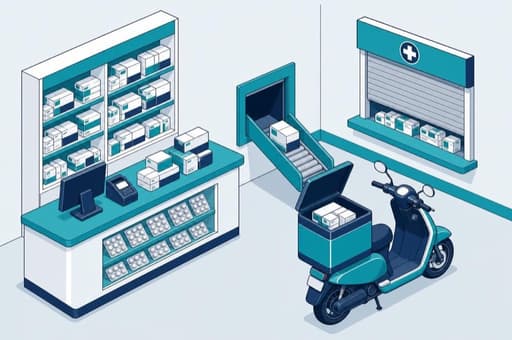
Established Brands in China (Lipitor, Norvasc, Viagra)
The growth engine: $2.33B in 2025, running close to a fifth of sales through the first half of 2026. Shoppers buy the original brand at the pharmacy and online; the risk is government price auctions muting hospital volumes.
Competes with Low-priced atorvastatin and amlodipine (Domestic Chinese generic makers) · Off-patent China brands (AstraZeneca) · Off-patent China brands (Roche)
In plain English
China's middle class is getting older and wants the original. Someone with high cholesterol walks into a pharmacy chain — or opens a shopping app — and pays more for the original name-brand version than for a local copy of the same molecule. That preference is the whole business here: Lipitor, Norvasc and Viagra, sold at retail rather than through hospitals.
Online sales grew by roughly a third over the past year and are now something like a tenth of the China business. The threat is the government, which runs national price auctions handing hospital volume to the cheapest local maker — eleven rounds so far — and in July 2026 issued a directive resetting how hospitals buy.
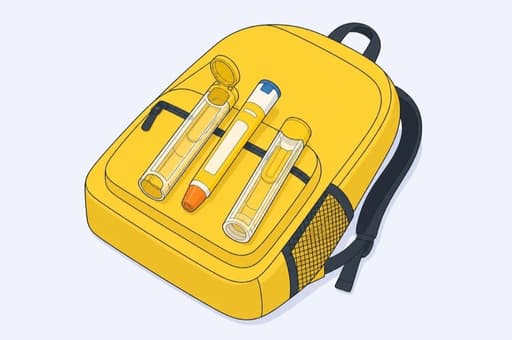
EpiPen Auto-Injectors
The emergency allergy pen — $469.7M in 2025. Sales fell 6% in the second quarter of 2026 as a needle-free nasal rival and a shelf of cheaper injectors take the same prescription.
Competes with neffy nasal epinephrine (ARS Pharmaceuticals) · Auvi-Q auto-injector (Kaleo) · Symjepi pre-filled syringe (Sandoz)
In plain English
The yellow pen a family keeps for a child with a severe allergy: press it to the thigh and it delivers one measured dose of epinephrine — adrenaline, the emergency drug for a dangerous allergic reaction.
Pharmacies dispense it on prescription, and the device is really the product; the medicine inside is old and cheap. So the competition arrived as new devices. A nasal spray called neffy handles the same emergency with no needle, rival injectors sit on the same shelf, and Teva sells an authorised copy of the EpiPen itself. Second-quarter 2026 sales were $129.2 million, down 6%.
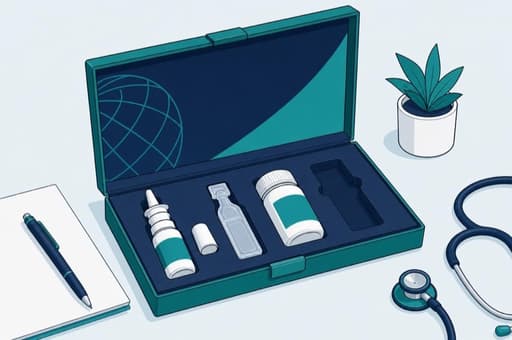
Promoted Brands (Creon, Yupelri, Dymista, Influvac, Amitiza)
The brands that still earn a sales visit. Creon and Yupelri each grew about 6–7% in the second quarter of 2026 while Dymista fell 18% — a portfolio that splits cleanly into the growing and the eroding.
Competes with Zenpep pancreatic enzymes (Nestlé Health Science) · Ryaltris nasal spray (Glenmark)
In plain English
Half a dozen products that a doctor has to be reminded about. Creon supplies the digestive enzymes a failing pancreas cannot make; Yupelri is a partnered lung medicine Viatris sells in America; Dymista is a nasal spray for allergies; Influvac is a flu vaccine rebuilt each year for the strains expected that season; Amitiza is a Japan-heavy brand whose generic competition has arrived later than planned.
They earn more than a plain copy because a device, a formulation or that yearly rebuild keeps copies away — and because someone is out there knocking on prescribers' doors. Creon was $365.8 million in 2025.
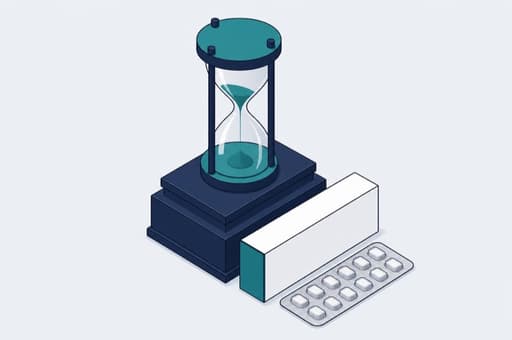
Fast-Acting Meloxicam
A familiar anti-inflammatory rebuilt to work fast, aimed at pain that doctors now treat with opioids. The FDA decision lands at the end of 2026; management has said peak sales could reach up to $500 million.
Competes with Journavx (suzetrigine) (Vertex) · Generic celecoxib (Generic drugmakers) · Ketorolac and IV acetaminophen (Hospital injectable makers)
In plain English
Take a well-known arthritis painkiller and reformulate it so it takes hold quickly enough for sudden pain — a bad sprain, the hours after an operation — which is where opioids get reached for today. Same molecule, different speed.
There is no product yet, and no revenue in this year's plan. The FDA's answer is due at the end of 2026, and the argument in the meantime is over where opioid-sparing wording lands on the label, because that sentence is what a sales team can carry into a clinic. Viatris is building one for the launch, a thing it does not otherwise have in America.

Selatogrel and Cenerimod
Two late-stage medicines bought in from Idorsia for $350 million up front. Both report in the first half of 2027, both are all-or-nothing, and neither sits in this year's guidance — analysts' forecasts appear to carry little of it either.
Competes with Brilinta (ticagrelor) (AstraZeneca) · Benlysta for lupus (GSK) · Zeposia (ozanimod) (Bristol Myers Squibb)
In plain English
Two experimental medicines Viatris did not invent. In 2024 it paid a smaller drug company called Idorsia $350 million up front for the worldwide rights, and owes more if either one works.
Selatogrel is a shot a patient could give themselves at the first sign of a heart attack, on top of the pills such patients already take; its trial is signing up about 1,200 people a month. Cenerimod is a daily pill for lupus, where the immune system attacks the body's own tissue. Results for both arrive in the first half of 2027 — and if the trials miss, the money spent does not come back.


 Established Brands outside ChinaThe brands inherited from Pfizer's Upjohn unit, sold everywhere but China: Lipitor, Norvasc, Lyrica, Celebrex, Zoloft, Effexor. Roughly a third of sales, fading slowly — its job is to throw off the cash that pays the dividend and funds the deals.
The brands inherited from Pfizer's Upjohn unit, sold everywhere but China: Lipitor, Norvasc, Lyrica, Celebrex, Zoloft, Effexor. Roughly a third of sales, fading slowly — its job is to throw off the cash that pays the dividend and funds the deals.
In plain English
Pills whose patents ran out years ago, still sold under the names patients learned by heart — Lipitor for cholesterol, Lyrica for nerve pain, Zoloft for depression. Anyone may copy them; plenty of people reach past the copy anyway, the way a shopper reaches past the store brand for the label they grew up with. Even the biggest of them, Lipitor, is only about a tenth of company sales, China included.
The research was paid for decades ago, so little is spent on these now. In America the boxes travel through two giant drug wholesalers, Cencora and McKesson, each recently accounting for around a tenth of everything Viatris sells. Prices drift down year after year, and Japan's government trims them by rule.
Competes with Generic atorvastatin and pregabalin (Teva) · Generic sertraline (Sandoz) · Established products portfolio (Organon) · Established products portfolio (Sanofi)
 Traditional Generics — everyday tablets and HIV medicinesThousands of unbranded tablets sold on price and reliable supply, plus a low-margin range of HIV medicines. France and Italy are the strong end. A fire at the Nashik plant takes a guided $100–150M out of the second half of 2026.
Thousands of unbranded tablets sold on price and reliable supply, plus a low-margin range of HIV medicines. France and Italy are the strong end. A fire at the Nashik plant takes a guided $100–150M out of the second half of 2026.
In plain English
Same medicine, no brand name, a fraction of the price. Once a patent expires anyone may file to make the molecule, and whoever makes it cleanly and ships it on time wins the order — public health systems in Europe buy by tender, American wholesalers and pharmacy chains buy by contract.
Nobody pays extra for a copy, so the price only moves one way: down. Standing still means launching new copies constantly — more than a hundred approvals are targeted this year, seventy of them already in hand by midyear — and keeping every plant in good standing with inspectors. When an Indian site called Indore drew an FDA import alert, it cost about $500 million of 2025 sales.
Competes with Global generics portfolio (Teva) · Global generics portfolio (Sandoz) · US and European generics book (Aurobindo)
 Complex Generics — inhalers and injectablesCopies that are hard to copy: the Wixela and Breyna asthma inhalers, plus sterile injections. The inhalers are meeting fresh competition this year while the injection side collects first-to-market approvals, including the first generic iron sucrose.
Copies that are hard to copy: the Wixela and Breyna asthma inhalers, plus sterile injections. The inhalers are meeting fresh competition this year while the injection side collects first-to-market approvals, including the first generic iron sucrose.
In plain English
Some medicines are hard to copy because of the thing that delivers them, not the chemical inside. An asthma inhaler has to puff an identical dose every time; a sterile injection has to be filled in a room kept cleaner than an operating theatre. Few rivals can match either, so these copies hold prices closer to a brand's.
Wixela and Breyna copy two well-known asthma inhalers, and management has named both as drags on the second half of 2026. Injections run the other way — eleven US approvals in two years, including the first copy of an iron infusion. Hospitals and the middlemen who decide what a pharmacy stocks are the buyers.
Competes with Symbicort and its authorized generic (AstraZeneca) · Fluticasone-salmeterol inhalers (Hikma) · Injectafer iron infusions (American Regent)
 Transdermal Patches (Xulane, estradiol, Gwyn Lo)Hormone medicines delivered through a sticky patch. Small today, but Gwyn Lo — a once-weekly contraceptive patch — cleared the FDA in July 2026 and launches later this year, with a second patch reading out in the first half of 2027.
Hormone medicines delivered through a sticky patch. Small today, but Gwyn Lo — a once-weekly contraceptive patch — cleared the FDA in July 2026 and launches later this year, with a second patch reading out in the first half of 2027.
In plain English
Stick it on your skin and it feeds a steady trickle of hormone through for a week. The trick is the glue and the layer underneath rather than the drug, which is why only a handful of companies sell one — the US contraceptive-patch shelf has held just three brands.
Viatris makes its own, so the manufacturing profit stays in the house. The estradiol patches and the older Xulane were named as North American growth drivers this year. Gwyn Lo, cleared in July 2026, is the new one: a once-weekly birth-control patch cleared with no body-weight limit for moderately overweight women. A patch for heavier women reports results in the first half of 2027.
Competes with Twirla contraceptive patch (Agile Therapeutics) · Zafemy contraceptive patch (Amneal)
 Established Brands in China (Lipitor, Norvasc, Viagra)The growth engine: $2.33B in 2025, running close to a fifth of sales through the first half of 2026. Shoppers buy the original brand at the pharmacy and online; the risk is government price auctions muting hospital volumes.
The growth engine: $2.33B in 2025, running close to a fifth of sales through the first half of 2026. Shoppers buy the original brand at the pharmacy and online; the risk is government price auctions muting hospital volumes.
In plain English
China's middle class is getting older and wants the original. Someone with high cholesterol walks into a pharmacy chain — or opens a shopping app — and pays more for the original name-brand version than for a local copy of the same molecule. That preference is the whole business here: Lipitor, Norvasc and Viagra, sold at retail rather than through hospitals.
Online sales grew by roughly a third over the past year and are now something like a tenth of the China business. The threat is the government, which runs national price auctions handing hospital volume to the cheapest local maker — eleven rounds so far — and in July 2026 issued a directive resetting how hospitals buy.
Competes with Low-priced atorvastatin and amlodipine (Domestic Chinese generic makers) · Off-patent China brands (AstraZeneca) · Off-patent China brands (Roche)
 EpiPen Auto-InjectorsThe emergency allergy pen — $469.7M in 2025. Sales fell 6% in the second quarter of 2026 as a needle-free nasal rival and a shelf of cheaper injectors take the same prescription.
The emergency allergy pen — $469.7M in 2025. Sales fell 6% in the second quarter of 2026 as a needle-free nasal rival and a shelf of cheaper injectors take the same prescription.
In plain English
The yellow pen a family keeps for a child with a severe allergy: press it to the thigh and it delivers one measured dose of epinephrine — adrenaline, the emergency drug for a dangerous allergic reaction.
Pharmacies dispense it on prescription, and the device is really the product; the medicine inside is old and cheap. So the competition arrived as new devices. A nasal spray called neffy handles the same emergency with no needle, rival injectors sit on the same shelf, and Teva sells an authorised copy of the EpiPen itself. Second-quarter 2026 sales were $129.2 million, down 6%.
Competes with neffy nasal epinephrine (ARS Pharmaceuticals) · Auvi-Q auto-injector (Kaleo) · Symjepi pre-filled syringe (Sandoz)
 Promoted Brands (Creon, Yupelri, Dymista, Influvac, Amitiza)The brands that still earn a sales visit. Creon and Yupelri each grew about 6–7% in the second quarter of 2026 while Dymista fell 18% — a portfolio that splits cleanly into the growing and the eroding.
The brands that still earn a sales visit. Creon and Yupelri each grew about 6–7% in the second quarter of 2026 while Dymista fell 18% — a portfolio that splits cleanly into the growing and the eroding.
In plain English
Half a dozen products that a doctor has to be reminded about. Creon supplies the digestive enzymes a failing pancreas cannot make; Yupelri is a partnered lung medicine Viatris sells in America; Dymista is a nasal spray for allergies; Influvac is a flu vaccine rebuilt each year for the strains expected that season; Amitiza is a Japan-heavy brand whose generic competition has arrived later than planned.
They earn more than a plain copy because a device, a formulation or that yearly rebuild keeps copies away — and because someone is out there knocking on prescribers' doors. Creon was $365.8 million in 2025.
Competes with Zenpep pancreatic enzymes (Nestlé Health Science) · Ryaltris nasal spray (Glenmark)
 Fast-Acting MeloxicamA familiar anti-inflammatory rebuilt to work fast, aimed at pain that doctors now treat with opioids. The FDA decision lands at the end of 2026; management has said peak sales could reach up to $500 million.
A familiar anti-inflammatory rebuilt to work fast, aimed at pain that doctors now treat with opioids. The FDA decision lands at the end of 2026; management has said peak sales could reach up to $500 million.
In plain English
Take a well-known arthritis painkiller and reformulate it so it takes hold quickly enough for sudden pain — a bad sprain, the hours after an operation — which is where opioids get reached for today. Same molecule, different speed.
There is no product yet, and no revenue in this year's plan. The FDA's answer is due at the end of 2026, and the argument in the meantime is over where opioid-sparing wording lands on the label, because that sentence is what a sales team can carry into a clinic. Viatris is building one for the launch, a thing it does not otherwise have in America.
Competes with Journavx (suzetrigine) (Vertex) · Generic celecoxib (Generic drugmakers) · Ketorolac and IV acetaminophen (Hospital injectable makers)
 Selatogrel and CenerimodTwo late-stage medicines bought in from Idorsia for $350 million up front. Both report in the first half of 2027, both are all-or-nothing, and neither sits in this year's guidance — analysts' forecasts appear to carry little of it either.
Two late-stage medicines bought in from Idorsia for $350 million up front. Both report in the first half of 2027, both are all-or-nothing, and neither sits in this year's guidance — analysts' forecasts appear to carry little of it either.
In plain English
Two experimental medicines Viatris did not invent. In 2024 it paid a smaller drug company called Idorsia $350 million up front for the worldwide rights, and owes more if either one works.
Selatogrel is a shot a patient could give themselves at the first sign of a heart attack, on top of the pills such patients already take; its trial is signing up about 1,200 people a month. Cenerimod is a daily pill for lupus, where the immune system attacks the body's own tissue. Results for both arrive in the first half of 2027 — and if the trials miss, the money spent does not come back.
Competes with Brilinta (ticagrelor) (AstraZeneca) · Benlysta for lupus (GSK) · Zeposia (ozanimod) (Bristol Myers Squibb)
Named in filings, launches and programs
- WAKIX (pitolisant) in JapanProductApproved in Japan in September 2026 for narcolepsy and for daytime sleepiness in sleep apnoea — the prize from the $35M Aculys purchase.
- SpydiaProductThe second brain-and-nerve medicine from that same Aculys purchase, covering Japan and certain other Asia-Pacific markets.
- Effexor for anxiety in JapanProduct · RampingAn older antidepressant cleared for a new use in Japan — a rare piece of growth in a region where the government keeps cutting prices.
- Nefecon in JapanProduct · Pre-revenueA kidney-disease treatment licensed from Calliditas; the Japanese trial read out positively in June 2026, with a filing targeted by the end of the year.
- Progestin-only contraceptive patchProduct · Pre-revenueA patch aimed at heavier women; final-stage enrolment is complete and first results are due in the first half of 2027.
- MR-141Product · AnnouncedAn eye treatment for the age-related loss of close-up focus, filed with the FDA and one of two approvals management still expected this year.
- MR-142Product · Pre-revenueA second eye program, for trouble seeing in dim light; its final trial is fully recruited with results due in the first half of 2027.
- SotagliflozinProduct line · AnnouncedLicensed from Lexicon for $25M up front plus later payments, covering every market except the United States and Europe.
- Global Healthcare GatewayPlatformViatris' named front door for licensing in other companies' medicines — the channel behind deals such as the Lexicon agreement.
- Wixela InhubProductThe substitutable copy of the Advair asthma inhaler; management named it as a specific drag on the second half of 2026.
- BreynaProductThe copy of the Symbicort asthma inhaler, approved in China as well as the US, and facing fresh competition this year.
- CreonBrandReplacement digestive enzymes for a failing pancreas — $365.8M in 2025, and up 7% in the second quarter of 2026.
- YupelriBrandA partnered lung brand Viatris sells in America: $70.7M in the second quarter of 2026, up 6%. Also approved in China.
- InfluvacBrandA flu vaccine remade each year for the expected strains, so sales land in the autumn quarters — $130.8M over the first nine months of 2025.
- AmitizaBrand$39.4M in the second quarter of 2026, down 5%; competition in Japan has been slower to arrive than the company planned.
- XulaneProductThe older weekly contraceptive patch, still named as a North American growth driver alongside the estradiol patches.
WAKIX (pitolisant) in JapanProduct
Approved in Japan in September 2026 for narcolepsy and for daytime sleepiness in sleep apnoea — the prize from the $35M Aculys purchase.
SpydiaProduct
The second brain-and-nerve medicine from that same Aculys purchase, covering Japan and certain other Asia-Pacific markets.
Effexor for anxiety in JapanProduct · Ramping
An older antidepressant cleared for a new use in Japan — a rare piece of growth in a region where the government keeps cutting prices.
Nefecon in JapanProduct · Pre-revenue
A kidney-disease treatment licensed from Calliditas; the Japanese trial read out positively in June 2026, with a filing targeted by the end of the year.
Progestin-only contraceptive patchProduct · Pre-revenue
A patch aimed at heavier women; final-stage enrolment is complete and first results are due in the first half of 2027.
MR-141Product · Announced
An eye treatment for the age-related loss of close-up focus, filed with the FDA and one of two approvals management still expected this year.
MR-142Product · Pre-revenue
A second eye program, for trouble seeing in dim light; its final trial is fully recruited with results due in the first half of 2027.
SotagliflozinProduct line · Announced
Licensed from Lexicon for $25M up front plus later payments, covering every market except the United States and Europe.
Global Healthcare GatewayPlatform
Viatris' named front door for licensing in other companies' medicines — the channel behind deals such as the Lexicon agreement.
Wixela InhubProduct
The substitutable copy of the Advair asthma inhaler; management named it as a specific drag on the second half of 2026.
BreynaProduct
The copy of the Symbicort asthma inhaler, approved in China as well as the US, and facing fresh competition this year.
CreonBrand
Replacement digestive enzymes for a failing pancreas — $365.8M in 2025, and up 7% in the second quarter of 2026.
YupelriBrand
A partnered lung brand Viatris sells in America: $70.7M in the second quarter of 2026, up 6%. Also approved in China.
InfluvacBrand
A flu vaccine remade each year for the expected strains, so sales land in the autumn quarters — $130.8M over the first nine months of 2025.
AmitizaBrand
$39.4M in the second quarter of 2026, down 5%; competition in Japan has been slower to arrive than the company planned.
XulaneProduct
The older weekly contraceptive patch, still named as a North American growth driver alongside the estradiol patches.