
WM (WM)
Operates collection routes, landfills, recycling plants, landfill-gas energy, and healthcare-waste services.
Something off on this page? Send us feedback.
Waste Management is mostly a network of recurring trash routes feeding its own transfer stations and landfills. Those ordinary pickups pay the bills; the newer push is to fold medical waste and document destruction into that network while expanding recycling plants and turning landfill gas into fuel.
Item facts: FY2025 · year ended Dec 31, 2025, from filings, earnings calls and company pages.
Judgment weights, not filed revenue
The band summarizes business focus and direction. ~ marks estimates.
9 in detail · 8 more below
Commercial
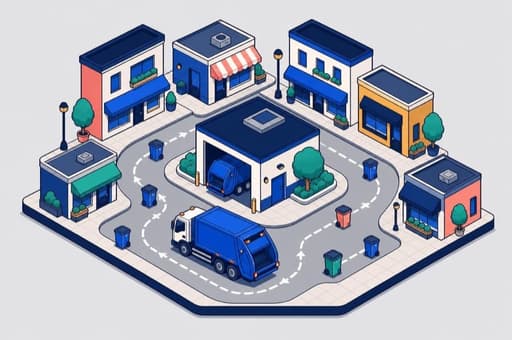
Scheduled pickup for businesses brought in $5.63 billion in FY2025. It is WM's largest line; keeping dense routes full matters more than chasing every contract when prices reset.
Competes with Commercial collection (Republic Services) · Commercial collection (Waste Connections)
In plain English
The unglamorous part that pays for everything else: trucks empty bins behind shops, offices and restaurants on a schedule. Because many stops sit close together, one crew can serve a crowded route without wasting much time or fuel between customers.
Businesses usually sign three-year agreements and pay according to pickup frequency, container size, material, weight and travel distance. They keep paying because waste keeps arriving and missed collections quickly become a problem. The customer base is broad, running from local storefronts to companies with sites across the country; no single buyer accounts for a large slice of WM's sales.
Residential
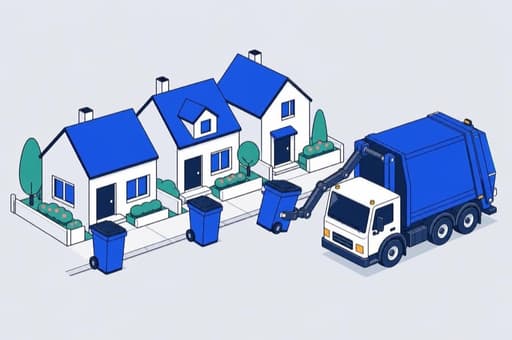
Curbside service produced $3.51 billion in FY2025. Household waste is steady, but WM is letting weak contracts go and using automated trucks to reduce lifting, labor and injuries.
Competes with Residential collection (Republic Services) · Residential collection (Waste Connections)
In plain English
On collection day, WM is the familiar truck lifting household carts at the curb. The service covers ordinary trash, recyclables and food or yard waste, either for a whole community or for homes that subscribe directly.
Cities, homeowner groups and households pay because the work repeats every week and has to be dependable. Community agreements often last three to ten years; direct customers usually pay monthly. WM is replacing hand-loaded routes with carts and trucks that lift them mechanically, even when dropping poorly priced work makes the total amount collected look smaller for a while.
Other collection
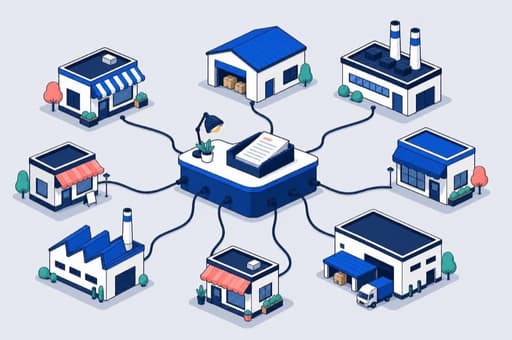
Managed waste work beyond the main customer groups generated $3.18 billion in FY2025. The watchpoint is consistency: a large customer expects one bill and one answer across many locations.
Competes with Environmental Solutions (Republic Services) · Industrial processing and disposal (Waste Connections)
In plain English
Imagine a chain with hundreds of locations that does not want to call a different hauler in every town. WM can sit in the middle, arrange service across the map, combine the bills and show the customer what happened to its waste.
The same line also includes hands-on work at industrial sites, such as cleanup, waste processing and selling industrial ash for reuse. Companies pay for one coordinator, dependable local coverage and help following disposal rules. Some jobs use WM crews and facilities; others require outside service partners. WM does not separate the sales from these activities.
Industrial
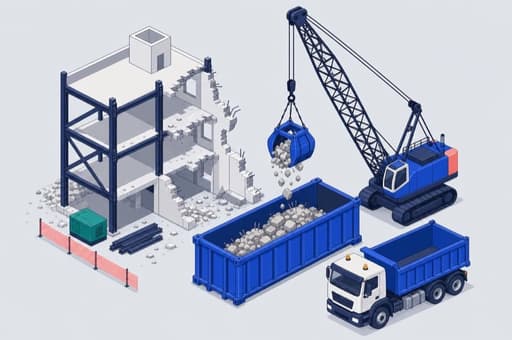
Large-container service for factories and building sites made $3.11 billion in FY2025. Collection volumes were growing again in the first half of 2026, but this line rises and falls with construction and manufacturing activity.
Competes with Industrial and construction container service (Waste Connections) · Industrial collection and Environmental Solutions (Republic Services)
In plain English
A renovation crew cannot leave a mountain of debris at the curb. WM drops off a large open steel container, returns when it is full and hauls the load to a suitable processor or landfill; factories use similar containers and compacting equipment for repeat waste.
Customers pay for the container, each pickup, the load's weight, the distance traveled and the kind of material inside. The model earns more when boxes turn over often and WM can use its own nearby disposal sites. Unlike weekly household pickup, demand slows when factories produce less or construction projects pause.
Landfill
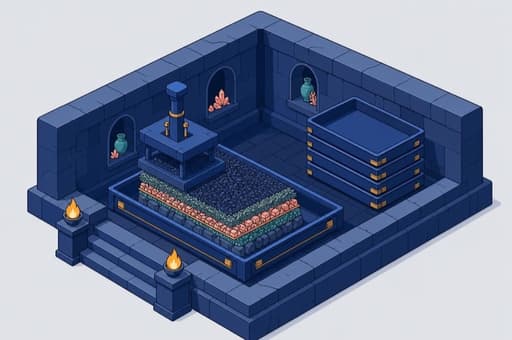
Accepting waste at landfills produced $3.78 billion in FY2025. The network's value rests on nearby permitted space that lasts for years, while every filled section creates future closure and care work.
Competes with Active landfill network (Republic Services) · Landfill Disposal Services (Waste Connections)
In plain English
A landfill is not just an open hole. Waste is packed into carefully built, lined sections, covered and monitored so water and gas can be managed. WM accepts loads from its own trucks and from other haulers at its sites.
Each arriving load is charged by its weight or size, what it contains and how much scarce space it will use. Owning the destination also means WM does not have to pay another operator for much of the waste it collects. The catch is physical and long-lived: new sections need permits and construction, and closed areas still need care for years.
Transfer
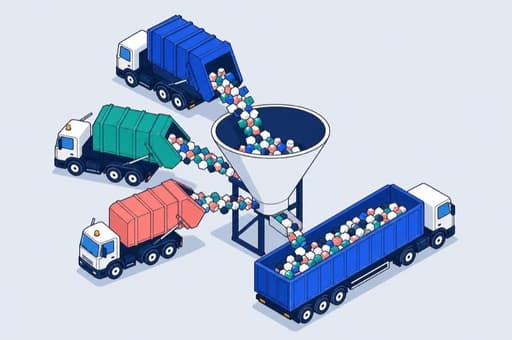
Transfer stations contributed $1.50 billion in outside-customer revenue in FY2025. They are the relay points that make distant landfills economical by packing many local truckloads into fewer long-haul loads.
Competes with Transfer-station network (Republic Services) · Transfer services (Waste Connections)
In plain English
When the landfill is far away, sending every neighborhood truck all the way there would waste a day. A transfer station is the halfway depot: small trucks unload nearby, their waste is combined, and much larger loads make the long trip.
Outside haulers pay according to the material, its weight or size and the distance to the final destination. WM's own routes use the same stations, helping keep them busy, though money passed between WM operations disappears when the company totals its sales. Profit depends on moving enough material through each site and keeping fuel and onward hauling costs under control.
Healthcare Solutions
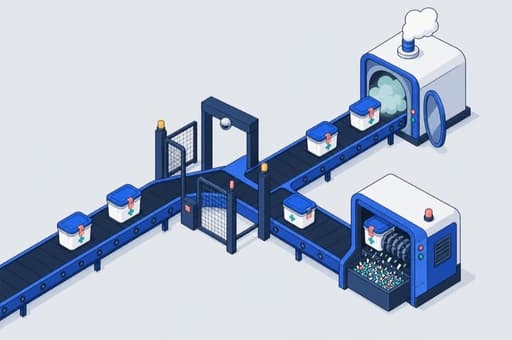
The Stericycle business delivered $2.51 billion in FY2025 revenue, roughly two-thirds from healthcare waste and one-third from secure document destruction. By mid-2026, integration was largely done; returning the healthcare side to growth was next.
Competes with Medical Waste Services (Daniels Health) · Secure Shredding (Iron Mountain)
In plain English
Hospitals and clinics cannot toss used needles, medicines or other controlled waste into an ordinary bin. WM supplies the right containers, collects them on a schedule and sends each load through steam treatment, burning or another approved disposal path.
The business also destroys private paper records, hard drives and unwanted products so they cannot be recovered. Customers pay monthly, quarterly, yearly or per visit, with prices shaped by the material and amount. They stay because health and privacy rules do not go away—and because every handoff has to be tracked safely from pickup to destruction.
Recycling Processing and Sales
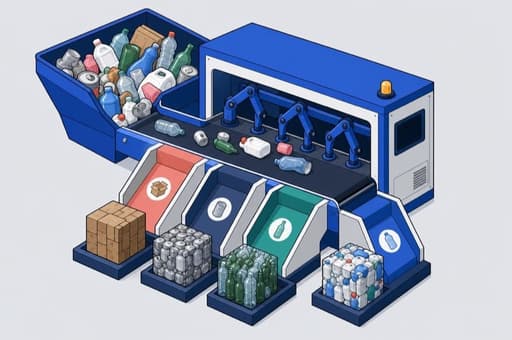
Sorting and selling reusable material generated $1.49 billion in FY2025. New plants are lifting the amount processed, but weak prices for recovered paper, plastic and other materials can still drag on sales.
Competes with Recycling centers and Polymer Centers (Republic Services) · Recycling operations (Waste Connections)
In plain English
The blue-bin mixture arrives messy: cardboard, cans, bottles, glass and things that never belonged there. WM's plants separate that stream into clean bundles that manufacturers can use again, while food and yard waste go through a different network.
Cities and businesses may pay WM to process each load, which gives the plant a base payment before anything is sold. WM then sells the recovered material and may share some of a strong price with the customer. Think of it as a sorting workshop with two cash drawers—one for doing the work, another for what the sorted goods fetch.
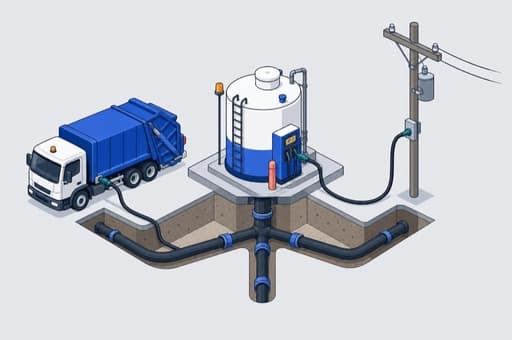
Renewable Energy
Landfill gas became $478 million of FY2025 revenue. During 2026, delayed pipeline connections were postponing output even after expensive new fuel-plant equipment had been built.
Competes with Landfill-gas renewable fuel projects (OPAL Fuels) · Archaea Energy landfill fuel (bp)
In plain English
Buried waste naturally gives off gas. Instead of simply burning it away, WM can collect it through pipes, clean it and sell it as fuel or use some in its own trucks. Other sites turn the gas into electricity.
Buyers pay for the fuel or power, and some also pay for certificates that prove a lower-carbon fuel was made. The landfill supplies the raw material, but a project still needs processing equipment and a connection to a pipeline before it earns at full speed. That final connection has recently taken longer than expected, so finished plants do not always mean immediate sales.


 CommercialScheduled pickup for businesses brought in $5.63 billion in FY2025. It is WM's largest line; keeping dense routes full matters more than chasing every contract when prices reset.
Scheduled pickup for businesses brought in $5.63 billion in FY2025. It is WM's largest line; keeping dense routes full matters more than chasing every contract when prices reset.
In plain English
The unglamorous part that pays for everything else: trucks empty bins behind shops, offices and restaurants on a schedule. Because many stops sit close together, one crew can serve a crowded route without wasting much time or fuel between customers.
Businesses usually sign three-year agreements and pay according to pickup frequency, container size, material, weight and travel distance. They keep paying because waste keeps arriving and missed collections quickly become a problem. The customer base is broad, running from local storefronts to companies with sites across the country; no single buyer accounts for a large slice of WM's sales.
Competes with Commercial collection (Republic Services) · Commercial collection (Waste Connections)
 ResidentialCurbside service produced $3.51 billion in FY2025. Household waste is steady, but WM is letting weak contracts go and using automated trucks to reduce lifting, labor and injuries.
Curbside service produced $3.51 billion in FY2025. Household waste is steady, but WM is letting weak contracts go and using automated trucks to reduce lifting, labor and injuries.
In plain English
On collection day, WM is the familiar truck lifting household carts at the curb. The service covers ordinary trash, recyclables and food or yard waste, either for a whole community or for homes that subscribe directly.
Cities, homeowner groups and households pay because the work repeats every week and has to be dependable. Community agreements often last three to ten years; direct customers usually pay monthly. WM is replacing hand-loaded routes with carts and trucks that lift them mechanically, even when dropping poorly priced work makes the total amount collected look smaller for a while.
Competes with Residential collection (Republic Services) · Residential collection (Waste Connections)
 Other collectionManaged waste work beyond the main customer groups generated $3.18 billion in FY2025. The watchpoint is consistency: a large customer expects one bill and one answer across many locations.
Managed waste work beyond the main customer groups generated $3.18 billion in FY2025. The watchpoint is consistency: a large customer expects one bill and one answer across many locations.
In plain English
Imagine a chain with hundreds of locations that does not want to call a different hauler in every town. WM can sit in the middle, arrange service across the map, combine the bills and show the customer what happened to its waste.
The same line also includes hands-on work at industrial sites, such as cleanup, waste processing and selling industrial ash for reuse. Companies pay for one coordinator, dependable local coverage and help following disposal rules. Some jobs use WM crews and facilities; others require outside service partners. WM does not separate the sales from these activities.
Competes with Environmental Solutions (Republic Services) · Industrial processing and disposal (Waste Connections)
 IndustrialLarge-container service for factories and building sites made $3.11 billion in FY2025. Collection volumes were growing again in the first half of 2026, but this line rises and falls with construction and manufacturing activity.
Large-container service for factories and building sites made $3.11 billion in FY2025. Collection volumes were growing again in the first half of 2026, but this line rises and falls with construction and manufacturing activity.
In plain English
A renovation crew cannot leave a mountain of debris at the curb. WM drops off a large open steel container, returns when it is full and hauls the load to a suitable processor or landfill; factories use similar containers and compacting equipment for repeat waste.
Customers pay for the container, each pickup, the load's weight, the distance traveled and the kind of material inside. The model earns more when boxes turn over often and WM can use its own nearby disposal sites. Unlike weekly household pickup, demand slows when factories produce less or construction projects pause.
Competes with Industrial and construction container service (Waste Connections) · Industrial collection and Environmental Solutions (Republic Services)
 LandfillAccepting waste at landfills produced $3.78 billion in FY2025. The network's value rests on nearby permitted space that lasts for years, while every filled section creates future closure and care work.
Accepting waste at landfills produced $3.78 billion in FY2025. The network's value rests on nearby permitted space that lasts for years, while every filled section creates future closure and care work.
In plain English
A landfill is not just an open hole. Waste is packed into carefully built, lined sections, covered and monitored so water and gas can be managed. WM accepts loads from its own trucks and from other haulers at its sites.
Each arriving load is charged by its weight or size, what it contains and how much scarce space it will use. Owning the destination also means WM does not have to pay another operator for much of the waste it collects. The catch is physical and long-lived: new sections need permits and construction, and closed areas still need care for years.
Competes with Active landfill network (Republic Services) · Landfill Disposal Services (Waste Connections)
 TransferTransfer stations contributed $1.50 billion in outside-customer revenue in FY2025. They are the relay points that make distant landfills economical by packing many local truckloads into fewer long-haul loads.
Transfer stations contributed $1.50 billion in outside-customer revenue in FY2025. They are the relay points that make distant landfills economical by packing many local truckloads into fewer long-haul loads.
In plain English
When the landfill is far away, sending every neighborhood truck all the way there would waste a day. A transfer station is the halfway depot: small trucks unload nearby, their waste is combined, and much larger loads make the long trip.
Outside haulers pay according to the material, its weight or size and the distance to the final destination. WM's own routes use the same stations, helping keep them busy, though money passed between WM operations disappears when the company totals its sales. Profit depends on moving enough material through each site and keeping fuel and onward hauling costs under control.
Competes with Transfer-station network (Republic Services) · Transfer services (Waste Connections)
 Healthcare SolutionsThe Stericycle business delivered $2.51 billion in FY2025 revenue, roughly two-thirds from healthcare waste and one-third from secure document destruction. By mid-2026, integration was largely done; returning the healthcare side to growth was next.
The Stericycle business delivered $2.51 billion in FY2025 revenue, roughly two-thirds from healthcare waste and one-third from secure document destruction. By mid-2026, integration was largely done; returning the healthcare side to growth was next.
In plain English
Hospitals and clinics cannot toss used needles, medicines or other controlled waste into an ordinary bin. WM supplies the right containers, collects them on a schedule and sends each load through steam treatment, burning or another approved disposal path.
The business also destroys private paper records, hard drives and unwanted products so they cannot be recovered. Customers pay monthly, quarterly, yearly or per visit, with prices shaped by the material and amount. They stay because health and privacy rules do not go away—and because every handoff has to be tracked safely from pickup to destruction.
Competes with Medical Waste Services (Daniels Health) · Secure Shredding (Iron Mountain)
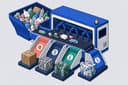 Recycling Processing and SalesSorting and selling reusable material generated $1.49 billion in FY2025. New plants are lifting the amount processed, but weak prices for recovered paper, plastic and other materials can still drag on sales.
Sorting and selling reusable material generated $1.49 billion in FY2025. New plants are lifting the amount processed, but weak prices for recovered paper, plastic and other materials can still drag on sales.
In plain English
The blue-bin mixture arrives messy: cardboard, cans, bottles, glass and things that never belonged there. WM's plants separate that stream into clean bundles that manufacturers can use again, while food and yard waste go through a different network.
Cities and businesses may pay WM to process each load, which gives the plant a base payment before anything is sold. WM then sells the recovered material and may share some of a strong price with the customer. Think of it as a sorting workshop with two cash drawers—one for doing the work, another for what the sorted goods fetch.
Competes with Recycling centers and Polymer Centers (Republic Services) · Recycling operations (Waste Connections)
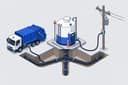 Renewable EnergyLandfill gas became $478 million of FY2025 revenue. During 2026, delayed pipeline connections were postponing output even after expensive new fuel-plant equipment had been built.
Landfill gas became $478 million of FY2025 revenue. During 2026, delayed pipeline connections were postponing output even after expensive new fuel-plant equipment had been built.
In plain English
Buried waste naturally gives off gas. Instead of simply burning it away, WM can collect it through pipes, clean it and sell it as fuel or use some in its own trucks. Other sites turn the gas into electricity.
Buyers pay for the fuel or power, and some also pay for certificates that prove a lower-carbon fuel was made. The landfill supplies the raw material, but a project still needs processing equipment and a connection to a pipeline before it earns at full speed. That final connection has recently taken longer than expected, so finished plants do not always mean immediate sales.
Competes with Landfill-gas renewable fuel projects (OPAL Fuels) · Archaea Energy landfill fuel (bp)
Named in filings, launches and programs
- Strategic Business Solutions (WMSBS)ServiceOne service desk, bill and reporting system for customers with many locations across the United States and Canada.
- Sustainability and Environmental Solutions (SES)ServiceRuns managed waste programs, cleanup, industrial-ash sales and industrial-waste processing at or away from customer sites.
- Regulated Waste and Compliance Services (RWCS)ServiceThe healthcare arm for medical, pharmaceutical and hazardous waste, plus practical help following the rules around it.
- Shred-itBrandDestroys paper, hard drives and unwanted products through repeat pickups or one-time clear-outs.
- Recycle RightCustomer programTeaches customers what belongs in recycling; its current guidance keeps batteries out of both recycling and trash bins.
- CORePlatformProcesses discarded food and other plant or animal material inside WM's broader organics network.
- Bagster Dumpster in a BagProductA store-bought project bag paired with scheduled pickup when a full steel dumpster would be too much.
- LampTracker Recycling by MailServiceLets business customers send used lamps away for recycling by mail.
Strategic Business Solutions (WMSBS)Service
One service desk, bill and reporting system for customers with many locations across the United States and Canada.
Sustainability and Environmental Solutions (SES)Service
Runs managed waste programs, cleanup, industrial-ash sales and industrial-waste processing at or away from customer sites.
Regulated Waste and Compliance Services (RWCS)Service
The healthcare arm for medical, pharmaceutical and hazardous waste, plus practical help following the rules around it.
Shred-itBrand
Destroys paper, hard drives and unwanted products through repeat pickups or one-time clear-outs.
Recycle RightCustomer program
Teaches customers what belongs in recycling; its current guidance keeps batteries out of both recycling and trash bins.
CORePlatform
Processes discarded food and other plant or animal material inside WM's broader organics network.
Bagster Dumpster in a BagProduct
A store-bought project bag paired with scheduled pickup when a full steel dumpster would be too much.
LampTracker Recycling by MailService
Lets business customers send used lamps away for recycling by mail.