
W. R. Berkley (WRB)
Underwrites specialty commercial insurance, reinsurance, and excess-only risk through decentralized businesses.
Something off on this page? Send us feedback.
W. R. Berkley insures the risks ordinary insurers turn away — contractors, truck fleets, apartment blocks, company boards — through dozens of small firms that each choose their own customers. It earns money twice: on the premiums left after claims are paid, and on the large pile of customer money it holds while claims wait. Prices are softening, and it is writing less where they fall fastest.
Item facts: FY2025 · year ended December 31, 2025, from filings, earnings calls and company pages.
Judgment weights, not filed revenue
The band summarizes business focus and direction. ~ marks estimates.
8 in detail · 15 more below
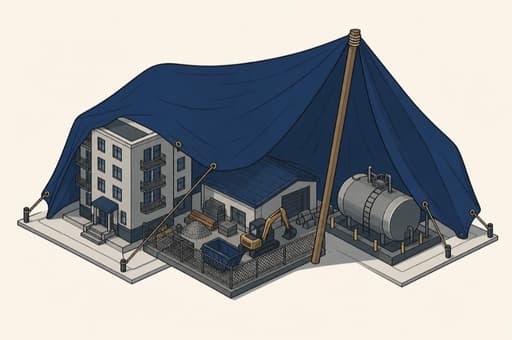
General & Excess Liability
The biggest engine: cover for businesses too hazardous or too claim-prone for a standard insurer, about $4.5B of premium in 2025. Growth has flattened to roughly 2% as the price it can charge stops rising.
Competes with Kinsale Insurance (Kinsale Capital) · Markel Insurance E&S (Markel Group)
In plain English
Every business needs cover for the day someone gets hurt on its premises or by its work. Most get it easily. A roofing contractor, an apartment block with a run of claims, an oilfield services yard — those get turned away, and that is who Berkley writes.
Specialist brokers carry these hard cases to Berkley units like Nautilus and Admiral, which are free to set their own price and their own policy wording, because this corner of the market is not rate-regulated the way ordinary policies are. The customer pays up front; Berkley keeps whatever is left once claims are settled. It is the company's largest source of premium, and today that premium is barely growing.

Professional Liability
Cover for boards, hospitals, design firms and hacked systems — roughly $1.1B of premium and Berkley's fastest-growing insurance line, up about 11% in the first half of 2026 while market prices fall.
Competes with Chubb Financial Lines (Chubb) · Arch Capital professional lines (Arch Capital Group)
In plain English
A board gets sued by its shareholders. An architect's design turns out wrong. A hospital's records are stolen. None of that is an ordinary business claim: this is the policy for being blamed for your professional work.
Boards, design and advisory firms, hospitals and life-science companies buy it through brokers who handle little else, and Berkley units take on the risk for a premium each year. The awkward part is that prices for this cover have been sliding for two years, so the only way to grow is to win more customers — which is exactly what Berkley has done, faster than in any of its other insurance lines.
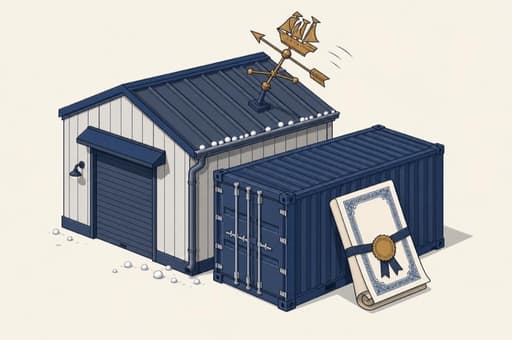
Property, Marine & Surety
Buildings, cargo, contractor bonds and product warranties — about $2.6B of premium. Claims land within months, so bad weather shows up here first: storm and disaster claims cost $62M in the second quarter of 2026, against $99M a year earlier.
Competes with Commercial property & marine (Chubb) · Bond & Specialty (Travelers) · Shared-and-layered property capacity (Delegated underwriting agencies)
In plain English
The short-fuse part of the book. A warehouse burns, a shipment is lost at sea, a builder walks off a half-finished job — those claims arrive within months rather than years, so Berkley learns quickly whether it priced the risk right.
Owners of buildings and cargo pay a yearly premium. Contractors pay for a bond, a promise that the customer is made whole if the work is abandoned. Several Berkley units sell these side by side, including cover bought with the product you just purchased. Commercial property prices have started slipping after years of increases, and this is the line that carries the company's storm losses.

Berkley One
Personal cover for wealthy households — houses, cars, collections — which management calls a great success. Its money lands inside the property lines, and Berkley writes no personal cover at all in California.
Competes with Personal Risk Services (Chubb) · High-value home cover (PURE) · Private Client Select (Ryan Specialty)
In plain English
Most people buy home insurance off a price-comparison list and never think about it again. A household with a big house, several cars and a case of art or jewellery cannot do that: the off-the-shelf policy simply is not built for what is in the building.
Berkley One writes that customer through agencies that specialise in serving wealthy families, charging a premium sized to what it is covering. The money shows up inside Berkley's property and marine lines rather than as a figure of its own. One deliberate gap: the company writes no personal cover in California.
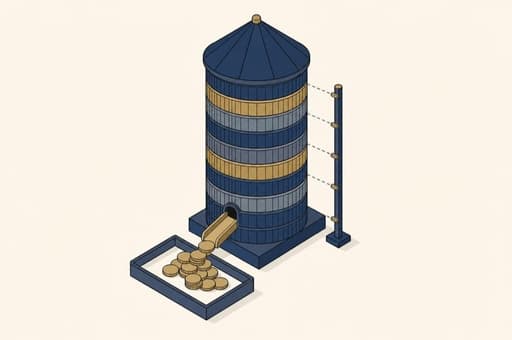
Investment Portfolio
The $33B of customer money held before claims are paid earned $1.429B in 2025 — the single biggest reason Berkley's returns improved since 2021. Kept short and safe, so income follows interest rates both ways.
Competes with Invested premium pool (Chubb) · Invested premium pool (Travelers) · Money-market funds and deposits (Banks and fund managers)
In plain English
Here is the quiet half of the business. Customers pay premiums today for claims that may not settle for years, so Berkley sits on a very large pool of other people's money in the meantime — and it gets to invest it.
The pool is kept in short, highly rated bonds, the sort that turn back into cash quickly when claims come due, rather than in anything adventurous. It pays interest every quarter. Because the bonds are short, roughly a third of the money is reinvested each year at whatever rates happen to be current — which helped enormously on the way up and cuts the same way down.
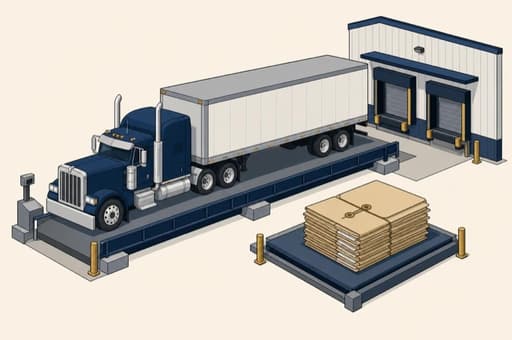
Commercial Auto
Cover for trucks and company fleets — about $1.7B of premium, up 5% in the first half of 2026. One of the few lines where Berkley expects prices to rise from here, because court awards against trucking firms keep climbing.
Competes with Progressive Commercial (Progressive) · Long-haul trucking cover (Great West Casualty)
In plain English
Trucks crash. When a loaded eighteen-wheeler hits a family car the bill can run to millions, and no haulage firm carries that alone, so it buys cover for the harm it causes and for its own vehicles.
Berkley charges by the fleet, which means its premium here tracks how many trucks are on the road and how much freight is moving. Carolina Casualty sells through agents who know trucking; Intrepid Direct sells straight to the operator. The difficult part is juries — awards against trucking companies have been climbing fast — which is why management expects the price of this cover to firm rather than fall.

Workers' Compensation
Wages and treatment for injured employees — roughly $1.3B of premium and the one insurance line going backwards, down about 1% in the first half of 2026 as state baseline rates come down.
Competes with Small-business workers' comp (Employers Holdings) · Workers' compensation (Travelers)
In plain English
Someone is hurt on the job; their lost wages and their care have to be paid for. That is the whole of this policy, and the employer is the one who buys it.
The price is worked out from the payroll the employer runs, so the premium follows wages rather than sales. Two forces pull against each other: the baseline rates set state by state have been drifting lower, while the cost of medical care keeps rising — management calls medical inflation a very leveraged assumption. Berkley writes this through units like Key Risk and Preferred Employers, and here its premium shrank slightly in the first half of 2026.
Berkley Re
Berkley insuring other insurers: roughly $1.2B of premium, and shrinking on purpose. In the first half of 2026 its liability premium fell about 15% and its property premium about 11% as prices dropped.
Competes with Reinsurance for other insurers (Everest Group) · Property and liability reinsurance (Munich Re) · Property and liability reinsurance (Swiss Re)
In plain English
Insurance companies buy insurance too. A single hurricane can cost one carrier more than it can absorb, so it hands part of that risk to a reinsurer and pays for the relief. Berkley Re is on the receiving end of those deals, in America, the UK, Australia and Asia.
Reinsurers have had a stretch of light disaster losses and are sitting on a lot of spare capital, so the price of taking on that risk has dropped sharply — property catastrophe cover repriced down by roughly a seventh at the January 2026 renewals. Berkley's answer is to write less rather than chase it down, which is why this book is getting smaller by choice.


 General & Excess LiabilityThe biggest engine: cover for businesses too hazardous or too claim-prone for a standard insurer, about $4.5B of premium in 2025. Growth has flattened to roughly 2% as the price it can charge stops rising.
The biggest engine: cover for businesses too hazardous or too claim-prone for a standard insurer, about $4.5B of premium in 2025. Growth has flattened to roughly 2% as the price it can charge stops rising.
In plain English
Every business needs cover for the day someone gets hurt on its premises or by its work. Most get it easily. A roofing contractor, an apartment block with a run of claims, an oilfield services yard — those get turned away, and that is who Berkley writes.
Specialist brokers carry these hard cases to Berkley units like Nautilus and Admiral, which are free to set their own price and their own policy wording, because this corner of the market is not rate-regulated the way ordinary policies are. The customer pays up front; Berkley keeps whatever is left once claims are settled. It is the company's largest source of premium, and today that premium is barely growing.
Competes with Kinsale Insurance (Kinsale Capital) · Markel Insurance E&S (Markel Group)
 Professional LiabilityCover for boards, hospitals, design firms and hacked systems — roughly $1.1B of premium and Berkley's fastest-growing insurance line, up about 11% in the first half of 2026 while market prices fall.
Cover for boards, hospitals, design firms and hacked systems — roughly $1.1B of premium and Berkley's fastest-growing insurance line, up about 11% in the first half of 2026 while market prices fall.
In plain English
A board gets sued by its shareholders. An architect's design turns out wrong. A hospital's records are stolen. None of that is an ordinary business claim: this is the policy for being blamed for your professional work.
Boards, design and advisory firms, hospitals and life-science companies buy it through brokers who handle little else, and Berkley units take on the risk for a premium each year. The awkward part is that prices for this cover have been sliding for two years, so the only way to grow is to win more customers — which is exactly what Berkley has done, faster than in any of its other insurance lines.
Competes with Chubb Financial Lines (Chubb) · Arch Capital professional lines (Arch Capital Group)
 Property, Marine & SuretyBuildings, cargo, contractor bonds and product warranties — about $2.6B of premium. Claims land within months, so bad weather shows up here first: storm and disaster claims cost $62M in the second quarter of 2026, against $99M a year earlier.
Buildings, cargo, contractor bonds and product warranties — about $2.6B of premium. Claims land within months, so bad weather shows up here first: storm and disaster claims cost $62M in the second quarter of 2026, against $99M a year earlier.
In plain English
The short-fuse part of the book. A warehouse burns, a shipment is lost at sea, a builder walks off a half-finished job — those claims arrive within months rather than years, so Berkley learns quickly whether it priced the risk right.
Owners of buildings and cargo pay a yearly premium. Contractors pay for a bond, a promise that the customer is made whole if the work is abandoned. Several Berkley units sell these side by side, including cover bought with the product you just purchased. Commercial property prices have started slipping after years of increases, and this is the line that carries the company's storm losses.
Competes with Commercial property & marine (Chubb) · Bond & Specialty (Travelers) · Shared-and-layered property capacity (Delegated underwriting agencies)
 Berkley OnePersonal cover for wealthy households — houses, cars, collections — which management calls a great success. Its money lands inside the property lines, and Berkley writes no personal cover at all in California.
Personal cover for wealthy households — houses, cars, collections — which management calls a great success. Its money lands inside the property lines, and Berkley writes no personal cover at all in California.
In plain English
Most people buy home insurance off a price-comparison list and never think about it again. A household with a big house, several cars and a case of art or jewellery cannot do that: the off-the-shelf policy simply is not built for what is in the building.
Berkley One writes that customer through agencies that specialise in serving wealthy families, charging a premium sized to what it is covering. The money shows up inside Berkley's property and marine lines rather than as a figure of its own. One deliberate gap: the company writes no personal cover in California.
Competes with Personal Risk Services (Chubb) · High-value home cover (PURE) · Private Client Select (Ryan Specialty)
 Investment PortfolioThe $33B of customer money held before claims are paid earned $1.429B in 2025 — the single biggest reason Berkley's returns improved since 2021. Kept short and safe, so income follows interest rates both ways.
The $33B of customer money held before claims are paid earned $1.429B in 2025 — the single biggest reason Berkley's returns improved since 2021. Kept short and safe, so income follows interest rates both ways.
In plain English
Here is the quiet half of the business. Customers pay premiums today for claims that may not settle for years, so Berkley sits on a very large pool of other people's money in the meantime — and it gets to invest it.
The pool is kept in short, highly rated bonds, the sort that turn back into cash quickly when claims come due, rather than in anything adventurous. It pays interest every quarter. Because the bonds are short, roughly a third of the money is reinvested each year at whatever rates happen to be current — which helped enormously on the way up and cuts the same way down.
Competes with Invested premium pool (Chubb) · Invested premium pool (Travelers) · Money-market funds and deposits (Banks and fund managers)
 Commercial AutoCover for trucks and company fleets — about $1.7B of premium, up 5% in the first half of 2026. One of the few lines where Berkley expects prices to rise from here, because court awards against trucking firms keep climbing.
Cover for trucks and company fleets — about $1.7B of premium, up 5% in the first half of 2026. One of the few lines where Berkley expects prices to rise from here, because court awards against trucking firms keep climbing.
In plain English
Trucks crash. When a loaded eighteen-wheeler hits a family car the bill can run to millions, and no haulage firm carries that alone, so it buys cover for the harm it causes and for its own vehicles.
Berkley charges by the fleet, which means its premium here tracks how many trucks are on the road and how much freight is moving. Carolina Casualty sells through agents who know trucking; Intrepid Direct sells straight to the operator. The difficult part is juries — awards against trucking companies have been climbing fast — which is why management expects the price of this cover to firm rather than fall.
Competes with Progressive Commercial (Progressive) · Long-haul trucking cover (Great West Casualty)
 Workers' CompensationWages and treatment for injured employees — roughly $1.3B of premium and the one insurance line going backwards, down about 1% in the first half of 2026 as state baseline rates come down.
Wages and treatment for injured employees — roughly $1.3B of premium and the one insurance line going backwards, down about 1% in the first half of 2026 as state baseline rates come down.
In plain English
Someone is hurt on the job; their lost wages and their care have to be paid for. That is the whole of this policy, and the employer is the one who buys it.
The price is worked out from the payroll the employer runs, so the premium follows wages rather than sales. Two forces pull against each other: the baseline rates set state by state have been drifting lower, while the cost of medical care keeps rising — management calls medical inflation a very leveraged assumption. Berkley writes this through units like Key Risk and Preferred Employers, and here its premium shrank slightly in the first half of 2026.
Competes with Small-business workers' comp (Employers Holdings) · Workers' compensation (Travelers)
 Berkley ReBerkley insuring other insurers: roughly $1.2B of premium, and shrinking on purpose. In the first half of 2026 its liability premium fell about 15% and its property premium about 11% as prices dropped.
Berkley insuring other insurers: roughly $1.2B of premium, and shrinking on purpose. In the first half of 2026 its liability premium fell about 15% and its property premium about 11% as prices dropped.
In plain English
Insurance companies buy insurance too. A single hurricane can cost one carrier more than it can absorb, so it hands part of that risk to a reinsurer and pays for the relief. Berkley Re is on the receiving end of those deals, in America, the UK, Australia and Asia.
Reinsurers have had a stretch of light disaster losses and are sitting on a lot of spare capital, so the price of taking on that risk has dropped sharply — property catastrophe cover repriced down by roughly a seventh at the January 2026 renewals. Berkley's answer is to write less rather than chase it down, which is why this book is getting smaller by choice.
Competes with Reinsurance for other insurers (Everest Group) · Property and liability reinsurance (Munich Re) · Property and liability reinsurance (Swiss Re)
Named in filings, launches and programs
- Monoline Excess (Midwest Employers Casualty)BrandBackstop injury cover for employers who pay their own claims up to a limit — roughly 2% of revenue, and one of the few Berkley books still growing.
- Berkley MeridianBrandFormed August 2026 by combining two specialty units, Verus and Vela — a move trade press called unusual for a company built on keeping businesses apart.
- Berkley Embedded SolutionsBrand · RampingLaunched 2025: cover sold alongside the item at the point of sale, jewellery being the example Berkley gives.
- Berkley EdgeBrand · RampingLaunched 2025: a streamlined version of Berkley's hard-to-place cover, written on narrower wording than its traditional deluxe policies.
- Nautilus Insurance GroupBrandScottsdale-based writer of small hard-to-place commercial risks, and one of the main homes for the general liability book.
- Admiral Insurance GroupBrandWrites hard-to-place liability and professional cover through specialist brokers; a direct rival to Markel's specialty operation.
- Berkley Specialty LondonBrandA syndicate at Lloyd's of London — the marketplace where insurers club together on large risks — plus Berkley's UK company.
- Berkley EnvironmentalBrandPollution and contamination cover for contractors and industrial sites; part of the general liability book.
- Berkley Oil & GasBrandCover for energy businesses, with a renewable-energy arm alongside it; part of the general liability book.
- Berkley SuretyBrandBonds promising a contractor's job gets finished or the customer gets paid; up against Travelers in the same corner.
- Intrepid DirectBrandSells fleet cover straight to the operator rather than through an agent; part of the commercial auto book.
- Berkley Program SpecialistsServiceBack-office help for outside agencies running insurance programs, plus structuring work for insurers passing risk on — fee income, not premium.
- Berkley RiskServiceFee-based program and risk-management services; part of the $118.5M of service fees Berkley collected in 2025.
- International unitsBrandInsurance companies in Latin America, Europe, Australia and Asia; Berkley does not publish what each one writes.
- Non-insurance businessesSegmentPromotional merchandise, textiles, aviation parts and aircraft sales — roughly $580M in 2025, a small commercial tail attached to an insurer.
Monoline Excess (Midwest Employers Casualty)Brand
Backstop injury cover for employers who pay their own claims up to a limit — roughly 2% of revenue, and one of the few Berkley books still growing.
Berkley MeridianBrand
Formed August 2026 by combining two specialty units, Verus and Vela — a move trade press called unusual for a company built on keeping businesses apart.
Berkley Embedded SolutionsBrand · Ramping
Launched 2025: cover sold alongside the item at the point of sale, jewellery being the example Berkley gives.
Berkley EdgeBrand · Ramping
Launched 2025: a streamlined version of Berkley's hard-to-place cover, written on narrower wording than its traditional deluxe policies.
Nautilus Insurance GroupBrand
Scottsdale-based writer of small hard-to-place commercial risks, and one of the main homes for the general liability book.
Admiral Insurance GroupBrand
Writes hard-to-place liability and professional cover through specialist brokers; a direct rival to Markel's specialty operation.
Berkley Specialty LondonBrand
A syndicate at Lloyd's of London — the marketplace where insurers club together on large risks — plus Berkley's UK company.
Berkley EnvironmentalBrand
Pollution and contamination cover for contractors and industrial sites; part of the general liability book.
Berkley Oil & GasBrand
Cover for energy businesses, with a renewable-energy arm alongside it; part of the general liability book.
Berkley SuretyBrand
Bonds promising a contractor's job gets finished or the customer gets paid; up against Travelers in the same corner.
Intrepid DirectBrand
Sells fleet cover straight to the operator rather than through an agent; part of the commercial auto book.
Berkley Program SpecialistsService
Back-office help for outside agencies running insurance programs, plus structuring work for insurers passing risk on — fee income, not premium.
Berkley RiskService
Fee-based program and risk-management services; part of the $118.5M of service fees Berkley collected in 2025.
International unitsBrand
Insurance companies in Latin America, Europe, Australia and Asia; Berkley does not publish what each one writes.
Non-insurance businessesSegment
Promotional merchandise, textiles, aviation parts and aircraft sales — roughly $580M in 2025, a small commercial tail attached to an insurer.