
Zebra Technologies (ZBRA)
Equips frontline operations with data-capture devices, workflow software, automation, and services.
Something off on this page? Send us feedback.
Zebra makes the gear that turns physical work into data — the rugged handheld a warehouse picker carries, the printer that spits out shipping labels, the scanner at the checkout. Most of the money is hardware, sold through a short list of distributors, with a smaller stream of support and software behind it. It is climbing out of a slump, and its new limit is memory chips: demand runs ahead of what it can build.
Item facts: H1 FY2026 · six months ended July 4, 2026, from filings, earnings calls and company pages.
Judgment weights, not filed revenue
The band summarizes business focus and direction. ~ marks estimates.
8 in detail · 10 more below
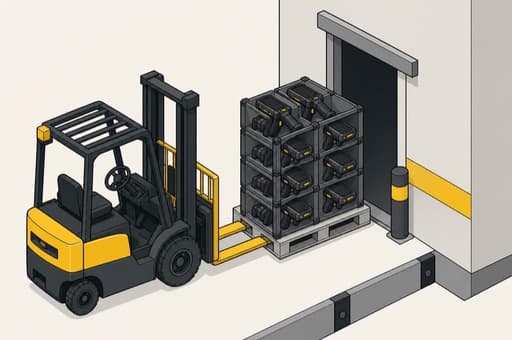
Enterprise Mobile Computing
Rugged Android handhelds for pickers, drivers, shop staff and nurses — Zebra's biggest line and the one leading its segment's growth. Memory chips are the squeeze: about $120M of extra cost across the company this year, and a hard limit on how many devices it can build.
Competes with CT/CK series rugged handhelds (Honeywell) · Memor and Skorpio handhelds (Datalogic) · Rugged handhelds (Point Mobile)
In plain English
Picture the boxy handheld a warehouse picker carries all shift, or the one clipped to a delivery van's dashboard: an Android device built to be dropped and worked for years.
Zebra rarely sells one at a time. It sells to a few large distributors, who pass devices on to more than ten thousand resellers, who fit out an entire fleet in a single order. Fleets wear out and get replaced, and that replacement cycle is the demand. Three distributors were 29%, 15% and 15% of last year's sales, and the filings never say which.
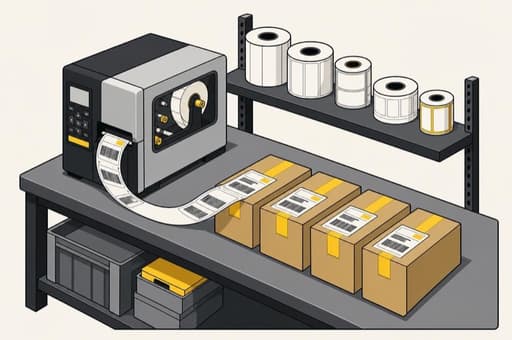
Barcode and Card Printing
Thermal printers that turn out shipping labels, shelf tags, wristbands and ID cards — about 15% of sales, and the strongest grower in its segment two quarters running. Each printer sold is really a ticket to years of label and ribbon orders.
Competes with PM/PC series industrial printers (Honeywell) · CL/CT series label printers (SATO Holdings) · Barcode printers (TSC Auto ID)
In plain English
A thermal printer heats its image onto special paper or ribbon instead of spraying ink. Out come shipping labels, shelf tags, hospital wristbands, receipts and plastic ID cards.
The machine is bought once and then runs quietly for years, and that is the whole point: a customer who buys Zebra printers buys Zebra labels and ribbons for as long as those printers live, the way a coffee machine ties you to its pods. Warehouses, parcel depots and shops keep printing because every parcel and every shelf edge needs a sticker.
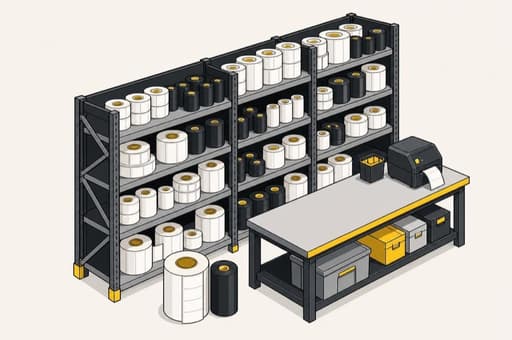
Supplies and Sensors
Labels, ribbons, wristbands and tags — the stream printers eat through. Under a tenth of sales, but it reorders itself: consumption follows how much gets shipped and printed, not whether anyone is buying new machines.
Competes with RFID inlays and labels (Avery Dennison) · Identification labels and wristbands (Brady Corporation)
In plain English
The refill business. Every label, ribbon, wristband and tag a printer swallows is something somebody has to buy again next week.
Because of that, this line moves with how much stuff is being printed and shipped rather than with capital budgets — which is why it held up better than hardware when customers stopped spending in 2023. It also carries the sticker-thin radio tags shops use to count stock, and small sensors that watch temperature and condition. Least glamorous line on the map, most repeatable money.
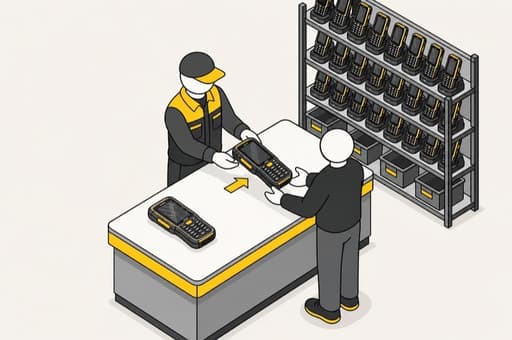
Services and Software
Support contracts, repairs, security updates and store software sold alongside the hardware — 16.5% of sales in the first half. The steady, repeating part of Zebra, growing more slowly than the devices it attaches to.
Competes with Workforce and task management software (Blue Yonder) · Staff scheduling software (UKG) · Operational Intelligence device programmes (Honeywell)
In plain English
Buy two thousand handhelds and you also buy a plan. Zebra fixes the ones that break, pushes out the updates that keep the devices safe to use for years, and sells software that schedules shop staff and tracks stock.
This is the part that bills every year instead of once — about a sixth of sales in the first half. It grows more slowly than the hardware, for a simple reason: a support plan only arrives after the device it covers does. Lately management has been talking far more about its new AI helpers than about the store software.
Data Capture
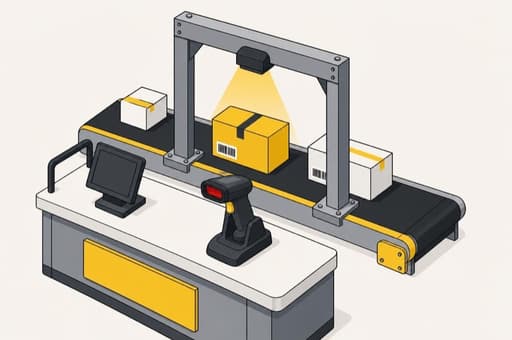
Barcode scanners at checkouts and over conveyor belts — roughly 9% of sales, and the tier Zebra grows slowest. It fell back in late 2025 against a tough comparison before recovering; longer term, radio tags can do the same counting.
Competes with Xenon and Granit scanners (Honeywell) · Gryphon and Magellan scanners (Datalogic)
In plain English
The handheld gun at a supermarket till, and its bigger cousins: scanners bolted above conveyor belts that read every box sliding past.
They all do one job — turn a printed stripe pattern into a number a computer understands. Grocers, general stores and parcel sorters buy them by the hundred and replace them as they wear out, which makes this the slowest-growing corner of the business. It also has a rival living inside the same house: the radio tags Zebra sells can count stock without anyone pointing anything at anything.
RFID and RTLS
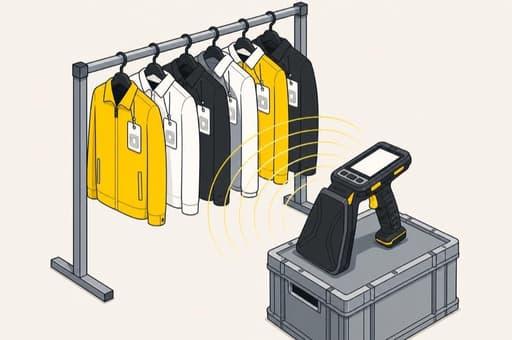
Readers, antennas and tag-writing printers that let a shop count its stock by radio instead of by eye. Around 4% of sales, expected to grow at a double-digit rate this year, and increasingly built into the handhelds rather than bought on its own.
Competes with R700 readers and M800 tag chips (Impinj) · RFID inlays (Avery Dennison) · RFID readers (Alien Technology)
In plain English
A barcode has to be seen, one at a time, straight on. A radio tag simply answers when a reader calls it, so a worker can walk past a rail of clothes and have every item counted in seconds.
Zebra sells the readers, the antennas and the printers that write the tags; the tags themselves ship out through its label business. Small line, quick growth, and less and less of a separate purchase — the newest handhelds and wearables read tags themselves. What gates it is the price of a tag: counting item by item only pays below a few cents each.
Machine Vision and Zebra Aurora
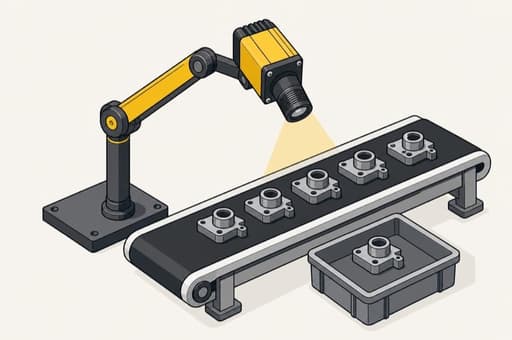
Industrial cameras plus the Aurora software that judges what they see — around 2% of sales, the smallest thing here, sitting in the tier Zebra calls its fastest growing. It needs factories to be spending.
Competes with In-Sight vision systems and DataMan (Cognex) · Vision sensors and systems (Keyence) · 3D sensors and industrial cameras (Basler)
In plain English
Cameras that look at things on a factory line and decide whether they are right — the cap on straight, the part in the bin a robot is about to grab. Zebra's Aurora software is what tells the camera what right looks like.
Electronics plants, battery makers, chip fabs and drug factories buy the cameras, the controllers behind them and the software that runs them. The 3D piece came with Photoneo, a company Zebra bought for roughly €60M. It only sells when factories are spending on their lines, which Zebra says has been picking up through this year.
Elo Touch Solutions
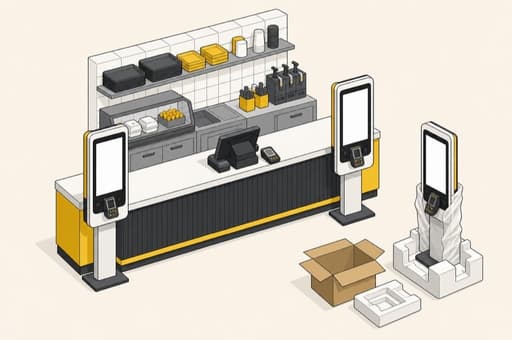
Touchscreens, checkout terminals and self-service kiosks, bought for about $1.3B and folded in at the end of September 2025 — roughly 7% of sales, and the way into an $8B market Zebra says the deal opens up.
Competes with Self-service kiosks and point-of-sale (NCR Voyix) · Kiosks and retail terminals (Diebold Nixdorf) · Touch panel PCs and kiosks (Advantech)
In plain English
The screen you tap to order a burger, check in at a clinic or pay at a shop counter. Elo has been making touchscreens for about fifty years and holds hundreds of patents on them.
Zebra paid roughly $1.3B in late 2025, borrowing to do it, and set Elo beside the handhelds. Restaurants, shops and hospitals buy the screens, the kiosks they stand in and the computers behind them. The tidy part of the deal: Elo's biggest North American distributor is already Zebra's, so the new products travel down a pipe Zebra had built. About $25M a year of savings is targeted by year three.


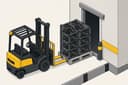 Enterprise Mobile ComputingRugged Android handhelds for pickers, drivers, shop staff and nurses — Zebra's biggest line and the one leading its segment's growth. Memory chips are the squeeze: about $120M of extra cost across the company this year, and a hard limit on how many devices it can build.
Rugged Android handhelds for pickers, drivers, shop staff and nurses — Zebra's biggest line and the one leading its segment's growth. Memory chips are the squeeze: about $120M of extra cost across the company this year, and a hard limit on how many devices it can build.
In plain English
Picture the boxy handheld a warehouse picker carries all shift, or the one clipped to a delivery van's dashboard: an Android device built to be dropped and worked for years.
Zebra rarely sells one at a time. It sells to a few large distributors, who pass devices on to more than ten thousand resellers, who fit out an entire fleet in a single order. Fleets wear out and get replaced, and that replacement cycle is the demand. Three distributors were 29%, 15% and 15% of last year's sales, and the filings never say which.
Competes with CT/CK series rugged handhelds (Honeywell) · Memor and Skorpio handhelds (Datalogic) · Rugged handhelds (Point Mobile)
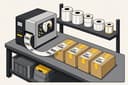 Barcode and Card PrintingThermal printers that turn out shipping labels, shelf tags, wristbands and ID cards — about 15% of sales, and the strongest grower in its segment two quarters running. Each printer sold is really a ticket to years of label and ribbon orders.
Thermal printers that turn out shipping labels, shelf tags, wristbands and ID cards — about 15% of sales, and the strongest grower in its segment two quarters running. Each printer sold is really a ticket to years of label and ribbon orders.
In plain English
A thermal printer heats its image onto special paper or ribbon instead of spraying ink. Out come shipping labels, shelf tags, hospital wristbands, receipts and plastic ID cards.
The machine is bought once and then runs quietly for years, and that is the whole point: a customer who buys Zebra printers buys Zebra labels and ribbons for as long as those printers live, the way a coffee machine ties you to its pods. Warehouses, parcel depots and shops keep printing because every parcel and every shelf edge needs a sticker.
Competes with PM/PC series industrial printers (Honeywell) · CL/CT series label printers (SATO Holdings) · Barcode printers (TSC Auto ID)
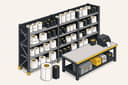 Supplies and SensorsLabels, ribbons, wristbands and tags — the stream printers eat through. Under a tenth of sales, but it reorders itself: consumption follows how much gets shipped and printed, not whether anyone is buying new machines.
Labels, ribbons, wristbands and tags — the stream printers eat through. Under a tenth of sales, but it reorders itself: consumption follows how much gets shipped and printed, not whether anyone is buying new machines.
In plain English
The refill business. Every label, ribbon, wristband and tag a printer swallows is something somebody has to buy again next week.
Because of that, this line moves with how much stuff is being printed and shipped rather than with capital budgets — which is why it held up better than hardware when customers stopped spending in 2023. It also carries the sticker-thin radio tags shops use to count stock, and small sensors that watch temperature and condition. Least glamorous line on the map, most repeatable money.
Competes with RFID inlays and labels (Avery Dennison) · Identification labels and wristbands (Brady Corporation)
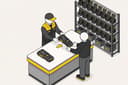 Services and SoftwareSupport contracts, repairs, security updates and store software sold alongside the hardware — 16.5% of sales in the first half. The steady, repeating part of Zebra, growing more slowly than the devices it attaches to.
Support contracts, repairs, security updates and store software sold alongside the hardware — 16.5% of sales in the first half. The steady, repeating part of Zebra, growing more slowly than the devices it attaches to.
In plain English
Buy two thousand handhelds and you also buy a plan. Zebra fixes the ones that break, pushes out the updates that keep the devices safe to use for years, and sells software that schedules shop staff and tracks stock.
This is the part that bills every year instead of once — about a sixth of sales in the first half. It grows more slowly than the hardware, for a simple reason: a support plan only arrives after the device it covers does. Lately management has been talking far more about its new AI helpers than about the store software.
Competes with Workforce and task management software (Blue Yonder) · Staff scheduling software (UKG) · Operational Intelligence device programmes (Honeywell)
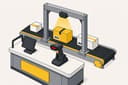 Data CaptureBarcode scanners at checkouts and over conveyor belts — roughly 9% of sales, and the tier Zebra grows slowest. It fell back in late 2025 against a tough comparison before recovering; longer term, radio tags can do the same counting.
Barcode scanners at checkouts and over conveyor belts — roughly 9% of sales, and the tier Zebra grows slowest. It fell back in late 2025 against a tough comparison before recovering; longer term, radio tags can do the same counting.
In plain English
The handheld gun at a supermarket till, and its bigger cousins: scanners bolted above conveyor belts that read every box sliding past.
They all do one job — turn a printed stripe pattern into a number a computer understands. Grocers, general stores and parcel sorters buy them by the hundred and replace them as they wear out, which makes this the slowest-growing corner of the business. It also has a rival living inside the same house: the radio tags Zebra sells can count stock without anyone pointing anything at anything.
Competes with Xenon and Granit scanners (Honeywell) · Gryphon and Magellan scanners (Datalogic)
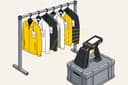 RFID and RTLSReaders, antennas and tag-writing printers that let a shop count its stock by radio instead of by eye. Around 4% of sales, expected to grow at a double-digit rate this year, and increasingly built into the handhelds rather than bought on its own.
Readers, antennas and tag-writing printers that let a shop count its stock by radio instead of by eye. Around 4% of sales, expected to grow at a double-digit rate this year, and increasingly built into the handhelds rather than bought on its own.
In plain English
A barcode has to be seen, one at a time, straight on. A radio tag simply answers when a reader calls it, so a worker can walk past a rail of clothes and have every item counted in seconds.
Zebra sells the readers, the antennas and the printers that write the tags; the tags themselves ship out through its label business. Small line, quick growth, and less and less of a separate purchase — the newest handhelds and wearables read tags themselves. What gates it is the price of a tag: counting item by item only pays below a few cents each.
Competes with R700 readers and M800 tag chips (Impinj) · RFID inlays (Avery Dennison) · RFID readers (Alien Technology)
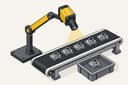 Machine Vision and Zebra AuroraIndustrial cameras plus the Aurora software that judges what they see — around 2% of sales, the smallest thing here, sitting in the tier Zebra calls its fastest growing. It needs factories to be spending.
Industrial cameras plus the Aurora software that judges what they see — around 2% of sales, the smallest thing here, sitting in the tier Zebra calls its fastest growing. It needs factories to be spending.
In plain English
Cameras that look at things on a factory line and decide whether they are right — the cap on straight, the part in the bin a robot is about to grab. Zebra's Aurora software is what tells the camera what right looks like.
Electronics plants, battery makers, chip fabs and drug factories buy the cameras, the controllers behind them and the software that runs them. The 3D piece came with Photoneo, a company Zebra bought for roughly €60M. It only sells when factories are spending on their lines, which Zebra says has been picking up through this year.
Competes with In-Sight vision systems and DataMan (Cognex) · Vision sensors and systems (Keyence) · 3D sensors and industrial cameras (Basler)
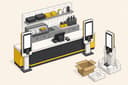 Elo Touch SolutionsTouchscreens, checkout terminals and self-service kiosks, bought for about $1.3B and folded in at the end of September 2025 — roughly 7% of sales, and the way into an $8B market Zebra says the deal opens up.
Touchscreens, checkout terminals and self-service kiosks, bought for about $1.3B and folded in at the end of September 2025 — roughly 7% of sales, and the way into an $8B market Zebra says the deal opens up.
In plain English
The screen you tap to order a burger, check in at a clinic or pay at a shop counter. Elo has been making touchscreens for about fifty years and holds hundreds of patents on them.
Zebra paid roughly $1.3B in late 2025, borrowing to do it, and set Elo beside the handhelds. Restaurants, shops and hospitals buy the screens, the kiosks they stand in and the computers behind them. The tidy part of the deal: Elo's biggest North American distributor is already Zebra's, so the new products travel down a pipe Zebra had built. About $25M a year of savings is targeted by year three.
Competes with Self-service kiosks and point-of-sale (NCR Voyix) · Kiosks and retail terminals (Diebold Nixdorf) · Touch panel PCs and kiosks (Advantech)
Named in filings, launches and programs
- Zebra Frontline AI suitePlatform · RampingBundled AI tools for frontline staff — ready-made blueprints plus the Companion agents. Sold, not given away; paid pilots were running as of February 2026.
- Zebra CompanionProduct · RampingThe managed AI helper in that suite: answers on operating procedures, product knowledge and sales, first shown at a retail trade show by a customer.
- Workcloud SuiteProduct lineStore software for scheduling staff, optimising inventory and reading demand. Counted in the services line — and barely mentioned on the last six earnings calls.
- Zebra DNA and LifeGuardPlatformDevice management plus years of Android security updates that keep a deployed fleet usable — part of what the support contract buys.
- PhotoneoBrand3D machine-vision company bought for about €60M and closed in early 2025; its bin-picking sits inside the machine vision line.
- Location Technologies / MotionWorksProduct lineReal-time location tracking, sports player tracking included, grouped with the RFID line.
- Environmental SensorsProduct lineTemperature and condition monitors sold alongside labels and tags, and counted with supplies.
- Rugged Tablets (ET series)Product lineRugged tablets counted inside mobile computing; the ET401 reads radio tags itself, so the tablet doubles as a stock counter.
- ZeroLinerProductA linerless label format — labels with no backing paper to peel off and bin.
- KC401 kioskProduct · AnnouncedThe first new self-service kiosk announced since the Elo deal closed, in September 2026.
Zebra Frontline AI suitePlatform · Ramping
Bundled AI tools for frontline staff — ready-made blueprints plus the Companion agents. Sold, not given away; paid pilots were running as of February 2026.
Zebra CompanionProduct · Ramping
The managed AI helper in that suite: answers on operating procedures, product knowledge and sales, first shown at a retail trade show by a customer.
Workcloud SuiteProduct line
Store software for scheduling staff, optimising inventory and reading demand. Counted in the services line — and barely mentioned on the last six earnings calls.
Zebra DNA and LifeGuardPlatform
Device management plus years of Android security updates that keep a deployed fleet usable — part of what the support contract buys.
PhotoneoBrand
3D machine-vision company bought for about €60M and closed in early 2025; its bin-picking sits inside the machine vision line.
Location Technologies / MotionWorksProduct line
Real-time location tracking, sports player tracking included, grouped with the RFID line.
Environmental SensorsProduct line
Temperature and condition monitors sold alongside labels and tags, and counted with supplies.
Rugged Tablets (ET series)Product line
Rugged tablets counted inside mobile computing; the ET401 reads radio tags itself, so the tablet doubles as a stock counter.
ZeroLinerProduct
A linerless label format — labels with no backing paper to peel off and bin.
KC401 kioskProduct · Announced
The first new self-service kiosk announced since the Elo deal closed, in September 2026.