
Applied Optoelectronics (AAOI)
Vertically integrated maker of optical transceivers, laser chips, and cable-network equipment.
Something off on this page? Send us feedback.
Applied Optoelectronics makes the small parts that push data through glass fiber as light — plug-in modules for the data centers running artificial intelligence, and amplifiers for cable companies rebuilding their neighborhood networks. Cable still brings in more, but the data-center side is overtaking it fast. Most of the money comes from just two buyers, and the factories being built to serve them are paid for by selling new shares.
Item facts: FY2025 · year ended Dec 31, 2025, from filings, earnings calls and company pages.
Judgment weights, not filed revenue
The band summarizes business focus and direction. ~ marks estimates.
7 in detail · 11 more below
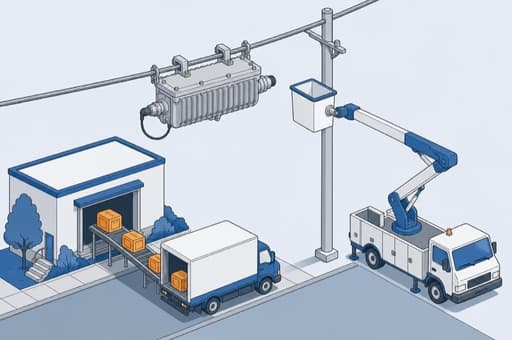
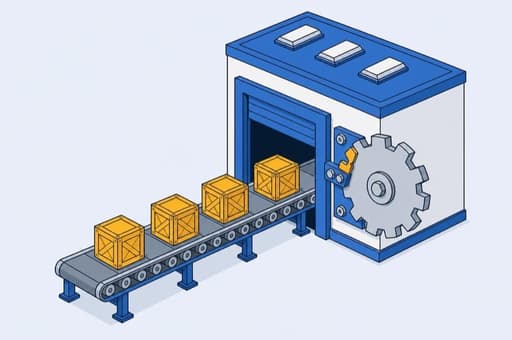
Quantum Bandwidth 1.8 GHz Amplifiers and Nodes
The boxes that let a cable company sell faster internet without digging up the street. Cable sales nearly tripled to $245.1M in 2025 and set a record $80.6M in the June-2026 quarter, though management frames the cable business as topping out above $325M a year.
Competes with STARLINE ESD amplifiers and NC4000 nodes (CommScope) · 1.8 GHz ESD amplifiers (ATX Networks)
In plain English
Cable internet arrives over the thick TV cable already strung down the street. Rather than replace it, operators swap out the powered boxes along the line — the ones that give the fading signal a push — for boxes that carry a much wider range of signals, which is what lets them sell faster service. Repaving the same road for more lanes.
AOI builds those boxes and sells them to Digicomm, a distributor that resells them to cable operators: Charter certified them in 2025, Mediacom followed in 2026. Each stretch of upgraded line is a one-time sale, so this is a wave to ride, not a stream that keeps flowing.
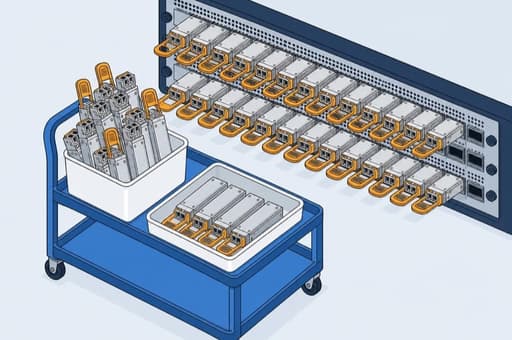
100G and 400G Data Center Transceivers
The two workhorse speeds in data-center networks. 400G more than quadrupled to $48.4M in the June-2026 quarter; the older 100G half is fading because one buyer cannot get the switches to plug it into. Microsoft was 28.8% of 2025 sales — with Digicomm, two customers were four-fifths of the company.
Competes with 400G modules (Innolight) · 400G datacom transceivers (Coherent) · 100G datacom modules (Eoptolink)
In plain English
Inside a data center, machines talk to each other as pulses of light down glass fiber, and something has to translate between electricity and light at both ends. That translator is a transceiver: a small metal module that clicks into the front of a network switch, one per port.
Big cloud operators buy them by the hundreds of thousands and pay per module — no subscription, no renewal. 400G is where the volume sits now; 100G is the older generation on the way out, and how fast it fades is set by the customer's own equipment supply. Volume is not the problem, profit is: AOI has lost money five years running, keeping about 30 cents of gross profit per dollar of sales against its own 40-cent goal.
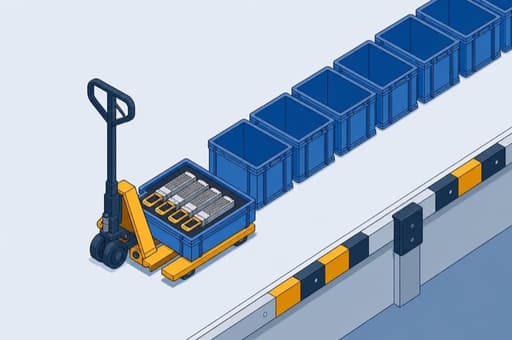
800G Data Center Transceivers
The speed grade the near-term ramp rides on. Sales reached $12.8M in the June-2026 quarter, more than ten times a year earlier but from almost nothing, with nearly five times that guided for the next quarter. Capacity, not orders, sets the pace.
Competes with 800G modules (Innolight) · 800G datacom transceivers (Coherent)
In plain English
A step up the speed ladder, aimed at the networks that wire AI machines to each other. Physically it is the same kind of plug-in module, made on the same lines, and it is cleared to be built at two plants — Taipei in 2025, Sugar Land, Texas through 2026 — so the same part has a second home.
Here the constraint is unusual: the orders AOI can see already run past what its factories can build into mid-2027, so sales depend on how fast new lines go up, not on winning customers. Management's promise of around $1.1 billion of sales in 2026 leans on this line landing on time, and analysts' forecasts sit a little below that promise.
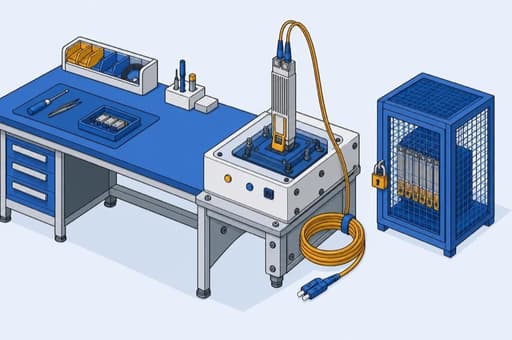
1.6T Data Center Transceivers
The newest speed, and the biggest piece of management's 2027 plan — a target of $164M of 1.6T a month by mid-2027. The first volume order came from a long-standing giant cloud buyer; December-quarter output is capped near $70–80M by parts supply.
Competes with 1.6T modules (Innolight) · 1.6T datacom transceivers (Coherent)
In plain English
Same production lines, same steps — mainly a different final test and a stronger laser inside. That is most of what separates this from the modules already shipping, which makes extra output cheap once those earlier lines exist: the building is up, the recipe barely changes.
The first volume order came from a cloud company AOI has supplied for years and does not name, with shipments starting in the second half of 2026. What limits it now is not floor space but parts: management has capped what it expects to ship in the December quarter because material supply is short.
Amazon Supply Agreement and Customer Warrant
How AOI paid for a second giant customer: an Amazon arm can buy up to 7.9 million AOI shares at $23.70, unlocked as its purchases build toward $4 billion over ten years. Roughly 2.5% of those sales comes straight back off the top.
Competes with AWS transceiver supply (Innolight) · AWS transceiver supply (Eoptolink) · AWS transceiver supply (Coherent)
In plain English
Warrants are a discount paid in stock instead of cash. In March 2025 AOI handed a wholly owned Amazon subsidiary the right to buy almost eight million AOI shares at about $23.70 apiece — a slice unlocked immediately, the rest only as Amazon's cumulative purchases climb toward $4 billion over ten years, which management framed as $400 million or more of orders a year at full stretch.
The cost is real on both sides: existing owners' stakes get smaller, and about 2.5% of what these customers pay is subtracted before the sale is counted — $1.2 million in the June-2026 quarter. Amazon had not yet reached a tenth of AOI's sales by the end of 2025.
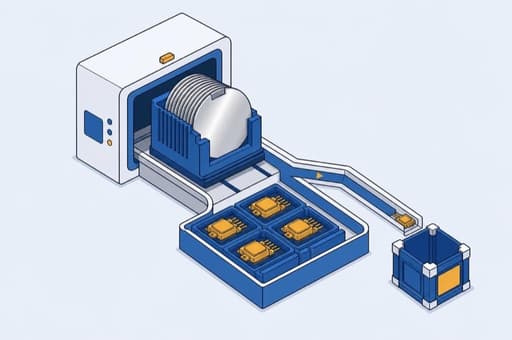
In-House Indium Phosphide Laser Fab
AOI grows the tiny laser chips that are the light source in its own modules, while rivals queue for theirs. Management plans to expand laser capacity by around 350% by 2027 — and equipment ordered today takes roughly two years to reach full production.
Competes with UHP CW lasers for co-packaged optics (Lumentum) · Indium phosphide laser supply (Coherent)
In plain English
Every one of these modules needs something to make the light. That something is a laser chip grown from a crystal called indium phosphide, and many module makers buy theirs from outside suppliers, then queue whenever supply is tight.
AOI runs its own laser plant instead, which its chief executive points to as the reason it does not share the shortage its competitors complain about. None of it is billed separately — the output walks out the door inside finished modules. The payoff is being able to ship when others cannot, and, later, selling lasers to outsiders.
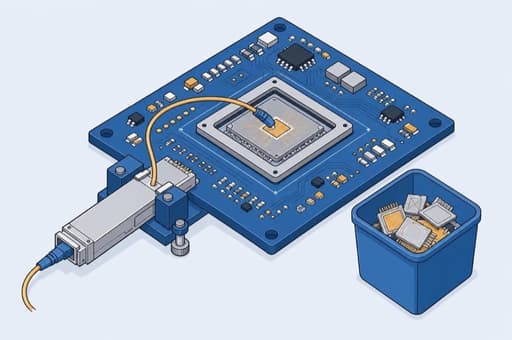
ELSFP External Laser Source
A plug-in light source for the coming data-center design, where the optics move next to the switch chip. Several customers have cleared the simpler version; AOI throttles output because its own modules get the lasers first, and the big ramp slipped to 2028.
Competes with Eight-wavelength DWDM ELSFP module (Lumentum) · Co-packaged optics light sources (Coherent)
In plain English
Chip designers want to stop plugging modules into the front of a switch and put the optics right beside the switch chip instead. The light still has to come from somewhere, so it moves into a separate little box that pipes laser light in — the engine lifted off the machine and connected by a hose.
That box is what AOI sells here, to whoever builds the switch. It earns far better than the rest of the company: above 50 cents of gross profit per dollar against roughly 30 cents company-wide. The catch is making them — the harder multi-color version still scraps 40–50% of what the line produces.


 Quantum Bandwidth 1.8 GHz Amplifiers and NodesThe boxes that let a cable company sell faster internet without digging up the street. Cable sales nearly tripled to $245.1M in 2025 and set a record $80.6M in the June-2026 quarter, though management frames the cable business as topping out above $325M a year.
The boxes that let a cable company sell faster internet without digging up the street. Cable sales nearly tripled to $245.1M in 2025 and set a record $80.6M in the June-2026 quarter, though management frames the cable business as topping out above $325M a year.
In plain English
Cable internet arrives over the thick TV cable already strung down the street. Rather than replace it, operators swap out the powered boxes along the line — the ones that give the fading signal a push — for boxes that carry a much wider range of signals, which is what lets them sell faster service. Repaving the same road for more lanes.
AOI builds those boxes and sells them to Digicomm, a distributor that resells them to cable operators: Charter certified them in 2025, Mediacom followed in 2026. Each stretch of upgraded line is a one-time sale, so this is a wave to ride, not a stream that keeps flowing.
Competes with STARLINE ESD amplifiers and NC4000 nodes (CommScope) · 1.8 GHz ESD amplifiers (ATX Networks)
 100G and 400G Data Center TransceiversThe two workhorse speeds in data-center networks. 400G more than quadrupled to $48.4M in the June-2026 quarter; the older 100G half is fading because one buyer cannot get the switches to plug it into. Microsoft was 28.8% of 2025 sales — with Digicomm, two customers were four-fifths of the company.
The two workhorse speeds in data-center networks. 400G more than quadrupled to $48.4M in the June-2026 quarter; the older 100G half is fading because one buyer cannot get the switches to plug it into. Microsoft was 28.8% of 2025 sales — with Digicomm, two customers were four-fifths of the company.
In plain English
Inside a data center, machines talk to each other as pulses of light down glass fiber, and something has to translate between electricity and light at both ends. That translator is a transceiver: a small metal module that clicks into the front of a network switch, one per port.
Big cloud operators buy them by the hundreds of thousands and pay per module — no subscription, no renewal. 400G is where the volume sits now; 100G is the older generation on the way out, and how fast it fades is set by the customer's own equipment supply. Volume is not the problem, profit is: AOI has lost money five years running, keeping about 30 cents of gross profit per dollar of sales against its own 40-cent goal.
Competes with 400G modules (Innolight) · 400G datacom transceivers (Coherent) · 100G datacom modules (Eoptolink)
 800G Data Center TransceiversThe speed grade the near-term ramp rides on. Sales reached $12.8M in the June-2026 quarter, more than ten times a year earlier but from almost nothing, with nearly five times that guided for the next quarter. Capacity, not orders, sets the pace.
The speed grade the near-term ramp rides on. Sales reached $12.8M in the June-2026 quarter, more than ten times a year earlier but from almost nothing, with nearly five times that guided for the next quarter. Capacity, not orders, sets the pace.
In plain English
A step up the speed ladder, aimed at the networks that wire AI machines to each other. Physically it is the same kind of plug-in module, made on the same lines, and it is cleared to be built at two plants — Taipei in 2025, Sugar Land, Texas through 2026 — so the same part has a second home.
Here the constraint is unusual: the orders AOI can see already run past what its factories can build into mid-2027, so sales depend on how fast new lines go up, not on winning customers. Management's promise of around $1.1 billion of sales in 2026 leans on this line landing on time, and analysts' forecasts sit a little below that promise.
Competes with 800G modules (Innolight) · 800G datacom transceivers (Coherent)
 1.6T Data Center TransceiversThe newest speed, and the biggest piece of management's 2027 plan — a target of $164M of 1.6T a month by mid-2027. The first volume order came from a long-standing giant cloud buyer; December-quarter output is capped near $70–80M by parts supply.
The newest speed, and the biggest piece of management's 2027 plan — a target of $164M of 1.6T a month by mid-2027. The first volume order came from a long-standing giant cloud buyer; December-quarter output is capped near $70–80M by parts supply.
In plain English
Same production lines, same steps — mainly a different final test and a stronger laser inside. That is most of what separates this from the modules already shipping, which makes extra output cheap once those earlier lines exist: the building is up, the recipe barely changes.
The first volume order came from a cloud company AOI has supplied for years and does not name, with shipments starting in the second half of 2026. What limits it now is not floor space but parts: management has capped what it expects to ship in the December quarter because material supply is short.
Competes with 1.6T modules (Innolight) · 1.6T datacom transceivers (Coherent)
 Amazon Supply Agreement and Customer WarrantHow AOI paid for a second giant customer: an Amazon arm can buy up to 7.9 million AOI shares at $23.70, unlocked as its purchases build toward $4 billion over ten years. Roughly 2.5% of those sales comes straight back off the top.
How AOI paid for a second giant customer: an Amazon arm can buy up to 7.9 million AOI shares at $23.70, unlocked as its purchases build toward $4 billion over ten years. Roughly 2.5% of those sales comes straight back off the top.
In plain English
Warrants are a discount paid in stock instead of cash. In March 2025 AOI handed a wholly owned Amazon subsidiary the right to buy almost eight million AOI shares at about $23.70 apiece — a slice unlocked immediately, the rest only as Amazon's cumulative purchases climb toward $4 billion over ten years, which management framed as $400 million or more of orders a year at full stretch.
The cost is real on both sides: existing owners' stakes get smaller, and about 2.5% of what these customers pay is subtracted before the sale is counted — $1.2 million in the June-2026 quarter. Amazon had not yet reached a tenth of AOI's sales by the end of 2025.
Competes with AWS transceiver supply (Innolight) · AWS transceiver supply (Eoptolink) · AWS transceiver supply (Coherent)
 In-House Indium Phosphide Laser FabAOI grows the tiny laser chips that are the light source in its own modules, while rivals queue for theirs. Management plans to expand laser capacity by around 350% by 2027 — and equipment ordered today takes roughly two years to reach full production.
AOI grows the tiny laser chips that are the light source in its own modules, while rivals queue for theirs. Management plans to expand laser capacity by around 350% by 2027 — and equipment ordered today takes roughly two years to reach full production.
In plain English
Every one of these modules needs something to make the light. That something is a laser chip grown from a crystal called indium phosphide, and many module makers buy theirs from outside suppliers, then queue whenever supply is tight.
AOI runs its own laser plant instead, which its chief executive points to as the reason it does not share the shortage its competitors complain about. None of it is billed separately — the output walks out the door inside finished modules. The payoff is being able to ship when others cannot, and, later, selling lasers to outsiders.
Competes with UHP CW lasers for co-packaged optics (Lumentum) · Indium phosphide laser supply (Coherent)
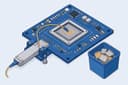 ELSFP External Laser SourceA plug-in light source for the coming data-center design, where the optics move next to the switch chip. Several customers have cleared the simpler version; AOI throttles output because its own modules get the lasers first, and the big ramp slipped to 2028.
A plug-in light source for the coming data-center design, where the optics move next to the switch chip. Several customers have cleared the simpler version; AOI throttles output because its own modules get the lasers first, and the big ramp slipped to 2028.
In plain English
Chip designers want to stop plugging modules into the front of a switch and put the optics right beside the switch chip instead. The light still has to come from somewhere, so it moves into a separate little box that pipes laser light in — the engine lifted off the machine and connected by a hose.
That box is what AOI sells here, to whoever builds the switch. It earns far better than the rest of the company: above 50 cents of gross profit per dollar against roughly 30 cents company-wide. The catch is making them — the harder multi-color version still scraps 40–50% of what the line produces.
Competes with Eight-wavelength DWDM ELSFP module (Lumentum) · Co-packaged optics light sources (Coherent)
Named in filings, launches and programs
- QuantumLinkPlatform · RampingSoftware that watches cable amplifiers from afar over a low-power wireless link, other vendors' boxes included; first meaningful sales expected during 2026.
- QuantumWaveProduct lineThe slower 10G and 25G optical modules, some of them tunable, that sit alongside the amplifiers in cable and access networks.
- Telecom lasers, subassemblies and transceiversProduct lineLasers, subassemblies and modules for telephone networks — $13.7M in 2025, 3.0% of sales, and lumpy from quarter to quarter.
- Laser and photodiode componentsProduct lineThe bare laser and light-detector parts sold one tier beneath AOI's finished modules.
- Digicomm International distribution agreementCustomer programExclusive cable distributor since 2023 and 53.1% of 2025 sales; at end-June 2026 it still owed $211M of the $314M AOI was waiting to collect.
- Microsoft 400G and 800G programsCustomer programTwo 2023 development agreements plus a 400G cable program Microsoft paid to develop; 28.8% of 2025 sales, the anchor of the data-center business.
- Oracle data-center programCustomer programWas 12.4% of 2024 sales and slipped under 10% in 2025 — a reminder that these giant accounts move around.
- Mediacom DOCSIS 4.0 programCustomer programThe fifth-largest US cable operator named AOI its primary vendor in May 2026, aiming at roughly a million homes by the end of the year.
- Charter 1.8 GHz deploymentCustomer programCharter certified AOI's 1.8 GHz amplifiers in 2025 and announced deployment; six other cable operators began ordering that year.
- Sugar Land, Pearland and Houston campusPlatform · RampingMore than 1.6 million square feet near Houston; a 210,000 sq ft 800G and 1.6T building starts late in 2026, with Pearland space online early 2027.
- Ningbo factory leasePlatform · AnnouncedAOI's Global Technology subsidiary signed a ten-year lease in September 2026 on roughly 38,000 square meters of factory space in Ningbo, China.
QuantumLinkPlatform · Ramping
Software that watches cable amplifiers from afar over a low-power wireless link, other vendors' boxes included; first meaningful sales expected during 2026.
QuantumWaveProduct line
The slower 10G and 25G optical modules, some of them tunable, that sit alongside the amplifiers in cable and access networks.
Telecom lasers, subassemblies and transceiversProduct line
Lasers, subassemblies and modules for telephone networks — $13.7M in 2025, 3.0% of sales, and lumpy from quarter to quarter.
Laser and photodiode componentsProduct line
The bare laser and light-detector parts sold one tier beneath AOI's finished modules.
Digicomm International distribution agreementCustomer program
Exclusive cable distributor since 2023 and 53.1% of 2025 sales; at end-June 2026 it still owed $211M of the $314M AOI was waiting to collect.
Microsoft 400G and 800G programsCustomer program
Two 2023 development agreements plus a 400G cable program Microsoft paid to develop; 28.8% of 2025 sales, the anchor of the data-center business.
Oracle data-center programCustomer program
Was 12.4% of 2024 sales and slipped under 10% in 2025 — a reminder that these giant accounts move around.
Mediacom DOCSIS 4.0 programCustomer program
The fifth-largest US cable operator named AOI its primary vendor in May 2026, aiming at roughly a million homes by the end of the year.
Charter 1.8 GHz deploymentCustomer program
Charter certified AOI's 1.8 GHz amplifiers in 2025 and announced deployment; six other cable operators began ordering that year.
Sugar Land, Pearland and Houston campusPlatform · Ramping
More than 1.6 million square feet near Houston; a 210,000 sq ft 800G and 1.6T building starts late in 2026, with Pearland space online early 2027.
Ningbo factory leasePlatform · Announced
AOI's Global Technology subsidiary signed a ten-year lease in September 2026 on roughly 38,000 square meters of factory space in Ningbo, China.