
Chevron (CVX)
Produces oil and gas and turns them into fuels, lubricants, and petrochemicals.
Something off on this page? Send us feedback.
Chevron sells far more fuel than raw oil and gas, but pulling oil and gas from the ground produces most of its operating profit. Its vast refining and station network provides scale; newly acquired fields, overseas megaprojects and a planned data-center power business are the growth push.
Item facts: FY2025 · year ended Dec 31, 2025, from filings, earnings calls and company pages.
Judgment weights, not filed revenue
The band summarizes business focus and direction. ~ marks estimates.
8 in detail · 13 more below
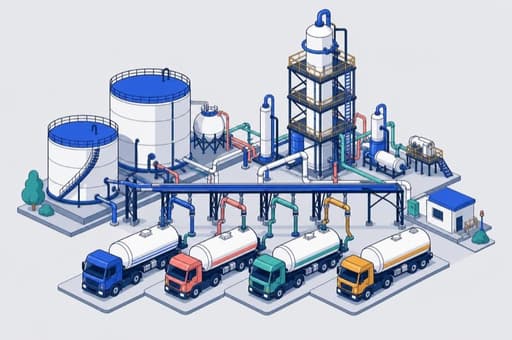
Refining and Marketing
Chevron refines and buys gasoline, diesel, jet fuel and marine fuel, then sells roughly 2.8 million barrels a day. The price gap between raw oil and finished fuel—and refinery outages—decides how much of those huge sales becomes profit.
Competes with Refining network (Valero Energy) · Refining system (Marathon Petroleum)
In plain English
Most people meet Chevron at a fuel pump, but the business starts in a refinery. Crude oil enters a maze of heated vessels and pipes and leaves as gasoline, diesel, jet fuel and ship fuel.
Wholesalers, airlines, fleet operators and drivers pay for those finished fuels. Chevron also buys fuel from others and moves it through trading and delivery networks, so sales can be enormous even when profit per gallon is thin. The key is keeping refineries running and preserving the price gap between the raw oil bought and the fuel sold.
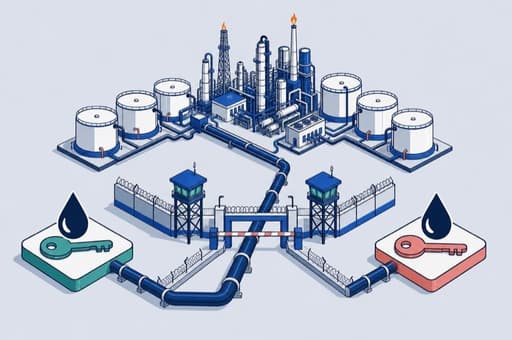
Tengizchevroil
A half-owned Kazakhstan oil operation whose expansion lifted processing above 1 million barrels a day. Chevron's payoff depends on reliable production and payouts to owners, with one main export pipeline and operating rights ending in 2033.
Competes with Kashagan Stage 1 and 2 (North Caspian Operating Company) · Ghawar complex (Saudi Aramco)
In plain English
In Kazakhstan, Chevron owns half of a giant oil-producing partnership rather than running a wholly owned field. Wells feed an expanded processing complex, and most of the oil then travels through the Caspian Pipeline Consortium to overseas refineries.
Buyers pay the partnership for the crude. Chevron does not add the partnership's sales to its own revenue; it records its share of the profit and receives cash when the partners distribute it. That makes plant reliability, the main export pipe and the terms agreed with Kazakhstan more important than a simple sales tally.
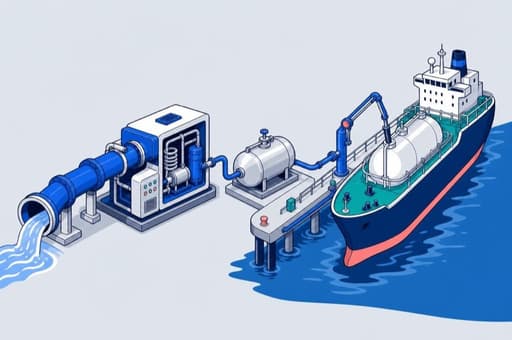
Gorgon and Wheatstone
Two Australian plants chill natural gas into liquid for export, producing an estimated $7.6 billion of Chevron revenue. Asian utility demand matters, but steady plant use is what spreads their large fixed costs across more cargoes.
Competes with Sabine Pass and Corpus Christi (Cheniere Energy) · LNG Canada and LNG portfolio (Shell)
In plain English
Natural gas is bulky, so Gorgon and Wheatstone cool it until it becomes liquid and small enough to ship across an ocean. It is like vacuum-packing a winter coat for a suitcase: the contents stay the same, but transport becomes practical.
Asian power and gas companies buy cargoes under long contracts or one shipment at a time, while Australian customers also buy gas through local pipes. Chevron earns from its ownership shares in both systems. Because the plants and offshore supply network cost so much whether busy or idle, reliable output and full ships are central to the economics.
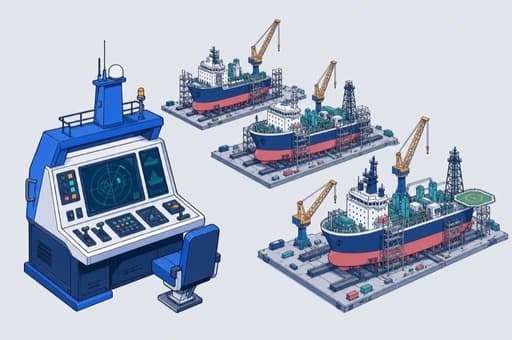
Stabroek Block
Chevron's newly acquired share of Guyana's fast-growing offshore oil fields implies roughly $2.8 billion of annual revenue at current output. More production ships are planned, but Exxon runs the project and Guyana controls approvals.
Competes with GranMorgu offshore project (TotalEnergies and APA) · Búzios field (Petrobras)
In plain English
Chevron owns three tenths of this offshore Guyana oil development, acquired with Hess, but it does not sit in the driver's seat. Exxon runs the drilling and the large ships that gather, process and store oil above the fields; Guyana's government approves each step.
Global refineries buy the crude loaded from those ships. Chevron receives its share after project costs and the government's portion. The attraction is a sequence of additional production ships that can lift output through the end of the decade; the catch is that Chevron relies on its partners, regulators and ship deliveries to get there.
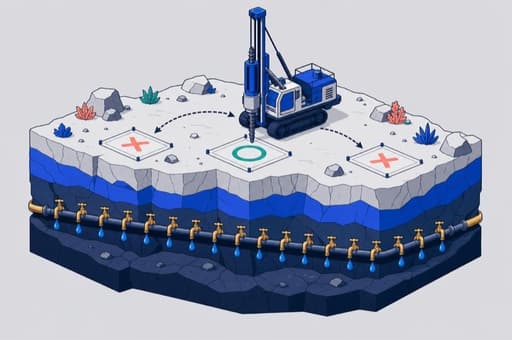
Shale and Tight Assets
Chevron's Permian, Denver-Julesburg and Bakken fields imply roughly $19 billion of oil-and-gas revenue. Their many smaller wells can be drilled faster than an offshore megaproject, so spending can move more quickly when prices change.
Competes with Permian oil fields (Occidental) · Permian portfolio (ExxonMobil)
In plain English
Here the oil and gas sit trapped in dense rock across broad U.S. regions. Chevron drills long sideways wells and cracks the surrounding rock so the fuel can flow—more like opening many small taps than building one enormous offshore platform.
Refiners buy the oil, while pipelines carry the gas and other liquids to processors and larger markets. Each well fades relatively quickly, so Chevron must keep choosing where to drill next. Better wells, cheaper crews, enough pipeline room and the selling price together decide whether this fleet of quick wells produces strong cash.
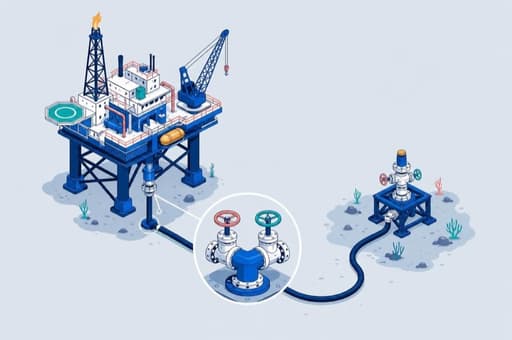
Gulf of America
A deepwater group of producing fields and new additions, implying about $5.6 billion of revenue. Connecting smaller discoveries to existing platforms can save time and money, while extreme pressure, storms and downtime remain the practical tests.
Competes with Sparta deepwater project (Shell) · Shenandoah deepwater project (Beacon Offshore Energy)
In plain English
Far offshore, Chevron drills through deep water and rock to reach oil and gas under very high pressure. Some newer fields connect back to an existing production platform instead of receiving a full new one—the industrial version of adding a room while reusing the house's plumbing.
Pipes carry the output toward Gulf Coast refineries and gas processors, which pay market prices. Reusing a host can make a smaller discovery worth developing, but the wells demand specialized equipment. Storms, permits and lost operating days can quickly interrupt the flow of barrels and cash.
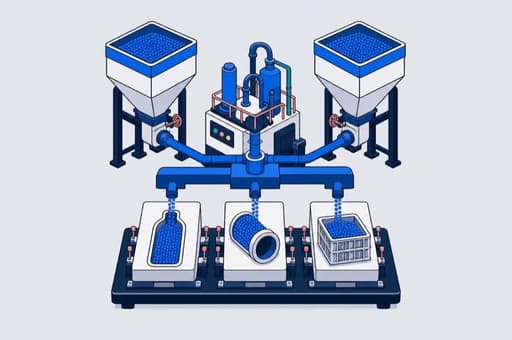
Chevron Phillips Chemical Company
A half-owned chemicals maker supplying the building blocks for packaging, pipe and durable goods. New Texas and Qatar plants are due in the first half of 2027; their startup and a crowded market will determine the payoff.
Competes with Polymer portfolio (LyondellBasell) · Polyethylene portfolio (Dow)
In plain English
Plastic begins as tiny chemical building blocks. This company turns oil-and-gas ingredients into those building blocks and into resin pellets that manufacturers melt into packaging, pipe and long-lasting products.
Chevron and Phillips 66 each own half. Customers pay the jointly owned company, so Chevron records its share of profit instead of adding the venture's sales to its own. The next step is bringing large new plants in Texas and Qatar online. More capacity can mean more product to sell, but only if factory use and selling prices hold up in a well-supplied world market.
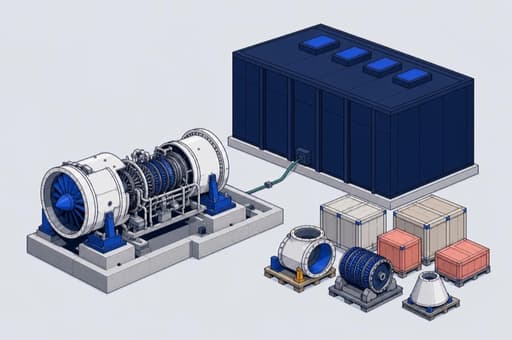
Project Kilby
A June 2026 agreement covers a very large 2.67-gigawatt gas power plant beside a Microsoft data center in West Texas. Chevron still needs a final build decision, permits, turbines and gas before targeted first power in 2028.
Competes with Low Carbon Data Center power project (ExxonMobil) · Homer City Energy Campus (Private sponsor and Kiewit)
In plain English
This is a proposed power plant built beside a huge Microsoft computing site, so electricity would travel a short distance directly to the customer. Natural gas would spin turbines supplied mainly by GE Vernova, with additional equipment from Solar Turbines.
Microsoft has agreed to buy power for two decades, giving Chevron a customer before construction begins. Yet no power is being sold today: Chevron still must make the final decision to build and satisfy other conditions. If it proceeds, the project would turn gas and large computing demand into contracted electricity revenue starting as early as 2028.


 Refining and MarketingChevron refines and buys gasoline, diesel, jet fuel and marine fuel, then sells roughly 2.8 million barrels a day. The price gap between raw oil and finished fuel—and refinery outages—decides how much of those huge sales becomes profit.
Chevron refines and buys gasoline, diesel, jet fuel and marine fuel, then sells roughly 2.8 million barrels a day. The price gap between raw oil and finished fuel—and refinery outages—decides how much of those huge sales becomes profit.
In plain English
Most people meet Chevron at a fuel pump, but the business starts in a refinery. Crude oil enters a maze of heated vessels and pipes and leaves as gasoline, diesel, jet fuel and ship fuel.
Wholesalers, airlines, fleet operators and drivers pay for those finished fuels. Chevron also buys fuel from others and moves it through trading and delivery networks, so sales can be enormous even when profit per gallon is thin. The key is keeping refineries running and preserving the price gap between the raw oil bought and the fuel sold.
Competes with Refining network (Valero Energy) · Refining system (Marathon Petroleum)
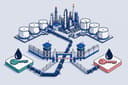 TengizchevroilA half-owned Kazakhstan oil operation whose expansion lifted processing above 1 million barrels a day. Chevron's payoff depends on reliable production and payouts to owners, with one main export pipeline and operating rights ending in 2033.
A half-owned Kazakhstan oil operation whose expansion lifted processing above 1 million barrels a day. Chevron's payoff depends on reliable production and payouts to owners, with one main export pipeline and operating rights ending in 2033.
In plain English
In Kazakhstan, Chevron owns half of a giant oil-producing partnership rather than running a wholly owned field. Wells feed an expanded processing complex, and most of the oil then travels through the Caspian Pipeline Consortium to overseas refineries.
Buyers pay the partnership for the crude. Chevron does not add the partnership's sales to its own revenue; it records its share of the profit and receives cash when the partners distribute it. That makes plant reliability, the main export pipe and the terms agreed with Kazakhstan more important than a simple sales tally.
Competes with Kashagan Stage 1 and 2 (North Caspian Operating Company) · Ghawar complex (Saudi Aramco)
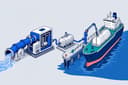 Gorgon and WheatstoneTwo Australian plants chill natural gas into liquid for export, producing an estimated $7.6 billion of Chevron revenue. Asian utility demand matters, but steady plant use is what spreads their large fixed costs across more cargoes.
Two Australian plants chill natural gas into liquid for export, producing an estimated $7.6 billion of Chevron revenue. Asian utility demand matters, but steady plant use is what spreads their large fixed costs across more cargoes.
In plain English
Natural gas is bulky, so Gorgon and Wheatstone cool it until it becomes liquid and small enough to ship across an ocean. It is like vacuum-packing a winter coat for a suitcase: the contents stay the same, but transport becomes practical.
Asian power and gas companies buy cargoes under long contracts or one shipment at a time, while Australian customers also buy gas through local pipes. Chevron earns from its ownership shares in both systems. Because the plants and offshore supply network cost so much whether busy or idle, reliable output and full ships are central to the economics.
Competes with Sabine Pass and Corpus Christi (Cheniere Energy) · LNG Canada and LNG portfolio (Shell)
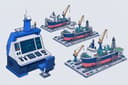 Stabroek BlockChevron's newly acquired share of Guyana's fast-growing offshore oil fields implies roughly $2.8 billion of annual revenue at current output. More production ships are planned, but Exxon runs the project and Guyana controls approvals.
Chevron's newly acquired share of Guyana's fast-growing offshore oil fields implies roughly $2.8 billion of annual revenue at current output. More production ships are planned, but Exxon runs the project and Guyana controls approvals.
In plain English
Chevron owns three tenths of this offshore Guyana oil development, acquired with Hess, but it does not sit in the driver's seat. Exxon runs the drilling and the large ships that gather, process and store oil above the fields; Guyana's government approves each step.
Global refineries buy the crude loaded from those ships. Chevron receives its share after project costs and the government's portion. The attraction is a sequence of additional production ships that can lift output through the end of the decade; the catch is that Chevron relies on its partners, regulators and ship deliveries to get there.
Competes with GranMorgu offshore project (TotalEnergies and APA) · Búzios field (Petrobras)
 Shale and Tight AssetsChevron's Permian, Denver-Julesburg and Bakken fields imply roughly $19 billion of oil-and-gas revenue. Their many smaller wells can be drilled faster than an offshore megaproject, so spending can move more quickly when prices change.
Chevron's Permian, Denver-Julesburg and Bakken fields imply roughly $19 billion of oil-and-gas revenue. Their many smaller wells can be drilled faster than an offshore megaproject, so spending can move more quickly when prices change.
In plain English
Here the oil and gas sit trapped in dense rock across broad U.S. regions. Chevron drills long sideways wells and cracks the surrounding rock so the fuel can flow—more like opening many small taps than building one enormous offshore platform.
Refiners buy the oil, while pipelines carry the gas and other liquids to processors and larger markets. Each well fades relatively quickly, so Chevron must keep choosing where to drill next. Better wells, cheaper crews, enough pipeline room and the selling price together decide whether this fleet of quick wells produces strong cash.
Competes with Permian oil fields (Occidental) · Permian portfolio (ExxonMobil)
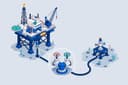 Gulf of AmericaA deepwater group of producing fields and new additions, implying about $5.6 billion of revenue. Connecting smaller discoveries to existing platforms can save time and money, while extreme pressure, storms and downtime remain the practical tests.
A deepwater group of producing fields and new additions, implying about $5.6 billion of revenue. Connecting smaller discoveries to existing platforms can save time and money, while extreme pressure, storms and downtime remain the practical tests.
In plain English
Far offshore, Chevron drills through deep water and rock to reach oil and gas under very high pressure. Some newer fields connect back to an existing production platform instead of receiving a full new one—the industrial version of adding a room while reusing the house's plumbing.
Pipes carry the output toward Gulf Coast refineries and gas processors, which pay market prices. Reusing a host can make a smaller discovery worth developing, but the wells demand specialized equipment. Storms, permits and lost operating days can quickly interrupt the flow of barrels and cash.
Competes with Sparta deepwater project (Shell) · Shenandoah deepwater project (Beacon Offshore Energy)
 Chevron Phillips Chemical CompanyA half-owned chemicals maker supplying the building blocks for packaging, pipe and durable goods. New Texas and Qatar plants are due in the first half of 2027; their startup and a crowded market will determine the payoff.
A half-owned chemicals maker supplying the building blocks for packaging, pipe and durable goods. New Texas and Qatar plants are due in the first half of 2027; their startup and a crowded market will determine the payoff.
In plain English
Plastic begins as tiny chemical building blocks. This company turns oil-and-gas ingredients into those building blocks and into resin pellets that manufacturers melt into packaging, pipe and long-lasting products.
Chevron and Phillips 66 each own half. Customers pay the jointly owned company, so Chevron records its share of profit instead of adding the venture's sales to its own. The next step is bringing large new plants in Texas and Qatar online. More capacity can mean more product to sell, but only if factory use and selling prices hold up in a well-supplied world market.
Competes with Polymer portfolio (LyondellBasell) · Polyethylene portfolio (Dow)
 Project KilbyA June 2026 agreement covers a very large 2.67-gigawatt gas power plant beside a Microsoft data center in West Texas. Chevron still needs a final build decision, permits, turbines and gas before targeted first power in 2028.
A June 2026 agreement covers a very large 2.67-gigawatt gas power plant beside a Microsoft data center in West Texas. Chevron still needs a final build decision, permits, turbines and gas before targeted first power in 2028.
In plain English
This is a proposed power plant built beside a huge Microsoft computing site, so electricity would travel a short distance directly to the customer. Natural gas would spin turbines supplied mainly by GE Vernova, with additional equipment from Solar Turbines.
Microsoft has agreed to buy power for two decades, giving Chevron a customer before construction begins. Yet no power is being sold today: Chevron still must make the final decision to build and satisfy other conditions. If it proceeds, the project would turn gas and large computing demand into contracted electricity revenue starting as early as 2028.
Competes with Low Carbon Data Center power project (ExxonMobil) · Homer City Energy Campus (Private sponsor and Kiewit)
Named in filings, launches and programs
- Venezuela Joint VenturesPlatform · RampingThree producing ventures plus new acreage carry a five-year plan above $7 billion, targeting roughly 600,000 barrels a day before Chevron's share.
- Vaca MuertaPlatform · RampingArgentine shale fields sell oil and gas at home and abroad; government terms and enough pipeline capacity shape the opportunity.
- Leviathan and TamarPlatformEastern Mediterranean gas fields supply Israel and nearby export markets.
- West Africa PortfolioPlatformAngolan oil and gas production anchors the portfolio; a recent Angola discovery and preliminary Ghana agreement add exploration options, not current output.
- Asia Gas PortfolioProduct lineGas assets in Bangladesh, Thailand and Malaysia serve regional power and gas companies.
- GS Caltex CorporationPlatformHalf-owned Korean refining and chemicals company that contributed $278 million of Chevron's fiscal-year earnings.
- Chevron OroniteBrandMakes additives that fuel and lubricant producers blend into finished products for engines and industrial equipment.
- Base Oils and LubricantsProduct lineNexbase oils and Havoline and Delo lubricants reach industrial and retail customers.
- Renewable FuelsProduct line · RampingBiodiesel, renewable diesel and lower-carbon vehicle gases remain a small fuel-sales tail.
- U.S. LNG Offtake PortfolioCustomer program · AnnouncedLong-term agreements to buy about 7 million tonnes of liquefied gas yearly extend Chevron's trading reach without owning the export plants.
- Hess MidstreamEcosystemA roughly 38%-owned Bakken network gathers, processes, stores and loads oil and gas.
- Chevron New EnergiesPlatform · Pre-revenueCarbon storage, hydrogen storage and lithium acreage are early projects whose timing depends on construction and government support.
- Pipelines and ShippingEcosystemPipelines, tankers, terminals and storage connect Chevron's production with refineries and buyers.
Venezuela Joint VenturesPlatform · Ramping
Three producing ventures plus new acreage carry a five-year plan above $7 billion, targeting roughly 600,000 barrels a day before Chevron's share.
Vaca MuertaPlatform · Ramping
Argentine shale fields sell oil and gas at home and abroad; government terms and enough pipeline capacity shape the opportunity.
Leviathan and TamarPlatform
Eastern Mediterranean gas fields supply Israel and nearby export markets.
West Africa PortfolioPlatform
Angolan oil and gas production anchors the portfolio; a recent Angola discovery and preliminary Ghana agreement add exploration options, not current output.
Asia Gas PortfolioProduct line
Gas assets in Bangladesh, Thailand and Malaysia serve regional power and gas companies.
GS Caltex CorporationPlatform
Half-owned Korean refining and chemicals company that contributed $278 million of Chevron's fiscal-year earnings.
Chevron OroniteBrand
Makes additives that fuel and lubricant producers blend into finished products for engines and industrial equipment.
Base Oils and LubricantsProduct line
Nexbase oils and Havoline and Delo lubricants reach industrial and retail customers.
Renewable FuelsProduct line · Ramping
Biodiesel, renewable diesel and lower-carbon vehicle gases remain a small fuel-sales tail.
U.S. LNG Offtake PortfolioCustomer program · Announced
Long-term agreements to buy about 7 million tonnes of liquefied gas yearly extend Chevron's trading reach without owning the export plants.
Hess MidstreamEcosystem
A roughly 38%-owned Bakken network gathers, processes, stores and loads oil and gas.
Chevron New EnergiesPlatform · Pre-revenue
Carbon storage, hydrogen storage and lithium acreage are early projects whose timing depends on construction and government support.
Pipelines and ShippingEcosystem
Pipelines, tankers, terminals and storage connect Chevron's production with refineries and buyers.