
FedEx (FDX)
Moves parcels and freight through integrated U.S. and international air-ground networks.
Something off on this page? Send us feedback.
FedEx is first and foremost a vast U.S. parcel-delivery network, with faster domestic service and international delivery adding smaller but important layers. After separating its pallet-freight business, it is knitting once-separate routes together while pushing further into healthcare shipping and European pickup points.
Item facts: FY2026 · year ended May 31, 2026, from filings, earnings calls and company pages.
Judgment weights, not filed revenue
The band summarizes business focus and direction. ~ marks estimates.
7 in detail · 13 more below
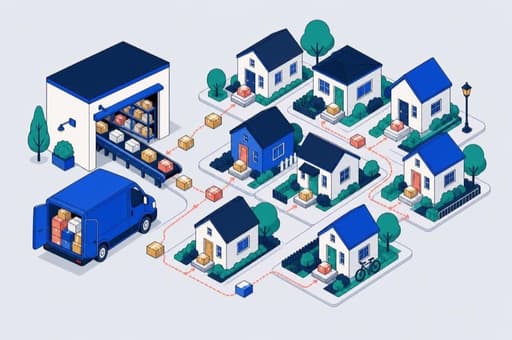
FedEx Ground Commercial, Home Delivery, and Ground Economy
The core U.S. parcel service produced $37.34 billion in FY2026. Its health depends on putting more packages onto each route and stop, so rising volume only helps when it makes drivers and vehicles more productive.
Competes with UPS Ground (UPS) · USPS Ground Advantage (U.S. Postal Service) · Amazon Logistics (Amazon)
In plain English
Most FedEx packages take this road network: boxes collected from shops and warehouses, sorted, then carried to businesses and front doors on a promised day. Customers trade some speed for a lower price than overnight delivery.
Retailers and online sellers pay per package, with the price changing by route, size, weight, and special handling. The network works best like a full school bus: the more parcels that share each vehicle, depot, and doorstep, the less each one costs to deliver. Independent delivery businesses provide much of the final trip.
FedEx First Overnight, Priority Overnight, Standard Overnight, 2Day, 2Day A.M., and Express Saver
Faster U.S. package choices made $17.30 billion in FY2026. Overnight revenue grew 10% and slower express revenue grew 14%; the watchpoint is keeping aircraft and crews busy enough to earn back their higher cost.
Competes with UPS Next Day Air and 2nd Day Air (UPS) · Priority Mail Express and Priority Mail (U.S. Postal Service)
In plain English
Speed is the product here. A customer chooses when a package must arrive—from the next morning to a few days later—and FedEx chooses the mix of aircraft and trucks that can keep that promise.
A hospital, retailer, or manufacturer pays more when waiting would cost more than shipping. Think of it as buying a reserved seat for a box: tighter arrival promises command higher prices, but empty space cannot be sold again after a flight leaves. FedEx therefore makes money by matching paid urgency with full aircraft, reliable crews, and smooth sorting hubs.
FedEx International Priority and International Economy
Premium and slower cross-border packages brought in $15.56 billion in FY2026. Export-package volume grew 5% in the final quarter for a second straight quarter, but border rules and aircraft space can quickly change the economics.
Competes with DHL Express Worldwide and Economy Select (DHL) · UPS Worldwide Express and Worldwide Expedited (UPS)
In plain English
A parcel crossing a border needs more than a ride. FedEx collects it, moves it between countries, handles the forms and inspections needed to clear the border, and delivers it locally. The customer can pay for priority speed or accept a slower route at a lower price.
Exporters, online merchants, and multinational companies pay for one carrier to coordinate that whole chain. It resembles an international relay race in which FedEx must make every handoff—airport, inspection gate, and delivery depot—without dropping the baton. Faster shipments bring in more per package; trade rules, currency, and available aircraft space shape demand and cost.
FedEx International Domestic Package Services
Local package delivery outside the United States generated $4.73 billion in FY2026, up 5%. Final-quarter volume fell 9% as FedEx shed cheaper traffic, so better-paying packages matter more here than simply moving more boxes.
Competes with DPD CLASSIC (Geopost) · DHL Express domestic services (DHL)
In plain English
Not every overseas package crosses an ocean. This business takes a parcel from one address to another within the same non-U.S. country, using local depots, drivers, shops, and pickup points.
Small businesses, retailers, and consumers pay for each delivery just as they would in the United States. But every country is its own small puzzle: labor costs, road rules, and the number of stops close together all differ. FedEx can protect earnings by turning away poorly paid work, which explains why revenue could rise even while the number of packages fell late in the year.
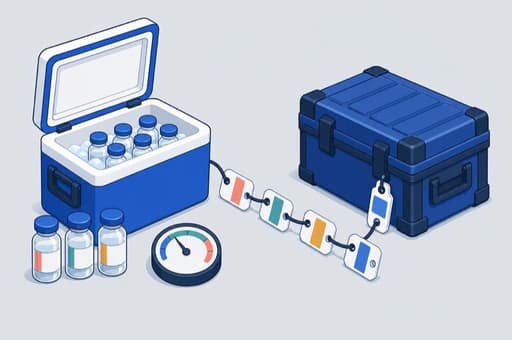
FedEx Life Sciences
Healthcare shipping already touches nearly $10 billion of FedEx revenue, but that money also sits inside its package and cargo lines. The new service must prove it can win more temperature-sensitive, carefully monitored shipments without costly failures.
Competes with UPS Healthcare Cold Chain and UPS Premier (UPS) · DHL Health Logistics and LifeConEx (DHL)
In plain English
A vaccine, laboratory sample, or medical device cannot simply be tossed into an ordinary delivery network. FedEx Life Sciences bundles fast transport with insulated packaging, temperature checks, border clearance, and alerts when a shipment may be delayed.
Drugmakers, laboratories, and device companies pay because a spoiled or missing shipment can be worth far more than the delivery fee. The service acts like a refrigerator that travels under watch: every handoff must preserve the package and its record. FedEx earns through the underlying delivery and handling, while the monitoring helps customers trust it with more sensitive work.
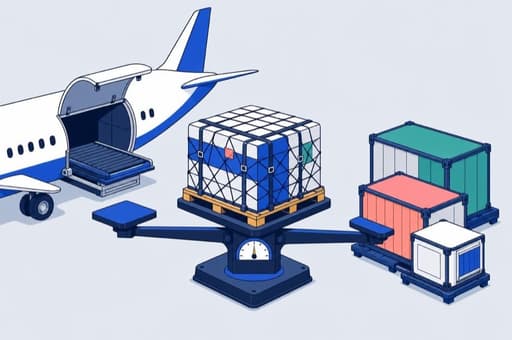
FedEx U.S. Freight, International Priority Freight, and International Economy Freight
This still-owned heavy air-cargo family earned $6.06 billion in FY2026. Weight moved rose 12% in the final quarter; the redesigned network must reserve FedEx aircraft for urgent loads and buy cheaper outside space for slower ones.
Competes with UPS Worldwide Express Freight (UPS) · DHL Air Priority and Air Economy (DHL)
In plain English
Think pallets, not porch boxes. This service moves heavy goods within the United States and across borders, either quickly on FedEx aircraft or more slowly through space bought from other carriers. It is separate from the pallet-trucking company FedEx spun off.
Manufacturers, distributors, and exporters pay by weight, route, and urgency. The economic trick is a two-shelf pantry: scarce space on FedEx aircraft is saved for customers paying for speed, while less urgent cargo goes onto cheaper outside flights. Profits depend on filling the available space, buying transport well, and getting heavy loads through airports and border checks without delay.
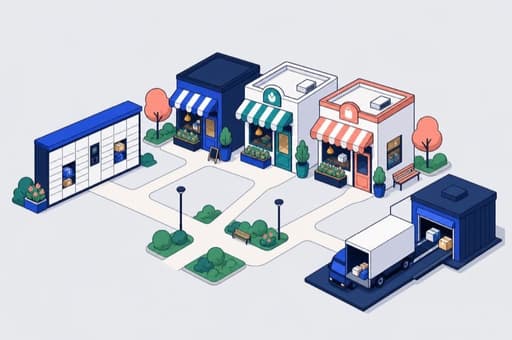
FedEx–InPost Strategic Partnership and Planned 37% Investment
FedEx plans to invest €2.20 billion and connect with InPost's European pickup network, but the deal was still pending and contributed no revenue. Approval and successful network connections come before any payoff from merchant or consumer use.
Competes with DHL Packstation/service points (DHL) · Amazon Hub Locker (Amazon) · DPD Pickup network (Geopost)
In plain English
In Europe, many shoppers collect parcels from automated lockers or nearby shops instead of waiting at home. The planned InPost partnership would join that local pickup web to FedEx's international transport, giving a merchant one route from a faraway origin to a convenient neighborhood collection point.
FedEx agreed to buy a large minority stake, so this is both a delivery partnership and an investment. Merchants would pay for shipping while InPost handles much of the final handoff. Nothing is contributing yet: the deal needs approval, the two networks must connect, and shoppers and sellers must actually choose the combined service.


 FedEx Ground Commercial, Home Delivery, and Ground EconomyThe core U.S. parcel service produced $37.34 billion in FY2026. Its health depends on putting more packages onto each route and stop, so rising volume only helps when it makes drivers and vehicles more productive.
The core U.S. parcel service produced $37.34 billion in FY2026. Its health depends on putting more packages onto each route and stop, so rising volume only helps when it makes drivers and vehicles more productive.
In plain English
Most FedEx packages take this road network: boxes collected from shops and warehouses, sorted, then carried to businesses and front doors on a promised day. Customers trade some speed for a lower price than overnight delivery.
Retailers and online sellers pay per package, with the price changing by route, size, weight, and special handling. The network works best like a full school bus: the more parcels that share each vehicle, depot, and doorstep, the less each one costs to deliver. Independent delivery businesses provide much of the final trip.
Competes with UPS Ground (UPS) · USPS Ground Advantage (U.S. Postal Service) · Amazon Logistics (Amazon)
 FedEx First Overnight, Priority Overnight, Standard Overnight, 2Day, 2Day A.M., and Express SaverFaster U.S. package choices made $17.30 billion in FY2026. Overnight revenue grew 10% and slower express revenue grew 14%; the watchpoint is keeping aircraft and crews busy enough to earn back their higher cost.
Faster U.S. package choices made $17.30 billion in FY2026. Overnight revenue grew 10% and slower express revenue grew 14%; the watchpoint is keeping aircraft and crews busy enough to earn back their higher cost.
In plain English
Speed is the product here. A customer chooses when a package must arrive—from the next morning to a few days later—and FedEx chooses the mix of aircraft and trucks that can keep that promise.
A hospital, retailer, or manufacturer pays more when waiting would cost more than shipping. Think of it as buying a reserved seat for a box: tighter arrival promises command higher prices, but empty space cannot be sold again after a flight leaves. FedEx therefore makes money by matching paid urgency with full aircraft, reliable crews, and smooth sorting hubs.
Competes with UPS Next Day Air and 2nd Day Air (UPS) · Priority Mail Express and Priority Mail (U.S. Postal Service)
 FedEx International Priority and International EconomyPremium and slower cross-border packages brought in $15.56 billion in FY2026. Export-package volume grew 5% in the final quarter for a second straight quarter, but border rules and aircraft space can quickly change the economics.
Premium and slower cross-border packages brought in $15.56 billion in FY2026. Export-package volume grew 5% in the final quarter for a second straight quarter, but border rules and aircraft space can quickly change the economics.
In plain English
A parcel crossing a border needs more than a ride. FedEx collects it, moves it between countries, handles the forms and inspections needed to clear the border, and delivers it locally. The customer can pay for priority speed or accept a slower route at a lower price.
Exporters, online merchants, and multinational companies pay for one carrier to coordinate that whole chain. It resembles an international relay race in which FedEx must make every handoff—airport, inspection gate, and delivery depot—without dropping the baton. Faster shipments bring in more per package; trade rules, currency, and available aircraft space shape demand and cost.
Competes with DHL Express Worldwide and Economy Select (DHL) · UPS Worldwide Express and Worldwide Expedited (UPS)
 FedEx International Domestic Package ServicesLocal package delivery outside the United States generated $4.73 billion in FY2026, up 5%. Final-quarter volume fell 9% as FedEx shed cheaper traffic, so better-paying packages matter more here than simply moving more boxes.
Local package delivery outside the United States generated $4.73 billion in FY2026, up 5%. Final-quarter volume fell 9% as FedEx shed cheaper traffic, so better-paying packages matter more here than simply moving more boxes.
In plain English
Not every overseas package crosses an ocean. This business takes a parcel from one address to another within the same non-U.S. country, using local depots, drivers, shops, and pickup points.
Small businesses, retailers, and consumers pay for each delivery just as they would in the United States. But every country is its own small puzzle: labor costs, road rules, and the number of stops close together all differ. FedEx can protect earnings by turning away poorly paid work, which explains why revenue could rise even while the number of packages fell late in the year.
Competes with DPD CLASSIC (Geopost) · DHL Express domestic services (DHL)
 FedEx Life SciencesHealthcare shipping already touches nearly $10 billion of FedEx revenue, but that money also sits inside its package and cargo lines. The new service must prove it can win more temperature-sensitive, carefully monitored shipments without costly failures.
Healthcare shipping already touches nearly $10 billion of FedEx revenue, but that money also sits inside its package and cargo lines. The new service must prove it can win more temperature-sensitive, carefully monitored shipments without costly failures.
In plain English
A vaccine, laboratory sample, or medical device cannot simply be tossed into an ordinary delivery network. FedEx Life Sciences bundles fast transport with insulated packaging, temperature checks, border clearance, and alerts when a shipment may be delayed.
Drugmakers, laboratories, and device companies pay because a spoiled or missing shipment can be worth far more than the delivery fee. The service acts like a refrigerator that travels under watch: every handoff must preserve the package and its record. FedEx earns through the underlying delivery and handling, while the monitoring helps customers trust it with more sensitive work.
Competes with UPS Healthcare Cold Chain and UPS Premier (UPS) · DHL Health Logistics and LifeConEx (DHL)
 FedEx U.S. Freight, International Priority Freight, and International Economy FreightThis still-owned heavy air-cargo family earned $6.06 billion in FY2026. Weight moved rose 12% in the final quarter; the redesigned network must reserve FedEx aircraft for urgent loads and buy cheaper outside space for slower ones.
This still-owned heavy air-cargo family earned $6.06 billion in FY2026. Weight moved rose 12% in the final quarter; the redesigned network must reserve FedEx aircraft for urgent loads and buy cheaper outside space for slower ones.
In plain English
Think pallets, not porch boxes. This service moves heavy goods within the United States and across borders, either quickly on FedEx aircraft or more slowly through space bought from other carriers. It is separate from the pallet-trucking company FedEx spun off.
Manufacturers, distributors, and exporters pay by weight, route, and urgency. The economic trick is a two-shelf pantry: scarce space on FedEx aircraft is saved for customers paying for speed, while less urgent cargo goes onto cheaper outside flights. Profits depend on filling the available space, buying transport well, and getting heavy loads through airports and border checks without delay.
Competes with UPS Worldwide Express Freight (UPS) · DHL Air Priority and Air Economy (DHL)
 FedEx–InPost Strategic Partnership and Planned 37% InvestmentFedEx plans to invest €2.20 billion and connect with InPost's European pickup network, but the deal was still pending and contributed no revenue. Approval and successful network connections come before any payoff from merchant or consumer use.
FedEx plans to invest €2.20 billion and connect with InPost's European pickup network, but the deal was still pending and contributed no revenue. Approval and successful network connections come before any payoff from merchant or consumer use.
In plain English
In Europe, many shoppers collect parcels from automated lockers or nearby shops instead of waiting at home. The planned InPost partnership would join that local pickup web to FedEx's international transport, giving a merchant one route from a faraway origin to a convenient neighborhood collection point.
FedEx agreed to buy a large minority stake, so this is both a delivery partnership and an investment. Merchants would pay for shipping while InPost handles much of the final handoff. Nothing is contributing yet: the deal needs approval, the two networks must connect, and shoppers and sellers must actually choose the combined service.
Competes with DHL Packstation/service points (DHL) · Amazon Hub Locker (Amazon) · DPD Pickup network (Geopost)
Named in filings, launches and programs
- FedEx OfficeBrandRoughly two thousand U.S. stores handle printing, packing, shipping, returns, and convenient drop-offs; its individual revenue is not disclosed.
- FedEx LogisticsBrandArranges air and ocean transport, border paperwork, and shipping plans; it now sits with the international delivery business.
- FedEx Supply ChainBrandRuns North American warehouses and shipping for other companies while a pending $1.4 billion sale to CMA CGM awaits closing.
- FedEx DataworksBrandSupports pricing, package visibility, and network decisions; FedEx does not say how much money it makes on its own.
- FedEx Surround, Tracking+, and Returns+PlatformDigital tools warn of likely delays, share shipment updates, and manage returns, supporting customer retention and paid data services.
- FedEx SameDay LocalServiceA locally fulfilled, same-day delivery option launched in March 2026 for merchants serving customers within one metropolitan area.
- Network 2.0Ecosystem · RampingCombines formerly separate pickup and delivery stations; roughly four hundred U.S. and Canadian locations had switched by May 2026.
- TricolorEcosystem · RampingReserves FedEx aircraft for urgent freight and sends slower freight through cheaper space bought from other carriers.
- DRIVEEcosystemA multiyear cost and process overhaul moving from launch into day-to-day execution across the company.
- Amazon large-package residential programCustomer program · RampingAdds large and heavy home deliveries, but was still too small to matter materially and Amazon was not a top customer.
- Best Buy primary national parcel-carrier programCustomer programA U.S. parcel win disclosed during FY2026; its value, length, and exact shipment contribution were not disclosed.
- BMW business-to-business parcel programCustomer program · RampingAdds business parcel traffic announced in December 2025, with no disclosed value or contract length.
- Wayfair premium-visibility programCustomer programWayfair uses FedEx's higher-touch shipment visibility tools; no contract value was disclosed.
FedEx OfficeBrand
Roughly two thousand U.S. stores handle printing, packing, shipping, returns, and convenient drop-offs; its individual revenue is not disclosed.
FedEx LogisticsBrand
Arranges air and ocean transport, border paperwork, and shipping plans; it now sits with the international delivery business.
FedEx Supply ChainBrand
Runs North American warehouses and shipping for other companies while a pending $1.4 billion sale to CMA CGM awaits closing.
FedEx DataworksBrand
Supports pricing, package visibility, and network decisions; FedEx does not say how much money it makes on its own.
FedEx Surround, Tracking+, and Returns+Platform
Digital tools warn of likely delays, share shipment updates, and manage returns, supporting customer retention and paid data services.
FedEx SameDay LocalService
A locally fulfilled, same-day delivery option launched in March 2026 for merchants serving customers within one metropolitan area.
Network 2.0Ecosystem · Ramping
Combines formerly separate pickup and delivery stations; roughly four hundred U.S. and Canadian locations had switched by May 2026.
TricolorEcosystem · Ramping
Reserves FedEx aircraft for urgent freight and sends slower freight through cheaper space bought from other carriers.
DRIVEEcosystem
A multiyear cost and process overhaul moving from launch into day-to-day execution across the company.
Amazon large-package residential programCustomer program · Ramping
Adds large and heavy home deliveries, but was still too small to matter materially and Amazon was not a top customer.
Best Buy primary national parcel-carrier programCustomer program
A U.S. parcel win disclosed during FY2026; its value, length, and exact shipment contribution were not disclosed.
BMW business-to-business parcel programCustomer program · Ramping
Adds business parcel traffic announced in December 2025, with no disclosed value or contract length.
Wayfair premium-visibility programCustomer program
Wayfair uses FedEx's higher-touch shipment visibility tools; no contract value was disclosed.