
FirstEnergy (FE)
Operator of regulated electric distribution, transmission, and generation systems across six states.
Something off on this page? Send us feedback.
FirstEnergy delivers electricity to homes and businesses across six states. It barely sells power at all — it earns a regulated return on the poles, wires and substations it is allowed to build, so growth comes from building, not from selling more. Data centers are now arriving fast enough that the company is racing to add high-voltage lines and asking West Virginia for permission to build a power plant again.
Item facts: H1 FY2026 · six months ended Jun 30, 2026, from filings, earnings calls and company pages.
Judgment weights, not filed revenue
The band summarizes business focus and direction. ~ marks estimates.
7 in detail · 12 more below
FirstEnergy Pennsylvania
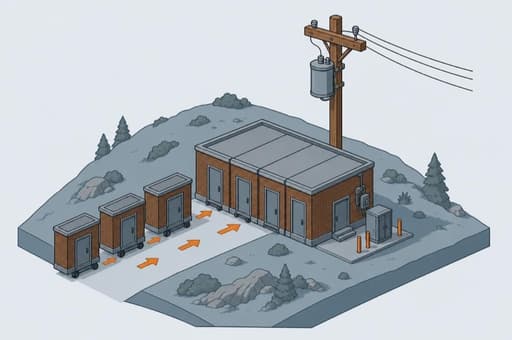
Four old Pennsylvania utilities folded into one company serving about 2.1 million customers, still billing under the old names. A settlement with state regulators that took effect in 2025 lifted earnings more than any other rate decision that year; the next review is due by 2030.
Competes with PPL Electric Utilities (PPL Corp) · PECO Energy (Exelon)
In plain English
Pennsylvania used to have four separate FirstEnergy utilities — Met-Ed, Penelec, Penn Power and West Penn Power. In 2024 they became one company, though the bills still carry the old names.
The electricity itself is bought elsewhere: households there can pick their own supplier, and whatever that power costs is handed through at cost. What FirstEnergy keeps is the charge for the delivery system — the poles, wires and substations between the generating station and the wall socket. State regulators set that charge, a settlement effective in 2025 raised it, and separate surcharges cover upgrading the system.
Ohio Companies
Three Ohio utilities delivering to about 2.2 million customers, with the electricity itself sold by others. A 2025 state law scrapped the old pricing plan; the replacement filing asks for a $481.4M increase. Factory demand grew over 4% in the second quarter.
Competes with AEP Ohio (American Electric Power) · Duke Energy Ohio (Duke Energy)
In plain English
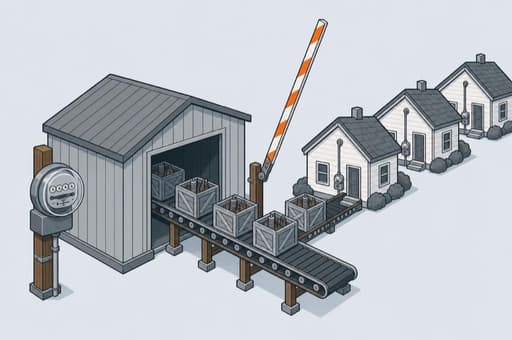
Poles and wires, nothing more. Most Ohio households buy their actual electricity from competing retailers, so Ohio Edison, The Illuminating Company and Toledo Edison carry it the last stretch and bill for the carrying.
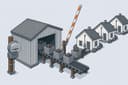
Picture a toll road: the trucks and the cargo belong to someone else, the road belongs to the company, and the state sets the toll. Ohio changed how that toll gets set in 2025, retiring a long-running pricing plan in favour of cases built on the next three years of expected costs. Under the new rules the three utilities asked for a $481.4M delivery increase and roughly $2B of new equipment to earn a return on.
Jersey Central Power & Light
New Jersey's wires business — about 1.2 million customers, no power plants. Demand growth here is modest and the real constraint is affordability politics: the August 2026 rate proposal is built to hold residential bills flat until 2028.
Competes with Public Service Electric & Gas (PSEG) · Atlantic City Electric (Exelon)
In plain English
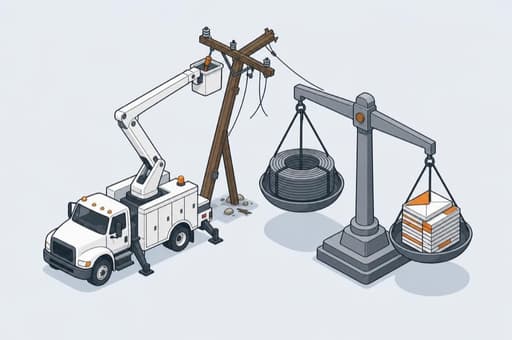
Jersey Central Power & Light keeps about 1.2 million New Jersey homes and businesses connected. It owns the poles, the wires and the crews who restring them after a storm — and nothing that generates electricity.
The power is bought at auction on customers' behalf and billed on at what it cost, so the whole question is what the state allows for delivery and repair. That ask is a delicate one in New Jersey, where bills are a political subject: the proposal filed in August 2026 is designed to keep residential bills from rising until 2028.
Mon Power and Potomac Edison
About 850,000 customers in West Virginia and Maryland, and the only corner where FirstEnergy still owns power plants — 3,610 megawatts of them. West Virginia went from a low-growth franchise to the fastest-growing part of the company in six quarters.
Competes with Appalachian Power (American Electric Power) · Dominion Energy Virginia (Dominion Energy)
In plain English
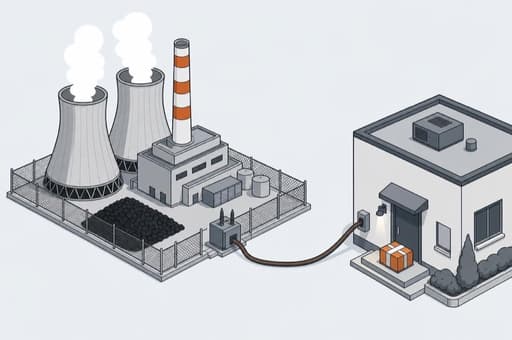
Everywhere else FirstEnergy only moves electricity around. In West Virginia it makes it too — Mon Power owns 3,610 megawatts of generating capacity, mostly the Fort Martin and Harrison coal stations, and customers get power and delivery together on one bill.
That one-bill setup is why the state suddenly matters. A large customer can sign with a single company for both the connection and the electricity, and West Virginia demand behind those conversations reached 4.3 gigawatts by mid-2026, more than double three months earlier. Regulators there granted a $76M revenue increase, phasing in from August 2026.
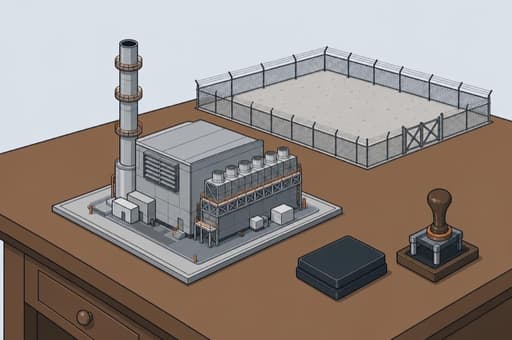
Maidsville Energy Center
A 1,200 megawatt gas plant proposed for West Virginia at about $2.5B, filed in February 2026 with a decision expected this autumn. Approval would lift the company's investment growth target from about 10% a year to about 11%.
Competes with Appalachian Power generation filings (American Electric Power) · Capacity auction procurement (PJM Interconnection)
In plain English
FirstEnergy got out of owning competitive power plants a decade ago. This is the way back in: a gas-burning station at Maidsville, West Virginia, 1,200 megawatts, costed at about $2.5B and aimed at running around 2031.
The economics work like a substation's, only bigger. If the state approves it, the plant's cost joins the pile of assets customers pay a set return on, and it earns from the day it starts. If the state says no, nothing happens — which is why the $2.5B is deliberately left out of the five-year spending plan until an order arrives. Management calls it the first of a broader generation push in the state.
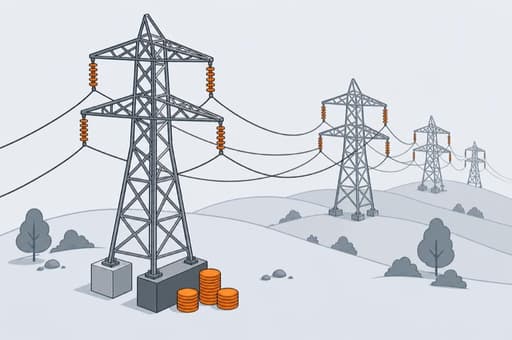
FirstEnergy Transmission
The high-voltage backbone, roughly 24,000 miles of line. It brings in about an eighth of revenue but close to a quarter of profit, and takes $19B of the $36B five-year spending plan. Brookfield owns 49.9% of it.
Competes with Transource Energy (American Electric Power) · Dominion Energy transmission (Dominion Energy)
In plain English
Before electricity reaches a street it travels a long way at very high voltage, along steel towers strung across farmland and hills. FirstEnergy's stretch of that network runs to roughly 24,000 miles inside PJM, the operator that coordinates the regional grid.
This is where a dollar of spending turns into profit fastest. A federal formula totals up what the lines cost, adds an approved profit on top, and corrects the bill each year to match — no fuel cost riding along, almost no waiting. Brookfield, which paid $3.5B in 2024 for an extra slice, owns 49.9% of it and funds part of the build.
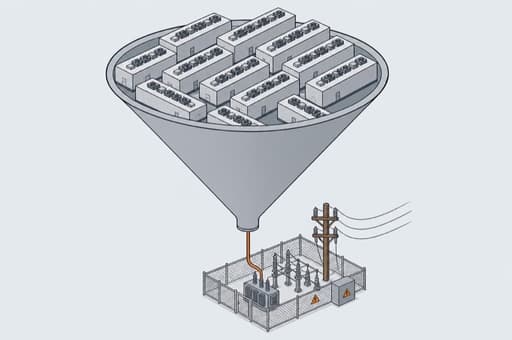
Data Center and Large-Load Program
Signed deals to connect very large customers reached 6.4 gigawatts by mid-2026, nearly a fifth of the system's summer peak, with 24.8 gigawatts signed or waiting in line. Each contracted gigawatt implies roughly $250M of new line spending.
Competes with Virginia connection queue (Dominion Energy) · Large-load tariffs at AEP Ohio and Appalachian Power (American Electric Power) · Capacity market and backstop auction (PJM Interconnection)
In plain English
Data centers are windowless buildings full of computers with an appetite for electricity to match. Since the start of 2024 developers have asked FirstEnergy to study more than 95 gigawatts of new connections — three times what its own system carries at its busiest hour — and more than forty of those requests are for over 500 megawatts each.
None of it is a product with its own price tag. It arrives as more electricity delivered over lines and substations FirstEnergy has to build first, roughly $250M worth for every gigawatt actually signed. Only one customer has been named publicly: Meta, building near Bowling Green, Ohio.


 FirstEnergy PennsylvaniaFour old Pennsylvania utilities folded into one company serving about 2.1 million customers, still billing under the old names. A settlement with state regulators that took effect in 2025 lifted earnings more than any other rate decision that year; the next review is due by 2030.
Four old Pennsylvania utilities folded into one company serving about 2.1 million customers, still billing under the old names. A settlement with state regulators that took effect in 2025 lifted earnings more than any other rate decision that year; the next review is due by 2030.
In plain English
Pennsylvania used to have four separate FirstEnergy utilities — Met-Ed, Penelec, Penn Power and West Penn Power. In 2024 they became one company, though the bills still carry the old names.
The electricity itself is bought elsewhere: households there can pick their own supplier, and whatever that power costs is handed through at cost. What FirstEnergy keeps is the charge for the delivery system — the poles, wires and substations between the generating station and the wall socket. State regulators set that charge, a settlement effective in 2025 raised it, and separate surcharges cover upgrading the system.
Competes with PPL Electric Utilities (PPL Corp) · PECO Energy (Exelon)
 Ohio CompaniesThree Ohio utilities delivering to about 2.2 million customers, with the electricity itself sold by others. A 2025 state law scrapped the old pricing plan; the replacement filing asks for a $481.4M increase. Factory demand grew over 4% in the second quarter.
Three Ohio utilities delivering to about 2.2 million customers, with the electricity itself sold by others. A 2025 state law scrapped the old pricing plan; the replacement filing asks for a $481.4M increase. Factory demand grew over 4% in the second quarter.
In plain English
Poles and wires, nothing more. Most Ohio households buy their actual electricity from competing retailers, so Ohio Edison, The Illuminating Company and Toledo Edison carry it the last stretch and bill for the carrying.
Picture a toll road: the trucks and the cargo belong to someone else, the road belongs to the company, and the state sets the toll. Ohio changed how that toll gets set in 2025, retiring a long-running pricing plan in favour of cases built on the next three years of expected costs. Under the new rules the three utilities asked for a $481.4M delivery increase and roughly $2B of new equipment to earn a return on.
Competes with AEP Ohio (American Electric Power) · Duke Energy Ohio (Duke Energy)
 Jersey Central Power & LightNew Jersey's wires business — about 1.2 million customers, no power plants. Demand growth here is modest and the real constraint is affordability politics: the August 2026 rate proposal is built to hold residential bills flat until 2028.
New Jersey's wires business — about 1.2 million customers, no power plants. Demand growth here is modest and the real constraint is affordability politics: the August 2026 rate proposal is built to hold residential bills flat until 2028.
In plain English
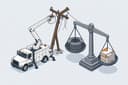
Jersey Central Power & Light keeps about 1.2 million New Jersey homes and businesses connected. It owns the poles, the wires and the crews who restring them after a storm — and nothing that generates electricity.
The power is bought at auction on customers' behalf and billed on at what it cost, so the whole question is what the state allows for delivery and repair. That ask is a delicate one in New Jersey, where bills are a political subject: the proposal filed in August 2026 is designed to keep residential bills from rising until 2028.
Competes with Public Service Electric & Gas (PSEG) · Atlantic City Electric (Exelon)
 Mon Power and Potomac EdisonAbout 850,000 customers in West Virginia and Maryland, and the only corner where FirstEnergy still owns power plants — 3,610 megawatts of them. West Virginia went from a low-growth franchise to the fastest-growing part of the company in six quarters.
About 850,000 customers in West Virginia and Maryland, and the only corner where FirstEnergy still owns power plants — 3,610 megawatts of them. West Virginia went from a low-growth franchise to the fastest-growing part of the company in six quarters.
In plain English
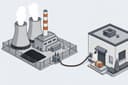
Everywhere else FirstEnergy only moves electricity around. In West Virginia it makes it too — Mon Power owns 3,610 megawatts of generating capacity, mostly the Fort Martin and Harrison coal stations, and customers get power and delivery together on one bill.
That one-bill setup is why the state suddenly matters. A large customer can sign with a single company for both the connection and the electricity, and West Virginia demand behind those conversations reached 4.3 gigawatts by mid-2026, more than double three months earlier. Regulators there granted a $76M revenue increase, phasing in from August 2026.
Competes with Appalachian Power (American Electric Power) · Dominion Energy Virginia (Dominion Energy)
 Maidsville Energy CenterA 1,200 megawatt gas plant proposed for West Virginia at about $2.5B, filed in February 2026 with a decision expected this autumn. Approval would lift the company's investment growth target from about 10% a year to about 11%.
A 1,200 megawatt gas plant proposed for West Virginia at about $2.5B, filed in February 2026 with a decision expected this autumn. Approval would lift the company's investment growth target from about 10% a year to about 11%.
In plain English
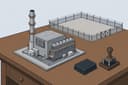
FirstEnergy got out of owning competitive power plants a decade ago. This is the way back in: a gas-burning station at Maidsville, West Virginia, 1,200 megawatts, costed at about $2.5B and aimed at running around 2031.
The economics work like a substation's, only bigger. If the state approves it, the plant's cost joins the pile of assets customers pay a set return on, and it earns from the day it starts. If the state says no, nothing happens — which is why the $2.5B is deliberately left out of the five-year spending plan until an order arrives. Management calls it the first of a broader generation push in the state.
Competes with Appalachian Power generation filings (American Electric Power) · Capacity auction procurement (PJM Interconnection)
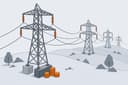 FirstEnergy TransmissionThe high-voltage backbone, roughly 24,000 miles of line. It brings in about an eighth of revenue but close to a quarter of profit, and takes $19B of the $36B five-year spending plan. Brookfield owns 49.9% of it.
The high-voltage backbone, roughly 24,000 miles of line. It brings in about an eighth of revenue but close to a quarter of profit, and takes $19B of the $36B five-year spending plan. Brookfield owns 49.9% of it.
In plain English
Before electricity reaches a street it travels a long way at very high voltage, along steel towers strung across farmland and hills. FirstEnergy's stretch of that network runs to roughly 24,000 miles inside PJM, the operator that coordinates the regional grid.
This is where a dollar of spending turns into profit fastest. A federal formula totals up what the lines cost, adds an approved profit on top, and corrects the bill each year to match — no fuel cost riding along, almost no waiting. Brookfield, which paid $3.5B in 2024 for an extra slice, owns 49.9% of it and funds part of the build.
Competes with Transource Energy (American Electric Power) · Dominion Energy transmission (Dominion Energy)
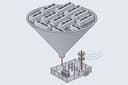 Data Center and Large-Load ProgramSigned deals to connect very large customers reached 6.4 gigawatts by mid-2026, nearly a fifth of the system's summer peak, with 24.8 gigawatts signed or waiting in line. Each contracted gigawatt implies roughly $250M of new line spending.
Signed deals to connect very large customers reached 6.4 gigawatts by mid-2026, nearly a fifth of the system's summer peak, with 24.8 gigawatts signed or waiting in line. Each contracted gigawatt implies roughly $250M of new line spending.
In plain English
Data centers are windowless buildings full of computers with an appetite for electricity to match. Since the start of 2024 developers have asked FirstEnergy to study more than 95 gigawatts of new connections — three times what its own system carries at its busiest hour — and more than forty of those requests are for over 500 megawatts each.
None of it is a product with its own price tag. It arrives as more electricity delivered over lines and substations FirstEnergy has to build first, roughly $250M worth for every gigawatt actually signed. Only one customer has been named publicly: Meta, building near Bowling Green, Ohio.
Competes with Virginia connection queue (Dominion Energy) · Large-load tariffs at AEP Ohio and Appalachian Power (American Electric Power) · Capacity market and backstop auction (PJM Interconnection)
Named in filings, launches and programs
- Energize365EcosystemThe label for the whole build-out — $36B of grid spending planned for 2026 through 2030, three-quarters of it where price is cost plus an approved profit.
- Valley Link TransmissionBrandA transmission venture with Dominion and AEP's Transource; FirstEnergy's transmission arm holds 34%, and roughly $3B of projects were approved, about $1B of it theirs.
- Grid Growth VenturesBrandFormed with Transource in September 2025; the grid operator awarded it about $1B of work in February 2026, of which FirstEnergy's share is about $448M.
- Fort Martin and Harrison stationsProduct lineMon Power's two coal plants, kept running through the current planning period; their cost is recovered in West Virginia rates rather than sold into a market.
- West Virginia solar sites (70 MW)Product line · AnnouncedThree small solar sites planned for 2028, travelling alongside the much larger gas proposal.
- Ohio Three-Year Rate PlanCustomer programThe Ohio utilities' filing under the new state law, built on three years of projected costs; regulators accepted it for review in 2026.
- EnergizeNJCustomer programJCP&L's New Jersey infrastructure spending program — what its earnings there hang on, alongside the state's decision on delivery charges.
- Default service supplyServiceIn Ohio, Pennsylvania, New Jersey and Maryland the electricity itself is bought competitively and billed on at cost — it swells revenue and earns nothing.
- PATHBrandA long-standing transmission joint venture held under FirstEnergy Transmission.
- Allegheny Generating CompanyBrandWholly owned by Mon Power and counted inside the regulated generation West Virginia customers pay for.
- KATCoBrandKeystone Appalachian Transmission Company, the transmission unit held directly by the parent rather than under FirstEnergy Transmission.
- FirstEnergy Service CompanyBrandThe in-house shared services company; its costs sit at the corporate level rather than inside any one state utility.
Energize365Ecosystem
The label for the whole build-out — $36B of grid spending planned for 2026 through 2030, three-quarters of it where price is cost plus an approved profit.
Valley Link TransmissionBrand
A transmission venture with Dominion and AEP's Transource; FirstEnergy's transmission arm holds 34%, and roughly $3B of projects were approved, about $1B of it theirs.
Grid Growth VenturesBrand
Formed with Transource in September 2025; the grid operator awarded it about $1B of work in February 2026, of which FirstEnergy's share is about $448M.
Fort Martin and Harrison stationsProduct line
Mon Power's two coal plants, kept running through the current planning period; their cost is recovered in West Virginia rates rather than sold into a market.
West Virginia solar sites (70 MW)Product line · Announced
Three small solar sites planned for 2028, travelling alongside the much larger gas proposal.
Ohio Three-Year Rate PlanCustomer program
The Ohio utilities' filing under the new state law, built on three years of projected costs; regulators accepted it for review in 2026.
EnergizeNJCustomer program
JCP&L's New Jersey infrastructure spending program — what its earnings there hang on, alongside the state's decision on delivery charges.
Default service supplyService
In Ohio, Pennsylvania, New Jersey and Maryland the electricity itself is bought competitively and billed on at cost — it swells revenue and earns nothing.
PATHBrand
A long-standing transmission joint venture held under FirstEnergy Transmission.
Allegheny Generating CompanyBrand
Wholly owned by Mon Power and counted inside the regulated generation West Virginia customers pay for.
KATCoBrand
Keystone Appalachian Transmission Company, the transmission unit held directly by the parent rather than under FirstEnergy Transmission.
FirstEnergy Service CompanyBrand
The in-house shared services company; its costs sit at the corporate level rather than inside any one state utility.