
Intel (INTC)
Designs PC and data-center processors while operating an integrated semiconductor foundry.
Something off on this page? Send us feedback.
Intel still earns most of its money from the processors inside personal computers and servers, while making most of those chips in its own factories. Server and made-to-order chips are growing faster as personal-computer demand cools. The wager is that those costly factories can become a business for outside chip designers, but for now Intel itself keeps them busy and absorbs the losses.
Item facts: FY2025 · year ended Dec 27, 2025, from filings, earnings calls and company pages.
Judgment weights, not filed revenue
The band summarizes business focus and direction. ~ marks estimates.
7 in detail · 15 more below
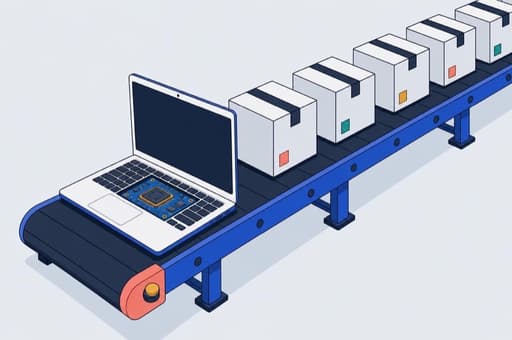
Intel Core and Intel Core Ultra Processors
Core and Core Ultra are the central chips in most of Intel’s personal-computer business. They produced $27.6 billion in FY2025; watch a shrinking PC market as newer, higher-priced models take over.
Competes with Ryzen and Ryzen AI processors (AMD) · M-series processors (Apple) · Snapdragon processors (Qualcomm)
In plain English
Open a laptop and the main chip doing the everyday calculating is usually its processor. Core is Intel’s long-running family for that job; Core Ultra is the newer, higher-priced generation, built to handle some artificial-intelligence tasks directly on the computer instead of sending everything elsewhere.
Laptop and desktop makers order these chips according to their own production plans, then put them into finished machines. Intel gets paid for each shipment, with discounts tied to volume and product choice. This remains the cash engine, but fewer personal computers are expected to sell this year.
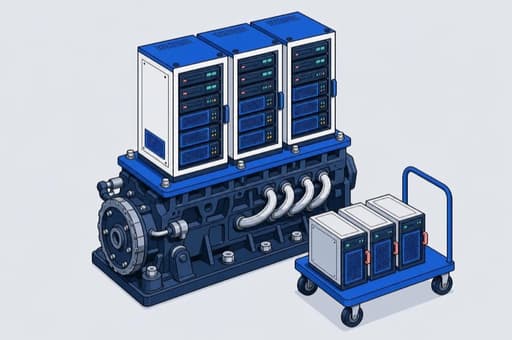
Intel Xeon Processors
Xeon anchors Intel’s fast-growing server line. In FY2026 Q2, server revenue was $2.0 billion higher than a year earlier; watch whether rising shipments can outweigh lower prices and fierce alternatives.
Competes with EPYC server processors (AMD) · Vera server processors (NVIDIA) · Graviton server processors (AWS)
In plain English
Behind websites, company databases and cloud services sit rooms of powerful computers called servers. Xeon is the main processor inside many of them: the general-purpose engine that coordinates data, runs business software and feeds specialized chips.
Cloud operators and computer makers buy Xeons as they add machines or replace old ones. They keep buying because their software is built around these processors and because growing online services need more computing capacity. Intel earns when each processor ships; demand is climbing, though customers can switch to AMD chips or design their own processors.
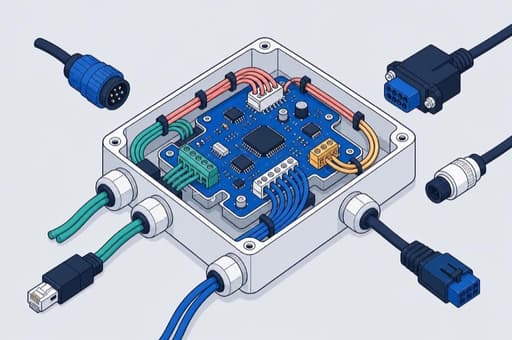
Networking and Purpose-Built Silicon
These chips connect machines or are tailored for one customer’s job. Sales nearly tripled year over year in FY2026 Q2, but from a much smaller base than Xeon; repeat production is the test.
Competes with ConnectX and BlueField network chips (NVIDIA) · Pensando network processors (AMD) · Custom chip design services (Broadcom)
In plain English
This is Intel’s made-to-measure counter beside the off-the-shelf Xeon aisle. Some chips move data between computers; others take a customer’s exact design and turn it into a processor for one narrow task.
Cloud companies, phone-network suppliers and security-equipment makers pay Intel for the design and then for chips as their products roll out. Google’s custom network program and Fortinet, a cybersecurity equipment maker, show the model. Each win can last for years, but the buyer must finish testing before meaningful orders arrive, so early growth can look spectacular from a small starting point.
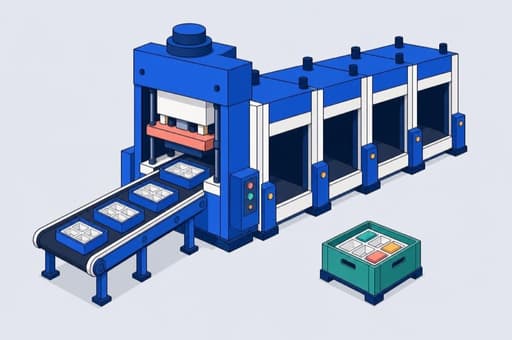
Intel Foundry Process Technologies
Intel’s factories mostly serve its own chip teams. Only $307 million came from outside customers in FY2025; the decisive test is whether the next factory process reaches mass production in 2028.
Competes with Leading-edge chip manufacturing (TSMC) · Leading-edge chip manufacturing (Samsung Foundry) · Older-process chip manufacturing (GlobalFoundries) · Older-process chip manufacturing (UMC)
In plain English
A chip factory turns flat silicon discs into thousands of tiny electronic parts through a long sequence of printing, coating and cutting steps. Intel uses its factories chiefly for its own processors, then cancels those internal charges when counting company sales.
The outside business works like a bakery opening spare ovens to other brands: customers bring chip designs and pay Intel to manufacture them. Full factories spread enormous equipment costs across more chips; half-empty ones become painfully expensive. Outside orders are still tiny, so Intel’s own products currently provide almost all the work while the company prepares its newer process for customers.
Intel Foundry Advanced Packaging
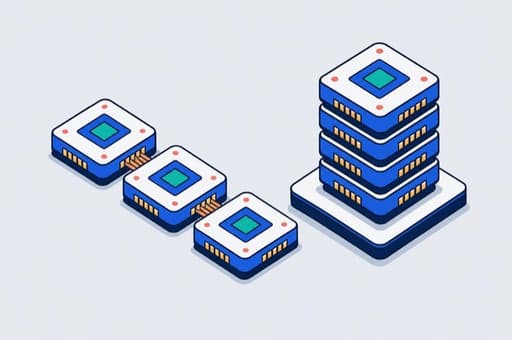
EMIB and Foveros join small chip pieces side by side or stack them vertically. Intel says customer production starts in 2027; the waiting work has no disclosed dollar value, so adoption matters most.
Competes with Advanced chip-packaging services (TSMC) · Advanced chip-packaging services (Samsung Foundry)
In plain English
Modern processors can be assembled from several smaller pieces rather than cut as one giant piece. EMIB is a tiny bridge that lets neighboring pieces talk quickly; Foveros stacks pieces like floors in a compact building. The result can mix parts made with different factory methods.
Intel’s own Core Ultra and Xeon processors are the main users today. Outside designers would pay Intel to assemble and connect their pieces without building that specialized capability themselves. Customer work is lined up, but Intel has not said what it is worth, and those programs must pass testing before production begins.
Edge Computing and Open Edge
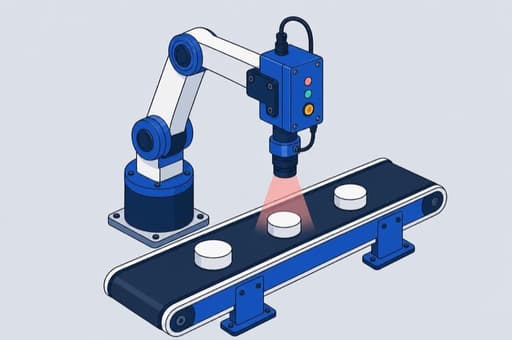
Intel adapts its processors and software for machines that must think where the work happens. In FY2026 Q2, edge was about a tenth of the division containing PCs; long equipment cycles shape demand.
Competes with Ryzen AI and EPYC Embedded processors (AMD) · Edge artificial-intelligence platforms (NVIDIA) · Embedded computing platforms (Qualcomm)
In plain English
Not every computer sits on a desk or in a remote data center. A factory camera spotting defects, a store checkout or a robot may need to react on the spot. Intel calls this edge computing: putting the processor close to the physical job so it does not wait for a distant server.
Equipment makers choose an Intel processor and supporting software while designing a machine, then buy units as that machine sells. Once approved, a design can run for years because industrial customers value reliability and long support. The trade-off is patience: testing is slow, and a design win earns nothing until equipment ships.

Mobileye
Mobileye supplies the eyes and decision-making kit behind driver assistance. FY2025 revenue was $1.894 billion, mostly from EyeQ; more systems shipped, but customers’ choice of cheaper versions lowered the average price.
Competes with Driver-assistance chips and software (Qualcomm / Arriver) · Driver-assistance chips and software (NVIDIA) · Driver-assistance processors and software (Horizon Robotics)
In plain English
The small cameras that help a car stay in its lane need a computer to understand the road. Mobileye’s EyeQ chip and software do that work; SuperVision adds a more capable set of driving-assistance features. Intel owned about three quarters of Mobileye at the latest update.
Car makers select the system years before a vehicle reaches showrooms. Large parts suppliers then buy and install the electronics as cars are built, paying Mobileye with each system. Those long programs can create repeat sales across a model’s life, but car makers can develop their own technology or choose rival chips, and lower-priced product choices can dilute growth.


 Intel Core and Intel Core Ultra ProcessorsCore and Core Ultra are the central chips in most of Intel’s personal-computer business. They produced $27.6 billion in FY2025; watch a shrinking PC market as newer, higher-priced models take over.
Core and Core Ultra are the central chips in most of Intel’s personal-computer business. They produced $27.6 billion in FY2025; watch a shrinking PC market as newer, higher-priced models take over.
In plain English
Open a laptop and the main chip doing the everyday calculating is usually its processor. Core is Intel’s long-running family for that job; Core Ultra is the newer, higher-priced generation, built to handle some artificial-intelligence tasks directly on the computer instead of sending everything elsewhere.
Laptop and desktop makers order these chips according to their own production plans, then put them into finished machines. Intel gets paid for each shipment, with discounts tied to volume and product choice. This remains the cash engine, but fewer personal computers are expected to sell this year.
Competes with Ryzen and Ryzen AI processors (AMD) · M-series processors (Apple) · Snapdragon processors (Qualcomm)
 Intel Xeon ProcessorsXeon anchors Intel’s fast-growing server line. In FY2026 Q2, server revenue was $2.0 billion higher than a year earlier; watch whether rising shipments can outweigh lower prices and fierce alternatives.
Xeon anchors Intel’s fast-growing server line. In FY2026 Q2, server revenue was $2.0 billion higher than a year earlier; watch whether rising shipments can outweigh lower prices and fierce alternatives.
In plain English
Behind websites, company databases and cloud services sit rooms of powerful computers called servers. Xeon is the main processor inside many of them: the general-purpose engine that coordinates data, runs business software and feeds specialized chips.
Cloud operators and computer makers buy Xeons as they add machines or replace old ones. They keep buying because their software is built around these processors and because growing online services need more computing capacity. Intel earns when each processor ships; demand is climbing, though customers can switch to AMD chips or design their own processors.
Competes with EPYC server processors (AMD) · Vera server processors (NVIDIA) · Graviton server processors (AWS)
 Networking and Purpose-Built SiliconThese chips connect machines or are tailored for one customer’s job. Sales nearly tripled year over year in FY2026 Q2, but from a much smaller base than Xeon; repeat production is the test.
These chips connect machines or are tailored for one customer’s job. Sales nearly tripled year over year in FY2026 Q2, but from a much smaller base than Xeon; repeat production is the test.
In plain English
This is Intel’s made-to-measure counter beside the off-the-shelf Xeon aisle. Some chips move data between computers; others take a customer’s exact design and turn it into a processor for one narrow task.
Cloud companies, phone-network suppliers and security-equipment makers pay Intel for the design and then for chips as their products roll out. Google’s custom network program and Fortinet, a cybersecurity equipment maker, show the model. Each win can last for years, but the buyer must finish testing before meaningful orders arrive, so early growth can look spectacular from a small starting point.
Competes with ConnectX and BlueField network chips (NVIDIA) · Pensando network processors (AMD) · Custom chip design services (Broadcom)
 Intel Foundry Process TechnologiesIntel’s factories mostly serve its own chip teams. Only $307 million came from outside customers in FY2025; the decisive test is whether the next factory process reaches mass production in 2028.
Intel’s factories mostly serve its own chip teams. Only $307 million came from outside customers in FY2025; the decisive test is whether the next factory process reaches mass production in 2028.
In plain English
A chip factory turns flat silicon discs into thousands of tiny electronic parts through a long sequence of printing, coating and cutting steps. Intel uses its factories chiefly for its own processors, then cancels those internal charges when counting company sales.
The outside business works like a bakery opening spare ovens to other brands: customers bring chip designs and pay Intel to manufacture them. Full factories spread enormous equipment costs across more chips; half-empty ones become painfully expensive. Outside orders are still tiny, so Intel’s own products currently provide almost all the work while the company prepares its newer process for customers.
Competes with Leading-edge chip manufacturing (TSMC) · Leading-edge chip manufacturing (Samsung Foundry) · Older-process chip manufacturing (GlobalFoundries) · Older-process chip manufacturing (UMC)
 Intel Foundry Advanced PackagingEMIB and Foveros join small chip pieces side by side or stack them vertically. Intel says customer production starts in 2027; the waiting work has no disclosed dollar value, so adoption matters most.
EMIB and Foveros join small chip pieces side by side or stack them vertically. Intel says customer production starts in 2027; the waiting work has no disclosed dollar value, so adoption matters most.
In plain English
Modern processors can be assembled from several smaller pieces rather than cut as one giant piece. EMIB is a tiny bridge that lets neighboring pieces talk quickly; Foveros stacks pieces like floors in a compact building. The result can mix parts made with different factory methods.
Intel’s own Core Ultra and Xeon processors are the main users today. Outside designers would pay Intel to assemble and connect their pieces without building that specialized capability themselves. Customer work is lined up, but Intel has not said what it is worth, and those programs must pass testing before production begins.
Competes with Advanced chip-packaging services (TSMC) · Advanced chip-packaging services (Samsung Foundry)
 Edge Computing and Open EdgeIntel adapts its processors and software for machines that must think where the work happens. In FY2026 Q2, edge was about a tenth of the division containing PCs; long equipment cycles shape demand.
Intel adapts its processors and software for machines that must think where the work happens. In FY2026 Q2, edge was about a tenth of the division containing PCs; long equipment cycles shape demand.
In plain English
Not every computer sits on a desk or in a remote data center. A factory camera spotting defects, a store checkout or a robot may need to react on the spot. Intel calls this edge computing: putting the processor close to the physical job so it does not wait for a distant server.
Equipment makers choose an Intel processor and supporting software while designing a machine, then buy units as that machine sells. Once approved, a design can run for years because industrial customers value reliability and long support. The trade-off is patience: testing is slow, and a design win earns nothing until equipment ships.
Competes with Ryzen AI and EPYC Embedded processors (AMD) · Edge artificial-intelligence platforms (NVIDIA) · Embedded computing platforms (Qualcomm)
 MobileyeMobileye supplies the eyes and decision-making kit behind driver assistance. FY2025 revenue was $1.894 billion, mostly from EyeQ; more systems shipped, but customers’ choice of cheaper versions lowered the average price.
Mobileye supplies the eyes and decision-making kit behind driver assistance. FY2025 revenue was $1.894 billion, mostly from EyeQ; more systems shipped, but customers’ choice of cheaper versions lowered the average price.
In plain English
The small cameras that help a car stay in its lane need a computer to understand the road. Mobileye’s EyeQ chip and software do that work; SuperVision adds a more capable set of driving-assistance features. Intel owned about three quarters of Mobileye at the latest update.
Car makers select the system years before a vehicle reaches showrooms. Large parts suppliers then buy and install the electronics as cars are built, paying Mobileye with each system. Those long programs can create repeat sales across a model’s life, but car makers can develop their own technology or choose rival chips, and lower-priced product choices can dilute growth.
Competes with Driver-assistance chips and software (Qualcomm / Arriver) · Driver-assistance chips and software (NVIDIA) · Driver-assistance processors and software (Horizon Robotics)
Named in filings, launches and programs
- Intel Arc GraphicsProduct lineSeparate and built-in graphics chips extend Intel beyond its central processors in personal computers.
- Intel vProPlatformBusiness-computer hardware and software let employers secure and manage fleets of machines from afar.
- Client ConnectivityProduct lineWi-Fi, Bluetooth and wired connection products ride inside personal computers and edge equipment.
- Crescent Island and Jaguar ShoresProduct · AnnouncedPlanned data-center graphics processors aim to handle artificial-intelligence answers; neither is a current commercial product.
- Gaudi 3ProductAn artificial-intelligence accelerator that missed its sales target and has disappeared from recent management discussions, though it has not been discontinued.
- AWS Custom Xeon 6 and AI Fabric ProgramCustomer programA multiyear, multibillion-dollar framework covers a custom server processor and a made-to-order chip for linking artificial-intelligence systems.
- NVIDIA Custom x86 CPU and RTX SoC CollaborationCustomer program · AnnouncedIntel and NVIDIA plan several generations of jointly connected computer products; NVIDIA’s investment does not promise factory orders.
- Google Xeon and IPU ProgramCustomer programA multiyear agreement covers several Xeon generations and custom chips that take networking work away from main processors; value is undisclosed.
- Fortinet SP6 ASIC ProgramCustomer program · AnnouncedIntel will design, package and manufacture Fortinet’s made-to-order security processor.
- SambaNova Xeon 6 ProgramCustomer program · AnnouncedA planned system pairs Xeon with SambaNova technology to answer artificial-intelligence requests, with initial availability expected in late 2026.
- Undisclosed Long-Term Agreements and DepositsCustomer programCustomers A, B and C supplied 43% of FY2025 sales; separate three-to-five-year agreements brought $1.7 billion of deposits in FY2026 Q2.
- Secure Enclave and RAMP-CCustomer programUnited States government programs support secure domestic chip manufacturing; Secure Enclave carries an award of up to $3 billion.
- TerafabCustomer program · AnnouncedIntel joined SpaceX, xAI and Tesla as a strategic partner, but no contract value or sales schedule has been disclosed.
- IMS NanofabricationBrandIntel owns most of this maker of equipment that writes the masks used to print chip patterns.
- Mentee RoboticsBrandMobileye bought this robotics company for $637 million; its results were still too small to matter at the latest quarter.
Intel Arc GraphicsProduct line
Separate and built-in graphics chips extend Intel beyond its central processors in personal computers.
Intel vProPlatform
Business-computer hardware and software let employers secure and manage fleets of machines from afar.
Client ConnectivityProduct line
Wi-Fi, Bluetooth and wired connection products ride inside personal computers and edge equipment.
Crescent Island and Jaguar ShoresProduct · Announced
Planned data-center graphics processors aim to handle artificial-intelligence answers; neither is a current commercial product.
Gaudi 3Product
An artificial-intelligence accelerator that missed its sales target and has disappeared from recent management discussions, though it has not been discontinued.
AWS Custom Xeon 6 and AI Fabric ProgramCustomer program
A multiyear, multibillion-dollar framework covers a custom server processor and a made-to-order chip for linking artificial-intelligence systems.
NVIDIA Custom x86 CPU and RTX SoC CollaborationCustomer program · Announced
Intel and NVIDIA plan several generations of jointly connected computer products; NVIDIA’s investment does not promise factory orders.
Google Xeon and IPU ProgramCustomer program
A multiyear agreement covers several Xeon generations and custom chips that take networking work away from main processors; value is undisclosed.
Fortinet SP6 ASIC ProgramCustomer program · Announced
Intel will design, package and manufacture Fortinet’s made-to-order security processor.
SambaNova Xeon 6 ProgramCustomer program · Announced
A planned system pairs Xeon with SambaNova technology to answer artificial-intelligence requests, with initial availability expected in late 2026.
Undisclosed Long-Term Agreements and DepositsCustomer program
Customers A, B and C supplied 43% of FY2025 sales; separate three-to-five-year agreements brought $1.7 billion of deposits in FY2026 Q2.
Secure Enclave and RAMP-CCustomer program
United States government programs support secure domestic chip manufacturing; Secure Enclave carries an award of up to $3 billion.
TerafabCustomer program · Announced
Intel joined SpaceX, xAI and Tesla as a strategic partner, but no contract value or sales schedule has been disclosed.
IMS NanofabricationBrand
Intel owns most of this maker of equipment that writes the masks used to print chip patterns.
Mentee RoboticsBrand
Mobileye bought this robotics company for $637 million; its results were still too small to matter at the latest quarter.