
Linde (LIN)
Supplies industrial gases through pipelines, tankers and cylinders, and engineers gas-processing plants.
Something off on this page? Send us feedback.
Linde sells gases that keep factories, hospitals, food plants, and launch sites running, using everything from refillable cylinders to plants built beside a customer. Most money still comes from its mature delivery network; the next leg is long-contract gas plants for chipmaking, space launches, and carbon-cutting industrial projects, with engineering helping build the machinery.
Item facts: FY2025 · year ended Dec 31, 2025, from filings, earnings calls and company pages.
Judgment weights, not filed revenue
The band summarizes business focus and direction. ~ marks estimates.
8 in detail · 9 more below
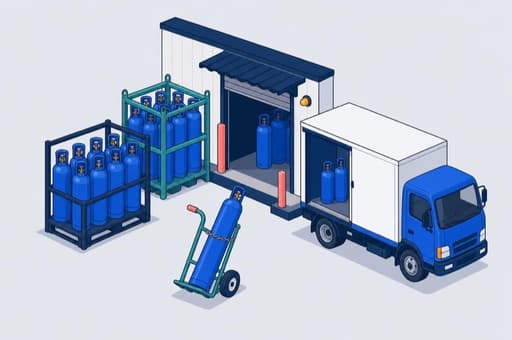
Packaged Gas
Cylinders, small tanks, equipment rentals, and related supplies brought in $11.853 billion in FY2025. This is Linde's largest sales engine; branch density and repeat rentals matter more than splashy new projects.
Competes with Airgas packaged gases and hardgoods (Air Liquide) · Cylinder and specialty gases (Messer Group)
In plain English
Picture the neighborhood hardware store for gases: a nearby Linde branch keeps racks of cylinders, small tanks, and related equipment ready for manufacturers, laboratories, hospitals, and food processors. Customers collect supplies or receive local deliveries as their work requires.
Money arrives through gas refills, equipment sales, and rent on the containers and gear Linde keeps in service. Orders or contracts usually last one to three years. A dense branch network makes each delivery cheaper and keeps the customer close, while small acquisitions add routes and buyers to the same local system.
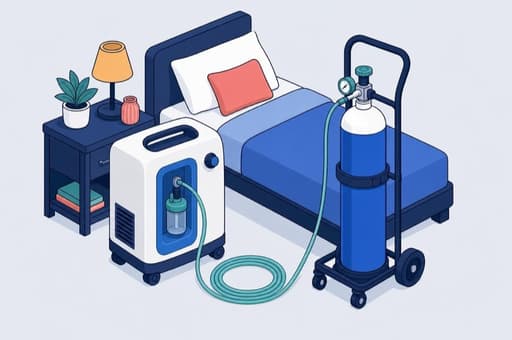
Healthcare
Healthcare made up 16% of sales in Q1 2026. Medical gases held up, but Linde's U.S. home-care business was flat after a policy change and remained under strategic review in July 2026.
Competes with Medical gases and hospital services (Air Liquide Healthcare) · Respiratory Health and Sleep Health (AdaptHealth)
In plain English
A hospital needs dependable oxygen pipes and cylinders; a patient at home may need an oxygen machine, a breathing aid for sleep, or feeding equipment. Linde supplies both worlds, with Lincare handling much of the U.S. home service.
Hospitals pay for medical gases and service. At home, prescriptions and insurer or government payments support equipment placement, refills, and ongoing care. That makes demand steadier than factory output, but payment rules matter: a recent policy change held back the U.S. home business, even as medical gases outside that business continued to grow.
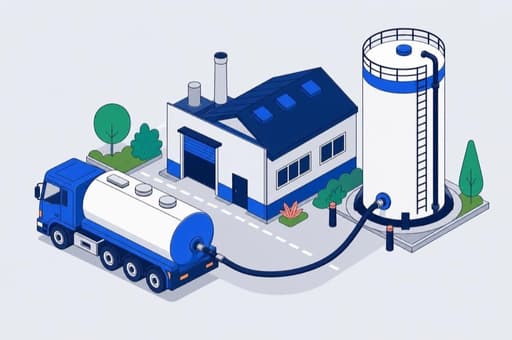
Merchant Gas
Regional plants and tankers supplied $10.159 billion of gas in FY2025. The watchpoint is factory activity: food and healthcare steady the route, while metals, chemicals, and manufacturing make delivery volumes rise and fall.
Competes with Industrial Merchant bulk delivery (Air Liquide) · Bulk Delivery and CryoEase (Air Products)
In plain English
Too much gas for cylinders, not enough for a dedicated plant: that middle ground belongs to merchant gas. Linde makes liquid gas at a regional plant, carries it by insulated tanker, and fills a storage tank that it usually owns at the customer's site.
Customers commonly sign three-to-seven-year agreements promising to buy what they need from Linde. The bill combines the gas, delivery, tank rent, and changes in energy cost. Nearby plants and reliable routes are crucial because hauling heavy tanks too far quickly eats the profit.
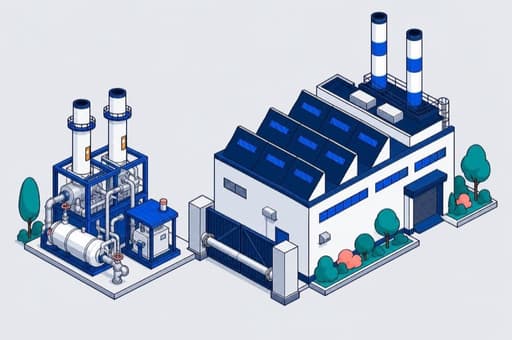
On-Site Gas
Plants beside major customers produced $8.083 billion in FY2025. Across long-term gas minimums and plant sales, customers had promised Linde $64 billion at June 2026; roughly half is due over six years.
Competes with Large Industries on-site and pipeline supply (Air Liquide) · Pipeline and On-Site Gas Generation (Air Products)
In plain English
For a steel mill, refinery, chemical works, or chip factory that cannot risk running short, trucks are not enough. Linde builds a gas-making plant next door and connects it by pipe, so supply becomes part of the customer's own production line.
The customer usually commits for ten to twenty years, paying a fixed facility charge or buying at least a minimum amount. Extra use brings extra sales, while contract formulas pass through much of the changing energy cost. Those promises help repay the plant, but Linde still depends on the customer's credit, dependable power, and flawless operation.
Electronics
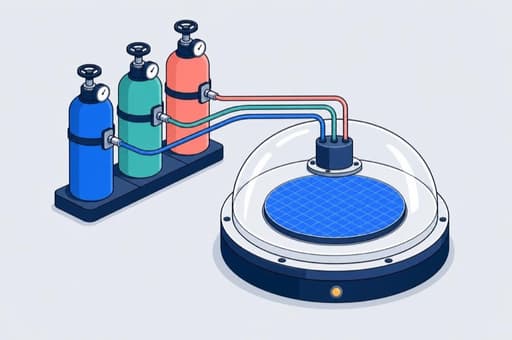
Exceptionally pure gases for chip factories were 9% of company sales in Q3 2025, plus 2% through a Taiwan partnership outside Linde's own revenue. New U.S. and Taiwan awards now have to become working plants.
Competes with Arizona chip-factory gas supply (Air Liquide Electronics) · Kaohsiung on-site plants (Air Products San Fu)
In plain English
A speck of unwanted material can ruin a computer chip, so the gases used to make one must be extraordinarily clean and must never stop flowing. Linde places purification and gas-making equipment at or near the chip factory and feeds its production rooms continuously.
Chipmakers pay under long supply agreements because rebuilding this invisible plumbing would be costly and an interruption could spoil expensive production. Growth comes when a new factory opens or expands. Linde is funding a major Phoenix project, while its Taiwan partnership has separate awards that do not appear in Linde's own sales.
Commercial Space
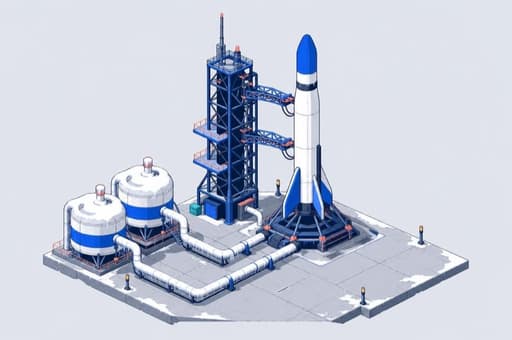
Launch gases grew to nearly four times their earlier sales over three years, but from a base still below 5% of FY2025 revenue. The next step depends on launch schedules and new Florida capacity opening on time.
Competes with Ariane 6 gases and systems (Air Liquide and ArianeGroup) · NASA liquid hydrogen (Air Products)
In plain English
Rockets consume enormous amounts of gases kept so cold that they turn into liquid. Linde makes, stores, and moves those supplies around launch sites, much as a fuel depot serves a fleet whose departure dates can shift without warning.
Launch operators pay for the gas and the ground equipment needed to handle it. More launches mean more deliveries, but timing depends on missions and approvals. A Brownsville plant began operating in January 2026, another Florida site is planned, and some investment stays outside Linde's usual count of promised sales because the contracts lack fixed facility payments.
Clean-Energy Programs
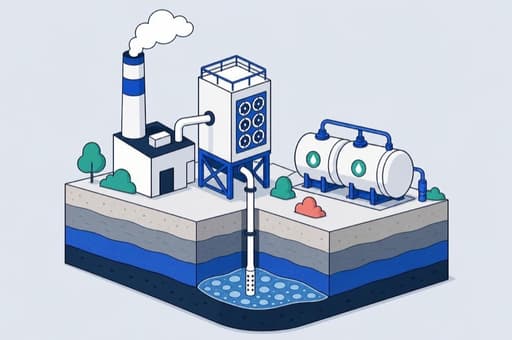
Three signed industrial projects represented nearly $5 billion of planned investment in August 2025. Much of the business is not producing sales yet, and delays show how policy, customer decisions, and carbon-storage networks can hold it back.
Competes with Low-carbon hydrogen and carbon capture (Air Liquide) · On-site hydrogen and carbon management (Air Products)
In plain English
The aim is practical: make hydrogen with less released carbon dioxide, or catch that gas before it reaches the air. Linde builds the gas plants and trapping equipment beside customers such as Dow, Woodside, and CF Industries, then supplies them over many years.
Customers pay once the plants start delivering; until then, these are expensive construction promises rather than an established sales stream. Government support, fuel and power costs, final customer approval, and a place to move and store the captured carbon all have to line up. Several projects are signed, but some are pre-sales or delayed.
Linde Engineering
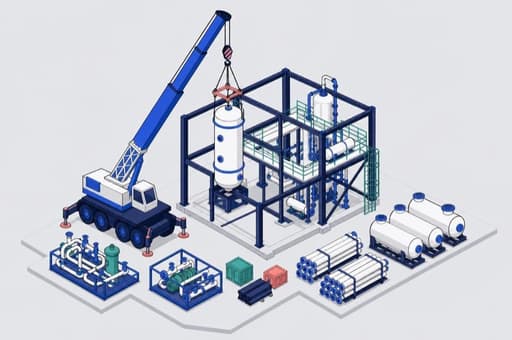
Designing and building gas and process plants produced $2.250 billion in FY2025. A $3.2 billion plant order book in August 2025 offered years of work, but fixed prices leave Linde carrying delay and cost-overrun risk.
Competes with Engineering & Technologies (Air Liquide) · Process technologies (Technip Energies) · Chemical plants (thyssenkrupp Uhde)
In plain English
Before anyone can sell industrial gas, someone has to design and assemble the plant that makes it. Linde Engineering does that work for Linde's own network and for outside gas, chemical, and energy companies.
Outside customers pay as construction advances, so sales arrive with completed stages rather than evenly each month. Customer payments made before work starts help fund equipment and contractors. The hard part is execution: when Linde promises a plant for a fixed price, late parts, disputes, or higher costs can shrink what it earns even if the customer still gets the finished facility.


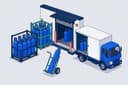 Packaged GasCylinders, small tanks, equipment rentals, and related supplies brought in $11.853 billion in FY2025. This is Linde's largest sales engine; branch density and repeat rentals matter more than splashy new projects.
Cylinders, small tanks, equipment rentals, and related supplies brought in $11.853 billion in FY2025. This is Linde's largest sales engine; branch density and repeat rentals matter more than splashy new projects.
In plain English
Picture the neighborhood hardware store for gases: a nearby Linde branch keeps racks of cylinders, small tanks, and related equipment ready for manufacturers, laboratories, hospitals, and food processors. Customers collect supplies or receive local deliveries as their work requires.
Money arrives through gas refills, equipment sales, and rent on the containers and gear Linde keeps in service. Orders or contracts usually last one to three years. A dense branch network makes each delivery cheaper and keeps the customer close, while small acquisitions add routes and buyers to the same local system.
Competes with Airgas packaged gases and hardgoods (Air Liquide) · Cylinder and specialty gases (Messer Group)
 HealthcareHealthcare made up 16% of sales in Q1 2026. Medical gases held up, but Linde's U.S. home-care business was flat after a policy change and remained under strategic review in July 2026.
Healthcare made up 16% of sales in Q1 2026. Medical gases held up, but Linde's U.S. home-care business was flat after a policy change and remained under strategic review in July 2026.
In plain English
A hospital needs dependable oxygen pipes and cylinders; a patient at home may need an oxygen machine, a breathing aid for sleep, or feeding equipment. Linde supplies both worlds, with Lincare handling much of the U.S. home service.
Hospitals pay for medical gases and service. At home, prescriptions and insurer or government payments support equipment placement, refills, and ongoing care. That makes demand steadier than factory output, but payment rules matter: a recent policy change held back the U.S. home business, even as medical gases outside that business continued to grow.
Competes with Medical gases and hospital services (Air Liquide Healthcare) · Respiratory Health and Sleep Health (AdaptHealth)
 Merchant GasRegional plants and tankers supplied $10.159 billion of gas in FY2025. The watchpoint is factory activity: food and healthcare steady the route, while metals, chemicals, and manufacturing make delivery volumes rise and fall.
Regional plants and tankers supplied $10.159 billion of gas in FY2025. The watchpoint is factory activity: food and healthcare steady the route, while metals, chemicals, and manufacturing make delivery volumes rise and fall.
In plain English
Too much gas for cylinders, not enough for a dedicated plant: that middle ground belongs to merchant gas. Linde makes liquid gas at a regional plant, carries it by insulated tanker, and fills a storage tank that it usually owns at the customer's site.
Customers commonly sign three-to-seven-year agreements promising to buy what they need from Linde. The bill combines the gas, delivery, tank rent, and changes in energy cost. Nearby plants and reliable routes are crucial because hauling heavy tanks too far quickly eats the profit.
Competes with Industrial Merchant bulk delivery (Air Liquide) · Bulk Delivery and CryoEase (Air Products)
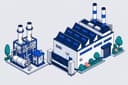 On-Site GasPlants beside major customers produced $8.083 billion in FY2025. Across long-term gas minimums and plant sales, customers had promised Linde $64 billion at June 2026; roughly half is due over six years.
Plants beside major customers produced $8.083 billion in FY2025. Across long-term gas minimums and plant sales, customers had promised Linde $64 billion at June 2026; roughly half is due over six years.
In plain English
For a steel mill, refinery, chemical works, or chip factory that cannot risk running short, trucks are not enough. Linde builds a gas-making plant next door and connects it by pipe, so supply becomes part of the customer's own production line.
The customer usually commits for ten to twenty years, paying a fixed facility charge or buying at least a minimum amount. Extra use brings extra sales, while contract formulas pass through much of the changing energy cost. Those promises help repay the plant, but Linde still depends on the customer's credit, dependable power, and flawless operation.
Competes with Large Industries on-site and pipeline supply (Air Liquide) · Pipeline and On-Site Gas Generation (Air Products)
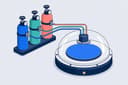 ElectronicsExceptionally pure gases for chip factories were 9% of company sales in Q3 2025, plus 2% through a Taiwan partnership outside Linde's own revenue. New U.S. and Taiwan awards now have to become working plants.
Exceptionally pure gases for chip factories were 9% of company sales in Q3 2025, plus 2% through a Taiwan partnership outside Linde's own revenue. New U.S. and Taiwan awards now have to become working plants.
In plain English
A speck of unwanted material can ruin a computer chip, so the gases used to make one must be extraordinarily clean and must never stop flowing. Linde places purification and gas-making equipment at or near the chip factory and feeds its production rooms continuously.
Chipmakers pay under long supply agreements because rebuilding this invisible plumbing would be costly and an interruption could spoil expensive production. Growth comes when a new factory opens or expands. Linde is funding a major Phoenix project, while its Taiwan partnership has separate awards that do not appear in Linde's own sales.
Competes with Arizona chip-factory gas supply (Air Liquide Electronics) · Kaohsiung on-site plants (Air Products San Fu)
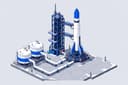 Commercial SpaceLaunch gases grew to nearly four times their earlier sales over three years, but from a base still below 5% of FY2025 revenue. The next step depends on launch schedules and new Florida capacity opening on time.
Launch gases grew to nearly four times their earlier sales over three years, but from a base still below 5% of FY2025 revenue. The next step depends on launch schedules and new Florida capacity opening on time.
In plain English
Rockets consume enormous amounts of gases kept so cold that they turn into liquid. Linde makes, stores, and moves those supplies around launch sites, much as a fuel depot serves a fleet whose departure dates can shift without warning.
Launch operators pay for the gas and the ground equipment needed to handle it. More launches mean more deliveries, but timing depends on missions and approvals. A Brownsville plant began operating in January 2026, another Florida site is planned, and some investment stays outside Linde's usual count of promised sales because the contracts lack fixed facility payments.
Competes with Ariane 6 gases and systems (Air Liquide and ArianeGroup) · NASA liquid hydrogen (Air Products)
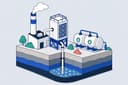 Clean-Energy ProgramsThree signed industrial projects represented nearly $5 billion of planned investment in August 2025. Much of the business is not producing sales yet, and delays show how policy, customer decisions, and carbon-storage networks can hold it back.
Three signed industrial projects represented nearly $5 billion of planned investment in August 2025. Much of the business is not producing sales yet, and delays show how policy, customer decisions, and carbon-storage networks can hold it back.
In plain English
The aim is practical: make hydrogen with less released carbon dioxide, or catch that gas before it reaches the air. Linde builds the gas plants and trapping equipment beside customers such as Dow, Woodside, and CF Industries, then supplies them over many years.
Customers pay once the plants start delivering; until then, these are expensive construction promises rather than an established sales stream. Government support, fuel and power costs, final customer approval, and a place to move and store the captured carbon all have to line up. Several projects are signed, but some are pre-sales or delayed.
Competes with Low-carbon hydrogen and carbon capture (Air Liquide) · On-site hydrogen and carbon management (Air Products)
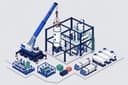 Linde EngineeringDesigning and building gas and process plants produced $2.250 billion in FY2025. A $3.2 billion plant order book in August 2025 offered years of work, but fixed prices leave Linde carrying delay and cost-overrun risk.
Designing and building gas and process plants produced $2.250 billion in FY2025. A $3.2 billion plant order book in August 2025 offered years of work, but fixed prices leave Linde carrying delay and cost-overrun risk.
In plain English
Before anyone can sell industrial gas, someone has to design and assemble the plant that makes it. Linde Engineering does that work for Linde's own network and for outside gas, chemical, and energy companies.
Outside customers pay as construction advances, so sales arrive with completed stages rather than evenly each month. Customer payments made before work starts help fund equipment and contractors. The hard part is execution: when Linde promises a plant for a fixed price, late parts, disputes, or higher costs can shrink what it earns even if the customer still gets the finished facility.
Competes with Engineering & Technologies (Air Liquide) · Process technologies (Technip Energies) · Chemical plants (thyssenkrupp Uhde)
Named in filings, launches and programs
- Atmospheric GasesProduct lineOxygen, nitrogen, argon, and rare gases separated from air and sold through cylinders, tankers, or customer-site plants.
- Process GasesProduct lineHydrogen, helium, carbon dioxide, carbon monoxide, acetylene, and specialty gases made or bought for industrial customers.
- Small On-Site SolutionsProduct lineStandard gas-making units at customer sites for buyers too large for tanker delivery but too small for a major plant.
- Linde Advanced Material TechnologiesBrandMaterials and coating technology whose sales Linde does not reveal separately.
- Global Helium WholesaleProduct lineSources helium across regions and sells it in bulk; Linde does not reveal this line's sales separately.
- SPECTRAPlatformPlant design that separates gases from air with exceptional cleanliness, selected for the Phoenix chip-factory expansion.
- HISORPPlatform · RampingLinde's process for trapping carbon dioxide, specified for Dow's delayed Path2Zero project.
- Linde LienHwaBrandTaiwan chipmaking-gas partnership with $800 million of July 2026 awards that are not counted as Linde's own sales promises.
- AirtecBrandGulf-region industrial-gas business more than 90% owned by Linde since September 2025.
Atmospheric GasesProduct line
Oxygen, nitrogen, argon, and rare gases separated from air and sold through cylinders, tankers, or customer-site plants.
Process GasesProduct line
Hydrogen, helium, carbon dioxide, carbon monoxide, acetylene, and specialty gases made or bought for industrial customers.
Small On-Site SolutionsProduct line
Standard gas-making units at customer sites for buyers too large for tanker delivery but too small for a major plant.
Linde Advanced Material TechnologiesBrand
Materials and coating technology whose sales Linde does not reveal separately.
Global Helium WholesaleProduct line
Sources helium across regions and sells it in bulk; Linde does not reveal this line's sales separately.
SPECTRAPlatform
Plant design that separates gases from air with exceptional cleanliness, selected for the Phoenix chip-factory expansion.
HISORPPlatform · Ramping
Linde's process for trapping carbon dioxide, specified for Dow's delayed Path2Zero project.
Linde LienHwaBrand
Taiwan chipmaking-gas partnership with $800 million of July 2026 awards that are not counted as Linde's own sales promises.
AirtecBrand
Gulf-region industrial-gas business more than 90% owned by Linde since September 2025.