
Nasdaq (NDAQ)
Runs securities exchanges and supplies data, indexes, and financial-market software.
Something off on this page? Send us feedback.
Nasdaq owns the marketplace where a great many American shares change hands — but that exchange is no longer the main event. Most of the money now arrives by subscription: software banks run their trading on, systems that hunt money laundering, and the fee funds pay for the right to track its best-known index. The exchange itself is already the smaller half.
Item facts: FY2025 · year ended Dec 31, 2025, from filings, earnings calls and company pages.
Judgment weights, not filed revenue
The band summarizes business focus and direction. ~ marks estimates.
8 in detail · 13 more below
Market Services
The exchanges themselves — US shares and share options, plus the Nordic and Baltic markets and Nasdaq's clearing house. Volumes hit records in mid-2026, but sixteen share venues and seventeen options venues chase the same orders, so the fee kept on each trade keeps getting squeezed.
Competes with NYSE cash equities (Intercontinental Exchange) · MIAX options markets (Miami International Holdings)
In plain English
Somebody wants to sell a hundred shares; somebody else wants to buy them. Nasdaq's computers pair the two in a fraction of a second and charge a small fee for the introduction.
The catch is that most of that fee goes straight back out the door. To attract orders in the first place, Nasdaq pays rebates back to the trading firms that send them, and pays clearing costs on top — of roughly four billion dollars of trading fees collected in 2025, it kept a little under a third. That kept sliver is the real business, and it rises and falls with how much the world is trading.
Always-On Markets, Equity Tokens and Digital Liquidity Networks
Nasdaq's bet on trading that barely stops: sessions running twenty-three hours a day, five days a week from 6 December 2026, a redesign of how shares are recorded digitally, and a newly bought off-exchange venue. Nothing earns yet, and a rival is aiming at the same launch date.
Competes with 24X National Exchange (24X) · Tokenized securities platform (Intercontinental Exchange) · EDGX 24x5 trading (Cboe Global Markets)
In plain English
American shares mostly change hands during office hours. Nasdaq has regulatory permission to keep its market open twenty-three hours a day, five days a week from December 2026, so someone on the other side of the world can trade over breakfast instead of at midnight.
Beside it sits a rethink of how a share is recorded, with issuing companies placed at the centre of it. Nasdaq is building that with Payward, the parent of crypto exchange Kraken, and has agreed to put a hundred million dollars into the company. None of it earns anything yet, and the gating question is whether the industry plumbing that finalises trades overnight stretches to cover the longer day.
Capital Markets Technology (Nasdaq Calypso)
Nasdaq's largest single revenue line: the trading, treasury and collateral system banks and central banks run on, now used in more than seventy countries, plus rack space rented to trading firms. Revenue grew 14% in the second quarter of 2026; big upfront licences make quarters lumpy.
Competes with MX.3 trading and risk platform (Murex) · Treasury and risk suite (ION Group)
In plain English
Banks need one place that tracks every trade, loan and piece of collateral they hold — the ledger the whole trading desk works from. Nasdaq sells that system, called Calypso, and once a bank installs it, replacing it is like rewiring a house while still living in it. So they stay for years and pay every year.
The same line rents out space in Nasdaq's own machine rooms to firms that want their own machines sitting as close to the exchange's as they can get. One long renewal with a large bank can land inside a single quarter, which is why the growth rate jumps around.
Data and Listing Services
Yearly fees from the companies quoted on Nasdaq, plus subscriptions to its price feeds. Dependable rather than fast — though the first half of 2026 was extraordinary, with SpaceX's record share sale landing here and Nasdaq winning roughly three in four new company listings.
Competes with NYSE listings (Intercontinental Exchange) · Proprietary US equity data feeds (Cboe Global Markets)
In plain English
Getting your company quoted on Nasdaq is a little like renting a shop in a famous arcade: you pay every year to keep the address. Thousands of companies do, and in the first half of 2026 they raised more than a hundred billion dollars between them — SpaceX alone took in $85.7 billion, the largest share sale of its kind on record.
The other half of this line sells the prices themselves: anyone who wants live Nasdaq quotes pays a subscription for the feed. Neither half sprints: fees wear off as companies leave, and management expects only low single-digit growth.
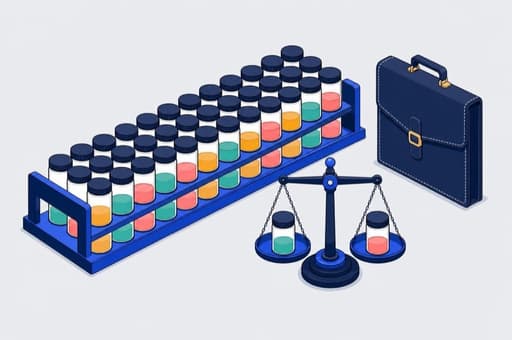
Workflow and Insights (eVestment, IR Insight, Boardvantage)
Software and data for two crowds: investment firms picking fund managers, and companies running their boardrooms and shareholder relations. The slowest corner Nasdaq owns — about 5% growth in the second quarter of 2026, with the corporate side essentially flat.
Competes with Diligent Boards (Diligent) · Burgiss private-asset data (MSCI) · Private-fund data (With Intelligence)
In plain English
Two different customers, one bundle. Pension funds and the consultants who advise them pay for eVestment, a database connecting them to roughly five thousand investment managers and the products those managers run, so buyers can line them up side by side — a car-buying guide, except for people who manage money.
The other side sells to companies: a secure place for directors to read board papers, and a tool for the staff who field calls from shareholders. Both are paid for by the seat, so they thin out when corporate activity slows. It is Nasdaq's slowest patch, and the stated fix is automated helpers inside the products, which the company says more clients switch on each quarter.
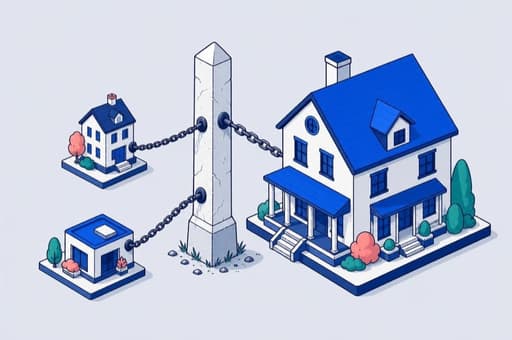
Index (the Nasdaq-100 and the wider index family)
Nasdaq rents out its scoreboards. Funds that track its benchmarks pay a sliver of the money they hold, and those assets crossed a trillion dollars in mid-2026, lifting revenue 35%. Which is also the risk: when markets fall, this money falls with them.
Competes with S&P 500 and S&P Dow Jones Indices (S&P Global) · MSCI equity indexes (MSCI)
In plain English
An index is a list of companies, kept up to date, used as a yardstick for how a slice of the market is doing. Nasdaq owns some of the best known, the Nasdaq-100 above all.
A fund manager who wants to sell a product that tracks one of those lists must license it, and pays a small annual slice of whatever money sits in the fund. It behaves like a toll booth: nothing more to sell once the fund exists, just more traffic passing through. Invesco's QQQ fund is the single biggest payer, holding roughly $407 billion at the end of 2025. The flip side is that Nasdaq cannot make markets rise — when they drop, the fee shrinks by itself.
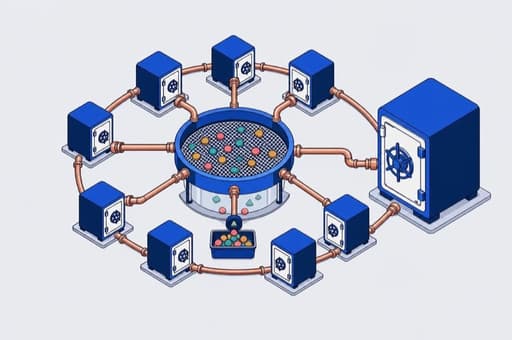
Nasdaq Verafin
Cloud software that spots laundering and fraud for more than 2,800 financial institutions holding around thirteen trillion dollars of assets. Nasdaq's fastest-growing line and its most ambitious target — though the field is crowded and the giant banks are only starting to arrive.
Competes with Actimize financial-crime suite (NICE) · Financial Crime and Compliance Management (Oracle)
In plain English
Every bank is required by law to watch its own customers for signs of laundering or fraud, and a small bank has no realistic way to build that itself. Verafin does the watching and charges a yearly fee.
The clever part is that its members share one pool of data, so a pattern caught at one member bank feeds the alerts at the others — the more banks join, the better it works for all of them. Spread the roughly $331 million this line brought in across those 2,800-odd institutions and you get about a hundred thousand dollars each, which tells you the base is mostly small banks, with a thin layer of giants like Goldman Sachs on top.
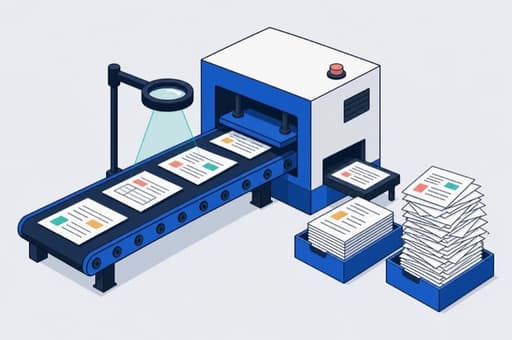
Regulatory Technology (Nasdaq AxiomSL, Trade Surveillance)
The paperwork engine: software that assembles the returns banks must file with regulators, plus systems that watch trading for manipulation. Revenue grew 13% in the second quarter of 2026, and 63 customers who already had it bought more in that quarter alone.
Competes with Regulatory Reporting, with OneSumX (Regnology) · Regulatory reporting tools (Moody's Analytics) · Multi-jurisdiction reporting suite (Vermeg)
In plain English
The unglamorous, compulsory side of banking. Every country a bank operates in wants its numbers handed over in a different shape, and AxiomSL is the machine that builds those filings out of the bank's own records.
The second half of this line watches market activity for people trying to rig prices, and sells to brokers, exchanges and the regulators themselves. Nothing here is optional, which is what makes the money stick: banks pay year after year, and each new rulebook is a fresh reason to buy another piece. Growth comes mostly from selling more to banks already on board rather than from winning new names.


 Market ServicesThe exchanges themselves — US shares and share options, plus the Nordic and Baltic markets and Nasdaq's clearing house. Volumes hit records in mid-2026, but sixteen share venues and seventeen options venues chase the same orders, so the fee kept on each trade keeps getting squeezed.
The exchanges themselves — US shares and share options, plus the Nordic and Baltic markets and Nasdaq's clearing house. Volumes hit records in mid-2026, but sixteen share venues and seventeen options venues chase the same orders, so the fee kept on each trade keeps getting squeezed.
In plain English
Somebody wants to sell a hundred shares; somebody else wants to buy them. Nasdaq's computers pair the two in a fraction of a second and charge a small fee for the introduction.
The catch is that most of that fee goes straight back out the door. To attract orders in the first place, Nasdaq pays rebates back to the trading firms that send them, and pays clearing costs on top — of roughly four billion dollars of trading fees collected in 2025, it kept a little under a third. That kept sliver is the real business, and it rises and falls with how much the world is trading.
Competes with NYSE cash equities (Intercontinental Exchange) · MIAX options markets (Miami International Holdings)
 Always-On Markets, Equity Tokens and Digital Liquidity NetworksNasdaq's bet on trading that barely stops: sessions running twenty-three hours a day, five days a week from 6 December 2026, a redesign of how shares are recorded digitally, and a newly bought off-exchange venue. Nothing earns yet, and a rival is aiming at the same launch date.
Nasdaq's bet on trading that barely stops: sessions running twenty-three hours a day, five days a week from 6 December 2026, a redesign of how shares are recorded digitally, and a newly bought off-exchange venue. Nothing earns yet, and a rival is aiming at the same launch date.
In plain English
American shares mostly change hands during office hours. Nasdaq has regulatory permission to keep its market open twenty-three hours a day, five days a week from December 2026, so someone on the other side of the world can trade over breakfast instead of at midnight.
Beside it sits a rethink of how a share is recorded, with issuing companies placed at the centre of it. Nasdaq is building that with Payward, the parent of crypto exchange Kraken, and has agreed to put a hundred million dollars into the company. None of it earns anything yet, and the gating question is whether the industry plumbing that finalises trades overnight stretches to cover the longer day.
Competes with 24X National Exchange (24X) · Tokenized securities platform (Intercontinental Exchange) · EDGX 24x5 trading (Cboe Global Markets)
 Capital Markets Technology (Nasdaq Calypso)Nasdaq's largest single revenue line: the trading, treasury and collateral system banks and central banks run on, now used in more than seventy countries, plus rack space rented to trading firms. Revenue grew 14% in the second quarter of 2026; big upfront licences make quarters lumpy.
Nasdaq's largest single revenue line: the trading, treasury and collateral system banks and central banks run on, now used in more than seventy countries, plus rack space rented to trading firms. Revenue grew 14% in the second quarter of 2026; big upfront licences make quarters lumpy.
In plain English
Banks need one place that tracks every trade, loan and piece of collateral they hold — the ledger the whole trading desk works from. Nasdaq sells that system, called Calypso, and once a bank installs it, replacing it is like rewiring a house while still living in it. So they stay for years and pay every year.
The same line rents out space in Nasdaq's own machine rooms to firms that want their own machines sitting as close to the exchange's as they can get. One long renewal with a large bank can land inside a single quarter, which is why the growth rate jumps around.
Competes with MX.3 trading and risk platform (Murex) · Treasury and risk suite (ION Group)
 Data and Listing ServicesYearly fees from the companies quoted on Nasdaq, plus subscriptions to its price feeds. Dependable rather than fast — though the first half of 2026 was extraordinary, with SpaceX's record share sale landing here and Nasdaq winning roughly three in four new company listings.
Yearly fees from the companies quoted on Nasdaq, plus subscriptions to its price feeds. Dependable rather than fast — though the first half of 2026 was extraordinary, with SpaceX's record share sale landing here and Nasdaq winning roughly three in four new company listings.
In plain English
Getting your company quoted on Nasdaq is a little like renting a shop in a famous arcade: you pay every year to keep the address. Thousands of companies do, and in the first half of 2026 they raised more than a hundred billion dollars between them — SpaceX alone took in $85.7 billion, the largest share sale of its kind on record.
The other half of this line sells the prices themselves: anyone who wants live Nasdaq quotes pays a subscription for the feed. Neither half sprints: fees wear off as companies leave, and management expects only low single-digit growth.
Competes with NYSE listings (Intercontinental Exchange) · Proprietary US equity data feeds (Cboe Global Markets)
 Workflow and Insights (eVestment, IR Insight, Boardvantage)Software and data for two crowds: investment firms picking fund managers, and companies running their boardrooms and shareholder relations. The slowest corner Nasdaq owns — about 5% growth in the second quarter of 2026, with the corporate side essentially flat.
Software and data for two crowds: investment firms picking fund managers, and companies running their boardrooms and shareholder relations. The slowest corner Nasdaq owns — about 5% growth in the second quarter of 2026, with the corporate side essentially flat.
In plain English
Two different customers, one bundle. Pension funds and the consultants who advise them pay for eVestment, a database connecting them to roughly five thousand investment managers and the products those managers run, so buyers can line them up side by side — a car-buying guide, except for people who manage money.
The other side sells to companies: a secure place for directors to read board papers, and a tool for the staff who field calls from shareholders. Both are paid for by the seat, so they thin out when corporate activity slows. It is Nasdaq's slowest patch, and the stated fix is automated helpers inside the products, which the company says more clients switch on each quarter.
Competes with Diligent Boards (Diligent) · Burgiss private-asset data (MSCI) · Private-fund data (With Intelligence)
 Index (the Nasdaq-100 and the wider index family)Nasdaq rents out its scoreboards. Funds that track its benchmarks pay a sliver of the money they hold, and those assets crossed a trillion dollars in mid-2026, lifting revenue 35%. Which is also the risk: when markets fall, this money falls with them.
Nasdaq rents out its scoreboards. Funds that track its benchmarks pay a sliver of the money they hold, and those assets crossed a trillion dollars in mid-2026, lifting revenue 35%. Which is also the risk: when markets fall, this money falls with them.
In plain English
An index is a list of companies, kept up to date, used as a yardstick for how a slice of the market is doing. Nasdaq owns some of the best known, the Nasdaq-100 above all.
A fund manager who wants to sell a product that tracks one of those lists must license it, and pays a small annual slice of whatever money sits in the fund. It behaves like a toll booth: nothing more to sell once the fund exists, just more traffic passing through. Invesco's QQQ fund is the single biggest payer, holding roughly $407 billion at the end of 2025. The flip side is that Nasdaq cannot make markets rise — when they drop, the fee shrinks by itself.
Competes with S&P 500 and S&P Dow Jones Indices (S&P Global) · MSCI equity indexes (MSCI)
 Nasdaq VerafinCloud software that spots laundering and fraud for more than 2,800 financial institutions holding around thirteen trillion dollars of assets. Nasdaq's fastest-growing line and its most ambitious target — though the field is crowded and the giant banks are only starting to arrive.
Cloud software that spots laundering and fraud for more than 2,800 financial institutions holding around thirteen trillion dollars of assets. Nasdaq's fastest-growing line and its most ambitious target — though the field is crowded and the giant banks are only starting to arrive.
In plain English
Every bank is required by law to watch its own customers for signs of laundering or fraud, and a small bank has no realistic way to build that itself. Verafin does the watching and charges a yearly fee.
The clever part is that its members share one pool of data, so a pattern caught at one member bank feeds the alerts at the others — the more banks join, the better it works for all of them. Spread the roughly $331 million this line brought in across those 2,800-odd institutions and you get about a hundred thousand dollars each, which tells you the base is mostly small banks, with a thin layer of giants like Goldman Sachs on top.
Competes with Actimize financial-crime suite (NICE) · Financial Crime and Compliance Management (Oracle)
 Regulatory Technology (Nasdaq AxiomSL, Trade Surveillance)The paperwork engine: software that assembles the returns banks must file with regulators, plus systems that watch trading for manipulation. Revenue grew 13% in the second quarter of 2026, and 63 customers who already had it bought more in that quarter alone.
The paperwork engine: software that assembles the returns banks must file with regulators, plus systems that watch trading for manipulation. Revenue grew 13% in the second quarter of 2026, and 63 customers who already had it bought more in that quarter alone.
In plain English
The unglamorous, compulsory side of banking. Every country a bank operates in wants its numbers handed over in a different shape, and AxiomSL is the machine that builds those filings out of the bank's own records.
The second half of this line watches market activity for people trying to rig prices, and sells to brokers, exchanges and the regulators themselves. Nothing here is optional, which is what makes the money stick: banks pay year after year, and each new rulebook is a fresh reason to buy another piece. Growth comes mostly from selling more to banks already on board rather than from winning new names.
Competes with Regulatory Reporting, with OneSumX (Regnology) · Regulatory reporting tools (Moody's Analytics) · Multi-jurisdiction reporting suite (Vermeg)
Named in filings, launches and programs
- Nasdaq Clearing and the Nordic and Baltic exchangesEcosystemNasdaq's European side — exchanges across the Nordics and Baltics plus its own clearing house; shares and bonds both added growth in mid-2026.
- Trade Management ServicesProduct lineRack space beside the exchange computers, plus the network connections into them, sold to trading firms; a 2026 price rise lifted the line.
- Market TechnologyProduct lineMatching and settlement systems licensed to other market operators and depositories, sold as part of the capital-markets software line.
- FusionPlatformNasdaq's newer engine for matching derivatives trades; its ISE options market moved onto it in September 2024.
- Nasdaq TexasEcosystemA regional listings presence in Texas; its first advisory board met in June 2026.
- Nasdaq Private Capital indexesProductBenchmarks covering private-market assets, launched in early 2026 — the newest addition to the index family.
- Nasdaq Private MarketBrandA separate company for trading shares in private firms, spun out in 2021; Nasdaq keeps an undisclosed stake and distributes its data.
- Nasdaq VenturesBrandThe in-house investment arm; it agreed in September 2026 to put $100 million into Payward, the parent of Kraken.
- LeveL MarketsBrand · AnnouncedAn off-exchange trading venue Nasdaq agreed to buy in August 2026, to sit inside the new Digital Liquidity Networks unit. Price undisclosed.
- DassetiProductAn automated due-diligence tool bought in September 2026 and folded into eVestment, bringing coverage of 17,000 investment managers with it.
- BoardvantageProductSecure software where company directors read their board papers; roughly two-thirds of users had switched on its automated features by mid-2026.
- IR InsightProductThe tool corporate shareholder-relations teams use to track their investors; about four in five clients now use its automated features.
- Nasdaq Data Link and SolovisProductTwo smaller data and analytics products sold alongside eVestment to investment firms and the institutions that hire them.
Nasdaq Clearing and the Nordic and Baltic exchangesEcosystem
Nasdaq's European side — exchanges across the Nordics and Baltics plus its own clearing house; shares and bonds both added growth in mid-2026.
Trade Management ServicesProduct line
Rack space beside the exchange computers, plus the network connections into them, sold to trading firms; a 2026 price rise lifted the line.
Market TechnologyProduct line
Matching and settlement systems licensed to other market operators and depositories, sold as part of the capital-markets software line.
FusionPlatform
Nasdaq's newer engine for matching derivatives trades; its ISE options market moved onto it in September 2024.
Nasdaq TexasEcosystem
A regional listings presence in Texas; its first advisory board met in June 2026.
Nasdaq Private Capital indexesProduct
Benchmarks covering private-market assets, launched in early 2026 — the newest addition to the index family.
Nasdaq Private MarketBrand
A separate company for trading shares in private firms, spun out in 2021; Nasdaq keeps an undisclosed stake and distributes its data.
Nasdaq VenturesBrand
The in-house investment arm; it agreed in September 2026 to put $100 million into Payward, the parent of Kraken.
LeveL MarketsBrand · Announced
An off-exchange trading venue Nasdaq agreed to buy in August 2026, to sit inside the new Digital Liquidity Networks unit. Price undisclosed.
DassetiProduct
An automated due-diligence tool bought in September 2026 and folded into eVestment, bringing coverage of 17,000 investment managers with it.
BoardvantageProduct
Secure software where company directors read their board papers; roughly two-thirds of users had switched on its automated features by mid-2026.
IR InsightProduct
The tool corporate shareholder-relations teams use to track their investors; about four in five clients now use its automated features.
Nasdaq Data Link and SolovisProduct
Two smaller data and analytics products sold alongside eVestment to investment firms and the institutions that hire them.