
NetApp (NTAP)
Unifies enterprise storage and data management across data centers and public clouds.
Something off on this page? Send us feedback.
NetApp sells the machines big organisations keep their data on, and the software that runs them. The money arrives twice: once when a customer buys the hardware, then every year after in maintenance contracts that renew whether or not anything new is bought. The newer bet is renting the same technology through Amazon's, Microsoft's and Google's clouds, and building machines fast enough to feed AI.
Item facts: FY2026 · year ended April 24, 2026, from filings, earnings calls and company pages.
Judgment weights, not filed revenue
The band summarizes business focus and direction. ~ marks estimates.
9 in detail · 12 more below
AFF A-Series and C-Series
The all-flash machines most companies buy when they replace ageing storage — the biggest single product family here. Sales of flash systems grew 47% in the quarter ended July 2026, while memory-chip costs squeezed the margin.
Competes with PowerStore (Dell Technologies) · FlashArray (Everpure) · Alletra (HPE)
In plain English
Picture a filing cabinet for a company's working data — except it is a metal box in a rack, packed with memory chips instead of paper, and it answers in a fraction of a second. The A-Series is built for the jobs a business cannot have run slow; the C-Series holds more for less.
Customers buy one outright, usually every few years, when the old box runs out of room. Almost none of it is sold direct: two distributors, Arrow Electronics and TD SYNNEX, together accounted for 43% of NetApp's revenue in FY2026, which makes them the counterparties even though the end buyers stay spread across businesses and public bodies.
ASA A-Series and C-Series
Flash machines tuned for databases — the larger half of the storage market, and the half where NetApp has long been the challenger rather than the incumbent. Not broken out in the accounts, so the size is an estimate.
Competes with FlashArray (Everpure) · PowerMax and PowerStore (Dell Technologies) · Enterprise storage platforms (IBM)
In plain English
Databases — and the software that lets one physical server pretend to be many — want storage handed over as a raw slab of space they can organise themselves. ASA machines do only that job, and are faster for doing only it.
NetApp built this family to go after accounts it does not already hold, which means winning head-to-head evaluations against whoever installed the last system. It reaches mid-sized companies through the same two distributors and their resellers. One wrinkle: the capacity version leans hardest on cheap memory chips, so when chip prices rise this is the part of the line-up that feels it first.
FAS hybrid-flash systems
The cheaper machines that mix a little fast memory with plenty of spinning disks, kept for backups and records nobody reads often. Interest picked up in the quarter ended July 2026 as buyers dodged rising memory prices.
Competes with PowerProtect (Dell Technologies) · Alletra (HPE)
In plain English
Not every file has to come back instantly. Last year's records, finished projects, the backup copy nobody hopes to need — that material can sit on slower, cheaper spinning disks, with a layer of fast memory in front for whatever gets asked for often.
FAS is that machine. It goes to the same customers as the fast systems, often standing next to them in the same room, and it wins on price per unit of space rather than on speed. When memory chips get expensive, some buyers shift work down here instead of paying up — which is what NetApp described happening in the summer of 2026.
AFX
NetApp's AI-era machine, launched October 2025 and certified to sit beside NVIDIA's big AI clusters. Real wins exist, but the revenue base is tiny and reviewers had confirmed no full-scale AI training deployment by mid-2026.
Competes with VAST Data platform (VAST Data) · FlashBlade//EXA (Everpure) · AI400X3 (DDN)
In plain English
Training AI chews through data faster than an ordinary storage box can serve it. AFX splits the work in two: one set of boxes concentrates on answering fast, another on holding the sheer volume, and you buy more of whichever you run short of. Sold with it is software that catalogues a company's files so an AI assistant can find and quote from them.
The money comes the ordinary way — customers buy boxes — but nothing ships until NVIDIA has certified the design and the customer has finished months of testing. Early buyers include cloud start-ups that rent out AI computing, financial firms, a public-sector cluster, and Samsung Electronics for chip-design work.
ONTAP
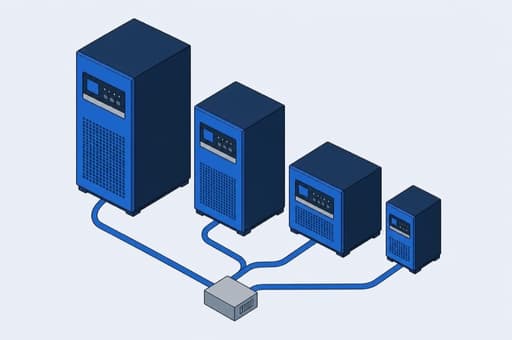
The operating system underneath everything: the same code runs on every NetApp machine and inside Amazon's, Microsoft's and Google's clouds, so a customer's data can move without being rebuilt. It carries no price tag of its own.
Competes with PowerStore / PowerFlex platforms (Dell Technologies) · FlashArray / FlashBlade platform (Everpure) · VAST Data platform (VAST Data)
In plain English
Every NetApp box runs the same piece of software, the way every phone from one maker runs the same operating system. It decides where data sits, copies it elsewhere, keeps snapshots you can rewind to, and locks records that must not be altered.
Nobody buys it separately. It is folded into the price of the hardware, into the yearly support fee, and into what the cloud giants charge when they rent NetApp storage out under their own names. Its value is that it makes leaving awkward: a customer whose data lives in this format can shuffle between its own machines and the cloud without rewriting anything, so the software keeps dragging the hardware and the services along behind it.
Google Distributed Cloud agreement
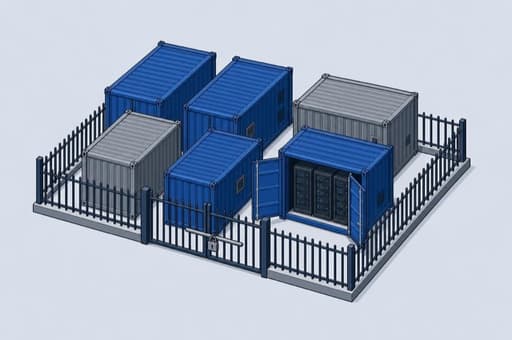
A four-year deal announced April 2026 to supply the storage inside Google's sealed-off sovereign cloud. Carrying it out drove product revenue up 14% in the quarter ended April 2026; the contract's value has never been disclosed.
Competes with Dell-based sovereign stacks (Dell Technologies) · Ceph and other in-house storage software (open-source alternatives)
In plain English
Some governments will not put their data on a normal cloud at all, so Google builds sealed-off versions of its cloud, cut off from the open internet. NetApp supplies the storage inside those builds, plus the plumbing that lets the cloud's own software claim space on it.
For NetApp it is a plain hardware sale, only bought in large lumps by one partner rather than in ones and twos by many customers, and installed on the ground by World Wide Technology. That makes the revenue lumpy — it lands whenever systems ship. Management describes secure and sovereign work as new ground rather than share taken from rivals.
Support contracts
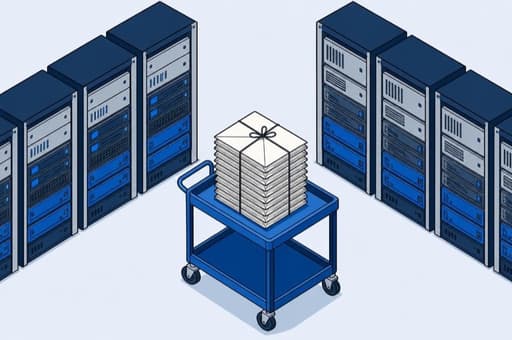
Maintenance attached to every machine sold: $2.64B in FY2026 at a 93% margin, the largest source of profit. It was shrinking a year earlier and grows again now. Company-wide, $5.65B of signed work sits undelivered, up 14%.
Competes with APEX subscriptions and support renewals (Dell Technologies) · Evergreen subscriptions (Everpure)
In plain English
The dull line that quietly funds the rest. Buy a NetApp system and you buy a contract with it: software updates, a replacement part when a drive fails, technical help when something breaks. It runs for years and renews whether or not the customer buys anything new.
Because there is almost nothing left to build — the machines are already installed and paid for — about 93 cents of every dollar here is gross profit, which is why this line matters more to earnings than its size suggests. The catch is that it reads the past: it tracks systems shipped three to five years ago, so a weak selling year only shows up here much later.
NetApp storage sold by AWS, Azure and Google Cloud
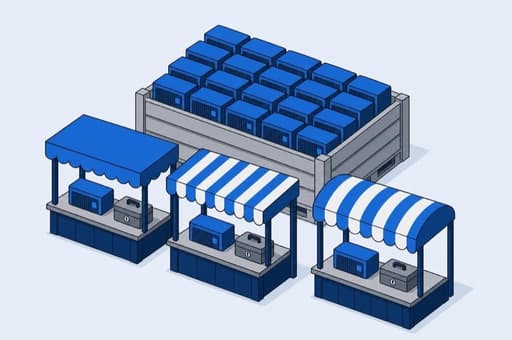
NetApp's software sold as the cloud giants' own storage service, on their invoice. About three-quarters of the $688M cloud line in FY2026, growing 30%, at an 86% margin — and it lasts as long as those three keep carrying it.
Competes with Amazon EFS and S3 file access (AWS) · Azure Files (Microsoft)
In plain English
A company moving into Amazon's or Microsoft's cloud usually wants its data to behave exactly as it did in its own building, especially when it is lifting over software that used to run on servers in the basement. So the cloud giants put NetApp's storage on their own menus: Amazon FSx for NetApp ONTAP, Azure NetApp Files, Google Cloud NetApp Volumes.
The customer clicks it, uses it by the hour, and pays Amazon, Microsoft or Google, who pass NetApp a cut. Nothing is manufactured or shipped, so almost the whole amount falls through as gross profit. The dependency is blunt: Amazon and Microsoft sell in-house alternatives beside it, and the arrangement lasts only while the cloud giants choose to keep NetApp on the shelf.
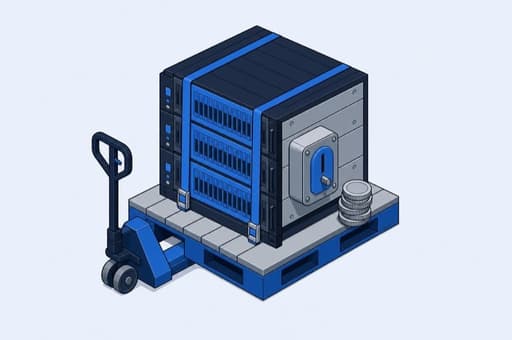
Keystone
NetApp hardware in the customer's own building, paid monthly by how much space is used. The fastest-growing line NetApp discloses — $224M of contracts signed in FY2025, up 54% — and its thinnest margin at roughly 37%.
Competes with Evergreen//One (Everpure) · APEX Flex on Demand (Dell Technologies) · GreenLake (HPE)
In plain English
Renting instead of buying. The machines still stand in the customer's own building, but NetApp owns them; the customer commits to a base amount of space and pays extra only in the months it spills over — the way an office pays a power bill rather than buying a generator.
Finance departments like turning one big purchase into a monthly cost, which is why this is the quickest-growing line NetApp reports. Two catches: NetApp buys the hardware up front and waits years to earn it back, so growth eats cash; and at roughly 37 cents of gross profit per dollar it is the thinnest margin in the company. Every big rival now offers the same deal.


 AFF A-Series and C-SeriesThe all-flash machines most companies buy when they replace ageing storage — the biggest single product family here. Sales of flash systems grew 47% in the quarter ended July 2026, while memory-chip costs squeezed the margin.
The all-flash machines most companies buy when they replace ageing storage — the biggest single product family here. Sales of flash systems grew 47% in the quarter ended July 2026, while memory-chip costs squeezed the margin.
In plain English
Picture a filing cabinet for a company's working data — except it is a metal box in a rack, packed with memory chips instead of paper, and it answers in a fraction of a second. The A-Series is built for the jobs a business cannot have run slow; the C-Series holds more for less.
Customers buy one outright, usually every few years, when the old box runs out of room. Almost none of it is sold direct: two distributors, Arrow Electronics and TD SYNNEX, together accounted for 43% of NetApp's revenue in FY2026, which makes them the counterparties even though the end buyers stay spread across businesses and public bodies.
Competes with PowerStore (Dell Technologies) · FlashArray (Everpure) · Alletra (HPE)
 ASA A-Series and C-SeriesFlash machines tuned for databases — the larger half of the storage market, and the half where NetApp has long been the challenger rather than the incumbent. Not broken out in the accounts, so the size is an estimate.
Flash machines tuned for databases — the larger half of the storage market, and the half where NetApp has long been the challenger rather than the incumbent. Not broken out in the accounts, so the size is an estimate.
In plain English
Databases — and the software that lets one physical server pretend to be many — want storage handed over as a raw slab of space they can organise themselves. ASA machines do only that job, and are faster for doing only it.
NetApp built this family to go after accounts it does not already hold, which means winning head-to-head evaluations against whoever installed the last system. It reaches mid-sized companies through the same two distributors and their resellers. One wrinkle: the capacity version leans hardest on cheap memory chips, so when chip prices rise this is the part of the line-up that feels it first.
Competes with FlashArray (Everpure) · PowerMax and PowerStore (Dell Technologies) · Enterprise storage platforms (IBM)
 FAS hybrid-flash systemsThe cheaper machines that mix a little fast memory with plenty of spinning disks, kept for backups and records nobody reads often. Interest picked up in the quarter ended July 2026 as buyers dodged rising memory prices.
The cheaper machines that mix a little fast memory with plenty of spinning disks, kept for backups and records nobody reads often. Interest picked up in the quarter ended July 2026 as buyers dodged rising memory prices.
In plain English
Not every file has to come back instantly. Last year's records, finished projects, the backup copy nobody hopes to need — that material can sit on slower, cheaper spinning disks, with a layer of fast memory in front for whatever gets asked for often.
FAS is that machine. It goes to the same customers as the fast systems, often standing next to them in the same room, and it wins on price per unit of space rather than on speed. When memory chips get expensive, some buyers shift work down here instead of paying up — which is what NetApp described happening in the summer of 2026.
Competes with PowerProtect (Dell Technologies) · Alletra (HPE)
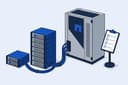 AFXNetApp's AI-era machine, launched October 2025 and certified to sit beside NVIDIA's big AI clusters. Real wins exist, but the revenue base is tiny and reviewers had confirmed no full-scale AI training deployment by mid-2026.
NetApp's AI-era machine, launched October 2025 and certified to sit beside NVIDIA's big AI clusters. Real wins exist, but the revenue base is tiny and reviewers had confirmed no full-scale AI training deployment by mid-2026.
In plain English
Training AI chews through data faster than an ordinary storage box can serve it. AFX splits the work in two: one set of boxes concentrates on answering fast, another on holding the sheer volume, and you buy more of whichever you run short of. Sold with it is software that catalogues a company's files so an AI assistant can find and quote from them.
The money comes the ordinary way — customers buy boxes — but nothing ships until NVIDIA has certified the design and the customer has finished months of testing. Early buyers include cloud start-ups that rent out AI computing, financial firms, a public-sector cluster, and Samsung Electronics for chip-design work.
Competes with VAST Data platform (VAST Data) · FlashBlade//EXA (Everpure) · AI400X3 (DDN)
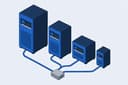 ONTAPThe operating system underneath everything: the same code runs on every NetApp machine and inside Amazon's, Microsoft's and Google's clouds, so a customer's data can move without being rebuilt. It carries no price tag of its own.
The operating system underneath everything: the same code runs on every NetApp machine and inside Amazon's, Microsoft's and Google's clouds, so a customer's data can move without being rebuilt. It carries no price tag of its own.
In plain English
Every NetApp box runs the same piece of software, the way every phone from one maker runs the same operating system. It decides where data sits, copies it elsewhere, keeps snapshots you can rewind to, and locks records that must not be altered.
Nobody buys it separately. It is folded into the price of the hardware, into the yearly support fee, and into what the cloud giants charge when they rent NetApp storage out under their own names. Its value is that it makes leaving awkward: a customer whose data lives in this format can shuffle between its own machines and the cloud without rewriting anything, so the software keeps dragging the hardware and the services along behind it.
Competes with PowerStore / PowerFlex platforms (Dell Technologies) · FlashArray / FlashBlade platform (Everpure) · VAST Data platform (VAST Data)
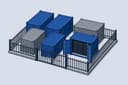 Google Distributed Cloud agreementA four-year deal announced April 2026 to supply the storage inside Google's sealed-off sovereign cloud. Carrying it out drove product revenue up 14% in the quarter ended April 2026; the contract's value has never been disclosed.
A four-year deal announced April 2026 to supply the storage inside Google's sealed-off sovereign cloud. Carrying it out drove product revenue up 14% in the quarter ended April 2026; the contract's value has never been disclosed.
In plain English
Some governments will not put their data on a normal cloud at all, so Google builds sealed-off versions of its cloud, cut off from the open internet. NetApp supplies the storage inside those builds, plus the plumbing that lets the cloud's own software claim space on it.
For NetApp it is a plain hardware sale, only bought in large lumps by one partner rather than in ones and twos by many customers, and installed on the ground by World Wide Technology. That makes the revenue lumpy — it lands whenever systems ship. Management describes secure and sovereign work as new ground rather than share taken from rivals.
Competes with Dell-based sovereign stacks (Dell Technologies) · Ceph and other in-house storage software (open-source alternatives)
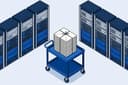 Support contractsMaintenance attached to every machine sold: $2.64B in FY2026 at a 93% margin, the largest source of profit. It was shrinking a year earlier and grows again now. Company-wide, $5.65B of signed work sits undelivered, up 14%.
Maintenance attached to every machine sold: $2.64B in FY2026 at a 93% margin, the largest source of profit. It was shrinking a year earlier and grows again now. Company-wide, $5.65B of signed work sits undelivered, up 14%.
In plain English
The dull line that quietly funds the rest. Buy a NetApp system and you buy a contract with it: software updates, a replacement part when a drive fails, technical help when something breaks. It runs for years and renews whether or not the customer buys anything new.
Because there is almost nothing left to build — the machines are already installed and paid for — about 93 cents of every dollar here is gross profit, which is why this line matters more to earnings than its size suggests. The catch is that it reads the past: it tracks systems shipped three to five years ago, so a weak selling year only shows up here much later.
Competes with APEX subscriptions and support renewals (Dell Technologies) · Evergreen subscriptions (Everpure)
 NetApp storage sold by AWS, Azure and Google CloudNetApp's software sold as the cloud giants' own storage service, on their invoice. About three-quarters of the $688M cloud line in FY2026, growing 30%, at an 86% margin — and it lasts as long as those three keep carrying it.
NetApp's software sold as the cloud giants' own storage service, on their invoice. About three-quarters of the $688M cloud line in FY2026, growing 30%, at an 86% margin — and it lasts as long as those three keep carrying it.
In plain English
A company moving into Amazon's or Microsoft's cloud usually wants its data to behave exactly as it did in its own building, especially when it is lifting over software that used to run on servers in the basement. So the cloud giants put NetApp's storage on their own menus: Amazon FSx for NetApp ONTAP, Azure NetApp Files, Google Cloud NetApp Volumes.
The customer clicks it, uses it by the hour, and pays Amazon, Microsoft or Google, who pass NetApp a cut. Nothing is manufactured or shipped, so almost the whole amount falls through as gross profit. The dependency is blunt: Amazon and Microsoft sell in-house alternatives beside it, and the arrangement lasts only while the cloud giants choose to keep NetApp on the shelf.
Competes with Amazon EFS and S3 file access (AWS) · Azure Files (Microsoft)
 KeystoneNetApp hardware in the customer's own building, paid monthly by how much space is used. The fastest-growing line NetApp discloses — $224M of contracts signed in FY2025, up 54% — and its thinnest margin at roughly 37%.
NetApp hardware in the customer's own building, paid monthly by how much space is used. The fastest-growing line NetApp discloses — $224M of contracts signed in FY2025, up 54% — and its thinnest margin at roughly 37%.
In plain English
Renting instead of buying. The machines still stand in the customer's own building, but NetApp owns them; the customer commits to a base amount of space and pays extra only in the months it spills over — the way an office pays a power bill rather than buying a generator.
Finance departments like turning one big purchase into a monthly cost, which is why this is the quickest-growing line NetApp reports. Two catches: NetApp buys the hardware up front and waits years to earn it back, so growth eats cash; and at roughly 37 cents of gross profit per dollar it is the thinnest margin in the company. Every big rival now offers the same deal.
Competes with Evergreen//One (Everpure) · APEX Flex on Demand (Dell Technologies) · GreenLake (HPE)
Named in filings, launches and programs
- NetApp AI Data EnginePlatform · RampingSoftware that indexes and guards a company's files so AI tools can search them; sold with AFX and through Keystone.
- StorageGRIDProduct lineStorage for very large piles of loose files; part of the Google sovereign-cloud stack, with newer features aimed at AI work.
- E-Series / EF-SeriesProduct lineStripped-down machines built for jobs that need raw throughput — supercomputing, video — rather than data-management features.
- Cloud Volumes ONTAPServiceThe same NetApp software running inside a customer's own cloud account and managed by them — the part of cloud revenue the cloud giants don't bill.
- InstaclustrServiceManaged open-source databases and data pipelines, run for customers who would rather not operate them.
- NetApp ConsolePlatformOne control panel for everything a customer runs, on-site and in the cloud; renamed from BlueXP in October 2025.
- SnapMirror, SnapCenter, SnapLock, SnapshotProduct lineCopying, backup and record-locking built into ONTAP rather than priced separately.
- TridentProduct linePlumbing that lets container software claim storage space automatically; ships inside the Google Distributed Cloud stack.
- Data Infrastructure Insights, Ransomware Resilience, Backup and Recovery, ClassificationServiceSubscription add-ons on the Console: monitoring, ransomware defence, backup, and sorting data by what it holds.
- DataPelagoProduct · Pre-revenueBought July 2026, price undisclosed: technology for processing data where it already sits, across ordinary and AI chips.
- JetStream SoftwareProduct line · Pre-revenueBought August 2026, price undisclosed: continuously copies server estates into Azure NetApp Files so they can be restarted after an outage.
- Professional servicesServiceInstallation and migration work — the non-Keystone remainder of the $407M services line, sold to get new systems running.
NetApp AI Data EnginePlatform · Ramping
Software that indexes and guards a company's files so AI tools can search them; sold with AFX and through Keystone.
StorageGRIDProduct line
Storage for very large piles of loose files; part of the Google sovereign-cloud stack, with newer features aimed at AI work.
E-Series / EF-SeriesProduct line
Stripped-down machines built for jobs that need raw throughput — supercomputing, video — rather than data-management features.
Cloud Volumes ONTAPService
The same NetApp software running inside a customer's own cloud account and managed by them — the part of cloud revenue the cloud giants don't bill.
InstaclustrService
Managed open-source databases and data pipelines, run for customers who would rather not operate them.
NetApp ConsolePlatform
One control panel for everything a customer runs, on-site and in the cloud; renamed from BlueXP in October 2025.
SnapMirror, SnapCenter, SnapLock, SnapshotProduct line
Copying, backup and record-locking built into ONTAP rather than priced separately.
TridentProduct line
Plumbing that lets container software claim storage space automatically; ships inside the Google Distributed Cloud stack.
Data Infrastructure Insights, Ransomware Resilience, Backup and Recovery, ClassificationService
Subscription add-ons on the Console: monitoring, ransomware defence, backup, and sorting data by what it holds.
DataPelagoProduct · Pre-revenue
Bought July 2026, price undisclosed: technology for processing data where it already sits, across ordinary and AI chips.
JetStream SoftwareProduct line · Pre-revenue
Bought August 2026, price undisclosed: continuously copies server estates into Azure NetApp Files so they can be restarted after an outage.
Professional servicesService
Installation and migration work — the non-Keystone remainder of the $407M services line, sold to get new systems running.