
Public Service Enterprise Group (PEG)
New Jersey electric and gas utility paired with merchant nuclear generation.
Something off on this page? Send us feedback.
Public Service Enterprise Group is New Jersey's largest electricity and gas delivery utility — poles, wires and pipes, with prices set by regulators and earnings tied to what it builds. Beside it sits a fleet of nuclear plants selling power into the open market at whatever the market pays. The regulated side carries the company today; the nuclear side is where the options, and the doubt, sit.
Item facts: FY2025 · year ended Dec 31, 2025, from filings, earnings calls and company pages.
Judgment weights, not filed revenue
The band summarizes business focus and direction. ~ marks estimates.
8 in detail · 7 more below
PSE&G Electric Distribution
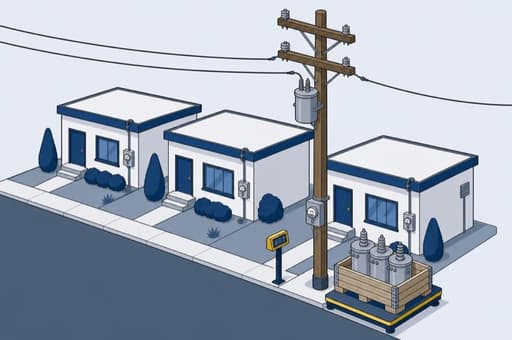
The wires and meters serving about 2.4 million New Jersey homes and businesses — the biggest single line, and with gas and transmission roughly four-fifths of revenue. PSEG plans $24–28B of spending through 2030, over ninety percent of it regulated. A rate case is due by end-2026.
Competes with Jersey Central Power & Light delivery (FirstEnergy) · Orange & Rockland delivery (Con Edison) · Retail power supply under NJ choice (Third-party suppliers)
In plain English
Think of an electricity bill as two things stapled together. The power itself PSE&G buys at state-run auctions and passes on at exactly what it paid — no markup, so a dearer winter is not a better year. What it actually earns on is the delivery: the poles, wires and meters between the power plant and the kitchen light, about a quarter of the bill.
Regulators decide how much it may collect for that, based on the equipment it has put in the ground. A state rule also evens out weather and usage. So growth comes from adding customers and adding equipment, not from selling more electricity.

Clean Energy Future programs
State-approved work that helps customers use less energy and ease off at peak hours. Management counts more than $1B a year of customer savings across roughly 525,000 participants since 2020. The next approval filing was due by the end of September 2026.
Competes with EnergizeNJ / IIP II investment program (FirstEnergy) · SAVEGREEN efficiency program (New Jersey Resources)
In plain English
A set of state-approved programs that help New Jersey homes and businesses burn less energy, cut back when the grid is straining, and swap gas equipment for electric.
Using less is, oddly, how the utility grows. Regulators let PSE&G treat what it spends on these programs like the money it spends on wires: it goes on the books and earns a set return, collected through delivery charges. Bills fall — management counts over a billion dollars a year saved across roughly 525,000 participants since 2020 — and PSE&G still earns. Every fresh round has to be approved, which is the catch.
PSE&G Gas Distribution
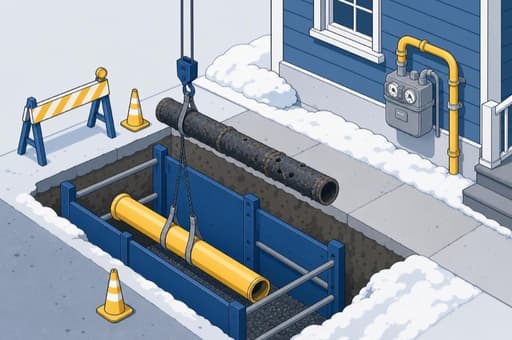
Pipes to roughly 1.9 million customers, and the most seasonal line in the company — $1,357M in the winter quarter against $343M in the spring one. The growth engine is a $1.4B, three-year pipe-replacement program approved in late 2025.
Competes with New Jersey Natural Gas delivery (New Jersey Resources) · Elizabethtown Gas & South Jersey Gas (South Jersey Industries) · Clean Energy Future electrification (PSE&G)
In plain English
Under the streets sits a second network entirely: pipes carrying gas to about 1.9 million customers for heat, hot water and cooking.
The gas itself is bought on customers' behalf and billed at exactly what it cost, so a cold, expensive winter does not make PSE&G richer. The earnings come from the pipes. The big job now is swapping old mains for new ones under a three-year, $1.4B program the state approved in late 2025, with much of that cost allowed into bills as the work happens rather than years afterwards. Revenue swings hard with the seasons: winter quarters dwarf summer ones.

PSEG Nuclear — Salem, Hope Creek, Peach Bottom
Three stations, 3,758 megawatts, running near 91% of full output last year. Unlike the wires, the price is not guaranteed — a federal tax credit sets a floor, and a market cap held standby payments to $325 a megawatt-day where uncapped bidding reached $555.
Competes with Nuclear fleet (Constellation) · Susquehanna station (Talen Energy) · Nuclear fleet (Vistra)
In plain English
Three nuclear stations — two in New Jersey, plus half of one across the line in Pennsylvania that Constellation runs — able together to put out 3,758 megawatts, day and night, a low single-digit slice of the whole regional grid's summer peak.
Nobody guarantees this price. The plants sell electricity into the regional wholesale market, and are paid separately just for promising to be available when demand spikes. A federal tax credit for nuclear output puts a floor under a bad year. PSEG has already locked in prices for about 95% of this year's output, so the surprises land later, not now.
Nuclear supply deals with large power users
PSEG has been shopping multi-year deals for existing nuclear output above the federal-credit floor since late 2024, and has put proposals into the regional grid's new backstop process. Counterparties and sizes are undisclosed, and nothing has been signed.
Competes with Crane Clean Energy Center (Constellation) · Susquehanna co-located campus (Talen Energy) · Generation built by the buyer itself (Large power users)
In plain English
Computer warehouses running artificial-intelligence work need electricity that never stops. PSEG owns three stations that never stop.
The idea is to sell a slice of that output straight to one big buyer on a multi-year contract, priced above what the open market and the federal credit deliver today. Same electricity, better price — that is the whole case. So far it is talk: no contract has been announced, rival owners have signed theirs, and PSEG's finance chief said in August 2026 that data-center interest had not stepped up, only continued. Management describes buyers in the fifty-to-hundred-megawatt range.
New nuclear at the Salem County site
New Jersey lifted its long-standing ban on new nuclear plants and in July 2026 ordered a competitive hunt for at least 1,100 megawatts. PSEG holds a federal early-site permit for Salem County land. Twelve-year projects, management says — and none of it is in the spending plan.
Competes with Rival bids into the state's nuclear procurement (Other nuclear developers) · New gas-fired plants for the same 2031 need (PJM backstop developers)
In plain English
New Jersey spent decades refusing to allow new nuclear plants. In July 2026 the governor signed a law telling two state agencies to go and procure at least 1,100 megawatts of advanced nuclear, with safeguards so customers do not carry all the cost.
PSEG's edge is paperwork and dirt: since 2016 it has held a federal permit saying its Salem County land is an acceptable place for a reactor — one of six such permits in the country — and it is the state's only nuclear operator. But the contest is competitive, so an edge is not a win, and management wants the project risk shared before it commits.
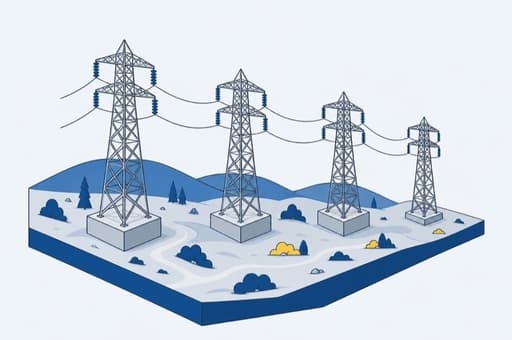
PSE&G Electric Transmission
The high-voltage backbone, and the steadiest line in the company at roughly $450M a quarter for six quarters running. A federal formula reset added $82M for 2026; a bonus slice worth about $40M of yearly profit disappears in January 2027.
Competes with Competitive transmission bids (FirstEnergy) · Competitive transmission bids (Exelon) · Merchant transmission projects (Independent developers)
In plain English
Before electricity reaches a street, it crosses the state at high voltage on tall steel towers. That long-distance layer is a separate business from the wires on the street, with a separate rulebook.
Nobody haggles over the price. A federal formula adds up what PSE&G spent, adds an allowed profit on the equipment, and resets the charge every January — which is why the revenue barely wobbles quarter to quarter. The cost is spread across everyone drawing power in PSE&G's patch of the regional grid rather than billed to a named customer. Build more towers, collect more. One bonus slice of that allowed profit ends in January 2027.
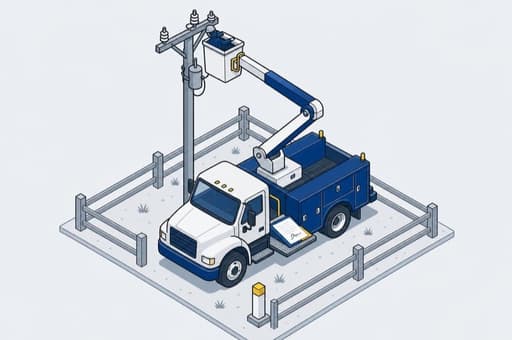
PSEG Long Island
PSEG runs Long Island's electric grid for the public authority that owns it, for fees put at roughly $121M a year. The one place a single customer matters. The renewed term runs to the end of 2030.
Competes with Power Long Island LLC bid (Quanta Services) · Re-procurement of the grid contract (LIPA)
In plain English
Long Island's poles and wires belong to a public authority, LIPA, which does not want to run them itself. It pays PSEG to do the work — operating and maintaining the system on Long Island and in the Rockaways.
PSEG owns none of those assets and takes no risk on them; it collects a management fee plus payments for computer and back-office support, together put at roughly $121M a year. This is the one place in the group where a single customer matters, and that customer re-tenders the job: a selection committee recommended replacing PSEG in 2025 before LIPA's board voted 6–1 to keep it. One piece of the fee ended in December 2025 and still shows as a drag.


 PSE&G Electric DistributionThe wires and meters serving about 2.4 million New Jersey homes and businesses — the biggest single line, and with gas and transmission roughly four-fifths of revenue. PSEG plans $24–28B of spending through 2030, over ninety percent of it regulated. A rate case is due by end-2026.
The wires and meters serving about 2.4 million New Jersey homes and businesses — the biggest single line, and with gas and transmission roughly four-fifths of revenue. PSEG plans $24–28B of spending through 2030, over ninety percent of it regulated. A rate case is due by end-2026.
In plain English
Think of an electricity bill as two things stapled together. The power itself PSE&G buys at state-run auctions and passes on at exactly what it paid — no markup, so a dearer winter is not a better year. What it actually earns on is the delivery: the poles, wires and meters between the power plant and the kitchen light, about a quarter of the bill.
Regulators decide how much it may collect for that, based on the equipment it has put in the ground. A state rule also evens out weather and usage. So growth comes from adding customers and adding equipment, not from selling more electricity.
Competes with Jersey Central Power & Light delivery (FirstEnergy) · Orange & Rockland delivery (Con Edison) · Retail power supply under NJ choice (Third-party suppliers)
 Clean Energy Future programsState-approved work that helps customers use less energy and ease off at peak hours. Management counts more than $1B a year of customer savings across roughly 525,000 participants since 2020. The next approval filing was due by the end of September 2026.
State-approved work that helps customers use less energy and ease off at peak hours. Management counts more than $1B a year of customer savings across roughly 525,000 participants since 2020. The next approval filing was due by the end of September 2026.
In plain English
A set of state-approved programs that help New Jersey homes and businesses burn less energy, cut back when the grid is straining, and swap gas equipment for electric.
Using less is, oddly, how the utility grows. Regulators let PSE&G treat what it spends on these programs like the money it spends on wires: it goes on the books and earns a set return, collected through delivery charges. Bills fall — management counts over a billion dollars a year saved across roughly 525,000 participants since 2020 — and PSE&G still earns. Every fresh round has to be approved, which is the catch.
Competes with EnergizeNJ / IIP II investment program (FirstEnergy) · SAVEGREEN efficiency program (New Jersey Resources)
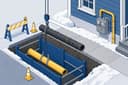 PSE&G Gas DistributionPipes to roughly 1.9 million customers, and the most seasonal line in the company — $1,357M in the winter quarter against $343M in the spring one. The growth engine is a $1.4B, three-year pipe-replacement program approved in late 2025.
Pipes to roughly 1.9 million customers, and the most seasonal line in the company — $1,357M in the winter quarter against $343M in the spring one. The growth engine is a $1.4B, three-year pipe-replacement program approved in late 2025.
In plain English
Under the streets sits a second network entirely: pipes carrying gas to about 1.9 million customers for heat, hot water and cooking.
The gas itself is bought on customers' behalf and billed at exactly what it cost, so a cold, expensive winter does not make PSE&G richer. The earnings come from the pipes. The big job now is swapping old mains for new ones under a three-year, $1.4B program the state approved in late 2025, with much of that cost allowed into bills as the work happens rather than years afterwards. Revenue swings hard with the seasons: winter quarters dwarf summer ones.
Competes with New Jersey Natural Gas delivery (New Jersey Resources) · Elizabethtown Gas & South Jersey Gas (South Jersey Industries) · Clean Energy Future electrification (PSE&G)
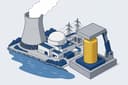 PSEG Nuclear — Salem, Hope Creek, Peach BottomThree stations, 3,758 megawatts, running near 91% of full output last year. Unlike the wires, the price is not guaranteed — a federal tax credit sets a floor, and a market cap held standby payments to $325 a megawatt-day where uncapped bidding reached $555.
Three stations, 3,758 megawatts, running near 91% of full output last year. Unlike the wires, the price is not guaranteed — a federal tax credit sets a floor, and a market cap held standby payments to $325 a megawatt-day where uncapped bidding reached $555.
In plain English
Three nuclear stations — two in New Jersey, plus half of one across the line in Pennsylvania that Constellation runs — able together to put out 3,758 megawatts, day and night, a low single-digit slice of the whole regional grid's summer peak.
Nobody guarantees this price. The plants sell electricity into the regional wholesale market, and are paid separately just for promising to be available when demand spikes. A federal tax credit for nuclear output puts a floor under a bad year. PSEG has already locked in prices for about 95% of this year's output, so the surprises land later, not now.
Competes with Nuclear fleet (Constellation) · Susquehanna station (Talen Energy) · Nuclear fleet (Vistra)
 Nuclear supply deals with large power usersPSEG has been shopping multi-year deals for existing nuclear output above the federal-credit floor since late 2024, and has put proposals into the regional grid's new backstop process. Counterparties and sizes are undisclosed, and nothing has been signed.
PSEG has been shopping multi-year deals for existing nuclear output above the federal-credit floor since late 2024, and has put proposals into the regional grid's new backstop process. Counterparties and sizes are undisclosed, and nothing has been signed.
In plain English
Computer warehouses running artificial-intelligence work need electricity that never stops. PSEG owns three stations that never stop.
The idea is to sell a slice of that output straight to one big buyer on a multi-year contract, priced above what the open market and the federal credit deliver today. Same electricity, better price — that is the whole case. So far it is talk: no contract has been announced, rival owners have signed theirs, and PSEG's finance chief said in August 2026 that data-center interest had not stepped up, only continued. Management describes buyers in the fifty-to-hundred-megawatt range.
Competes with Crane Clean Energy Center (Constellation) · Susquehanna co-located campus (Talen Energy) · Generation built by the buyer itself (Large power users)
 New nuclear at the Salem County siteNew Jersey lifted its long-standing ban on new nuclear plants and in July 2026 ordered a competitive hunt for at least 1,100 megawatts. PSEG holds a federal early-site permit for Salem County land. Twelve-year projects, management says — and none of it is in the spending plan.
New Jersey lifted its long-standing ban on new nuclear plants and in July 2026 ordered a competitive hunt for at least 1,100 megawatts. PSEG holds a federal early-site permit for Salem County land. Twelve-year projects, management says — and none of it is in the spending plan.
In plain English
New Jersey spent decades refusing to allow new nuclear plants. In July 2026 the governor signed a law telling two state agencies to go and procure at least 1,100 megawatts of advanced nuclear, with safeguards so customers do not carry all the cost.
PSEG's edge is paperwork and dirt: since 2016 it has held a federal permit saying its Salem County land is an acceptable place for a reactor — one of six such permits in the country — and it is the state's only nuclear operator. But the contest is competitive, so an edge is not a win, and management wants the project risk shared before it commits.
Competes with Rival bids into the state's nuclear procurement (Other nuclear developers) · New gas-fired plants for the same 2031 need (PJM backstop developers)
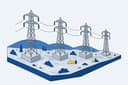 PSE&G Electric TransmissionThe high-voltage backbone, and the steadiest line in the company at roughly $450M a quarter for six quarters running. A federal formula reset added $82M for 2026; a bonus slice worth about $40M of yearly profit disappears in January 2027.
The high-voltage backbone, and the steadiest line in the company at roughly $450M a quarter for six quarters running. A federal formula reset added $82M for 2026; a bonus slice worth about $40M of yearly profit disappears in January 2027.
In plain English
Before electricity reaches a street, it crosses the state at high voltage on tall steel towers. That long-distance layer is a separate business from the wires on the street, with a separate rulebook.
Nobody haggles over the price. A federal formula adds up what PSE&G spent, adds an allowed profit on the equipment, and resets the charge every January — which is why the revenue barely wobbles quarter to quarter. The cost is spread across everyone drawing power in PSE&G's patch of the regional grid rather than billed to a named customer. Build more towers, collect more. One bonus slice of that allowed profit ends in January 2027.
Competes with Competitive transmission bids (FirstEnergy) · Competitive transmission bids (Exelon) · Merchant transmission projects (Independent developers)
 PSEG Long IslandPSEG runs Long Island's electric grid for the public authority that owns it, for fees put at roughly $121M a year. The one place a single customer matters. The renewed term runs to the end of 2030.
PSEG runs Long Island's electric grid for the public authority that owns it, for fees put at roughly $121M a year. The one place a single customer matters. The renewed term runs to the end of 2030.
In plain English
Long Island's poles and wires belong to a public authority, LIPA, which does not want to run them itself. It pays PSEG to do the work — operating and maintaining the system on Long Island and in the Rockaways.
PSEG owns none of those assets and takes no risk on them; it collects a management fee plus payments for computer and back-office support, together put at roughly $121M a year. This is the one place in the group where a single customer matters, and that customer re-tenders the job: a selection committee recommended replacing PSEG in 2025 before LIPA's board voted 6–1 to keep it. One piece of the fee ended in December 2025 and still shows as a drag.
Competes with Power Long Island LLC bid (Quanta Services) · Re-procurement of the grid contract (LIPA)
Named in filings, launches and programs
- Gas System Modernization Program IIICustomer programApproved by the state in November 2025: $1.4B over three years on gas mains, with about $1B of it recovered from bills as the work happens.
- Salem capacity uprateProduct · AnnouncedA capacity increase at Salem worth about 200 MW, roughly 112 MW of it PSEG's share, phased into service across 2027 to 2029.
- PSEG Power third-party gas salesProduct line$353M of gas sold to buyers outside the utility in 2025, under 3% of revenue — merchant gas operations sitting alongside the nuclear fleet.
- PSE&G appliance repair and solar projectsServiceRepairing customers' appliances and building solar projects brought in about $93M in the first quarter of 2026 — small, steady work beside the regulated wires.
- Basic Generation Service and BGSS procurementServiceThe power and gas themselves, bought at state-run auctions and billed on at cost. No profit in it, yet it sets most of what a customer pays.
- Conservation Incentive ProgramCustomer programThe state rule that separates delivery earnings from how much energy customers actually use, so a mild winter no longer dents the margin.
- Competitive transmission solicitationsProduct · AnnouncedPSE&G bids for grid projects beyond its own franchise, including offshore-wind connection work — upside management deliberately keeps outside its spending plan.
Gas System Modernization Program IIICustomer program
Approved by the state in November 2025: $1.4B over three years on gas mains, with about $1B of it recovered from bills as the work happens.
Salem capacity uprateProduct · Announced
A capacity increase at Salem worth about 200 MW, roughly 112 MW of it PSEG's share, phased into service across 2027 to 2029.
PSEG Power third-party gas salesProduct line
$353M of gas sold to buyers outside the utility in 2025, under 3% of revenue — merchant gas operations sitting alongside the nuclear fleet.
PSE&G appliance repair and solar projectsService
Repairing customers' appliances and building solar projects brought in about $93M in the first quarter of 2026 — small, steady work beside the regulated wires.
Basic Generation Service and BGSS procurementService
The power and gas themselves, bought at state-run auctions and billed on at cost. No profit in it, yet it sets most of what a customer pays.
Conservation Incentive ProgramCustomer program
The state rule that separates delivery earnings from how much energy customers actually use, so a mild winter no longer dents the margin.
Competitive transmission solicitationsProduct · Announced
PSE&G bids for grid projects beyond its own franchise, including offshore-wind connection work — upside management deliberately keeps outside its spending plan.