
Shopify (SHOP)
Runs storefront, checkout, payment, and point-of-sale infrastructure for merchants.
Something off on this page? Send us feedback.
Shopify gives merchants one place to run a store, whether the sale happens on a website, at a counter or through a computer assistant. Store subscriptions start the relationship, but checkout and payments now bring in most of the money; the next act is helping merchants sell through more places without leaving Shopify.
Item facts: FY2025 · year ended Dec 31, 2025, from filings, earnings calls and company pages.
Judgment weights, not filed revenue
The band summarizes business focus and direction. ~ marks estimates.
9 in detail · 9 more below

Shopify Payments and Shop Pay
The checkout and payment engine processed $248.1 billion of purchases in FY2025, or 65.6% of all sales through Shopify stores. More payment use lifts revenue, but card-network fees, fraud and payment losses rise alongside it.
Competes with Stripe Payments and Link (Stripe) · Square Payments (Block)
In plain English
When a shopper pays in a Shopify store, Shopify Payments moves the money from the shopper's card to the seller, while Shop Pay remembers checkout details to make the next purchase quicker. Affirm, an installment-payment company, lets shoppers split some bills over time.
Shopify keeps a fee from each payment, so it earns more when its merchants sell more and when more of those sales use its own checkout. The trade-off is simple: card networks and processing partners also collect fees, and Shopify bears costs when payments go bad or fraud slips through. No single merchant has ever supplied more than 5% of Shopify's revenue.
Shopify Subscription Plans
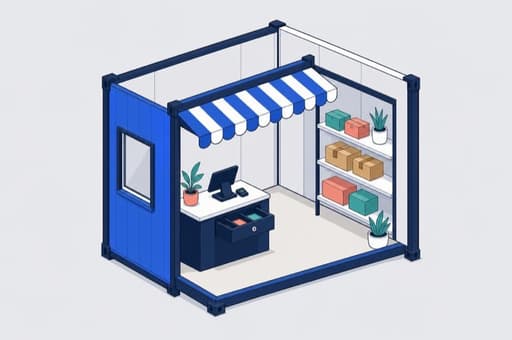
Basic, Grow and Advanced are the paid foundation for running an online store. Monthly prices ran from $39 to $399 on Sep. 4, 2026; keeping merchants on the platform matters because every added service starts with this relationship.
Competes with BigCommerce platform (BigCommerce) · Adobe Commerce (Adobe)
In plain English
The unglamorous doorway to Shopify is a monthly software plan. It gives a seller a ready-made website, a product shelf, a checkout and a place to track orders, without hiring a team to build those pieces from scratch.
Merchants pay a recurring fee for one of three main plans, then often add payments, shipping or apps as the store grows. That makes the plan less like a one-off website purchase and more like rent for a furnished shop: predictable money for Shopify, and a home the merchant is reluctant to rebuild elsewhere.
Shopify Plus and B2B
Shopify's enterprise plan serves larger sellers and wholesale buyers. It supplied 34% of monthly subscription fees at FY2025 year-end; wholesale sales growth remained strong but slowed to 76% in FY2026 Q2.
Competes with Salesforce B2B Commerce (Salesforce) · Adobe Commerce B2B (Adobe)
In plain English
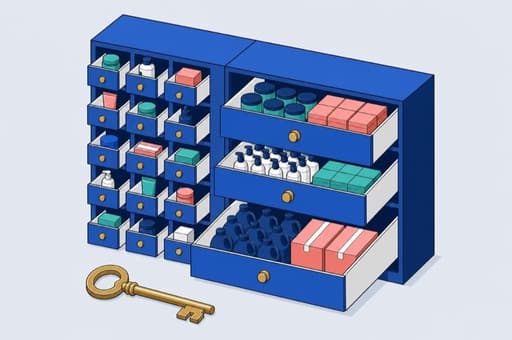
Big retailers and wholesalers need more than a standard web shop. Shopify Plus gives them the same core store system with room for complicated catalogs, buyer permissions and payment terms, so a brand can sell to consumers and business customers from one back room.
Customers pay larger subscriptions, often under multi-year agreements, and their sales can also feed Shopify's payment services. Moving a complex retailer is demanding, but once its products, buyers and orders all live in the system, renewing is easier than rebuilding the operation somewhere else.

Sidekick, Shopify Catalog, and Agentic Storefronts
These tools help merchants manage stores and put accurate products into AI-guided shopping. Shopify named four outside computer assistants as routes to discovery and checkout, but disclosed no separate sales; adoption and outside-platform dependence are the watchpoints.
Competes with Agentforce Guided Shopping (Salesforce) · Adobe Commerce AI-driven commerce (Adobe)
In plain English
Imagine every product in a store packed into a neat, machine-readable card: what it is, what it costs and whether it is available. Shopify Catalog organizes those cards, Sidekick helps the merchant do routine store work, and Agentic Storefronts let computer assistants guide a shopper toward checkout.
The tools do not have a separate price tag today. Their job is to make Shopify stores easier to run and easier to find through ChatGPT, Microsoft and Google services, keeping merchants and purchases inside Shopify's system. That promise depends on fresh product information and on outside assistants continuing to send shoppers through.
Partner and App Ecosystem
Developers and service partners fill gaps Shopify cannot cover itself, with more than 21,000 apps available at FY2025 year-end. Breadth helps stores stay, but Shopify must keep its rules and fees attractive to builders.
Competes with BigCommerce App Marketplace (BigCommerce) · Embedded apps in Agentforce Commerce (Salesforce)
In plain English
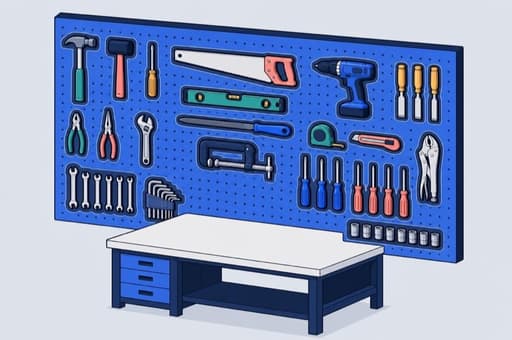
A bare online store rarely does everything its owner needs. Independent developers build add-ons for jobs such as marketing or order handling, while agencies help merchants set up and connect their stores. The result resembles a tool wall: Shopify supplies the board, and specialists keep making attachments for it.
Merchants pay for apps, themes and help. Shopify collects billing fees, a share of larger app sellers' revenue, referrals and other partner income. More useful tools make the main platform harder to leave, but developers can take their effort elsewhere if access becomes unreliable or the economics stop working.
Shopify Shipping and Managed Markets
Shopify sells shipping labels and helps merchants handle overseas orders. A three-year agreement keeps Global-e responsible for the cross-border sale while moving Shopify's own payment work in-house; carrier connections and customs accuracy remain the watchpoints.
Competes with ShipStation (Auctane) · Pirate Ship (Pirate Ship)
In plain English
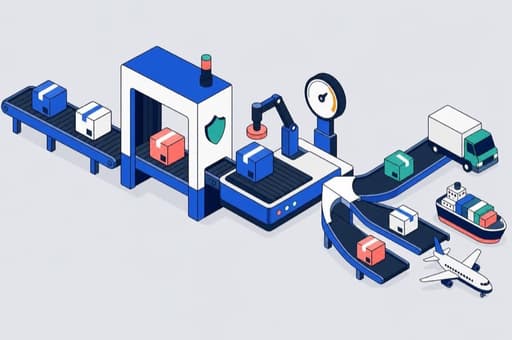
Selling abroad turns one order into a chain of chores: choose a carrier, print a label, calculate duties, show a local price and make sure the parcel clears the border. Shopify Shipping handles the parcel steps, while Managed Markets packages much of the cross-border work into one service.
Merchants pay for labels and overseas-order help. Global-e, a cross-border shopping specialist, temporarily becomes the legal seller for Managed Markets orders and handles that responsibility; Shopify will move its own payment work on future orders to Shopify Payments under their three-year agreement. Shopify earns from the service without owning delivery trucks, so carrier systems and border rules still matter.

Shopify Finance
Capital, Balance, Credit and Bill Pay turn store activity into loans and money-management services. Finance produced $258 million in FY2025, while transaction-and-loan losses jumped 76% in FY2026 Q2; lending quality is the key watch.
Competes with Square Loans (Block) · Stripe Capital (Stripe)
In plain English
A small seller may need stock before holiday shoppers arrive, but a normal bank sees only a thin credit file. Shopify can see the store's sales history, so Capital can offer a loan or cash advance sized around that flow; Balance, Credit and Bill Pay help hold, spend and move business money.
Shopify earns interest and fees, often collecting repayment alongside future store sales. That closeness makes offers quick and keeps merchants using the platform, but it also puts real money at risk. When sellers struggle or the checks are too loose, unpaid balances can erase a meaningful part of the income.
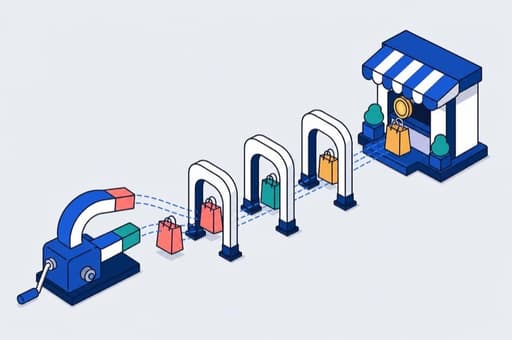
Shop and Shop Campaigns
Shop gives consumers a place to discover products, while Campaigns charges merchants for sales the system credits to promotions. Direct revenue remains under 1% today; the test is whether outside advertising channels keep supplying measurable purchases.
Competes with Google Shopping and Performance Max (Alphabet) · Meta Advantage advertising (Meta Platforms)
In plain English
Instead of buying an advertisement and hoping it works, a merchant using Shop Campaigns chooses what a new customer is worth and pays when the promotion leads to a sale. The offer can appear in Shop or travel through Google, Meta, Pinterest and ChatGPT.
That makes Shop both a shopper destination and a doorway into Shopify stores. Shopify earns from attributed sales, while outside advertising services receive demand when offers run there. The business is still small, and its value rests on a difficult measurement question: which promotion truly caused the purchase?

Shopify POS and POS Pro
Shopify's checkout hardware and software connect physical shops to the same products and orders as their websites. POS Pro cost $89 per location each month on Sep. 4, 2026; successful multi-location rollouts matter more than hardware alone.
Competes with Lightspeed Retail POS (Lightspeed) · Square Point of Sale (Block)
In plain English
A web order and a purchase at the counter can easily create two versions of the truth about what is left on the shelf. Shopify POS joins the card reader, shop software and online store so the seller sees one set of products, customers and orders.
Retailers pay for upgraded software by location, buy hardware and may route their in-store payments through Shopify. That creates several ways to earn from one counter, while the shared records make the full platform stickier. The weak links are physical devices, store internet connections and careful setup across every location.


 Shopify Payments and Shop PayThe checkout and payment engine processed $248.1 billion of purchases in FY2025, or 65.6% of all sales through Shopify stores. More payment use lifts revenue, but card-network fees, fraud and payment losses rise alongside it.
The checkout and payment engine processed $248.1 billion of purchases in FY2025, or 65.6% of all sales through Shopify stores. More payment use lifts revenue, but card-network fees, fraud and payment losses rise alongside it.
In plain English
When a shopper pays in a Shopify store, Shopify Payments moves the money from the shopper's card to the seller, while Shop Pay remembers checkout details to make the next purchase quicker. Affirm, an installment-payment company, lets shoppers split some bills over time.
Shopify keeps a fee from each payment, so it earns more when its merchants sell more and when more of those sales use its own checkout. The trade-off is simple: card networks and processing partners also collect fees, and Shopify bears costs when payments go bad or fraud slips through. No single merchant has ever supplied more than 5% of Shopify's revenue.
Competes with Stripe Payments and Link (Stripe) · Square Payments (Block)
 Shopify Subscription PlansBasic, Grow and Advanced are the paid foundation for running an online store. Monthly prices ran from $39 to $399 on Sep. 4, 2026; keeping merchants on the platform matters because every added service starts with this relationship.
Basic, Grow and Advanced are the paid foundation for running an online store. Monthly prices ran from $39 to $399 on Sep. 4, 2026; keeping merchants on the platform matters because every added service starts with this relationship.
In plain English
The unglamorous doorway to Shopify is a monthly software plan. It gives a seller a ready-made website, a product shelf, a checkout and a place to track orders, without hiring a team to build those pieces from scratch.
Merchants pay a recurring fee for one of three main plans, then often add payments, shipping or apps as the store grows. That makes the plan less like a one-off website purchase and more like rent for a furnished shop: predictable money for Shopify, and a home the merchant is reluctant to rebuild elsewhere.
Competes with BigCommerce platform (BigCommerce) · Adobe Commerce (Adobe)
 Shopify Plus and B2BShopify's enterprise plan serves larger sellers and wholesale buyers. It supplied 34% of monthly subscription fees at FY2025 year-end; wholesale sales growth remained strong but slowed to 76% in FY2026 Q2.
Shopify's enterprise plan serves larger sellers and wholesale buyers. It supplied 34% of monthly subscription fees at FY2025 year-end; wholesale sales growth remained strong but slowed to 76% in FY2026 Q2.
In plain English
Big retailers and wholesalers need more than a standard web shop. Shopify Plus gives them the same core store system with room for complicated catalogs, buyer permissions and payment terms, so a brand can sell to consumers and business customers from one back room.
Customers pay larger subscriptions, often under multi-year agreements, and their sales can also feed Shopify's payment services. Moving a complex retailer is demanding, but once its products, buyers and orders all live in the system, renewing is easier than rebuilding the operation somewhere else.
Competes with Salesforce B2B Commerce (Salesforce) · Adobe Commerce B2B (Adobe)
 Sidekick, Shopify Catalog, and Agentic StorefrontsThese tools help merchants manage stores and put accurate products into AI-guided shopping. Shopify named four outside computer assistants as routes to discovery and checkout, but disclosed no separate sales; adoption and outside-platform dependence are the watchpoints.
These tools help merchants manage stores and put accurate products into AI-guided shopping. Shopify named four outside computer assistants as routes to discovery and checkout, but disclosed no separate sales; adoption and outside-platform dependence are the watchpoints.
In plain English
Imagine every product in a store packed into a neat, machine-readable card: what it is, what it costs and whether it is available. Shopify Catalog organizes those cards, Sidekick helps the merchant do routine store work, and Agentic Storefronts let computer assistants guide a shopper toward checkout.
The tools do not have a separate price tag today. Their job is to make Shopify stores easier to run and easier to find through ChatGPT, Microsoft and Google services, keeping merchants and purchases inside Shopify's system. That promise depends on fresh product information and on outside assistants continuing to send shoppers through.
Competes with Agentforce Guided Shopping (Salesforce) · Adobe Commerce AI-driven commerce (Adobe)
 Partner and App EcosystemDevelopers and service partners fill gaps Shopify cannot cover itself, with more than 21,000 apps available at FY2025 year-end. Breadth helps stores stay, but Shopify must keep its rules and fees attractive to builders.
Developers and service partners fill gaps Shopify cannot cover itself, with more than 21,000 apps available at FY2025 year-end. Breadth helps stores stay, but Shopify must keep its rules and fees attractive to builders.
In plain English
A bare online store rarely does everything its owner needs. Independent developers build add-ons for jobs such as marketing or order handling, while agencies help merchants set up and connect their stores. The result resembles a tool wall: Shopify supplies the board, and specialists keep making attachments for it.
Merchants pay for apps, themes and help. Shopify collects billing fees, a share of larger app sellers' revenue, referrals and other partner income. More useful tools make the main platform harder to leave, but developers can take their effort elsewhere if access becomes unreliable or the economics stop working.
Competes with BigCommerce App Marketplace (BigCommerce) · Embedded apps in Agentforce Commerce (Salesforce)
 Shopify Shipping and Managed MarketsShopify sells shipping labels and helps merchants handle overseas orders. A three-year agreement keeps Global-e responsible for the cross-border sale while moving Shopify's own payment work in-house; carrier connections and customs accuracy remain the watchpoints.
Shopify sells shipping labels and helps merchants handle overseas orders. A three-year agreement keeps Global-e responsible for the cross-border sale while moving Shopify's own payment work in-house; carrier connections and customs accuracy remain the watchpoints.
In plain English
Selling abroad turns one order into a chain of chores: choose a carrier, print a label, calculate duties, show a local price and make sure the parcel clears the border. Shopify Shipping handles the parcel steps, while Managed Markets packages much of the cross-border work into one service.
Merchants pay for labels and overseas-order help. Global-e, a cross-border shopping specialist, temporarily becomes the legal seller for Managed Markets orders and handles that responsibility; Shopify will move its own payment work on future orders to Shopify Payments under their three-year agreement. Shopify earns from the service without owning delivery trucks, so carrier systems and border rules still matter.
Competes with ShipStation (Auctane) · Pirate Ship (Pirate Ship)
 Shopify FinanceCapital, Balance, Credit and Bill Pay turn store activity into loans and money-management services. Finance produced $258 million in FY2025, while transaction-and-loan losses jumped 76% in FY2026 Q2; lending quality is the key watch.
Capital, Balance, Credit and Bill Pay turn store activity into loans and money-management services. Finance produced $258 million in FY2025, while transaction-and-loan losses jumped 76% in FY2026 Q2; lending quality is the key watch.
In plain English
A small seller may need stock before holiday shoppers arrive, but a normal bank sees only a thin credit file. Shopify can see the store's sales history, so Capital can offer a loan or cash advance sized around that flow; Balance, Credit and Bill Pay help hold, spend and move business money.
Shopify earns interest and fees, often collecting repayment alongside future store sales. That closeness makes offers quick and keeps merchants using the platform, but it also puts real money at risk. When sellers struggle or the checks are too loose, unpaid balances can erase a meaningful part of the income.
Competes with Square Loans (Block) · Stripe Capital (Stripe)
 Shop and Shop CampaignsShop gives consumers a place to discover products, while Campaigns charges merchants for sales the system credits to promotions. Direct revenue remains under 1% today; the test is whether outside advertising channels keep supplying measurable purchases.
Shop gives consumers a place to discover products, while Campaigns charges merchants for sales the system credits to promotions. Direct revenue remains under 1% today; the test is whether outside advertising channels keep supplying measurable purchases.
In plain English
Instead of buying an advertisement and hoping it works, a merchant using Shop Campaigns chooses what a new customer is worth and pays when the promotion leads to a sale. The offer can appear in Shop or travel through Google, Meta, Pinterest and ChatGPT.
That makes Shop both a shopper destination and a doorway into Shopify stores. Shopify earns from attributed sales, while outside advertising services receive demand when offers run there. The business is still small, and its value rests on a difficult measurement question: which promotion truly caused the purchase?
Competes with Google Shopping and Performance Max (Alphabet) · Meta Advantage advertising (Meta Platforms)
 Shopify POS and POS ProShopify's checkout hardware and software connect physical shops to the same products and orders as their websites. POS Pro cost $89 per location each month on Sep. 4, 2026; successful multi-location rollouts matter more than hardware alone.
Shopify's checkout hardware and software connect physical shops to the same products and orders as their websites. POS Pro cost $89 per location each month on Sep. 4, 2026; successful multi-location rollouts matter more than hardware alone.
In plain English
A web order and a purchase at the counter can easily create two versions of the truth about what is left on the shelf. Shopify POS joins the card reader, shop software and online store so the seller sees one set of products, customers and orders.
Retailers pay for upgraded software by location, buy hardware and may route their in-store payments through Shopify. That creates several ways to earn from one counter, while the shared records make the full platform stickier. The weak links are physical devices, store internet connections and careful setup across every location.
Competes with Lightspeed Retail POS (Lightspeed) · Square Point of Sale (Block)
Named in filings, launches and programs
- Shop Pay InstallmentsServiceAffirm-powered installment payments expanded to Australia in August 2026, adding another checkout choice for eligible shoppers.
- Shopify CapitalServiceUses a merchant's store history to offer loans or cash advances, with repayment tied closely to future sales.
- Shopify BalanceProductA business money account inside Shopify, keeping merchant funds and everyday spending close to the store dashboard.
- Shopify CreditProductA spending product within Shopify Finance that deepens the company's role in merchants' day-to-day finances.
- Shopify Bill PayServiceLets merchants manage business bills alongside their store finances, adding another reason to stay inside Shopify's administration tools.
- Shopify TaxServiceCalculates sales tax and offers filing help, earning fees from a chore that grows more complicated as merchants expand.
- POS ProProductThe upgraded in-store plan adds recurring software fees by retail location on top of hardware and payment opportunities.
- Vantage DiscoveryBrandThe search-technology company Shopify bought in March 2025 supplies tools behind its push toward better product discovery.
- Universal Commerce ProtocolEcosystem · RampingA shared set of shopping connections co-developed with Google so outside computer assistants can discover products and hand shoppers into checkout.
Shop Pay InstallmentsService
Affirm-powered installment payments expanded to Australia in August 2026, adding another checkout choice for eligible shoppers.
Shopify CapitalService
Uses a merchant's store history to offer loans or cash advances, with repayment tied closely to future sales.
Shopify BalanceProduct
A business money account inside Shopify, keeping merchant funds and everyday spending close to the store dashboard.
Shopify CreditProduct
A spending product within Shopify Finance that deepens the company's role in merchants' day-to-day finances.
Shopify Bill PayService
Lets merchants manage business bills alongside their store finances, adding another reason to stay inside Shopify's administration tools.
Shopify TaxService
Calculates sales tax and offers filing help, earning fees from a chore that grows more complicated as merchants expand.
POS ProProduct
The upgraded in-store plan adds recurring software fees by retail location on top of hardware and payment opportunities.
Vantage DiscoveryBrand
The search-technology company Shopify bought in March 2025 supplies tools behind its push toward better product discovery.
Universal Commerce ProtocolEcosystem · Ramping
A shared set of shopping connections co-developed with Google so outside computer assistants can discover products and hand shoppers into checkout.