
Southern Company (SO)
Operator of Southeastern electric utilities, multi-state gas networks, and wholesale generation.
Something off on this page? Send us feedback.
Southern is mostly three state-regulated electric utilities, with a smaller gas-delivery network and a power-plant arm that sells under long contracts. Homes and businesses still pay the bills, while data centers are driving an enormous new build whose revenue mostly lies years ahead. The opportunity and the strain are the same: build generation and wires fast enough without letting debt or customer bills outrun the system.
Item facts: FY2025 · year ended Dec 31, 2025, from filings, earnings calls and company pages.
Judgment weights, not filed revenue
The band summarizes business focus and direction. ~ marks estimates.
6 in detail · 11 more below
Georgia Power
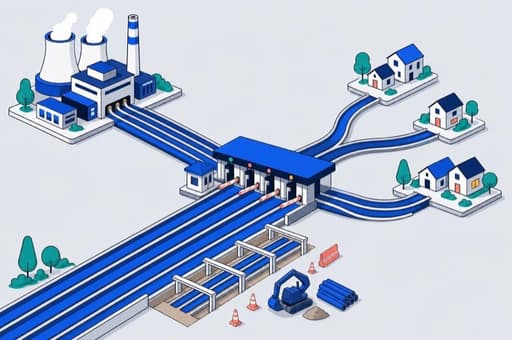
Southern's largest utility produced $12.63 billion of FY2025 revenue. Georgia is also the center of the data-center build, so approvals and on-time construction matter more than signed promises alone.
Competes with Large-load electric service agreements (Duke Energy) · Data-center service agreements (Entergy)
In plain English
Georgia Power is the local electricity company for much of Georgia: it makes or buys power, moves it over high-voltage lines, and delivers it to homes and businesses. Customers pay for the electricity they use through prices approved by the state.
Those bills repay the cost of power plants and wires and allow a return on approved investments. That makes growth resemble adding lanes to a toll road: new factories and data centers can support more construction, but regulators must approve the work and customers must actually arrive before the extra lanes earn their keep.
Large-load electric service agreements
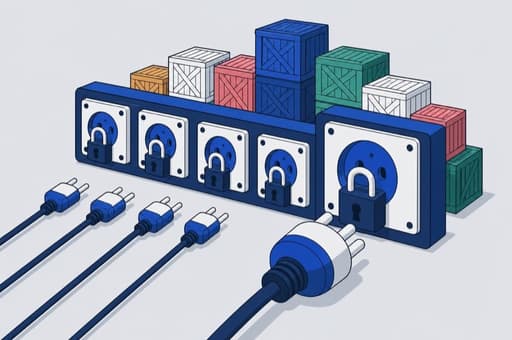
By July 2026, long-term power deals had turned data-center plans into a future construction program. OpenAI accounts for about one-fifth of the signed total; service phases in later this decade.
Competes with Large-load agreements (Duke Energy) · Data-center agreements (Entergy)
In plain English
Think of these agreements as reservations for exceptionally large electrical hookups. A gigawatt measures demand on the scale of a large power plant. Data-center operators promise to buy a minimum amount of power over many years, while Southern builds the plants, batteries, wires and other equipment needed to serve them.
Minimum bills, cancellation payments and money pledged as security help protect ordinary customers if a project falters. OpenAI, an artificial-intelligence company, is the largest buyer Southern has named; Compass Datacenters and Meta are also named. The contracts can become a major new source of electric sales, but most of the machines are not drawing power yet.
Alabama Power
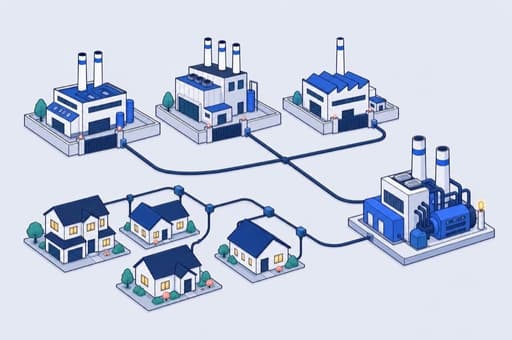
The second-largest utility serves households and industries. New, unnamed large-customer deals signed in mid-2026 total about three gigawatts, with buyer credit and gas supply still important.
Competes with Integrated power supply (Tennessee Valley Authority) · Large-load electric service agreements (Duke Energy)
In plain English
Alabama Power keeps the lights and machinery running for 1.563 million customers. It owns the chain from power station to neighborhood wire, then collects state-approved charges based largely on how much electricity customers use.
Its customer mix is broader than a row of houses: metals, cars, aircraft and data centers all need dependable power. The company earns by putting approved money into plants and the grid, then recovering that cost through bills over time. Three new large customers could deepen that industrial role, although their names and the revenue they may produce have not been made public.
Mississippi Power
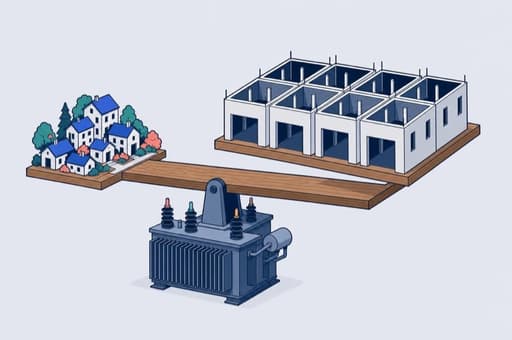
This small regional utility serves southeast Mississippi. Compass Datacenters' proposed campus could add roughly 500 megawatts of demand, making its construction timetable unusually important for this system.
Competes with Data-center electric service (Entergy Mississippi) · Generation and transmission supply (Cooperative Energy)
In plain English
A compact utility can still face a very large addition. Mississippi Power supplies homes and businesses in southeast Mississippi, charging prices approved by the state for electricity and for the network that delivers it.
The ordinary business is steady: maintain plants and lines, serve about 193,000 customers and earn on approved investment. Compass Datacenters plans eight large computing buildings. For a system this size, the completed campus would be like attaching a new neighborhood of factories, so each construction milestone matters.
Gas Distribution Operations
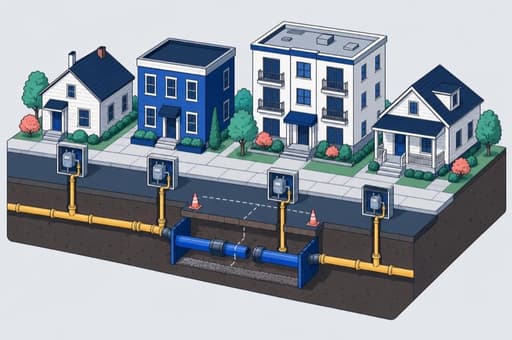
Four local gas companies generated $4.43 billion of FY2025 revenue by delivering fuel. Winter weather moves usage, while replacing aging pipe supports the steadier long-term earnings job.
Competes with Gas Distribution (Atmos Energy) · Gas Utility (Spire)
In plain English
The unglamorous network under the street. Atlanta Gas Light, Chattanooga Gas, Nicor Gas and Virginia Natural Gas carry fuel through local pipes to homes and businesses across four states.
Customers pay for delivery and transport, while much of the fuel's changing cost simply passes through the bill. The lasting money comes from maintaining and replacing the pipe network under prices set by state commissions. Cold winters raise demand, but the basic model is closer to paying for a safe delivery route than betting on the price of gas itself.
Southern Power
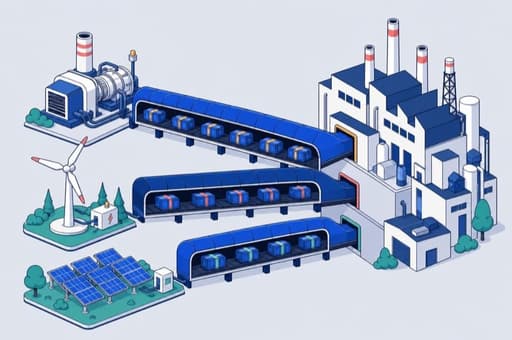
A fleet of gas and renewable plants sells power under long contracts. Those deals cover 97% of its available power through the decade's end; renewal prices and plant output shape what comes next.
Competes with Utility-scale renewables (NextEra Energy Resources) · Wind, solar, storage and gas generation (Invenergy)
In plain English
Unlike the local utilities, Southern Power usually does not sell electricity to the family or shop next door. It owns about 13 gigawatts of power plants across the country and sells their output or availability to utilities and companies under long agreements.
Picture a landlord leasing machines instead of apartments: a gas-plant customer commonly pays to keep generating ability ready and covers the fuel, while a wind or solar buyer pays a fixed price for energy actually produced. Long deals make cash more predictable, but weak wind, expiring agreements and a customer's ability to pay still matter.


 Georgia PowerSouthern's largest utility produced $12.63 billion of FY2025 revenue. Georgia is also the center of the data-center build, so approvals and on-time construction matter more than signed promises alone.
Southern's largest utility produced $12.63 billion of FY2025 revenue. Georgia is also the center of the data-center build, so approvals and on-time construction matter more than signed promises alone.
In plain English
Georgia Power is the local electricity company for much of Georgia: it makes or buys power, moves it over high-voltage lines, and delivers it to homes and businesses. Customers pay for the electricity they use through prices approved by the state.
Those bills repay the cost of power plants and wires and allow a return on approved investments. That makes growth resemble adding lanes to a toll road: new factories and data centers can support more construction, but regulators must approve the work and customers must actually arrive before the extra lanes earn their keep.
Competes with Large-load electric service agreements (Duke Energy) · Data-center service agreements (Entergy)
 Large-load electric service agreementsBy July 2026, long-term power deals had turned data-center plans into a future construction program. OpenAI accounts for about one-fifth of the signed total; service phases in later this decade.
By July 2026, long-term power deals had turned data-center plans into a future construction program. OpenAI accounts for about one-fifth of the signed total; service phases in later this decade.
In plain English
Think of these agreements as reservations for exceptionally large electrical hookups. A gigawatt measures demand on the scale of a large power plant. Data-center operators promise to buy a minimum amount of power over many years, while Southern builds the plants, batteries, wires and other equipment needed to serve them.
Minimum bills, cancellation payments and money pledged as security help protect ordinary customers if a project falters. OpenAI, an artificial-intelligence company, is the largest buyer Southern has named; Compass Datacenters and Meta are also named. The contracts can become a major new source of electric sales, but most of the machines are not drawing power yet.
Competes with Large-load agreements (Duke Energy) · Data-center agreements (Entergy)
 Alabama PowerThe second-largest utility serves households and industries. New, unnamed large-customer deals signed in mid-2026 total about three gigawatts, with buyer credit and gas supply still important.
The second-largest utility serves households and industries. New, unnamed large-customer deals signed in mid-2026 total about three gigawatts, with buyer credit and gas supply still important.
In plain English
Alabama Power keeps the lights and machinery running for 1.563 million customers. It owns the chain from power station to neighborhood wire, then collects state-approved charges based largely on how much electricity customers use.
Its customer mix is broader than a row of houses: metals, cars, aircraft and data centers all need dependable power. The company earns by putting approved money into plants and the grid, then recovering that cost through bills over time. Three new large customers could deepen that industrial role, although their names and the revenue they may produce have not been made public.
Competes with Integrated power supply (Tennessee Valley Authority) · Large-load electric service agreements (Duke Energy)
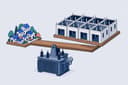 Mississippi PowerThis small regional utility serves southeast Mississippi. Compass Datacenters' proposed campus could add roughly 500 megawatts of demand, making its construction timetable unusually important for this system.
This small regional utility serves southeast Mississippi. Compass Datacenters' proposed campus could add roughly 500 megawatts of demand, making its construction timetable unusually important for this system.
In plain English
A compact utility can still face a very large addition. Mississippi Power supplies homes and businesses in southeast Mississippi, charging prices approved by the state for electricity and for the network that delivers it.
The ordinary business is steady: maintain plants and lines, serve about 193,000 customers and earn on approved investment. Compass Datacenters plans eight large computing buildings. For a system this size, the completed campus would be like attaching a new neighborhood of factories, so each construction milestone matters.
Competes with Data-center electric service (Entergy Mississippi) · Generation and transmission supply (Cooperative Energy)
 Gas Distribution OperationsFour local gas companies generated $4.43 billion of FY2025 revenue by delivering fuel. Winter weather moves usage, while replacing aging pipe supports the steadier long-term earnings job.
Four local gas companies generated $4.43 billion of FY2025 revenue by delivering fuel. Winter weather moves usage, while replacing aging pipe supports the steadier long-term earnings job.
In plain English
The unglamorous network under the street. Atlanta Gas Light, Chattanooga Gas, Nicor Gas and Virginia Natural Gas carry fuel through local pipes to homes and businesses across four states.
Customers pay for delivery and transport, while much of the fuel's changing cost simply passes through the bill. The lasting money comes from maintaining and replacing the pipe network under prices set by state commissions. Cold winters raise demand, but the basic model is closer to paying for a safe delivery route than betting on the price of gas itself.
Competes with Gas Distribution (Atmos Energy) · Gas Utility (Spire)
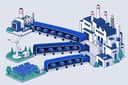 Southern PowerA fleet of gas and renewable plants sells power under long contracts. Those deals cover 97% of its available power through the decade's end; renewal prices and plant output shape what comes next.
A fleet of gas and renewable plants sells power under long contracts. Those deals cover 97% of its available power through the decade's end; renewal prices and plant output shape what comes next.
In plain English
Unlike the local utilities, Southern Power usually does not sell electricity to the family or shop next door. It owns about 13 gigawatts of power plants across the country and sells their output or availability to utilities and companies under long agreements.
Picture a landlord leasing machines instead of apartments: a gas-plant customer commonly pays to keep generating ability ready and covers the fuel, while a wind or solar buyer pays a fixed price for energy actually produced. Long deals make cash more predictable, but weak wind, expiring agreements and a customer's ability to pay still matter.
Competes with Utility-scale renewables (NextEra Energy Resources) · Wind, solar, storage and gas generation (Invenergy)
Named in filings, launches and programs
- PowerSecureBrandBuilds small on-site power systems and backup power for utilities and facilities that cannot afford an outage.
- Gas Marketing Services (SouthStar Energy Services)Product lineSells gas directly in competitive retail markets; FY2025 revenue was $582 million.
- Gas Pipeline InvestmentsSegmentOwns half of the Kinder Morgan-operated Southern Natural Gas system plus smaller pipeline interests serving the Southeast.
- Southern TelecomBrandLeases unused fiber strands and network capacity, including a 300-mile regional route completed for a major technology provider.
- Southern LincEcosystemRuns a wireless communications network for Southern's utilities and outside commercial and public-sector customers.
- Southern NuclearBrandOperates nuclear plants owned by companies within the Southern system rather than selling power as a separate business.
- Plant Vogtle Units 3 and 4EcosystemGeorgia Power's completed nuclear units now form part of its everyday regulated electricity supply.
- Millers Branch Solar FacilityEcosystem · RampingSouthern Power's large Texas solar project was still under construction in the 2025 review.
- Moody Battery Energy Storage SystemEcosystemA battery paired with solar that Georgia Power placed in service in July 2026.
- Plant Bowen gas-and-storage expansionEcosystem · AnnouncedA planned Georgia Power addition combining substantial gas generation with a large battery.
- Meta Alabama data-center projectCustomer program · RampingA previously announced Alabama project expected to use a few hundred megawatts; what it will pay is undisclosed.
PowerSecureBrand
Builds small on-site power systems and backup power for utilities and facilities that cannot afford an outage.
Gas Marketing Services (SouthStar Energy Services)Product line
Sells gas directly in competitive retail markets; FY2025 revenue was $582 million.
Gas Pipeline InvestmentsSegment
Owns half of the Kinder Morgan-operated Southern Natural Gas system plus smaller pipeline interests serving the Southeast.
Southern TelecomBrand
Leases unused fiber strands and network capacity, including a 300-mile regional route completed for a major technology provider.
Southern LincEcosystem
Runs a wireless communications network for Southern's utilities and outside commercial and public-sector customers.
Southern NuclearBrand
Operates nuclear plants owned by companies within the Southern system rather than selling power as a separate business.
Plant Vogtle Units 3 and 4Ecosystem
Georgia Power's completed nuclear units now form part of its everyday regulated electricity supply.
Millers Branch Solar FacilityEcosystem · Ramping
Southern Power's large Texas solar project was still under construction in the 2025 review.
Moody Battery Energy Storage SystemEcosystem
A battery paired with solar that Georgia Power placed in service in July 2026.
Plant Bowen gas-and-storage expansionEcosystem · Announced
A planned Georgia Power addition combining substantial gas generation with a large battery.
Meta Alabama data-center projectCustomer program · Ramping
A previously announced Alabama project expected to use a few hundred megawatts; what it will pay is undisclosed.