
Constellation Brands (STZ)
Producer and U.S. marketer of Modelo, Corona, Pacifico, and Victoria.
Something off on this page? Send us feedback.
Constellation Brands sells Mexican beer in America — Modelo, Corona, Pacifico — under a permanent license that lets it use those names only inside the United States. It owns the breweries but not the names, and its biggest brands are shrinking while its smaller ones grow. A slimmed-down premium wine and spirits business sits beside the beer, a fraction of what it was.
Item facts: FY2026 · year ended Feb 28, 2026, from filings, earnings calls and company pages.
Judgment weights, not filed revenue
The band summarizes business focus and direction. ~ marks estimates.
8 in detail · 9 more below
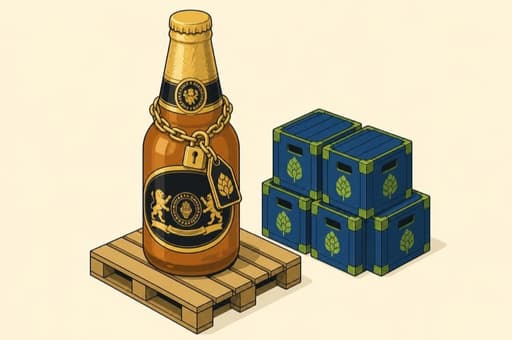
Modelo Especial
The single brand that carries the company — roughly $4 billion of sales, the top-selling U.S. beer in dollars at about a tenth of the market. Sales to drinkers fell about 3% last year; whether that steadies is the whole story.
Competes with Michelob Ultra (Anheuser-Busch InBev) · Bud Light (Anheuser-Busch InBev) · Dos Equis (Heineken)
In plain English
A Mexican lager in a gold-foil-capped bottle, sold in the United States by a company that does not own the name on the label. Constellation rents those rights forever from the owner of the Modelo trademarks — the same group that owns Michelob Ultra, the beer now outselling Especial in sheer volume — and cannot sell a drop of Especial outside the country.
The cash arrives wholesale: brewed in Mexico, shipped north, invoiced to independent beer wholesalers who mark it up on the way to the store cooler. Drinkers pay a high-end price, demand leans Hispanic, and about half the volume sits in just five states.
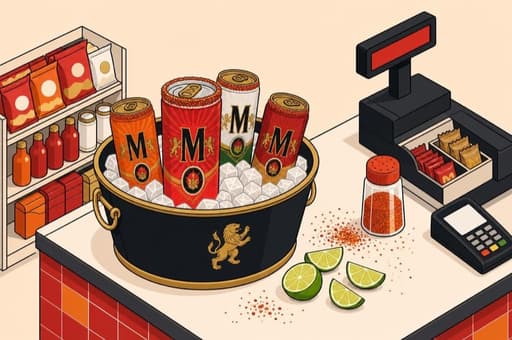
Modelo Chelada family (with Ranch Water and Vicky Chamoy)
Beer sold already mixed and flavoured in a can, plus ranch-water and aguas-frescas versions. Sales to drinkers dipped about 1% last year but grew around 5% in the closing quarter — this is the company's answer to ready-made cocktails.
Competes with Twisted Tea (Boston Beer) · Michelob Ultra Zero (Anheuser-Busch InBev)
In plain English
The cocktail someone else already made: beer blended with flavours and sold cold in a can, alongside ranch-water and spiked-aguas-frescas versions and a chamoy-flavoured spin-off of Victoria.
Why it exists is simple. Drinkers keep drifting from plain beer toward flavoured, ready-mixed drinks, and this is where Constellation meets them — same Mexican breweries, same wholesalers, a different moment, and heavy sales in convenience stores where single cans do well. It is also the corner of the shelf management points to when asked about hemp- and spirits-based drinks pressing on beer, and the aluminum can itself is one of the costs it watches.
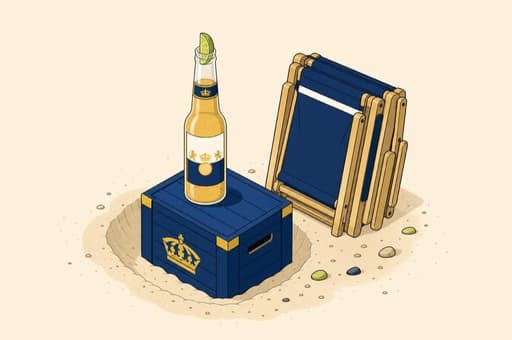
Corona Extra
The flagship sold on sunshine rather than heritage, about a quarter of sales and the weakest big line: sales to drinkers fell roughly 7% last year before improving. It is now run as an umbrella for the newer Corona drinks.
Competes with Heineken Original (Heineken) · Coors Banquet (Molson Coors) · Michelob Ultra (Anheuser-Busch InBev)
In plain English
Same brewer, different pitch. Where Modelo leans on Mexican heritage, Corona Extra sells a clear bottle and the idea of a day off — a beer for everyone rather than a beer for somebody in particular.
The money follows the usual path here: out of the Mexican brewery, across the border, into the hands of wholesalers who stock grocery, convenience and club stores and bars. The trouble is that shoppers have been drifting away — to Michelob Ultra, to Coors Banquet, to drinks that are not beer at all — so the company spends hard on advertising to stay top of mind, with more of it behind the World Cup and the NFL this year.
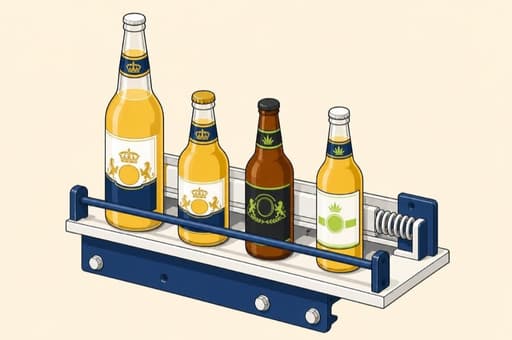
Corona Familiar, Sunbrew, Non-Alcoholic, Premier and Light
The parts of Corona still growing while the original slips: the family-size Familiar at 14.4 million cases, Sunbrew in its first full year, and an alcohol-free Corona up about 60% — fast, but from a small base.
Competes with Heineken 0.0 (Heineken) · Michelob Ultra (Anheuser-Busch InBev) · Coors Banquet (Molson Coors)
In plain English
One name, many drinks. Because the license covers the whole Corona trademark, Constellation can launch a family-size bottle, a new brew aimed at people in their twenties, a lighter version and a beer with the alcohol taken out, and pay nothing extra for the name.
Each launch is really a bid for cold-box space: wholesalers and stores hand out shelf slots, and a version that starts fast earns more of them — Sunbrew was called the number one new brand in dollars, and the alcohol-free Corona reached fourth in its category. That is the money. Extra cases down the same trucks, at premium prices, brewed in plants the company already owns.
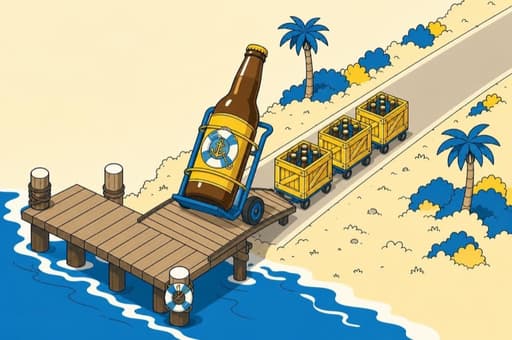
Pacifico
The clearest growth story: about 29 million cases in 2025, up 14%, and the number two beer in California. Management promised more spending behind it than ever, and the new brewing capacity is largely built on its case.
Competes with Coors Banquet (Molson Coors) · Dos Equis (Heineken) · Modelo Especial (Constellation Brands)
In plain English
The one going up. Pacifico is a Mexican lager that has mostly been a western drink — number two in California — and Constellation is now pushing it into coolers state by state, the same west-to-east route Modelo travelled years ago.
None of that growth comes from the category; American beer drinking is shrinking. It comes from taking shelf and cold-box slots that used to hold something else, which is why the extra brewing capacity being added through 2028 rests mainly on this brand. Two risks sit side by side: the volume is concentrated out west, so a regional wobble hurts, and a Pacifico sold may be a Modelo not sold.
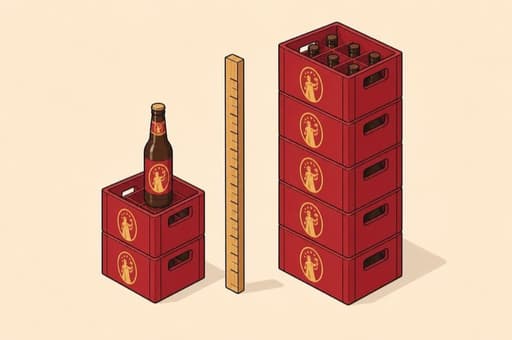
Victoria
Mexico's oldest beer brand, small in the U.S. but climbing: about 9 million cases in 2025, up 16%, with sales to drinkers up a similar amount. Management calls it a sleeper, carried by younger Hispanic drinkers.
Competes with Tecate (Heineken) · Dos Equis (Heineken)
In plain English
Old brand, new audience. Victoria has been brewed in Mexico longer than any other beer brand there, and in the United States it is still a couple of cents in every sales dollar — but one of the few lines rising at a double-digit pace.
The route to the till is the same as its bigger siblings', so nothing about the plumbing is new. What makes it worth watching is who reaches for it: younger Hispanic drinkers are pulling it along, the same group Modelo Especial leans on. That makes Victoria less a new market than a fresher door into the one this company already depends on.
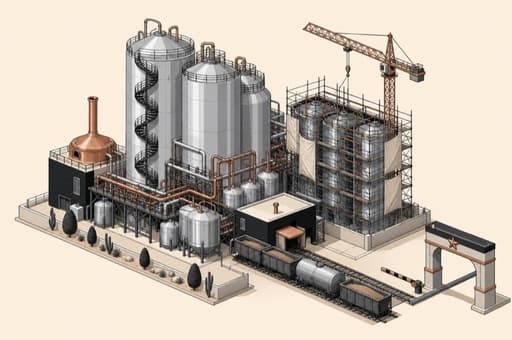
Nava, Obregón and Veracruz breweries
Two working Mexican plants plus a third going up in stages, and essentially all of the company's building money — $875 million last year. Veracruz starts brewing mid-year, and its start-up cost is why beer margins are guided lower.
Competes with Grupo Modelo breweries (Anheuser-Busch InBev) · Heineken México breweries (Heineken) · U.S. breweries (Molson Coors)
In plain English
Constellation does not own the Corona and Modelo names, but it does own the factories. Two breweries run today and a third is rising in modules, so the build can be slowed if demand does not show up — and last year's spending came in well under plan.
A brewery earns nothing on its own; it works like the oven behind a bakery, deciding how much you can sell and how cheaply. Brewing in Mexico while selling in the United States also puts the border inside the business: import taxes on Mexican goods and on aluminum were the loudest worry on company calls in early 2025 and early 2026, though they had gone quiet by mid-2026. Roughly four fifths of the Mexican peso exposure is hedged.
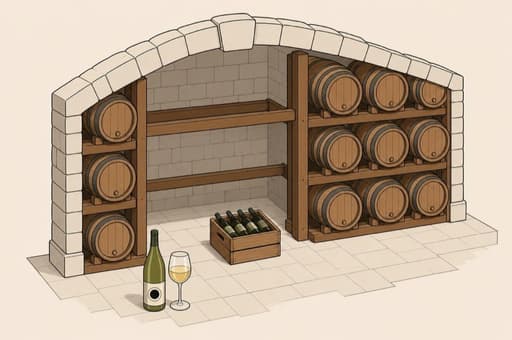
Premium wine — Kim Crawford, The Prisoner, Ruffino, Robert Mondavi Winery
What was kept after the June 2025 sale of the supermarket wine brands: pricier labels led by Kim Crawford, $700.4 million of sales. Wine and spirits together earned just $10.5 million of profit last year, down 97%.
Competes with Whitehaven (E. & J. Gallo) · Matua (Treasury Wine Estates) · Oyster Bay (Delegat Group)
In plain English
Kept on purpose, not left over by accident. In June 2025 Constellation sold its everyday supermarket wine brands and held on to the expensive ones — a New Zealand sauvignon blanc that anchors the line, a Napa red blend, an Italian house, a Napa winery — along with the vineyards that supply them.
Wine money travels like beer money: bottles go to distributors and state agencies, who sell on to shops and restaurants. Two things make it hard right now. Americans have bought less wine five years running, and Canada, the biggest market outside the U.S., stays shut to American wine over a trade fight. Wine and spirits together were about a fifth of company sales three years ago; now they are under a tenth.


 Modelo EspecialThe single brand that carries the company — roughly $4 billion of sales, the top-selling U.S. beer in dollars at about a tenth of the market. Sales to drinkers fell about 3% last year; whether that steadies is the whole story.
The single brand that carries the company — roughly $4 billion of sales, the top-selling U.S. beer in dollars at about a tenth of the market. Sales to drinkers fell about 3% last year; whether that steadies is the whole story.
In plain English
A Mexican lager in a gold-foil-capped bottle, sold in the United States by a company that does not own the name on the label. Constellation rents those rights forever from the owner of the Modelo trademarks — the same group that owns Michelob Ultra, the beer now outselling Especial in sheer volume — and cannot sell a drop of Especial outside the country.
The cash arrives wholesale: brewed in Mexico, shipped north, invoiced to independent beer wholesalers who mark it up on the way to the store cooler. Drinkers pay a high-end price, demand leans Hispanic, and about half the volume sits in just five states.
Competes with Michelob Ultra (Anheuser-Busch InBev) · Bud Light (Anheuser-Busch InBev) · Dos Equis (Heineken)
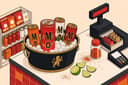 Modelo Chelada family (with Ranch Water and Vicky Chamoy)Beer sold already mixed and flavoured in a can, plus ranch-water and aguas-frescas versions. Sales to drinkers dipped about 1% last year but grew around 5% in the closing quarter — this is the company's answer to ready-made cocktails.
Beer sold already mixed and flavoured in a can, plus ranch-water and aguas-frescas versions. Sales to drinkers dipped about 1% last year but grew around 5% in the closing quarter — this is the company's answer to ready-made cocktails.
In plain English
The cocktail someone else already made: beer blended with flavours and sold cold in a can, alongside ranch-water and spiked-aguas-frescas versions and a chamoy-flavoured spin-off of Victoria.
Why it exists is simple. Drinkers keep drifting from plain beer toward flavoured, ready-mixed drinks, and this is where Constellation meets them — same Mexican breweries, same wholesalers, a different moment, and heavy sales in convenience stores where single cans do well. It is also the corner of the shelf management points to when asked about hemp- and spirits-based drinks pressing on beer, and the aluminum can itself is one of the costs it watches.
Competes with Twisted Tea (Boston Beer) · Michelob Ultra Zero (Anheuser-Busch InBev)
 Corona ExtraThe flagship sold on sunshine rather than heritage, about a quarter of sales and the weakest big line: sales to drinkers fell roughly 7% last year before improving. It is now run as an umbrella for the newer Corona drinks.
The flagship sold on sunshine rather than heritage, about a quarter of sales and the weakest big line: sales to drinkers fell roughly 7% last year before improving. It is now run as an umbrella for the newer Corona drinks.
In plain English
Same brewer, different pitch. Where Modelo leans on Mexican heritage, Corona Extra sells a clear bottle and the idea of a day off — a beer for everyone rather than a beer for somebody in particular.
The money follows the usual path here: out of the Mexican brewery, across the border, into the hands of wholesalers who stock grocery, convenience and club stores and bars. The trouble is that shoppers have been drifting away — to Michelob Ultra, to Coors Banquet, to drinks that are not beer at all — so the company spends hard on advertising to stay top of mind, with more of it behind the World Cup and the NFL this year.
Competes with Heineken Original (Heineken) · Coors Banquet (Molson Coors) · Michelob Ultra (Anheuser-Busch InBev)
 Corona Familiar, Sunbrew, Non-Alcoholic, Premier and LightThe parts of Corona still growing while the original slips: the family-size Familiar at 14.4 million cases, Sunbrew in its first full year, and an alcohol-free Corona up about 60% — fast, but from a small base.
The parts of Corona still growing while the original slips: the family-size Familiar at 14.4 million cases, Sunbrew in its first full year, and an alcohol-free Corona up about 60% — fast, but from a small base.
In plain English
One name, many drinks. Because the license covers the whole Corona trademark, Constellation can launch a family-size bottle, a new brew aimed at people in their twenties, a lighter version and a beer with the alcohol taken out, and pay nothing extra for the name.
Each launch is really a bid for cold-box space: wholesalers and stores hand out shelf slots, and a version that starts fast earns more of them — Sunbrew was called the number one new brand in dollars, and the alcohol-free Corona reached fourth in its category. That is the money. Extra cases down the same trucks, at premium prices, brewed in plants the company already owns.
Competes with Heineken 0.0 (Heineken) · Michelob Ultra (Anheuser-Busch InBev) · Coors Banquet (Molson Coors)
 PacificoThe clearest growth story: about 29 million cases in 2025, up 14%, and the number two beer in California. Management promised more spending behind it than ever, and the new brewing capacity is largely built on its case.
The clearest growth story: about 29 million cases in 2025, up 14%, and the number two beer in California. Management promised more spending behind it than ever, and the new brewing capacity is largely built on its case.
In plain English
The one going up. Pacifico is a Mexican lager that has mostly been a western drink — number two in California — and Constellation is now pushing it into coolers state by state, the same west-to-east route Modelo travelled years ago.
None of that growth comes from the category; American beer drinking is shrinking. It comes from taking shelf and cold-box slots that used to hold something else, which is why the extra brewing capacity being added through 2028 rests mainly on this brand. Two risks sit side by side: the volume is concentrated out west, so a regional wobble hurts, and a Pacifico sold may be a Modelo not sold.
Competes with Coors Banquet (Molson Coors) · Dos Equis (Heineken) · Modelo Especial (Constellation Brands)
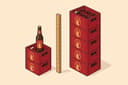 VictoriaMexico's oldest beer brand, small in the U.S. but climbing: about 9 million cases in 2025, up 16%, with sales to drinkers up a similar amount. Management calls it a sleeper, carried by younger Hispanic drinkers.
Mexico's oldest beer brand, small in the U.S. but climbing: about 9 million cases in 2025, up 16%, with sales to drinkers up a similar amount. Management calls it a sleeper, carried by younger Hispanic drinkers.
In plain English
Old brand, new audience. Victoria has been brewed in Mexico longer than any other beer brand there, and in the United States it is still a couple of cents in every sales dollar — but one of the few lines rising at a double-digit pace.
The route to the till is the same as its bigger siblings', so nothing about the plumbing is new. What makes it worth watching is who reaches for it: younger Hispanic drinkers are pulling it along, the same group Modelo Especial leans on. That makes Victoria less a new market than a fresher door into the one this company already depends on.
Competes with Tecate (Heineken) · Dos Equis (Heineken)
 Nava, Obregón and Veracruz breweriesTwo working Mexican plants plus a third going up in stages, and essentially all of the company's building money — $875 million last year. Veracruz starts brewing mid-year, and its start-up cost is why beer margins are guided lower.
Two working Mexican plants plus a third going up in stages, and essentially all of the company's building money — $875 million last year. Veracruz starts brewing mid-year, and its start-up cost is why beer margins are guided lower.
In plain English
Constellation does not own the Corona and Modelo names, but it does own the factories. Two breweries run today and a third is rising in modules, so the build can be slowed if demand does not show up — and last year's spending came in well under plan.
A brewery earns nothing on its own; it works like the oven behind a bakery, deciding how much you can sell and how cheaply. Brewing in Mexico while selling in the United States also puts the border inside the business: import taxes on Mexican goods and on aluminum were the loudest worry on company calls in early 2025 and early 2026, though they had gone quiet by mid-2026. Roughly four fifths of the Mexican peso exposure is hedged.
Competes with Grupo Modelo breweries (Anheuser-Busch InBev) · Heineken México breweries (Heineken) · U.S. breweries (Molson Coors)
 Premium wine — Kim Crawford, The Prisoner, Ruffino, Robert Mondavi WineryWhat was kept after the June 2025 sale of the supermarket wine brands: pricier labels led by Kim Crawford, $700.4 million of sales. Wine and spirits together earned just $10.5 million of profit last year, down 97%.
What was kept after the June 2025 sale of the supermarket wine brands: pricier labels led by Kim Crawford, $700.4 million of sales. Wine and spirits together earned just $10.5 million of profit last year, down 97%.
In plain English
Kept on purpose, not left over by accident. In June 2025 Constellation sold its everyday supermarket wine brands and held on to the expensive ones — a New Zealand sauvignon blanc that anchors the line, a Napa red blend, an Italian house, a Napa winery — along with the vineyards that supply them.
Wine money travels like beer money: bottles go to distributors and state agencies, who sell on to shops and restaurants. Two things make it hard right now. Americans have bought less wine five years running, and Canada, the biggest market outside the U.S., stays shut to American wine over a trade fight. Wine and spirits together were about a fifth of company sales three years ago; now they are under a tenth.
Competes with Whitehaven (E. & J. Gallo) · Matua (Treasury Wine Estates) · Oyster Bay (Delegat Group)
Named in filings, launches and programs
- Craft spirits — High West, Mi CAMPO, Casa Noble, Nelson's Green BrierProduct line$123.4M of sales last year; Mi CAMPO tequila is the fast riser off a small base, against Espolòn, Cazadores and Gran Coramino.
- Modelo OroBrandA light Modelo aimed squarely at Michelob Ultra; management said in July 2025 it was adjusting Oro's pricing.
- Modelo NegraBrandThe dark lager in the Modelo family, one of the named brands the company sells without ever breaking out its sales.
- Modelo Noche Especial and Spiked Aguas FrescasProductNewer Modelo spin-offs listed in the brand roster, too small to size on their own.
- HOPWTRBrandA non-alcoholic hops drink Constellation first backed in 2021 and bought outright in April 2026, folded into the beer business.
- Vicky ChamoyBrandA chamoy-flavoured spin-off of Victoria, sold inside the chelada family of cans.
- Austin CocktailsBrandReady-mixed cocktail brand carried in the portfolio; no separate sales figure is given for it.
- Fine wine labels — Schrader, Mount Veeder, Sea Smoke, My Favorite Neighbor, Lingua FrancaProduct lineSmall fine-wine labels kept through the 2025 sale, along with the Napa, Paso Robles, Marlborough and Tuscan vineyards behind the portfolio.
- Constellation Brands VenturesEcosystemThe small-stake arm that backs young drink brands; HOPWTR arrived through it. Fund size and holdings are not published.
Craft spirits — High West, Mi CAMPO, Casa Noble, Nelson's Green BrierProduct line
$123.4M of sales last year; Mi CAMPO tequila is the fast riser off a small base, against Espolòn, Cazadores and Gran Coramino.
Modelo OroBrand
A light Modelo aimed squarely at Michelob Ultra; management said in July 2025 it was adjusting Oro's pricing.
Modelo NegraBrand
The dark lager in the Modelo family, one of the named brands the company sells without ever breaking out its sales.
Modelo Noche Especial and Spiked Aguas FrescasProduct
Newer Modelo spin-offs listed in the brand roster, too small to size on their own.
HOPWTRBrand
A non-alcoholic hops drink Constellation first backed in 2021 and bought outright in April 2026, folded into the beer business.
Vicky ChamoyBrand
A chamoy-flavoured spin-off of Victoria, sold inside the chelada family of cans.
Austin CocktailsBrand
Ready-mixed cocktail brand carried in the portfolio; no separate sales figure is given for it.
Fine wine labels — Schrader, Mount Veeder, Sea Smoke, My Favorite Neighbor, Lingua FrancaProduct line
Small fine-wine labels kept through the 2025 sale, along with the Napa, Paso Robles, Marlborough and Tuscan vineyards behind the portfolio.
Constellation Brands VenturesEcosystem
The small-stake arm that backs young drink brands; HOPWTR arrived through it. Fund size and holdings are not published.