
Tenet Healthcare (THC)
Runs hospitals and a nationwide ambulatory-surgery platform alongside revenue-cycle services.
Something off on this page? Send us feedback.
Tenet owns the places where medical procedures happen and bills insurers for what is done inside them. Most of its money still comes from big hospitals with emergency rooms and overnight beds. Most of its growth, and nearly half its profit, comes from the other side of the house: same-day surgery centers it co-owns with the surgeons who work in them. What it earns swings on government coverage decisions it does not control.
Item facts: FY2025 · year ended Dec 31, 2025, from filings, earnings calls and company pages.
Judgment weights, not filed revenue
The band summarizes business focus and direction. ~ marks estimates.
7 in detail · 10 more below
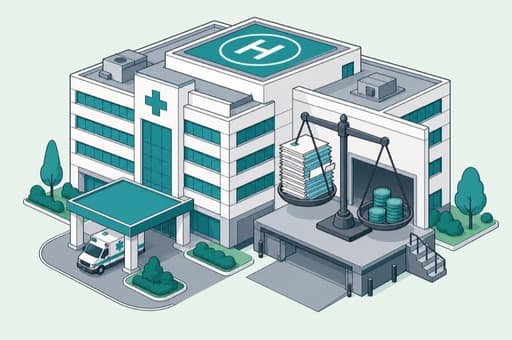
Acute care and specialty hospitals
Fifty hospitals across eight states doing the work nothing else can take: emergencies, intensive care, operations that need days of recovery. Roughly two-thirds of revenue, at about sixteen cents of profit per dollar. Plans bought on the government insurance market were roughly 5% of revenue last quarter, and falling.
Competes with Hospital division (HCA Healthcare) · Acute Care division (Universal Health Services) · Hospitals (Community Health Systems)
In plain English
A Tenet hospital is the building an ambulance takes you to: an emergency room at the front, operating rooms, intensive care beds, and wards for people too sick to go home the same day. There are fifty of them, spread across eight states.
Nobody pays a posted price. Tenet negotiates rates with insurance companies in advance, treats the patient, then bills against that contract. Commercial insurance plans cover a bit over two-thirds of what the hospitals bill for; Medicare and Medicaid, the government programs for older and lower-income people, most of the rest. Revenue grows when more patients come through the doors and when their cases are more complicated — not when Tenet raises prices.

State Medicaid top-up payments
Extra state payments for treating Medicaid and uninsured patients — running near $300M a quarter, with $140M of newly approved increases added to this year's outlook. A federal law starts capping them from 2028.
Competes with Supplemental Medicaid programs (HCA Healthcare) · Supplemental Medicaid programs (Community Health Systems)
In plain English
States charge their hospitals a tax, use it to draw matching money from the federal government, then pay it back out to hospitals that treat a lot of Medicaid and uninsured patients. Each arrangement is approved one at a time, and Tenet's hospitals in Texas, Michigan, Tennessee and Florida are where it lands.
It counts as ordinary revenue when it arrives, but it behaves nothing like a hospital bill: it comes in lumps, sometimes as back-payments for an earlier year, and it depends on approvals that can be withheld — Florida, Arizona and California were still pending in July. A law passed in July 2025 starts pulling these payments down toward standard Medicare rates from 2028.
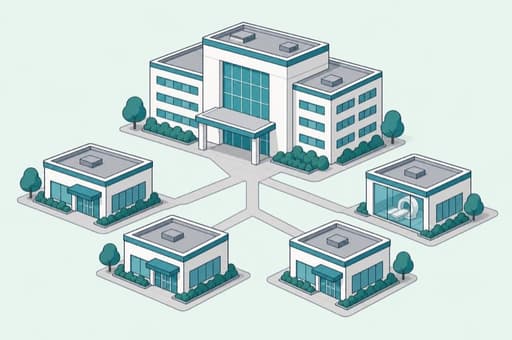
Hospital outpatient network
Imaging centers, urgent care clinics, micro-hospitals and off-campus emergency rooms — 132 of them, roughly a twentieth of revenue. Their other job is feeding the patients who need more into Tenet's hospitals nearby.
Competes with Freestanding ERs and urgent care (HCA Healthcare) · Hospitals (Community Health Systems)
In plain English
The front door, not the building behind it. These are the small places you walk into without an ambulance: a scan, a stitched hand, a chest x-ray, a little emergency room in a shopping strip miles from the main campus. Tenet counted 132 of them at the end of 2025.
Each visit gets billed like any other piece of care, usually to an insurance plan. The quieter value is traffic. Somebody whose scan turns up something serious is already inside the network, and the hospital that admits them is a Tenet hospital — which is how a small building full of day visits helps fill the expensive beds.
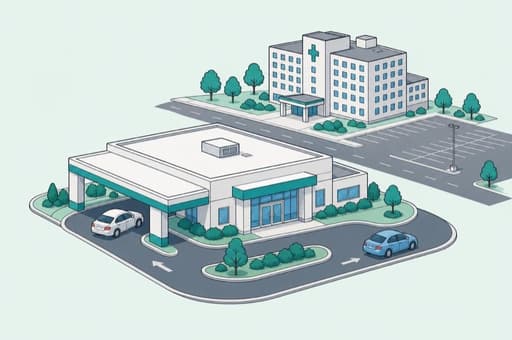
USPI surgery centers
More than 500 same-day surgery centers in 37 states: a quarter of revenue and about 44% of profit. Revenue per operation rose about 6% last quarter while the number of operations slipped — bigger cases, not more of them.
Competes with SCA Health surgery centers (Optum (UnitedHealth)) · AmSurg surgery centers (Ascension) · Surgery-center network (Surgery Partners)
In plain English
Picture a building with a few operating rooms and no beds for the night. A surgeon replaces a knee at eight in the morning; the patient is home by dinner. That is a surgery center, and United Surgical Partners International — USPI, Tenet's surgery-center arm — runs more than 500 of them across 37 states.
Insurers steer patients here because the same operation costs them less than it would in a hospital, and Tenet is paid for each case. The cases keep getting bigger — knees, hips, spines — so revenue per case rose about 6% last quarter even though the number of cases slipped slightly. The growth is coming from harder work, not busier days.
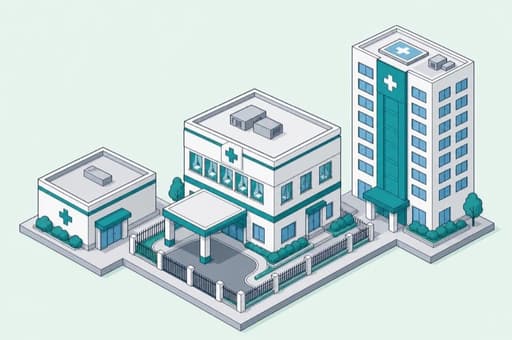
USPI surgical hospitals
Twenty-six small hospitals with overnight beds, for operations too heavy for a day clinic. The count has not moved while the surgery centers passed 500 — federal limits on doctor-owned hospitals cap the format.
Competes with Surgical hospitals (Surgery Partners) · Specialty and surgical hospitals (HCA Healthcare)
In plain English
Some operations are too big for a day clinic and too small for a full hospital stay. These 26 buildings take those: licensed for overnight beds and heavier procedures, but part-owned by the surgeons who work in them, like the rest of the surgery-center business.
Insurers pay more for an overnight surgical stay than for a same-day case, and less than for a full hospital admission — which is the useful part. As the operations Tenet's surgeons take on get more complicated, the work can step up a level without going back to the hospitals. The count has sat at 26 while the surgery centers passed 500; federal restrictions on doctor-owned hospitals make new ones hard to open.

USPI physician and health-system partnerships
Surgeons and local hospital systems own slices of the surgery centers alongside Tenet, which brings the capital and the insurer contracts. Of 2025's profit, $960M belonged to those partners. More than $300M is budgeted this year to add centers.
Competes with Physician joint ventures (SCA Health (Optum)) · Physician partnership model (Surgery Partners) · AmSurg centers bought outright (Ascension)
In plain English
Tenet almost never builds one of these centers by itself. The surgeons who will operate there put money in, a local hospital system often does too, and Tenet supplies the capital, the insurer contracts and the buying power — then runs the place for a fee. The doctors end up owning part of the building they work in.
The cost of that arrangement shows up plainly: of the profit the centers made in 2025, $960M belonged to the partners rather than to Tenet, which is why management talks about cash left over after the partners are paid. Growth means buying more centers and starting new ones, with more than $300M set aside this year.

Conifer Health Solutions
Tenet's billing and collections arm, chasing claims for around 600 hospitals and other clients. Its one large outside customer, CommonSpirit, is paying $1.9B to leave by the end of 2026, and over 1,000 jobs go with it.
Competes with Hospital billing outsourcing (R1 RCM) · Collections-based billing services (Ensemble Health Partners) · Payer-owned billing arm (Optum (UnitedHealth))
In plain English
Every time a hospital treats somebody, someone has to check what the insurer will cover, write the treatment up in the right codes, send the bill and chase the parts that never arrive. Conifer does that job — for Tenet's own hospitals and, all told, for around 600 hospitals and other clients.
The inside work matters most: money collected quickly is money Tenet does not have to borrow, and management gives Conifer the credit for it. Outside, the business is about to get much smaller. CommonSpirit, the hospital system that was its dominant client, is paying $1.9B over three years to end a long contract, with the work stopping in December 2026 and more than 1,000 jobs ending in November.


 Acute care and specialty hospitalsFifty hospitals across eight states doing the work nothing else can take: emergencies, intensive care, operations that need days of recovery. Roughly two-thirds of revenue, at about sixteen cents of profit per dollar. Plans bought on the government insurance market were roughly 5% of revenue last quarter, and falling.
Fifty hospitals across eight states doing the work nothing else can take: emergencies, intensive care, operations that need days of recovery. Roughly two-thirds of revenue, at about sixteen cents of profit per dollar. Plans bought on the government insurance market were roughly 5% of revenue last quarter, and falling.
In plain English
A Tenet hospital is the building an ambulance takes you to: an emergency room at the front, operating rooms, intensive care beds, and wards for people too sick to go home the same day. There are fifty of them, spread across eight states.
Nobody pays a posted price. Tenet negotiates rates with insurance companies in advance, treats the patient, then bills against that contract. Commercial insurance plans cover a bit over two-thirds of what the hospitals bill for; Medicare and Medicaid, the government programs for older and lower-income people, most of the rest. Revenue grows when more patients come through the doors and when their cases are more complicated — not when Tenet raises prices.
Competes with Hospital division (HCA Healthcare) · Acute Care division (Universal Health Services) · Hospitals (Community Health Systems)
 State Medicaid top-up paymentsExtra state payments for treating Medicaid and uninsured patients — running near $300M a quarter, with $140M of newly approved increases added to this year's outlook. A federal law starts capping them from 2028.
Extra state payments for treating Medicaid and uninsured patients — running near $300M a quarter, with $140M of newly approved increases added to this year's outlook. A federal law starts capping them from 2028.
In plain English
States charge their hospitals a tax, use it to draw matching money from the federal government, then pay it back out to hospitals that treat a lot of Medicaid and uninsured patients. Each arrangement is approved one at a time, and Tenet's hospitals in Texas, Michigan, Tennessee and Florida are where it lands.
It counts as ordinary revenue when it arrives, but it behaves nothing like a hospital bill: it comes in lumps, sometimes as back-payments for an earlier year, and it depends on approvals that can be withheld — Florida, Arizona and California were still pending in July. A law passed in July 2025 starts pulling these payments down toward standard Medicare rates from 2028.
Competes with Supplemental Medicaid programs (HCA Healthcare) · Supplemental Medicaid programs (Community Health Systems)
 Hospital outpatient networkImaging centers, urgent care clinics, micro-hospitals and off-campus emergency rooms — 132 of them, roughly a twentieth of revenue. Their other job is feeding the patients who need more into Tenet's hospitals nearby.
Imaging centers, urgent care clinics, micro-hospitals and off-campus emergency rooms — 132 of them, roughly a twentieth of revenue. Their other job is feeding the patients who need more into Tenet's hospitals nearby.
In plain English
The front door, not the building behind it. These are the small places you walk into without an ambulance: a scan, a stitched hand, a chest x-ray, a little emergency room in a shopping strip miles from the main campus. Tenet counted 132 of them at the end of 2025.
Each visit gets billed like any other piece of care, usually to an insurance plan. The quieter value is traffic. Somebody whose scan turns up something serious is already inside the network, and the hospital that admits them is a Tenet hospital — which is how a small building full of day visits helps fill the expensive beds.
Competes with Freestanding ERs and urgent care (HCA Healthcare) · Hospitals (Community Health Systems)
 USPI surgery centersMore than 500 same-day surgery centers in 37 states: a quarter of revenue and about 44% of profit. Revenue per operation rose about 6% last quarter while the number of operations slipped — bigger cases, not more of them.
More than 500 same-day surgery centers in 37 states: a quarter of revenue and about 44% of profit. Revenue per operation rose about 6% last quarter while the number of operations slipped — bigger cases, not more of them.
In plain English
Picture a building with a few operating rooms and no beds for the night. A surgeon replaces a knee at eight in the morning; the patient is home by dinner. That is a surgery center, and United Surgical Partners International — USPI, Tenet's surgery-center arm — runs more than 500 of them across 37 states.
Insurers steer patients here because the same operation costs them less than it would in a hospital, and Tenet is paid for each case. The cases keep getting bigger — knees, hips, spines — so revenue per case rose about 6% last quarter even though the number of cases slipped slightly. The growth is coming from harder work, not busier days.
Competes with SCA Health surgery centers (Optum (UnitedHealth)) · AmSurg surgery centers (Ascension) · Surgery-center network (Surgery Partners)
 USPI surgical hospitalsTwenty-six small hospitals with overnight beds, for operations too heavy for a day clinic. The count has not moved while the surgery centers passed 500 — federal limits on doctor-owned hospitals cap the format.
Twenty-six small hospitals with overnight beds, for operations too heavy for a day clinic. The count has not moved while the surgery centers passed 500 — federal limits on doctor-owned hospitals cap the format.
In plain English
Some operations are too big for a day clinic and too small for a full hospital stay. These 26 buildings take those: licensed for overnight beds and heavier procedures, but part-owned by the surgeons who work in them, like the rest of the surgery-center business.
Insurers pay more for an overnight surgical stay than for a same-day case, and less than for a full hospital admission — which is the useful part. As the operations Tenet's surgeons take on get more complicated, the work can step up a level without going back to the hospitals. The count has sat at 26 while the surgery centers passed 500; federal restrictions on doctor-owned hospitals make new ones hard to open.
Competes with Surgical hospitals (Surgery Partners) · Specialty and surgical hospitals (HCA Healthcare)
 USPI physician and health-system partnershipsSurgeons and local hospital systems own slices of the surgery centers alongside Tenet, which brings the capital and the insurer contracts. Of 2025's profit, $960M belonged to those partners. More than $300M is budgeted this year to add centers.
Surgeons and local hospital systems own slices of the surgery centers alongside Tenet, which brings the capital and the insurer contracts. Of 2025's profit, $960M belonged to those partners. More than $300M is budgeted this year to add centers.
In plain English
Tenet almost never builds one of these centers by itself. The surgeons who will operate there put money in, a local hospital system often does too, and Tenet supplies the capital, the insurer contracts and the buying power — then runs the place for a fee. The doctors end up owning part of the building they work in.
The cost of that arrangement shows up plainly: of the profit the centers made in 2025, $960M belonged to the partners rather than to Tenet, which is why management talks about cash left over after the partners are paid. Growth means buying more centers and starting new ones, with more than $300M set aside this year.
Competes with Physician joint ventures (SCA Health (Optum)) · Physician partnership model (Surgery Partners) · AmSurg centers bought outright (Ascension)
 Conifer Health SolutionsTenet's billing and collections arm, chasing claims for around 600 hospitals and other clients. Its one large outside customer, CommonSpirit, is paying $1.9B to leave by the end of 2026, and over 1,000 jobs go with it.
Tenet's billing and collections arm, chasing claims for around 600 hospitals and other clients. Its one large outside customer, CommonSpirit, is paying $1.9B to leave by the end of 2026, and over 1,000 jobs go with it.
In plain English
Every time a hospital treats somebody, someone has to check what the insurer will cover, write the treatment up in the right codes, send the bill and chase the parts that never arrive. Conifer does that job — for Tenet's own hospitals and, all told, for around 600 hospitals and other clients.
The inside work matters most: money collected quickly is money Tenet does not have to borrow, and management gives Conifer the credit for it. Outside, the business is about to get much smaller. CommonSpirit, the hospital system that was its dominant client, is paying $1.9B over three years to end a long contract, with the work stopping in December 2026 and more than 1,000 jobs ending in November.
Competes with Hospital billing outsourcing (R1 RCM) · Collections-based billing services (Ensemble Health Partners) · Payer-owned billing arm (Optum (UnitedHealth))
Named in filings, launches and programs
- Employed physician practicesServiceDoctors Tenet employs directly, who admit their patients into its hospitals; the company does not disclose how many practices it runs.
- Global Business CenterServiceThe shared back office Tenet lists as one of its four operating units, alongside the hospitals, the surgery centers and Conifer.
- Conifer value-based care servicesServiceHealth-management services sold alongside the billing work, across the same roughly 600 clients.
- Port St. Lucie hospitalServiceA hospital opened in Port St. Lucie, Florida in September 2025 — the most recent opening on record.
- Westover Hills hospitalServiceA San Antonio hospital opened in July 2024, the new build before Port St. Lucie.
- Micro-hospitals and off-campus emergency roomsServiceSmall emergency and short-stay buildings sited away from the main campuses, counted inside the 132 outpatient facilities.
- Total joint replacements in surgery centersProduct line · RampingKnee and hip replacements done in the surgery centers grew about 10% last quarter — heavier work moving out of hospitals.
- New surgery centers being built or syndicatedProduct line · AnnouncedA running pipeline of centers under construction or being sold into with physician partners; nearly 20 were in progress when management last counted publicly, in 2024.
- Recently added physician groupsProduct lineNamed additions include Synergy Orthopedics in San Diego and ChoiceCare Surgery Center in Midland, Texas.
- Health-system partnersPlatformLocal hospital systems co-own surgery centers with Tenet; Baylor and Memorial Hermann were named as partners on the April 2026 call.
Employed physician practicesService
Doctors Tenet employs directly, who admit their patients into its hospitals; the company does not disclose how many practices it runs.
Global Business CenterService
The shared back office Tenet lists as one of its four operating units, alongside the hospitals, the surgery centers and Conifer.
Conifer value-based care servicesService
Health-management services sold alongside the billing work, across the same roughly 600 clients.
Port St. Lucie hospitalService
A hospital opened in Port St. Lucie, Florida in September 2025 — the most recent opening on record.
Westover Hills hospitalService
A San Antonio hospital opened in July 2024, the new build before Port St. Lucie.
Micro-hospitals and off-campus emergency roomsService
Small emergency and short-stay buildings sited away from the main campuses, counted inside the 132 outpatient facilities.
Total joint replacements in surgery centersProduct line · Ramping
Knee and hip replacements done in the surgery centers grew about 10% last quarter — heavier work moving out of hospitals.
New surgery centers being built or syndicatedProduct line · Announced
A running pipeline of centers under construction or being sold into with physician partners; nearly 20 were in progress when management last counted publicly, in 2024.
Recently added physician groupsProduct line
Named additions include Synergy Orthopedics in San Diego and ChoiceCare Surgery Center in Midland, Texas.
Health-system partnersPlatform
Local hospital systems co-own surgery centers with Tenet; Baylor and Memorial Hermann were named as partners on the April 2026 call.