
Union Pacific (UNP)
Freight railroad linking western U.S. industries, ports, borders, and inland markets.
Something off on this page? Send us feedback.
Union Pacific is a western freight railroad whose tracks act like a shared road for containers, crops, cars and heavy materials. Industrial freight is the largest part, but no single cargo line dominates. The next chapter could be a coast-to-coast network with Norfolk Southern, though regulators are still reviewing the deal and the railroads remain separate.
Item facts: FY2025 · year ended Dec 31, 2025, from filings, earnings calls and company pages.
Judgment weights, not filed revenue
The band summarizes business focus and direction. ~ marks estimates.
9 in detail · 12 more below
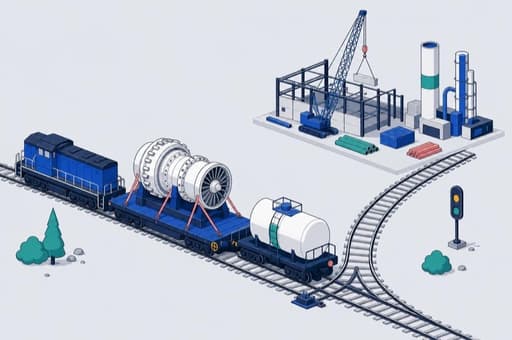
Energy & Specialized Markets
A mixed book of fuel, project and government freight produced $2.61 billion in FY2025. Its path depends on energy output and big construction jobs, so watch project timing rather than expecting one steady demand cycle.
Competes with Industrial Products service (BNSF Railway) · Energy, Chemicals & Plastics service (CPKC) · Pipelines (Pipeline operators)
In plain English
Think of the loads that do not fit a single tidy shelf: fuels, equipment for big projects and freight for government customers. Union Pacific provides the long rail journey, sometimes using loading yards to reach customers without their own track.
Producers, distributors and project owners pay to move each load. Demand can jump when construction starts or energy output rises, then fade when prices, permits or scarce specialist railcars hold a job back. That uneven mix makes this line less predictable than a regular consumer route.
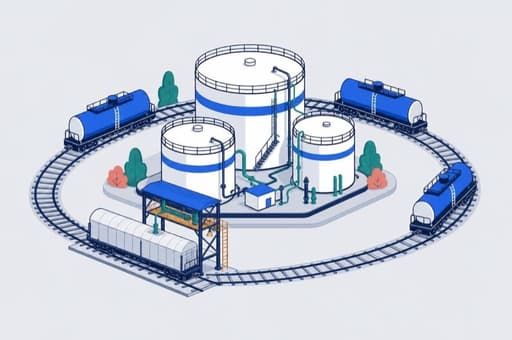
Industrial Chemicals & Plastics
Bulk chemicals and plastic-making material generated $2.51 billion in FY2025. A new Gulf Coast customer plant can add loads, while factory shutdowns, exports and safety rules decide how smoothly they arrive.
Competes with Industrial Products service (BNSF Railway) · Energy, Chemicals & Plastics service (CPKC) · Chemicals, Plastics & Petroleum service (CSX)
In plain English
A chemical plant needs huge quantities moved safely, not a parcel dropped at the door. Union Pacific carries liquids in tank cars and dry materials in covered cars between Gulf Coast plants, inland factories, Mexico and ports.
Chemical makers pay for each origin-to-destination trip. Customers without track can transfer freight between railcars and trucks at special yards, while other railroads extend the trip east. The economics improve when plants run steadily and cars stay moving; outages or export slowdowns leave equipment waiting.
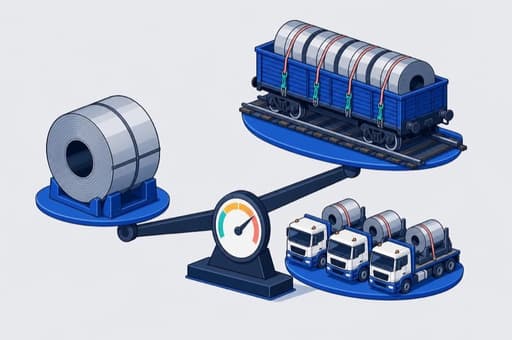
Metals & Minerals
Steel, ores, stone and other mineral loads brought in $2.19 billion in FY2025. New steel business is the opportunity; weak soda-ash exports and swings in construction are the counterweight.
Competes with Industrial Products service (BNSF Railway) · Metals, Minerals & Consumer service (CPKC) · Metals service (CSX)
In plain English
Steel coils and crushed rock are heavy, bulky and often travel far—the kind of cargo where a train can beat a line of trucks. Union Pacific links mines, mills, building markets and ports, then uses truck-transfer yards or connecting railroads where its own track stops.
Mills, miners and materials companies pay for the long haul. Revenue rises when factories make more steel or builders need more stone, and falls when production or exports slow. Winning a new plant matters because the same origin can send repeated loads for years.
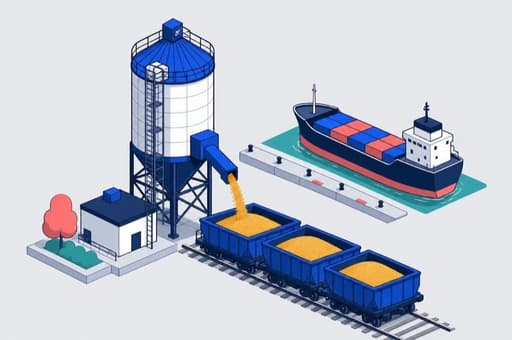
Grain & Grain Products
The second-largest named line connects farm regions to processors, Mexico and export docks. Q2 2026 revenue rose 15%; harvest size, overseas demand, trade rules and new plants determine whether that pace holds.
Competes with Agricultural Products service (BNSF Railway) · Grain service (CPKC) · Inland barges (Barge operators)
In plain English
Picture a moving pantry for industry. Grain elevators fill railcars that empty from the bottom, and Union Pacific pulls them to food processors, animal-feed makers, plants turning farm material into fuel, Mexico or an export ship.
Those customers pay for each trip, with long distances and large batches favoring rail. A strong harvest helps only if buyers and routes are available: foreign demand, trade policy and river conditions can redirect the flow. New processing and export facilities create repeat origins, which is why completed plants matter more than plans on paper.
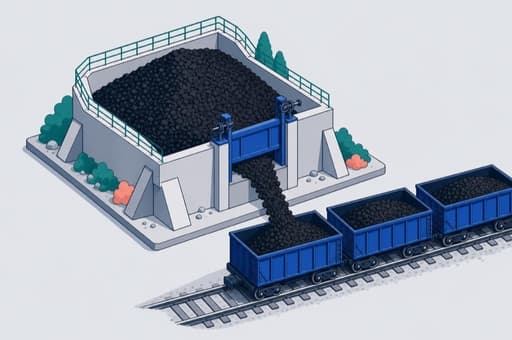
Coal & Renewables
Coal and related renewable-energy freight grew 20% in FY2025 from a smaller base, then weakened as coal stockpiles rose. Natural-gas prices, weather, power-plant outages and export demand can quickly reverse the direction.
Competes with Coal service (BNSF Railway) · Coal service (CPKC) · Gas-fired generation (Power generators)
In plain English
Coal moves in whole trains from mines to power plants or export docks. The line also carries related renewable-energy freight, but its rhythm is set largely by when utilities call for coal and how much they already have piled up.
Utilities and exporters pay Union Pacific to haul those trains. Cheap natural gas can make gas-fired power more attractive before a rail order is ever placed; hot or cold weather can pull the other way. One new utility contract helps, but plant outages and full stockyards can stop trains quickly.
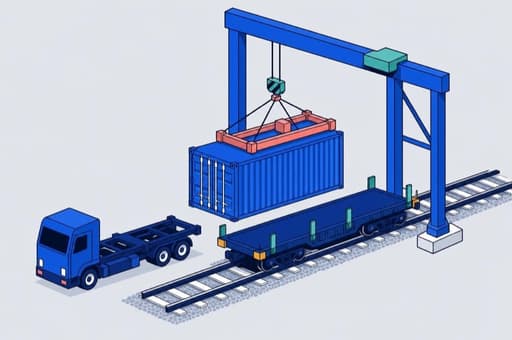
Intermodal
Union Pacific's largest named line carries boxes that can switch between train and truck. Q2 2026 revenue rose 26% as record domestic demand outweighed a sharp fall in overseas-container volume; watch that split.
Competes with Intermodal service (BNSF Railway) · Intermodal service (CPKC)
In plain English
This is the freight version of a relay race: the same sealed box rides a truck to a terminal, a train for the long middle stretch and another truck to the destination. Domestic trailers and containers serve logistics and parcel companies; overseas boxes arrive mainly through West Coast ports.
Importers and shipping coordinators pay for reliable routes and reserve lanes through quotes, contracts or public prices. Rail can replace a long highway drive when schedules work. Union Pacific earns on the rail leg, while its logistics arm can arrange the road legs and delivery too.
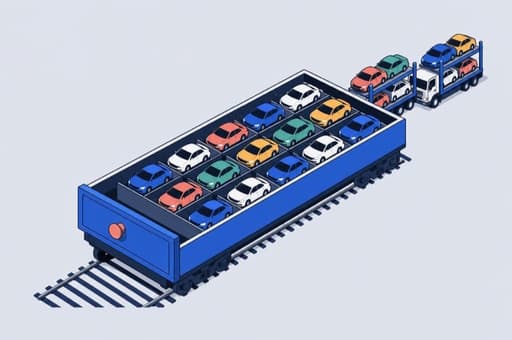
Automotive
Finished vehicles and parts travel between factories, distribution yards, ports and Mexico gateways. Q2 2026 revenue rose 11% on flat volume, so prices and what it carried mattered; watch production, tariffs and which railroad automakers choose.
Competes with Automotive service (BNSF Railway) · Automotive service (CPKC) · Automotive service (CSX)
In plain English
Freshly built cars rarely drive themselves across the country. Union Pacific loads them onto vehicle-carrying railcars for the long journey between assembly plants, large vehicle yards, ports and Mexico crossings; trucks handle the first or last short leg. Parts travel through the same broad network.
Automakers such as BMW, GM and Volkswagen award routes and pay for each movement. The railroad must deliver vehicles on time and without damage to keep that work. Factory output sets the pool of cars available, while tariffs and cross-border flows can shift where they need to go.
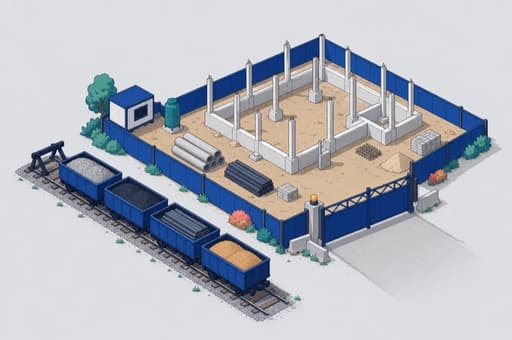
Industrial Development Pipeline
Union Pacific helps customers place new plants beside its tracks so construction can become recurring freight. The headline opportunity is a list of possible business, not firm orders; watch which proposed sites open and start shipping.
Competes with Certified Sites (BNSF Railway) · Industrial Development service (CSX)
In plain English
Before a factory can send trainloads, someone must put it beside useful track. Union Pacific works with companies, developers, utilities and local agencies to choose or expand rail-served sites, then hopes each completed plant becomes a lasting source of freight.
There are roughly two hundred current inquiries, but an inquiry is not a shipment. Customers still need funding, permits, construction and a rail award. Union Pacific gets paid later through the chemical, grain, steel or other loads that a working site creates, not for the possibility sitting in the funnel.
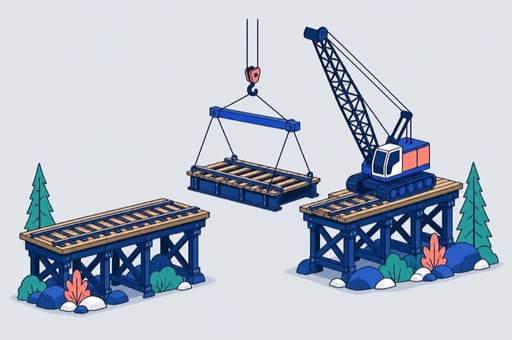
Union Pacific–Norfolk Southern Transcontinental Railroad
More than 10,000 routes now handed between the two railroads could become one-company trips. That could simplify coast-to-coast service, but it earns nothing today; government approval, financing and the work of joining them come first.
Competes with North American single-line network (CPKC) · BNSF Railway network (Berkshire Hathaway)
In plain English
Today, freight crossing from Union Pacific's western tracks to Norfolk Southern's eastern network may need a handoff—like changing trains midway through a journey. The proposed combination would put both sides under one railroad and reach more states and ports without that company-to-company transfer.
The money would come from keeping more of each long trip and winning freight now sent by truck. None of that is operating yet. Regulators have begun their review, and Union Pacific must also finance the cash portion and join two vast networks before the claimed savings or new traffic can appear.


 Energy & Specialized MarketsA mixed book of fuel, project and government freight produced $2.61 billion in FY2025. Its path depends on energy output and big construction jobs, so watch project timing rather than expecting one steady demand cycle.
A mixed book of fuel, project and government freight produced $2.61 billion in FY2025. Its path depends on energy output and big construction jobs, so watch project timing rather than expecting one steady demand cycle.
In plain English
Think of the loads that do not fit a single tidy shelf: fuels, equipment for big projects and freight for government customers. Union Pacific provides the long rail journey, sometimes using loading yards to reach customers without their own track.
Producers, distributors and project owners pay to move each load. Demand can jump when construction starts or energy output rises, then fade when prices, permits or scarce specialist railcars hold a job back. That uneven mix makes this line less predictable than a regular consumer route.
Competes with Industrial Products service (BNSF Railway) · Energy, Chemicals & Plastics service (CPKC) · Pipelines (Pipeline operators)
 Industrial Chemicals & PlasticsBulk chemicals and plastic-making material generated $2.51 billion in FY2025. A new Gulf Coast customer plant can add loads, while factory shutdowns, exports and safety rules decide how smoothly they arrive.
Bulk chemicals and plastic-making material generated $2.51 billion in FY2025. A new Gulf Coast customer plant can add loads, while factory shutdowns, exports and safety rules decide how smoothly they arrive.
In plain English
A chemical plant needs huge quantities moved safely, not a parcel dropped at the door. Union Pacific carries liquids in tank cars and dry materials in covered cars between Gulf Coast plants, inland factories, Mexico and ports.
Chemical makers pay for each origin-to-destination trip. Customers without track can transfer freight between railcars and trucks at special yards, while other railroads extend the trip east. The economics improve when plants run steadily and cars stay moving; outages or export slowdowns leave equipment waiting.
Competes with Industrial Products service (BNSF Railway) · Energy, Chemicals & Plastics service (CPKC) · Chemicals, Plastics & Petroleum service (CSX)
 Metals & MineralsSteel, ores, stone and other mineral loads brought in $2.19 billion in FY2025. New steel business is the opportunity; weak soda-ash exports and swings in construction are the counterweight.
Steel, ores, stone and other mineral loads brought in $2.19 billion in FY2025. New steel business is the opportunity; weak soda-ash exports and swings in construction are the counterweight.
In plain English
Steel coils and crushed rock are heavy, bulky and often travel far—the kind of cargo where a train can beat a line of trucks. Union Pacific links mines, mills, building markets and ports, then uses truck-transfer yards or connecting railroads where its own track stops.
Mills, miners and materials companies pay for the long haul. Revenue rises when factories make more steel or builders need more stone, and falls when production or exports slow. Winning a new plant matters because the same origin can send repeated loads for years.
Competes with Industrial Products service (BNSF Railway) · Metals, Minerals & Consumer service (CPKC) · Metals service (CSX)
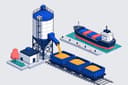 Grain & Grain ProductsThe second-largest named line connects farm regions to processors, Mexico and export docks. Q2 2026 revenue rose 15%; harvest size, overseas demand, trade rules and new plants determine whether that pace holds.
The second-largest named line connects farm regions to processors, Mexico and export docks. Q2 2026 revenue rose 15%; harvest size, overseas demand, trade rules and new plants determine whether that pace holds.
In plain English
Picture a moving pantry for industry. Grain elevators fill railcars that empty from the bottom, and Union Pacific pulls them to food processors, animal-feed makers, plants turning farm material into fuel, Mexico or an export ship.
Those customers pay for each trip, with long distances and large batches favoring rail. A strong harvest helps only if buyers and routes are available: foreign demand, trade policy and river conditions can redirect the flow. New processing and export facilities create repeat origins, which is why completed plants matter more than plans on paper.
Competes with Agricultural Products service (BNSF Railway) · Grain service (CPKC) · Inland barges (Barge operators)
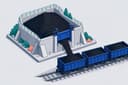 Coal & RenewablesCoal and related renewable-energy freight grew 20% in FY2025 from a smaller base, then weakened as coal stockpiles rose. Natural-gas prices, weather, power-plant outages and export demand can quickly reverse the direction.
Coal and related renewable-energy freight grew 20% in FY2025 from a smaller base, then weakened as coal stockpiles rose. Natural-gas prices, weather, power-plant outages and export demand can quickly reverse the direction.
In plain English
Coal moves in whole trains from mines to power plants or export docks. The line also carries related renewable-energy freight, but its rhythm is set largely by when utilities call for coal and how much they already have piled up.
Utilities and exporters pay Union Pacific to haul those trains. Cheap natural gas can make gas-fired power more attractive before a rail order is ever placed; hot or cold weather can pull the other way. One new utility contract helps, but plant outages and full stockyards can stop trains quickly.
Competes with Coal service (BNSF Railway) · Coal service (CPKC) · Gas-fired generation (Power generators)
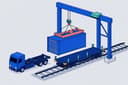 IntermodalUnion Pacific's largest named line carries boxes that can switch between train and truck. Q2 2026 revenue rose 26% as record domestic demand outweighed a sharp fall in overseas-container volume; watch that split.
Union Pacific's largest named line carries boxes that can switch between train and truck. Q2 2026 revenue rose 26% as record domestic demand outweighed a sharp fall in overseas-container volume; watch that split.
In plain English
This is the freight version of a relay race: the same sealed box rides a truck to a terminal, a train for the long middle stretch and another truck to the destination. Domestic trailers and containers serve logistics and parcel companies; overseas boxes arrive mainly through West Coast ports.
Importers and shipping coordinators pay for reliable routes and reserve lanes through quotes, contracts or public prices. Rail can replace a long highway drive when schedules work. Union Pacific earns on the rail leg, while its logistics arm can arrange the road legs and delivery too.
Competes with Intermodal service (BNSF Railway) · Intermodal service (CPKC)
 AutomotiveFinished vehicles and parts travel between factories, distribution yards, ports and Mexico gateways. Q2 2026 revenue rose 11% on flat volume, so prices and what it carried mattered; watch production, tariffs and which railroad automakers choose.
Finished vehicles and parts travel between factories, distribution yards, ports and Mexico gateways. Q2 2026 revenue rose 11% on flat volume, so prices and what it carried mattered; watch production, tariffs and which railroad automakers choose.
In plain English
Freshly built cars rarely drive themselves across the country. Union Pacific loads them onto vehicle-carrying railcars for the long journey between assembly plants, large vehicle yards, ports and Mexico crossings; trucks handle the first or last short leg. Parts travel through the same broad network.
Automakers such as BMW, GM and Volkswagen award routes and pay for each movement. The railroad must deliver vehicles on time and without damage to keep that work. Factory output sets the pool of cars available, while tariffs and cross-border flows can shift where they need to go.
Competes with Automotive service (BNSF Railway) · Automotive service (CPKC) · Automotive service (CSX)
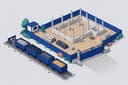 Industrial Development PipelineUnion Pacific helps customers place new plants beside its tracks so construction can become recurring freight. The headline opportunity is a list of possible business, not firm orders; watch which proposed sites open and start shipping.
Union Pacific helps customers place new plants beside its tracks so construction can become recurring freight. The headline opportunity is a list of possible business, not firm orders; watch which proposed sites open and start shipping.
In plain English
Before a factory can send trainloads, someone must put it beside useful track. Union Pacific works with companies, developers, utilities and local agencies to choose or expand rail-served sites, then hopes each completed plant becomes a lasting source of freight.
There are roughly two hundred current inquiries, but an inquiry is not a shipment. Customers still need funding, permits, construction and a rail award. Union Pacific gets paid later through the chemical, grain, steel or other loads that a working site creates, not for the possibility sitting in the funnel.
Competes with Certified Sites (BNSF Railway) · Industrial Development service (CSX)
 Union Pacific–Norfolk Southern Transcontinental RailroadMore than 10,000 routes now handed between the two railroads could become one-company trips. That could simplify coast-to-coast service, but it earns nothing today; government approval, financing and the work of joining them come first.
More than 10,000 routes now handed between the two railroads could become one-company trips. That could simplify coast-to-coast service, but it earns nothing today; government approval, financing and the work of joining them come first.
In plain English
Today, freight crossing from Union Pacific's western tracks to Norfolk Southern's eastern network may need a handoff—like changing trains midway through a journey. The proposed combination would put both sides under one railroad and reach more states and ports without that company-to-company transfer.
The money would come from keeping more of each long trip and winning freight now sent by truck. None of that is operating yet. Regulators have begun their review, and Union Pacific must also finance the cash portion and join two vast networks before the claimed savings or new traffic can appear.
Competes with North American single-line network (CPKC) · BNSF Railway network (Berkshire Hathaway)
Named in filings, launches and programs
- Forest ProductsService$1.29 billion from hauling lumber, paper and related freight—5.3% of FY2025 revenue.
- Food & RefrigeratedService$1.02 billion from food and temperature-sensitive farm freight—4.2% of FY2025 revenue.
- FertilizerService$856 million from moving farm inputs—3.5% of FY2025 revenue.
- Other Subsidiary RevenuesService$718 million, mostly from logistics, equal to 2.9% of FY2025 revenue.
- Accessorial RevenuesService$475 million from extra rail and equipment charges—1.9% of FY2025 revenue.
- Other RevenueServiceThe final $97 million of operating revenue, equal to 0.4% of FY2025 sales.
- Loup LogisticsBrandArranges door-to-door trips, truck-to-rail transfers, storage and shipment management around the core railroad.
- EMPEcosystemA shared domestic container pool with Norfolk Southern and other rail partners, holding tens of thousands of long containers.
- UMAXEcosystemA shared domestic container pool with CSX and other partners, also holding tens of thousands of long containers.
- Falcon PremiumServiceAn all-rail container service linking Mexico, the United States and Canada with Canadian National and GMXT.
- Mutual Commitment ProgramCustomer programShippers promise steady container volume in exchange for year-round train capacity and consistent pricing.
- Committed Gateway PricingCustomer program · AnnouncedA merger safeguard meant to preserve selected handoff routes and pricing choices if the Norfolk Southern deal closes.
Forest ProductsService
$1.29 billion from hauling lumber, paper and related freight—5.3% of FY2025 revenue.
Food & RefrigeratedService
$1.02 billion from food and temperature-sensitive farm freight—4.2% of FY2025 revenue.
FertilizerService
$856 million from moving farm inputs—3.5% of FY2025 revenue.
Other Subsidiary RevenuesService
$718 million, mostly from logistics, equal to 2.9% of FY2025 revenue.
Accessorial RevenuesService
$475 million from extra rail and equipment charges—1.9% of FY2025 revenue.
Other RevenueService
The final $97 million of operating revenue, equal to 0.4% of FY2025 sales.
Loup LogisticsBrand
Arranges door-to-door trips, truck-to-rail transfers, storage and shipment management around the core railroad.
EMPEcosystem
A shared domestic container pool with Norfolk Southern and other rail partners, holding tens of thousands of long containers.
UMAXEcosystem
A shared domestic container pool with CSX and other partners, also holding tens of thousands of long containers.
Falcon PremiumService
An all-rail container service linking Mexico, the United States and Canada with Canadian National and GMXT.
Mutual Commitment ProgramCustomer program
Shippers promise steady container volume in exchange for year-round train capacity and consistent pricing.
Committed Gateway PricingCustomer program · Announced
A merger safeguard meant to preserve selected handoff routes and pricing choices if the Norfolk Southern deal closes.