
The Trade Desk (TTD)
Self-service platform for buying and optimizing digital advertising across the open internet.
Something off on this page? Send us feedback.
The Trade Desk runs a control room for brands and agencies buying digital ads on websites, apps and streaming services beyond the biggest closed advertising systems. Every dollar still comes from one ad-buying business, with streaming video now its largest type of advertising. New audience, measurement, publisher and television tools are meant to deepen that engine, not yet diversify it, just as growth has slowed and the company is simplifying how it works.
Item facts: FY2025 · year ended Dec 31, 2025, from filings, earnings calls and company pages.
Judgment weights, not filed revenue
The band summarizes business focus and direction. ~ marks estimates.
8 in detail · 13 more below
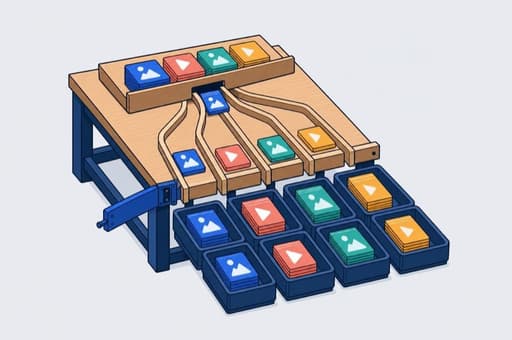
Kokai
The main control panel for planning, buying and checking digital ads, now being upgraded through Kokai Zuma. Most revenue runs through it, but clients generally can leave on sixty days’ notice and promise no minimum spend.
Competes with Display & Video 360 (Google) · StackAdapt Marketing Platform (StackAdapt)
In plain English
Picture an air-traffic desk for advertising. A buyer sets a budget, describes whom it wants to reach and chooses places where an ad might appear; Kokai weighs the available chances and decides what to buy, moment by moment. Zuma is the latest version of that desk.
Agencies, brands and service firms pay The Trade Desk a percentage of the advertising money they route through the platform, plus charges for data and other help. They keep using it when those choices improve campaign results, but their usual yearly agreements do not lock in future spending.

Video, including Connected TV
Streaming-TV and online-video advertising made up just over half of business in the second quarter of 2026. Streaming TV still grew by double digits, so the watchpoint is whether this largest type can pull total growth higher again.
Competes with Amazon DSP Streaming TV (Amazon) · StackAdapt Connected TV (StackAdapt)
In plain English
This is the part that turns television and online viewing into individually purchasable ad spots. Instead of ordering the same commercial for every household, a brand uses the platform to compete for one suitable spot at a time on streaming services and video sites.
The brand or its agency supplies the budget; media owners supply the viewing slots. The Trade Desk earns its usual platform and service fees as that money passes through. Buyers return for access, targeting and proof of results, while supply from desirable shows and fair access to publisher auctions determine how useful the channel remains.

Joint Business Plans
Shared growth plans covered 217 clients in the second quarter of 2026, up 38%, and their related revenue grew six times as fast as company revenue. Two unnamed agency groups supplied 30% of FY2025 advertising money routed through the platform.
Competes with Display & Video 360 (Google) · Amazon DSP (Amazon)
In plain English
The unglamorous relationship work matters here. The Trade Desk, a brand and its advertising agency agree on goals for using more of the platform, then account and product teams help put that plan into practice. Discounts or incentives may sweeten the arrangement.
These plans make money when a client shifts more advertising through The Trade Desk, which then collects its normal fees. They are not prepaid orders and guarantee no spending. That distinction matters: clients outside the program were weak enough in the latest quarter that fast growth among enrolled accounts did not keep the whole company growing quickly.

Audience Unlimited
One predictable data rate opens access to hundreds of thousands of outside audience groups. The open trial covered more than 70% of marketplace data providers; usefulness depends on permission, accuracy and whether buyers trust automated expansion.
Competes with Amazon Audiences (Amazon) · Audience targeting (StackAdapt)
In plain English
Choosing whom an ad should reach used to mean shopping among many separately priced lists. Audience Unlimited puts a large library behind one predictable rate: a buyer starts with a small example group, and the software looks for more people with similar traits.
Advertisers and agency buyers pay for that data access while outside data firms receive money when their information is used. The service can raise data use and the fees earned through Kokai, but it is not sold as its own reported business. Poor information or missing permission can make a large library much less valuable.

Measurement Framework
An early-stage tool for sharing credit among the ads seen before a sale, rather than rewarding only the last one. It helps keep clients using more services, but has no separately stated fee and still must prove credible results.
Competes with Unified Measurement (iSpot) · InnovidXP (Innovid)
In plain English
A purchase rarely follows just one advertisement. Someone might see a television spot, notice another ad on a phone and buy days later. This tool tries to divide credit among those steps instead of handing all the credit to the final click.
Brand and agency analysts use that answer to decide where the next advertising dollar goes. The Trade Desk does not disclose a separate charge for the tool; its value is making the wider platform more useful and harder to replace. It remains in early testing, and it relies on permitted information from publishers, retailers and other data holders.
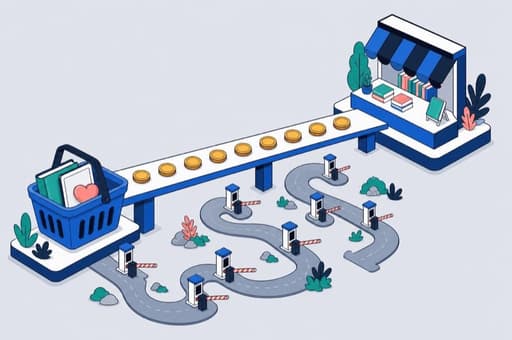
OpenPath
A direct connection from The Trade Desk’s bids to publisher sales, intended to remove middlemen and send more money toward the actual ad. It earns no stated fee of its own; publisher adoption and agency trust decide its reach.
Competes with ClearLine (Magnite) · PubMatic for Buyers / Activate (PubMatic)
In plain English
OpenPath is a shorter road between an ad buyer and a media owner. A publisher—the owner of a site, app or streaming service—connects its sale directly to The Trade Desk, so a buyer can see the opportunity and offer a price without as many companies standing between them. The Trade Desk says publishers still control their own prices.
There is no separate OpenPath fee in the figures. The hoped-for payoff is that less money leaks away between buyer and publisher, making Kokai more attractive and leaving media owners with more paying ads. That only works when publishers open the road and agencies believe the route is fair and clear.
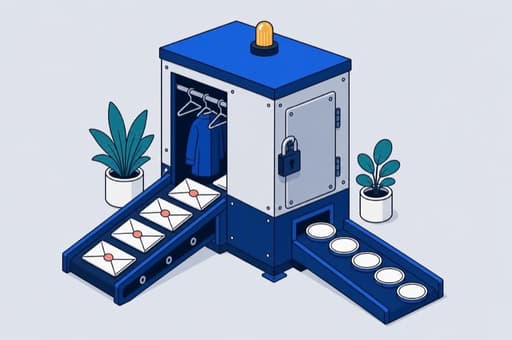
Unified ID 2.0
A free, shared way to turn contact details given with permission into matching codes without exposing those details. It helps ads find and measure intended audiences, but earns nothing alone and depends on consent, reach and common adoption.
Competes with ID5 ID and ID5 Graph (ID5) · Topics API / Protected Audience API (Google)
In plain English
Think of a coat-check token for contact information. A publisher or advertiser starts with an email address supplied with permission; the framework turns it into a matching code, so participating systems can recognize the same person without passing the address itself around. The code is the identifier.
Unified ID is free and open for others to use. Its economic job is to keep targeted buying and measurement working inside Kokai as older tracking methods fade. Advertisers bring customer information, publishers bring signed-in audiences, and connecting services match the codes. If too few parties use the same system, its usefulness shrinks.
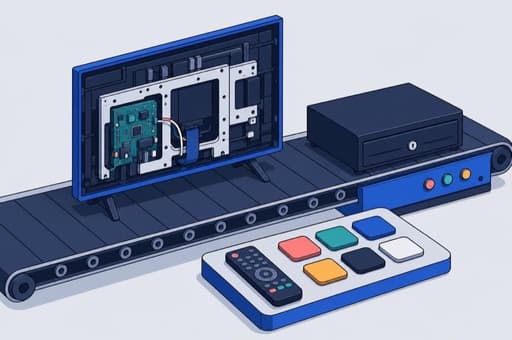
Ventura TV OS
A planned operating system for streaming televisions, meant to create better ad supply rather than collect stated software fees. DIRECTV is the clearest planned distributor, but no device had shipped or produced revenue by September 2026.
Competes with Roku OS (Roku) · Fire TV (Amazon) · Google TV / Android TV (Google)
In plain English
Ventura would be the software viewers meet when they turn on a streaming television: the home screen, app choices and paths into shows. The Trade Desk is developing it with television makers and distributors, including a planned custom version for DIRECTV. Partners V and Nexxen are also helping shape the surrounding system.
The business idea is not a disclosed software charge. More televisions running Ventura could create more viewing slots that connect cleanly to OpenPath and the shared identity system, giving Kokai buyers more places to advertise. Until a device actually ships and attracts viewers, that loop produces no revenue.


 KokaiThe main control panel for planning, buying and checking digital ads, now being upgraded through Kokai Zuma. Most revenue runs through it, but clients generally can leave on sixty days’ notice and promise no minimum spend.
The main control panel for planning, buying and checking digital ads, now being upgraded through Kokai Zuma. Most revenue runs through it, but clients generally can leave on sixty days’ notice and promise no minimum spend.
In plain English
Picture an air-traffic desk for advertising. A buyer sets a budget, describes whom it wants to reach and chooses places where an ad might appear; Kokai weighs the available chances and decides what to buy, moment by moment. Zuma is the latest version of that desk.
Agencies, brands and service firms pay The Trade Desk a percentage of the advertising money they route through the platform, plus charges for data and other help. They keep using it when those choices improve campaign results, but their usual yearly agreements do not lock in future spending.
Competes with Display & Video 360 (Google) · StackAdapt Marketing Platform (StackAdapt)
 Video, including Connected TVStreaming-TV and online-video advertising made up just over half of business in the second quarter of 2026. Streaming TV still grew by double digits, so the watchpoint is whether this largest type can pull total growth higher again.
Streaming-TV and online-video advertising made up just over half of business in the second quarter of 2026. Streaming TV still grew by double digits, so the watchpoint is whether this largest type can pull total growth higher again.
In plain English
This is the part that turns television and online viewing into individually purchasable ad spots. Instead of ordering the same commercial for every household, a brand uses the platform to compete for one suitable spot at a time on streaming services and video sites.
The brand or its agency supplies the budget; media owners supply the viewing slots. The Trade Desk earns its usual platform and service fees as that money passes through. Buyers return for access, targeting and proof of results, while supply from desirable shows and fair access to publisher auctions determine how useful the channel remains.
Competes with Amazon DSP Streaming TV (Amazon) · StackAdapt Connected TV (StackAdapt)
 Joint Business PlansShared growth plans covered 217 clients in the second quarter of 2026, up 38%, and their related revenue grew six times as fast as company revenue. Two unnamed agency groups supplied 30% of FY2025 advertising money routed through the platform.
Shared growth plans covered 217 clients in the second quarter of 2026, up 38%, and their related revenue grew six times as fast as company revenue. Two unnamed agency groups supplied 30% of FY2025 advertising money routed through the platform.
In plain English
The unglamorous relationship work matters here. The Trade Desk, a brand and its advertising agency agree on goals for using more of the platform, then account and product teams help put that plan into practice. Discounts or incentives may sweeten the arrangement.
These plans make money when a client shifts more advertising through The Trade Desk, which then collects its normal fees. They are not prepaid orders and guarantee no spending. That distinction matters: clients outside the program were weak enough in the latest quarter that fast growth among enrolled accounts did not keep the whole company growing quickly.
Competes with Display & Video 360 (Google) · Amazon DSP (Amazon)
 Audience UnlimitedOne predictable data rate opens access to hundreds of thousands of outside audience groups. The open trial covered more than 70% of marketplace data providers; usefulness depends on permission, accuracy and whether buyers trust automated expansion.
One predictable data rate opens access to hundreds of thousands of outside audience groups. The open trial covered more than 70% of marketplace data providers; usefulness depends on permission, accuracy and whether buyers trust automated expansion.
In plain English
Choosing whom an ad should reach used to mean shopping among many separately priced lists. Audience Unlimited puts a large library behind one predictable rate: a buyer starts with a small example group, and the software looks for more people with similar traits.
Advertisers and agency buyers pay for that data access while outside data firms receive money when their information is used. The service can raise data use and the fees earned through Kokai, but it is not sold as its own reported business. Poor information or missing permission can make a large library much less valuable.
Competes with Amazon Audiences (Amazon) · Audience targeting (StackAdapt)
 Measurement FrameworkAn early-stage tool for sharing credit among the ads seen before a sale, rather than rewarding only the last one. It helps keep clients using more services, but has no separately stated fee and still must prove credible results.
An early-stage tool for sharing credit among the ads seen before a sale, rather than rewarding only the last one. It helps keep clients using more services, but has no separately stated fee and still must prove credible results.
In plain English
A purchase rarely follows just one advertisement. Someone might see a television spot, notice another ad on a phone and buy days later. This tool tries to divide credit among those steps instead of handing all the credit to the final click.
Brand and agency analysts use that answer to decide where the next advertising dollar goes. The Trade Desk does not disclose a separate charge for the tool; its value is making the wider platform more useful and harder to replace. It remains in early testing, and it relies on permitted information from publishers, retailers and other data holders.
Competes with Unified Measurement (iSpot) · InnovidXP (Innovid)
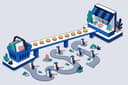 OpenPathA direct connection from The Trade Desk’s bids to publisher sales, intended to remove middlemen and send more money toward the actual ad. It earns no stated fee of its own; publisher adoption and agency trust decide its reach.
A direct connection from The Trade Desk’s bids to publisher sales, intended to remove middlemen and send more money toward the actual ad. It earns no stated fee of its own; publisher adoption and agency trust decide its reach.
In plain English
OpenPath is a shorter road between an ad buyer and a media owner. A publisher—the owner of a site, app or streaming service—connects its sale directly to The Trade Desk, so a buyer can see the opportunity and offer a price without as many companies standing between them. The Trade Desk says publishers still control their own prices.
There is no separate OpenPath fee in the figures. The hoped-for payoff is that less money leaks away between buyer and publisher, making Kokai more attractive and leaving media owners with more paying ads. That only works when publishers open the road and agencies believe the route is fair and clear.
Competes with ClearLine (Magnite) · PubMatic for Buyers / Activate (PubMatic)
 Unified ID 2.0A free, shared way to turn contact details given with permission into matching codes without exposing those details. It helps ads find and measure intended audiences, but earns nothing alone and depends on consent, reach and common adoption.
A free, shared way to turn contact details given with permission into matching codes without exposing those details. It helps ads find and measure intended audiences, but earns nothing alone and depends on consent, reach and common adoption.
In plain English
Think of a coat-check token for contact information. A publisher or advertiser starts with an email address supplied with permission; the framework turns it into a matching code, so participating systems can recognize the same person without passing the address itself around. The code is the identifier.
Unified ID is free and open for others to use. Its economic job is to keep targeted buying and measurement working inside Kokai as older tracking methods fade. Advertisers bring customer information, publishers bring signed-in audiences, and connecting services match the codes. If too few parties use the same system, its usefulness shrinks.
Competes with ID5 ID and ID5 Graph (ID5) · Topics API / Protected Audience API (Google)
 Ventura TV OSA planned operating system for streaming televisions, meant to create better ad supply rather than collect stated software fees. DIRECTV is the clearest planned distributor, but no device had shipped or produced revenue by September 2026.
A planned operating system for streaming televisions, meant to create better ad supply rather than collect stated software fees. DIRECTV is the clearest planned distributor, but no device had shipped or produced revenue by September 2026.
In plain English
Ventura would be the software viewers meet when they turn on a streaming television: the home screen, app choices and paths into shows. The Trade Desk is developing it with television makers and distributors, including a planned custom version for DIRECTV. Partners V and Nexxen are also helping shape the surrounding system.
The business idea is not a disclosed software charge. More televisions running Ventura could create more viewing slots that connect cleanly to OpenPath and the shared identity system, giving Kokai buyers more places to advertise. Until a device actually ships and attracts viewers, that loop produces no revenue.
Competes with Roku OS (Roku) · Fire TV (Amazon) · Google TV / Android TV (Google)
Named in filings, launches and programs
- MobileProduct linePhone and tablet advertising was in the high twenties as a share of second-quarter 2026 business, down from the mid-thirties in earlier calls.
- DisplayProduct lineTraditional visual ads on websites and apps supplied a low-double-digit share of second-quarter 2026 business.
- AudioProduct lineDigital audio was about 7% of second-quarter 2026 business and management’s fastest-growing type of advertising for four straight quarters.
- KoaPlatformKokai’s automated decision layer helps choose prices to offer, control campaign pace, forecast results and build audiences across more than 20 million ad opportunities each second.
- Deal DeskService · RampingA workspace for checking and pacing direct arrangements between ad buyers and publishers.
- OpenAdsPlatform · RampingA publisher sale designed to be inspectable by buyers, extending the direct-supply approach beyond OpenPath.
- PubDeskServiceA publisher dashboard showing buyer signals and the factors that influence bid prices.
- SinceraBrandAn advertising-information business bought in early 2025; it arrived with no revenue, so its role begins from a very small base.
- OpenSinceraServiceA free tool exposing quality and delivery information across hundreds of thousands of publishers.
- GalileoServiceMoves a brand’s permitted customer information into advertising and measurement through Unified ID.
- OpenTTDService · RampingA single sign-in and shared analysis layer for partners with several roles across advertising work.
- Sellers and Publishers 500+EcosystemA selected marketplace of large media owners; Netflix joined during Q2 2026.
- Walmart Connect DSPCustomer programA Walmart-branded ad-buying platform powered by The Trade Desk under a renewed multi-year agreement with no disclosed value or minimum.
MobileProduct line
Phone and tablet advertising was in the high twenties as a share of second-quarter 2026 business, down from the mid-thirties in earlier calls.
DisplayProduct line
Traditional visual ads on websites and apps supplied a low-double-digit share of second-quarter 2026 business.
AudioProduct line
Digital audio was about 7% of second-quarter 2026 business and management’s fastest-growing type of advertising for four straight quarters.
KoaPlatform
Kokai’s automated decision layer helps choose prices to offer, control campaign pace, forecast results and build audiences across more than 20 million ad opportunities each second.
Deal DeskService · Ramping
A workspace for checking and pacing direct arrangements between ad buyers and publishers.
OpenAdsPlatform · Ramping
A publisher sale designed to be inspectable by buyers, extending the direct-supply approach beyond OpenPath.
PubDeskService
A publisher dashboard showing buyer signals and the factors that influence bid prices.
SinceraBrand
An advertising-information business bought in early 2025; it arrived with no revenue, so its role begins from a very small base.
OpenSinceraService
A free tool exposing quality and delivery information across hundreds of thousands of publishers.
GalileoService
Moves a brand’s permitted customer information into advertising and measurement through Unified ID.
OpenTTDService · Ramping
A single sign-in and shared analysis layer for partners with several roles across advertising work.
Sellers and Publishers 500+Ecosystem
A selected marketplace of large media owners; Netflix joined during Q2 2026.
Walmart Connect DSPCustomer program
A Walmart-branded ad-buying platform powered by The Trade Desk under a renewed multi-year agreement with no disclosed value or minimum.